Choosing Comfortable and Stylish Sleepwear
. Then one summer, after waking up sweaty and weirdly irritated for the 47th night in a row, I finally asked myself: What if the problem isn’t me… it’s what I’m sleeping in?
That’s when I fell down the sleepwear rabbit hole — fabrics, cuts, thermal regulation, the works. When I tested my first proper pajama set (lightweight cotton, loose cut, real waistband that didn’t dig in), my sleep quality improved in a way I could actually feel.
This is the guide I wish I’d had before I spent money on things that looked cute on Instagram but felt like sleeping in a plastic bag.
Why Sleepwear Matters More Than We Think
When I started reading actual research, I realized my random t‑shirt method was sabotaging my sleep.
The American Academy of Sleep Medicine points out that small environmental tweaks — including bedding and clothing — can make a measurable difference to sleep quality and night awakenings. And a 2018 paper in Nature and Science of Sleep highlighted how skin and core temperature play a big role in how fast we fall asleep and how deeply we stay asleep.
Translation: if your sleepwear is trapping heat or moisture, you’re basically arguing with your own biology all night.
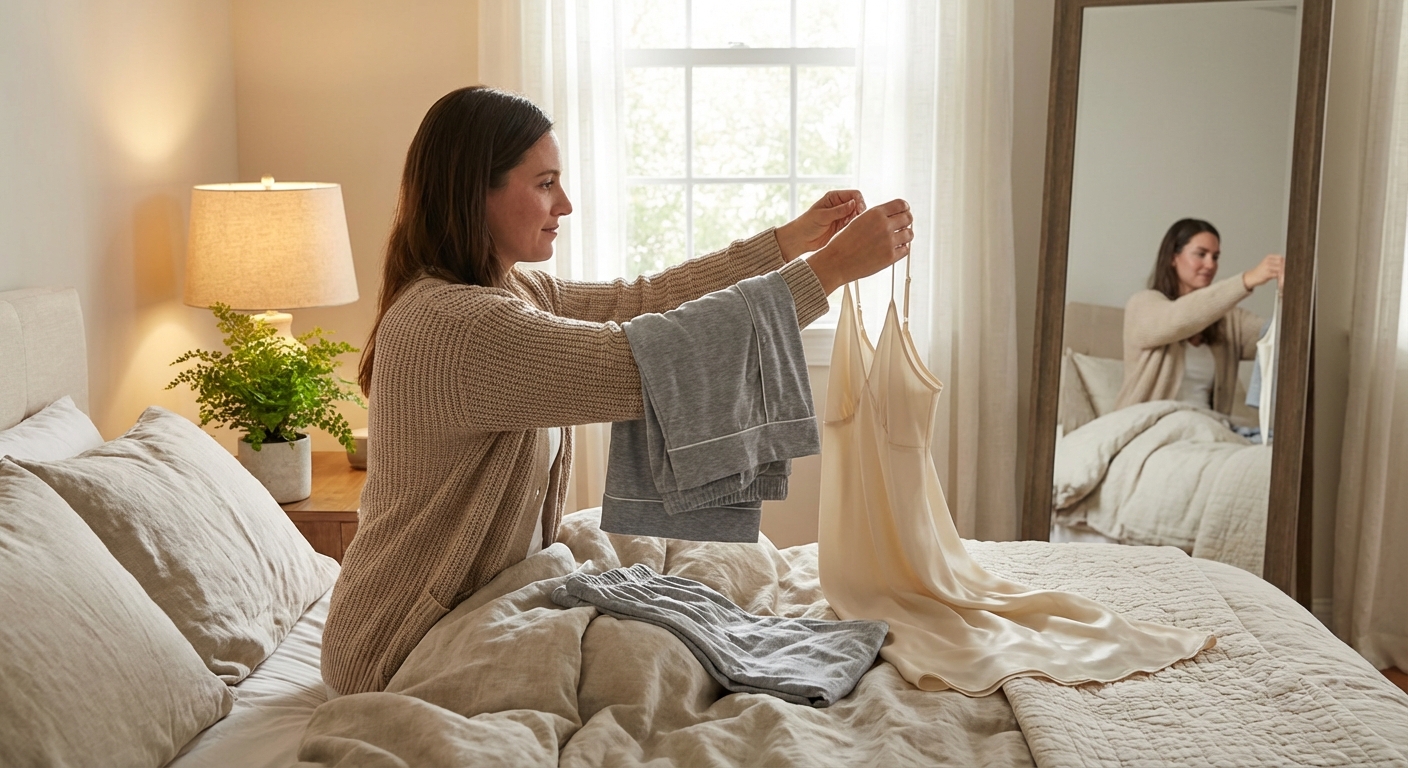
I noticed it personally when I switched from a synthetic blend set that looked gorgeous on camera to a simple breathable cotton modal mix. Same room, same mattress, same schedule — but I was waking up fewer times and not kicking the covers off in a rage at 3 a.m.
Step 1: Know Your Sleep Style (And Your Body)
When friends ask me what sleepwear to buy, I don’t start with brand names. I ask questions like:
- Do you run hot or cold at night? I’m a classic hot sleeper — if it’s remotely warm out, I’ll wake up sweating in polyester.
- Do you toss and turn? If yes, avoid super tight fits and spaghetti straps that migrate in the night.
- Do you sleep with a fan or AC blasting? You might actually need layers, not just a flimsy slip.
- Do you share a bed? Matching temperature needs with a partner is… let’s call it a diplomatic project. Breathable fabrics help.
Once I mapped my sleep habits (yes, I actually took notes for a week — nerd level: high), I stopped buying gorgeous but useless satin sets and started hunting for fabrics and cuts that worked with my body instead of against it.
Fabrics: The Real MVP of Sleepwear
Cotton: The Reliable Classic
When I tested different fabrics back-to-back, cotton came out as the safest all-rounder.
Pros:- Breathable and decent at moisture absorption
- Softens over time
- Easy to wash and durable
- 100% thick cotton can feel heavy and warm in humid climates
- Cheaper weaves can feel stiff or scratchy at first
My best results came from lightweight cotton poplin or cotton-modal blends: structured enough to feel put-together, light enough to not feel swampy at 2 a.m.
Modal, Tencel & Viscose: The Drapey Crowd
I recently discovered a modal pajama set from a mid-range brand, and it legit felt like sleeping in cloud fog. These cellulosic fibers (often from beech or eucalyptus) drape beautifully and feel cool to the touch.
Pros:- Very soft and smooth
- Breathable and good moisture management
- Usually more elegant-looking than basic cotton
- Can pill over time if the quality isn’t great
- Slightly more delicate in the wash (net bag recommended)
If you want something that looks luxe without a three-figure price tag, modal or Tencel lyocell is that sweet spot.
Silk: The Luxe Fantasy (With Fine Print)
I went through a silk phase after binge-watching old Hollywood movies. Silk can be amazing — it’s naturally temperature-regulating and feels incredible on skin.
Pros:- Thermoregulating: warm in winter, cool in summer
- Very low friction — good for sensitive skin and hair
- Looks and feels luxurious
- High-maintenance: often hand-wash or dry-clean
- Pricey for decent quality
- Not great if you sweat heavily; it can stain and feel clammy
For me, pure silk became a “special occasion” sleepwear choice. On regular nights, I reach for silk-blend or sateen cotton if I want that slight sheen without the drama.
Linen: The Hot-Sleeper Hero
When I tested linen in peak summer heat, it converted me fast.
Pros:- Extremely breathable
- Wicks moisture quickly
- Gets softer with every wash
- Wrinkles easily (I personally love the rumpled vibe)
- Can feel rough initially if it’s low quality
If your bedroom feels like a greenhouse in July, a linen sleep shirt or set is honestly a game-changer.
Synthetics (Polyester, Nylon): Handle With Care
Most fast-fashion sleepwear is heavy on polyester because it’s cheap and holds color. I’ve tried multiple sets, and… my skin staged a protest.
Pros:- Durable, colorfast, often very affordable
- Can be silky-soft (especially microfiber)
- Traps heat and sweat; can feel swampy
- More prone to static and cling
I don’t avoid synthetics entirely, but I prefer blends where cotton or modal is dominant. If you’re a cold sleeper or live somewhere chilly, a brushed polyester fleece set can actually feel cozy — I just won’t touch it in warmer months.
Fit and Design: Where Comfort Meets Style
One big mistake I made early on was buying sleepwear like I buy regular clothes: thinking about how it looks standing up, not how it feels lying on my side for 7 hours.
Here’s what changed the game for me:
1. Waistbands and Closures
I once bought a stunning satin short set with a tight, non-stretch waistband. Looked incredible. Cut into my skin every time I rolled over.
Now I look for:
- Wide, soft elastic or elastic + drawstring combos
- No bulky buttons or zippers at the waist
- Minimal hardware — those cute metal rings and sliders? They dig in at 4 a.m.
2. Seams and Tags
When I tested a “sensitive skin” line, the difference was obvious: flat seams, tagless labels, nothing rubbing.
If you’re prone to irritation, check:
- Inside seams: are they bulky or smooth?
- Tag placement: neck tags can be surprisingly annoying
- Lace trim: pretty, yes — but can be scratchy around the underarm or thigh
3. Temperature-Friendly Design
For hot sleepers like me:
- Short sleeves or tank tops with wide straps
- Roomy shorts with side slits or looser legs
- Button-down tops so you can adjust airflow
For cold sleepers:
- Long-sleeve sets in cotton jersey or flannel
- Layering options: a tank + long-sleeve top + robe
- Cuffed ankles and wrists to trap warmth
Style That Actually Feels Like You
I used to buy whatever was trending — all blush satin and lace trims. Then I realized: I never reached for them. They weren’t me.
The sleepwear I actually wear on repeat has two things in common:
- It matches my off-duty style. I’m a neutrals-and-stripes person, so my favorite set is a soft gray cotton-modal with a subtle pinstripe. It feels like my daytime wardrobe, just… cozier.
- It passes the “doorbell test.” If I’d be mortified answering the door in it, I don’t wear it on weeknights. Life happens — food deliveries arrive, fire alarms go off, neighbors need something.
Trending now (that I’ve personally tested and liked):
- Matching sets that look almost like loungewear — perfect for lazy Saturday mornings
- Oversized sleep shirts that double as beach cover-ups
- Minimalist ribbed sets in soft modal blends — very TikTok, but surprisingly comfortable when done right
How Much Should You Spend?
I’ve tested everything from $20 fast-fashion sets to $200 luxury silk pajamas. Here’s my honest take:
- Below ~$25: expect decent basics, usually heavy on synthetics. Great for backups or travel.
- $40–$80: best value in my experience. You can get high-quality cotton, modal, Tencel, and thoughtful design.
- $100+: you’re paying for brand, silk, or premium construction. Worth it if you love the feel and will wear them nonstop.
One thing I’ve learned the hard way: two well-made sets you adore will get worn 90% of the time. Five mediocre sets just clog your drawer.
Care Tips So Your Favorites Actually Last
Sleepwear lives a hard life: nightly wear, constant washing. I ruined a gorgeous modal set by blasting it on hot and tumble-drying it to death.
Now I:
- Wash on cold or warm, gentle cycle
- Use a mild detergent (no heavy softeners that can clog fibers)
- Air-dry or tumble on low heat
Brands like L.L.Bean and Uniqlo post care instructions that are worth actually reading — they’re trying to keep returns down, so the advice is practical.
Quick Checklist Before You Hit “Buy”
Whenever I’m shopping online now, I literally run through this in my head:
- Does this fabric match how I sleep (hot/cold)?
- Can I move, curl up, and roll over without anything digging in?
- Is there at least 1–2 real customer photos in reviews showing how it looks after washing?
- Would I be okay being seen in it outside my bedroom in an emergency?
- Does it spark a tiny bit of joy — not just “meh, it’s fine”?
When those boxes are ticked, I’ve almost never regretted the purchase.
Final Thought: Your Sleepwear Is Part of Your Self-Care
I used to think “self-care” meant candles and face masks. Now, honestly, it looks more like this: sliding into a worn-in but still-stylish pajama set that feels like my skin can finally exhale.
If you haven’t upgraded your sleepwear in years, pick one set that’s both comfortable and stylish enough that you feel slightly smug wearing it. Test it for a week. Pay attention to how you sleep, how you feel getting ready for bed, and how you feel waking up.
That tiny shift — from random t‑shirt to intentional sleepwear — might be the most underrated shopping upgrade you make this year.
Sources
- American Academy of Sleep Medicine – Healthy Sleep Habits - Overview of how environment and habits impact sleep quality
- Nature and Science of Sleep (Dunican & Walsh, 2018) - Review on sleep and performance, including thermoregulation
- Harvard Medical School – Temperature and Sleep - Discussion of how body temperature affects sleep onset and maintenance
- CDC – Sleep and Sleep Disorders - General guidance on sleep health and contributing factors
- L.L.Bean Sleepwear Care Instructions - Practical brand guidance on fabric care and durability