Classic Boots: Styles and Care Tips for Men
The pair that finally changed things? A simple cap-toe leather boot I picked up on a work trip in 2017. I wore them through client meetings, airports, and one awful muddy music festival I absolutely shouldn’t have brought them to. They survived. My sneakers didn’t.
Since then, I’ve gone down the rabbit hole: welt construction, last shapes, leather grades, resoling, conditioners, the whole nerdy boot universe. When I tested different pairs side by side, I realized classic boots aren’t just about style—they’re essentially a long-term investment if you treat them right.
Let’s break down the key styles, what they actually work for in real life, and the care routine that’s kept my boots going years longer than my old habit of “wipe on jeans and hope for the best.”
The Big Three: Classic Men’s Boot Styles I Actually Wear
There are dozens of variations, but if you’re building a versatile rotation, these three cover most situations.
1. Dress Boots – The “Suit and Street” Workhorse
My first serious pair of boots was a black cap-toe dress boot with a Goodyear welt and a slim last (basically, the shape of the footbed). They looked like slightly taller dress shoes, which made them perfect when I had to wear a suit to meetings but still walk a few miles in bad weather.
Best for: offices, dates, smart-casual outfits, city winters. What to look for:- Construction: Goodyear welt or Blake stitch. Goodyear is more water-resistant and easily resoled; Blake is a little slimmer and lighter.
- Leather: Full-grain calfskin or cowhide. Avoid “genuine leather” as your main pair—it’s usually lower grade and ages poorly.
- Sole: Leather or Dainite-style rubber. Leather looks sleek; studded rubber grips better on wet sidewalks. I personally prefer rubber because I like my bones unbroken.
2. Work Boots – The Tank You Didn’t Know You Needed
When I tested proper work-style boots for the first time—a pair with a 360° Goodyear storm welt and a chunky lug sole—I finally understood why guys get unreasonably attached to them.
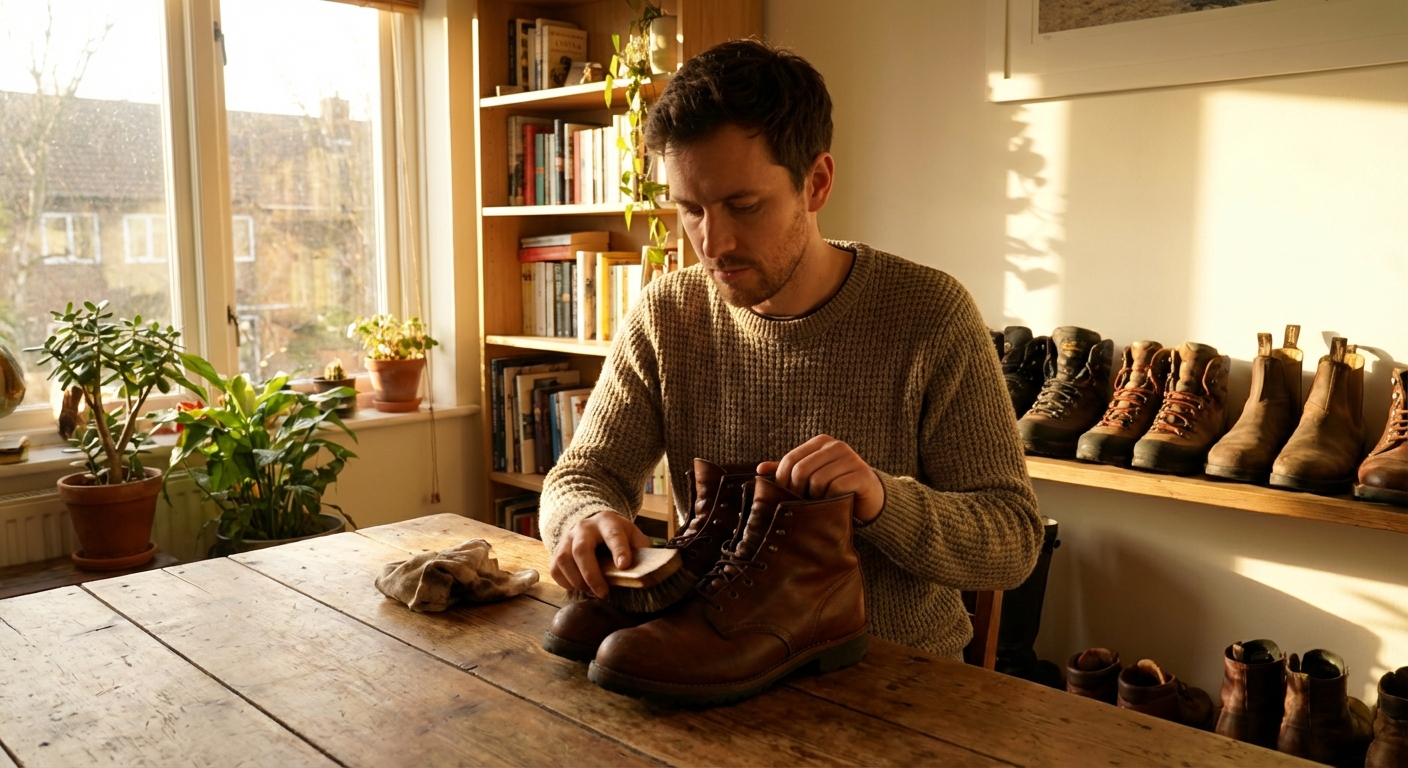
I’ve worn mine to move apartments, walk through slushy city streets, and on a short hike I was wildly underprepared for. They handled all of it.
Best for: rough weather, travel, weekends, casual office environments, standing/walking all day. Key features:- Thicker leather (2.0–2.2mm): Feels stiff at first, but it molds to your foot like armor that decided to be comfy.
- Lug or wedge sole: Vibram (or similar) rubber soles give legit traction and durability.
- Height: 6" is the sweet spot. 8" if you’re actually on a job site or in deep snow.
3. Chelsea Boots – The Minimalist Weapon
I recently rediscovered Chelsea boots after ignoring them for a couple of years. When I tested a sleek suede Chelsea with a slim profile, it instantly upgraded my simple jeans-and-tee outfit into something that felt… intentional.
Best for: dates, nights out, smart-casual looks, travel (easy on/off at security). What matters most:- Shape: A sleek almond or slightly pointed toe reads sharp; a big bulbous toe looks like a cartoon boot.
- Elastic gussets: Should be firm and supportive, not loose and floppy. When that elastic goes, the boot’s basically done.
- Upper material: Suede or smooth leather. Suede looks amazing but needs more care; leather is more forgiving.
How to Choose Quality Boots Without Getting Ripped Off
I used to assume price = quality. Then I bought a $400 “designer” boot with glued (cemented) soles that fell apart in 18 months.
Here’s how I evaluate boots now, in a more systematic way:
1. Check the Construction
- Goodyear welt: Stitched through a welt around the perimeter. Resoleable, water-resistant, usually more expensive but long-term value is solid.
- Blake stitch: Stitch goes through the insole directly. Slimmer and lighter, but a bit less water-resistant.
- Cemented: Sole is glued on. Fine for fashion boots and cheap pairs, but not worth it if you’re paying premium prices.
A 2022 consumer report on footwear durability from the University of Leeds found stitched constructions generally outlast cemented ones in stress-testing, especially under repeated flexing and moisture exposure.
2. Feel the Leather
In my experience, good full-grain leather feels dense but not plasticky, with natural grain variation. If it looks like shiny vinyl and creases in sharp lines when you bend it, it’s probably corrected grain or heavily coated. Those tend to crack rather than age.
Pull-up leather (the kind that shows lighter tones when flexed) can look incredible with wear, but it does show scuffs easily. Great if you like patina; not great if you want a pristine, dressy look.
3. Try Them on at the End of the Day
Feet swell as the day goes on. I learned this the hard way with a “perfect” morning fit that turned into a cramped nightmare by 5 p.m. Wear the socks you’ll actually wear with the boots, and walk at least a few minutes—up and down stairs if you can.
If your heel is violently slipping from the start, or your toes are brushing the front, no amount of “they’ll break in” is going to fix that.
Boot Care: The Routine That Actually Works
I used to think boot care was some mystical ritual involving 14 brushes and a candle. Now my routine is boring but it works.
Step 1: Clean
After a day in rain or dirt:
- Let boots dry at room temperature. No radiators, no hairdryers. Rapid heat can damage leather fibers; the U.S. National Park Service explicitly warns against high-heat drying for leather artifacts because it causes stiffness and cracking.
- Brush off dirt with a horsehair brush. If they’re really muddy, I’ll use a damp cloth and let them dry fully.
Step 2: Condition (But Not Every Week)
When I tested over-conditioning vs. a moderate schedule, the over-conditioned pair got a bit mushy and lost structure.
What works for me:
- Every 1–3 months, depending on wear and climate.
- Use a leather conditioner or cream (not greasy mink oil unless it’s a rugged work boot you don’t mind darkening).
- Apply a small amount with a cloth, let it absorb, buff with a brush.
The American Leather Chemists Association has noted in various technical bulletins that balanced conditioning helps maintain flexibility and resist drying, but over-saturation can weaken fiber structure long-term.
Step 3: Polish and Protect
For dress boots:
- Cream polish to restore color.
- Optional thin wax polish layer on the toe/heel for shine and mild water resistance.
For work boots:
- I usually skip polish and use a conditioner plus a waterproofing spray or wax if I expect serious rain or snow.
Step 4: Rotate and Rest
Boots need downtime. When I wore the same pair five days a week, they broke down fast. Now I rotate at least two pairs. Leather lasts longer when it can dry out and rebound.
Use cedar shoe trees if you can swing it—they help absorb moisture and keep shape. When I started using them, creasing improved noticeably.
When to Resole vs. Replace
The beauty of quality boots is that the upper can often outlive the sole.
Resole when:- The sole is worn thin but the upper leather is still solid and not deeply cracked.
- Stitching on the welt is intact or repairable.
A good cobbler can replace worn soles with new leather or rubber. I’ve paid around $90–$150 for resoles that essentially gave a “new life” to boots I already loved—and they were already broken in to my feet.
Replace when:- The upper is cracked through or torn.
- The structure has collapsed beyond repair.
- The boot was cheaply cemented and the upper isn’t worth saving.
Consumer data cited by the U.S. Environmental Protection Agency highlights that extending a leather shoe’s life by just one year significantly reduces its environmental footprint per wear. So fixing a quality boot isn’t just good for your wallet—it’s mildly heroic for the planet.
Quick Style Pairings That Rarely Fail
These are combos I’ve tested over and over:
- Brown dress boots + dark denim + navy sweater → casual but sharp.
- Black dress boots + charcoal trousers + white OCBD → simple office-ready uniform.
- Rough-out or matte work boots + slim jeans + flannel → weekend, travel, or errands.
- Suede Chelsea boots + black jeans + gray tee + overshirt → easy date-night look.
When in doubt, keep the rest of your outfit simple and let the boots be the statement. It’s hard to go wrong that way.
I’ve learned (expensively) that you don’t need 10 pairs of boots. Two or three well-chosen, well-cared-for pairs can cover almost everything: office, weekends, rain, cold, and the occasional questionable festival.
If you focus on solid construction, good leather, and a basic care routine, your boots stop being disposable fashion and start feeling like old friends that just keep looking better every year.
Sources
- National Park Service – Museum Handbook, Part I: Conserve Opaque Materials - Guidelines on leather care and avoiding heat damage
- American Leather Chemists Association - Technical resources on leather structure and conditioning
- U.S. Environmental Protection Agency – Textiles and Clothing Waste - Data on extending product lifecycles and environmental impact
- Vibram Official Website - Information on rubber sole types and performance
- New York Times – How to Care for Your Shoes - Practical shoe and boot care tips from experts