Costco Holiday Wines for Festive Dinners: A Guide
tely didn’t need. If you’ve ever stood in that Costco wine aisle wondering what actually works for festive dinners, I’ve been right there with you.
Over the last few holiday seasons, I’ve tested (and shared) a ridiculous number of Costco wines at family dinners, Friendsgivings, and quieter New Year’s Eve nights at home. I’ve taken notes, compared vintages, and even checked some labels against critic scores. This guide is exactly what I wish I’d had the first time I tried to stock up for guests.
Why Costco Is Secretly a Great Wine Shop
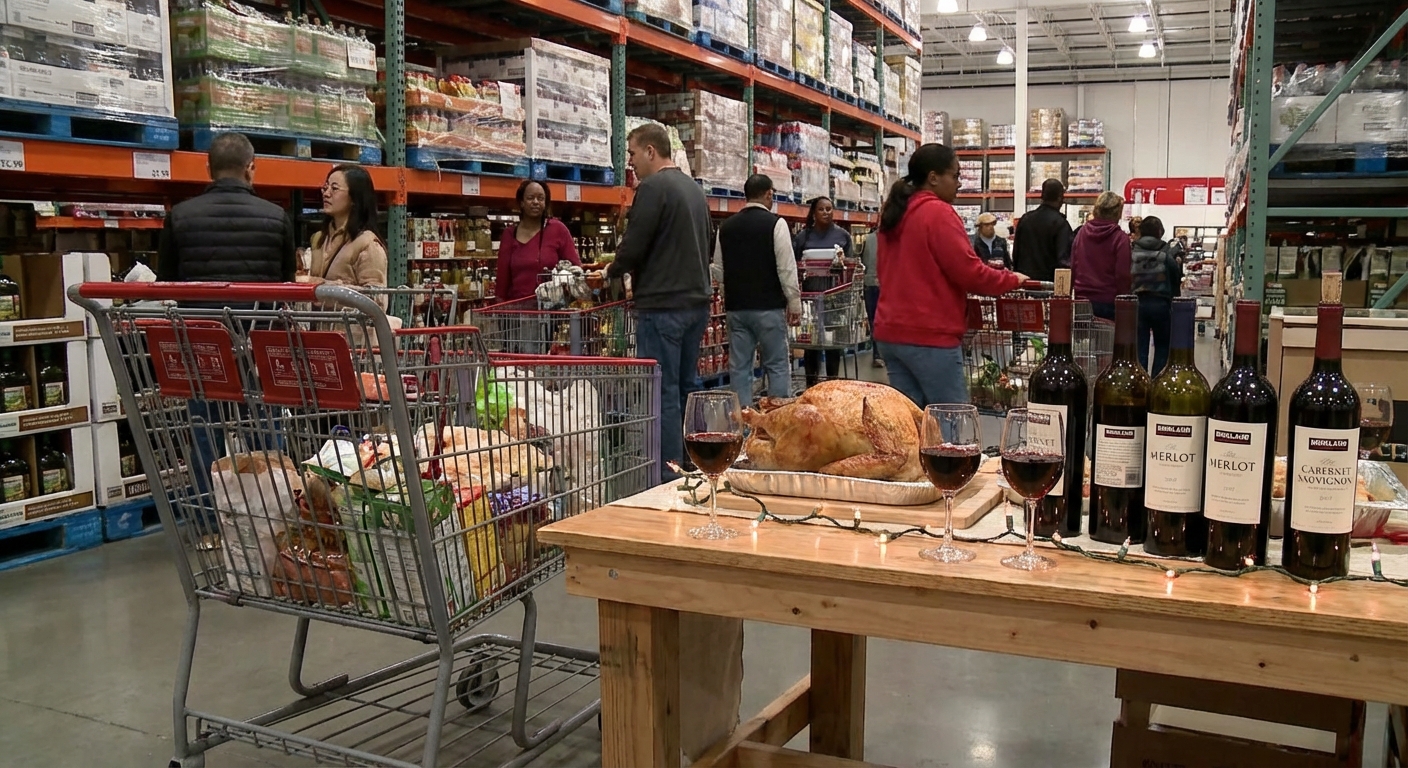
When I first got into wine seriously, I assumed “warehouse club” meant boring bulk bottles. Then I learned Costco is one of the largest wine retailers in the U.S., and it shows in the pricing.
In my experience, here’s what makes Costco stand out for holiday buying:
- Tight margins: Retail analysts regularly note that Costco often operates on a ~14% wine markup, compared with 30–50% at typical wine shops. That’s why you’ll often see the same label $5–$10 cheaper than elsewhere.
- Strong private label (Kirkland Signature): Some Kirkland Signature wines are made by serious, well-known producers that don’t put their name on the front label. I’ve poured a couple of these blind for friends and they guessed the wines were twice the price.
- Seasonal curation: Around November and December, the selection shifts. More Champagne, more Bordeaux, more “giftable” bottles in fancy boxes. I’ve learned to do one focused scouting trip right after Thanksgiving.
The flip side? Selection varies by state and even by store. A Bordeaux I loved one year vanished the next. So I’ll give you categories and styles first, then some specific bottles to look for, but know that your Costco may not have every single label.
Strategy First: How to Shop the Aisle Without Panic
When I tested different buying strategies over a few years, the most stress-free approach looked like this:
- 1–2 sparkling wines for toasts and appetizers
- 1–2 whites (one crisp, one richer)
- 2–3 reds (light-to-medium for picky guests, fuller-bodied for main courses)
- 1 “special” bottle for the serious wine person in your life (there’s always one)
And then I add a simple rule: aim for $12–$25 per bottle for crowd-pleasers, and maybe one nicer bottle in the $30–$50 range if it fits your budget.
I also always snap photos of wines that work well, so the next year I’m not wandering around trying to remember if the label had a gold border or a red crest.
Sparkling Wines: For Toasts, Nibbles, and All the Photos
Sparkling wine is where Costco quietly shines, especially during the holidays.
Kirkland Signature Champagne Brut
I recently poured this blind alongside a well-known non-vintage Champagne that costs twice as much. Four out of five people at the table picked the Kirkland as their favorite.
Why it works:- It’s real Champagne from France, not generic “sparkling wine”
- Classic notes of lemon, brioche, and a bit of green apple
- Enough acidity to cut through rich holiday appetizers (baked brie, smoked salmon, fried canapés)
Prosecco and Cava Options
When I hosted a big Friendsgiving last year, I went with a mix of Kirkland Signature Prosecco and a Spanish Cava.
- Prosecco: More fruit-forward (pear, white peach), great for mimosas or casual sipping.
- Cava: Often a bit more complex, with toasty notes more like Champagne but at a mid-range price.
My rule: Prosecco for brunch or parties, Champagne/Cava for the main dinner or more serious toasts.
Whites: From Salads to Turkey to Creamy Sides
I almost always buy at least two styles of white: one crisp and bright, one richer and rounder. That way, there’s something for the Sauvignon Blanc fan and the “I only drink buttery Chardonnay” person.
Kirkland Signature Sonoma County Chardonnay
When I tested this side by side with a popular $25 California Chardonnay, the Kirkland held its own.
Typical profile:- Medium body
- Notes of baked apple, vanilla, and a touch of oak
- Enough acidity that it doesn’t feel like drinking melted butter
This is fantastic with roast chicken, turkey, or creamy potato gratin. It’s not a minerally Chablis-style Chardonnay—it leans more into that classic American holiday comfort zone.
Upside: Great value, widely available, extremely food-friendly. Downside: If you hate oak, this probably won’t be your thing.Sauvignon Blanc or Albariño
For the lighter option, I’ve had good luck with New Zealand Sauvignon Blancs and Spanish Albariños at Costco.
- New Zealand Sauvignon Blanc: Zippy acidity, notes of lime, passionfruit, sometimes a bit of green bell pepper. Amazing with salads, goat cheese, and herb-heavy dishes.
- Albariño: My secret weapon with seafood. Peach, citrus, sometimes a salty edge that’s beautiful with shrimp, crab, or oysters.
One year I served an Albariño with Dungeness crab for Christmas Eve and it was the pairing everyone kept talking about.
Reds: The Heart of the Holiday Table
Red wine is where people get the most opinionated, so I like to have a range.
Pinots for Turkey and Ham
Costco usually carries a mix of California, Oregon, and sometimes New Zealand Pinot Noir. When I tested pairings with turkey over a couple of years, Pinot won every time.
What to look for:- Oregon Pinot Noir around the $18–$25 mark
- Medium body, red cherry and raspberry, a bit of earthiness
Pinot is perfect for guests who “don’t like heavy reds” but want something more serious than white.
Kirkland Signature Napa Valley Cabernet Sauvignon
If you’ve got prime rib, lamb, or a standing rib roast, this is where Cabernet steps in.
In my experience, the Kirkland Napa Cab is one of the most consistent values on the shelf:
- Dark fruit (blackcurrant, blackberry)
- Structured tannins (that mouth-drying grip that works so well with fatty meats)
- Vanilla, cocoa, and spice from oak aging
I once decanted this for an hour, served it in decent glasses, and didn’t tell anyone what it cost. Nobody guessed it was under $30.
Caveats:- It can be big and bold—if your menu is mostly lighter dishes, it might overpower them.
- Young vintages can be a bit tight; I like to open it early or use a decanter.
A Lighter Red Option: Côtes du Rhône or Chianti
For mixed crowds and mixed menus, I love grabbing a Côtes du Rhône blend or a Chianti Classico.
- Côtes du Rhône (usually Grenache/Syrah-based) gives you red and dark fruit, some spice, medium body. Great with stuffing, roasted vegetables, and charcuterie.
- Chianti Classico (Sangiovese-based) brings cherry, herbs, and bright acidity that pairs well with tomato dishes, lasagna, or Italian-style Christmas Eve spreads.
One year, I accidentally under-ordered turkey and over-ordered lasagna. The Chianti absolutely saved the meal.
The “Wow” Bottle: When You Want to Impress
If you’re shopping for a boss, in-laws, or that friend who casually mentions vineyard names, Costco usually has a few high-end picks.
You might see:
- Classified Bordeaux from left bank appellations
- Well-known Napa Valley Cabernets
- Serious Champagne from producers like Veuve Clicquot, Moët & Chandon, or sometimes grower Champagnes
When I splurge, I look up critic scores quickly on my phone (Wine Spectator, Wine Enthusiast, or similar) and check if the price is meaningfully lower than other retailers. Costco often wins by a noticeable margin on these.
Just be honest with yourself: if your crowd mostly drinks two glasses and mixes it with heavy gravy, that $80 bottle may not be the best use of your budget.
Serving Tips That Make $15 Bottles Taste Like $30
A few small tweaks I’ve tested over the years make a huge difference:
- Chill smartly
- Sparkling: 2–3 hours in the fridge, or 30 minutes in an ice bucket
- Whites: 2 hours in the fridge, then let them warm slightly in the glass
- Light reds (Pinot, Beaujolais): 20–30 minutes in the fridge before serving
- Let big reds breathe
If you don’t own a decanter, just pour the Cabernet or Bordeaux into a large bowl or even into multiple glasses 30–45 minutes before dinner. When I tested side-by-side “just opened” vs “pre-poured,” almost everyone preferred the pre-poured.
- Use the best glasses you have
They don’t need to be expensive, just not tiny, thick hotel-style goblets. A decent bowl shape lets aromas open up, which is half the pleasure.
- Label lightly
I sometimes put a little card near the bottles: “Light & fruity,” “Rich & bold,” “Dry and crisp.” It helps guests pick what they’ll actually enjoy without you having to play tableside sommelier all night.
The Honest Downsides of Costco Holiday Wine Shopping
As much as I rely on Costco for holiday wines, there are a few trade-offs I’ve run into:
- Limited staff guidance: You won’t get a wine shop owner walking you through obscure Austrian varietals. You’re mostly on your own.
- Inconsistent inventory: That Spanish red you loved last year may not be back. Holiday-specific imports especially tend to rotate.
- State/regional restrictions: Alcohol laws vary, so some Costcos don’t offer the full wine range, and certain labels only show up in particular markets.
That’s why I always keep a flexible “type-based” plan (sparkling + light white + rich white + light red + full red) instead of chasing specific labels.
Final Thoughts Before You Hit the Aisle
When I started taking holiday wine a bit more seriously, I thought I needed a perfect pairing for every single dish on the table. After quite a few trial-and-error dinners, my experience is simpler: if you have a good mix of styles, serve them at the right temperature, and open bottles people actually enjoy drinking, you’re already ahead of the game.
Costco happens to make that a lot easier—and cheaper—than most places. Grab a cart, build your lineup, and maybe leave a little room for the 2-pound brie. It does pair suspiciously well with that Kirkland Champagne.
Sources
- Costco Wholesale – Corporate Fact Sheet - Background on Costco’s scale and business model
- Forbes – Why Costco’s Wine Sales Are So Profitable - Analysis of Costco’s wine margins and strategy
- Harvard T.H. Chan School of Public Health – Alcohol: Balancing Risks and Benefits - Evidence-based overview of alcohol’s health impacts
- U.S. Dietary Guidelines 2020–2025 - Government guidelines on alcohol consumption
- Wine Spectator – Holiday Wine Pairing Guide - Expert perspectives on matching wine with festive foods