Delicate Eye Area Care Guide
in a row… after sleeping eight hours. That picture sent me down a rabbit hole of ingredients, techniques, and some very questionable gadgets.
After a lot of testing (and a few stinging-eye disasters), I’ve built a routine that actually works—and doesn’t require 14 products or a celebrity facialist on speed dial.
This is the eye-area guide I wish I’d had when I started.
Why the Eye Area Is So Freakishly Delicate
When I first asked a dermatologist friend why my eyes were aging faster than the rest of my face, she laughed and said: “Because the skin there is dramatic.”
Here’s what she meant, in less sassy terms:
- The skin around your eyes is about 0.5 mm thick—that’s roughly 3–5x thinner than your cheek skin.
- It has fewer sebaceous (oil) glands, so it dries out faster.
- It’s constantly moving: blinking, squinting, rubbing, making that face at your email.
According to the American Academy of Dermatology, repetitive movements + thin skin = earlier fine lines and creasing, especially if you’re not protecting or moisturizing properly.
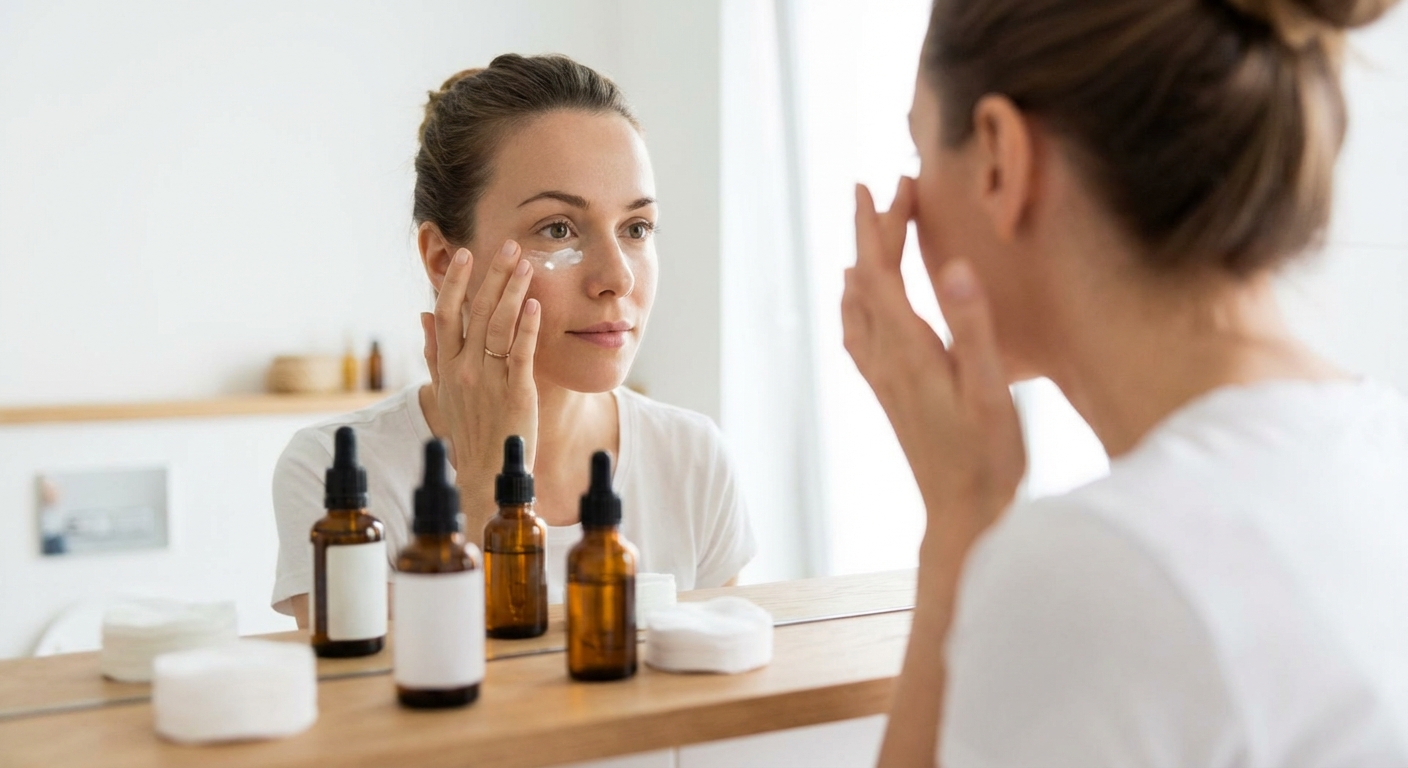
In my experience, once I started treating my eye area as a separate micro-zone instead of just “whatever’s left on my fingers,” the texture and puffiness changed dramatically within a few weeks.
Step 1: Stop the Damage (The Boring Part That Actually Matters)
Before chasing miracle creams, I had to admit I was sabotaging my own eye area.
The sneaky habits that wreck the eye contour
When I tested different lifestyle tweaks on myself over a few months, these made the biggest difference:
- Rubbing my eyes
I used to go to war with my mascara at night. That aggressive swiping stretches the skin and can worsen crepe-y texture. Now I:
- Saturate a cotton pad with a biphasic makeup remover (oil + water)
- Press it on my lashes for ~15 seconds
- Gently slide it off instead of scrubbing
- Sleeping face-down or on a rough pillowcase
I didn’t believe this until I woke up with literal pillow-crease art under one eye. Switching to a silk or satin pillowcase reduced my morning under-eye lines and puffiness more than any eye cream.
- Unprotected sun exposure
When I’m lazy with sunscreen, my crow’s feet remind me about it two weeks later. UV radiation breaks down collagen and elastin, especially where skin is thin.
What finally stuck for me was making sunglasses non-negotiable. Big frames + UV400 lenses = less squinting and better protection.
Step 2: Build a Smart, Simple Eye Routine
I’ve tested fussy eight-step routines and minimalist one-product routines. The sweet spot—for me and for most clients I’ve advised—is 3 focused steps twice a day.
1. Gentle cleanse (AM & PM)
I used to drag my regular foaming cleanser over my eyes and wonder why they felt tight and raw.
Now I:
- Use a fragrance-free, pH-balanced cleanser on my whole face
- Avoid letting foam sit around my eyes for long
- Use a separate gentle eye makeup remover if I’m wearing waterproof formulas
Look for phrases like ophthalmologist-tested and safe for contact lens wearers. Those usually signal lower irritation potential.
2. Treat (The fun, nerdy ingredient part)
This is where your eye routine gets powerful. When I tested ingredients one by one (yes, like a human guinea pig), these consistently pulled their weight:
#### For fine lines and texture: low-strength retinoids
Retinoids are the gold standard for collagen support. But they’re also the fastest way to torch your eye area if you go too hard.
What worked for me:
- Starting with a retinaldehyde or retinol eye cream 1–2 nights per week
- Pea-sized amount for both eyes, applied around the orbital bone, not on the lash line
- Slowly building up to 3–4 nights per week
Clinical studies (including a 2015 review in Clinical Interventions in Aging) show retinoids stimulate collagen production and improve fine lines over several months—not days.
Caution: If your eye area stings, peels like crazy, or gets red and angry, you’re doing too much. I’ve been there. Scaling back and sandwiching with a bland moisturizer saved me.#### For dark circles: a reality check + targeted actives
Dark circles are tricky because they’re usually a combo of:
- Pigmentation (especially in deeper skin tones)
- Vascular show-through (thin skin showing blue/purple vessels)
- Shadowing from volume loss
When I tested brightening creams on myself, they helped with pigment but did nothing for hollowing or bone structure (because no cream can do that).
Ingredients that gave me visible improvement:
- Vitamin C (ascorbic acid or derivatives) – helps with pigment and overall brightness
- Niacinamide – great for uneven tone and barrier support
- Caffeine – mild vasoconstrictor; can temporarily reduce puffiness and bluish tone
I’ve had the best luck with a lightweight vitamin C serum tapped gently under the eyes in the morning, followed by sunscreen.
#### For puffiness: circulation & behavior first
I once blew money on a “lymph-draining cryo eye wand” that did… approximately nothing long-term.
What actually helped my morning puffiness:
- Reducing salty late-night snacks (unsexy, yes, but effective)
- Propping my head slightly higher at night
- Using cool compresses (chilled spoons or reusable gel masks) for 1–2 minutes
- Gentle lymphatic drainage massage with my ring finger, tapping from the inner corner outward along the orbital bone
Caffeine eye gels and peptides give me a temporary smoothing effect, which is great before makeup or events, but they’re not magic.
3. Protect (Non-negotiable step)
If I had to pick only TWO things for my eye area, I’d keep:
- Moisturizer
- Sunscreen
#### Do you really need a separate eye cream?
Honestly? Not always. In my experience:
- If your regular moisturizer is fragrance-free, non-irritating, and not too heavy, you can absolutely use it around the orbital bone.
- I personally prefer a dedicated eye product when I’m using actives (retinoids, vitamin C) because eye formulas tend to be tested for that delicate area.
Look for:
- Ceramides, glycerin, hyaluronic acid for hydration
- No strong fragrance or essential oils
#### Sunscreen around the eyes
This was the hardest habit I had to build, but it’s the one I see the biggest payoff from in photos.
What works for me:
- Mineral (zinc/titanium) sunscreen around the eyes—chemical filters sting my eyes like crazy
- Applying very close, but not on, the lash line
- Using SPF lip balm on the lids if I’m super sensitive there
There’s also solid evidence that UV protection + sunglasses dramatically slows photoaging around the eyes.
What Actually Worked for Me (And What Didn’t)
Products and habits that made a clear difference
Over the last 18 months, these gave me the most noticeable, measurable improvement (yes, I took before-and-after pics):
- Consistent SPF 30+ daily, including around the eyes
- Low-dose retinaldehyde eye cream 3x/week at night
- Silk pillowcase + side/back sleeping instead of face-smushing
- Cool compress + caffeine gel on very puffy mornings
- Hydrating, fragrance-free eye cream under concealer (my concealer creases way less now)
Within about 10–12 weeks, the fine “crinkle lines” under my eyes looked softer, and the area didn’t look as perpetually dehydrated on camera.
Things that were overhyped for me
Not saying these never work—just being honest about my personal flops:
- 24K gold eye patches: Felt luxurious, great for a selfie, did about the same as a basic hydrogel patch from the drugstore.
- Random Amazon LED eye masks: The science on red light is promising, but quality and wavelength matter. The cheap one I tested was more “expensive nightlight” than treatment.
- Micro-needling pens near the eyes at home: Hard pass. The risk of improper depth and infection was not worth the tiny texture change I saw.
When to See a Pro (Because Creams Have Limits)
There’s a point where skincare hits its ceiling.
In my experience—and in conversations with derms and cosmetic doctors—topicals are fantastic for:
- Mild to moderate fine lines
- Texture and dryness
- Mild pigment and dullness
They’re less effective for:
- Deep hollows (tear troughs)
- Significant skin laxity
- Very prominent under-eye bags
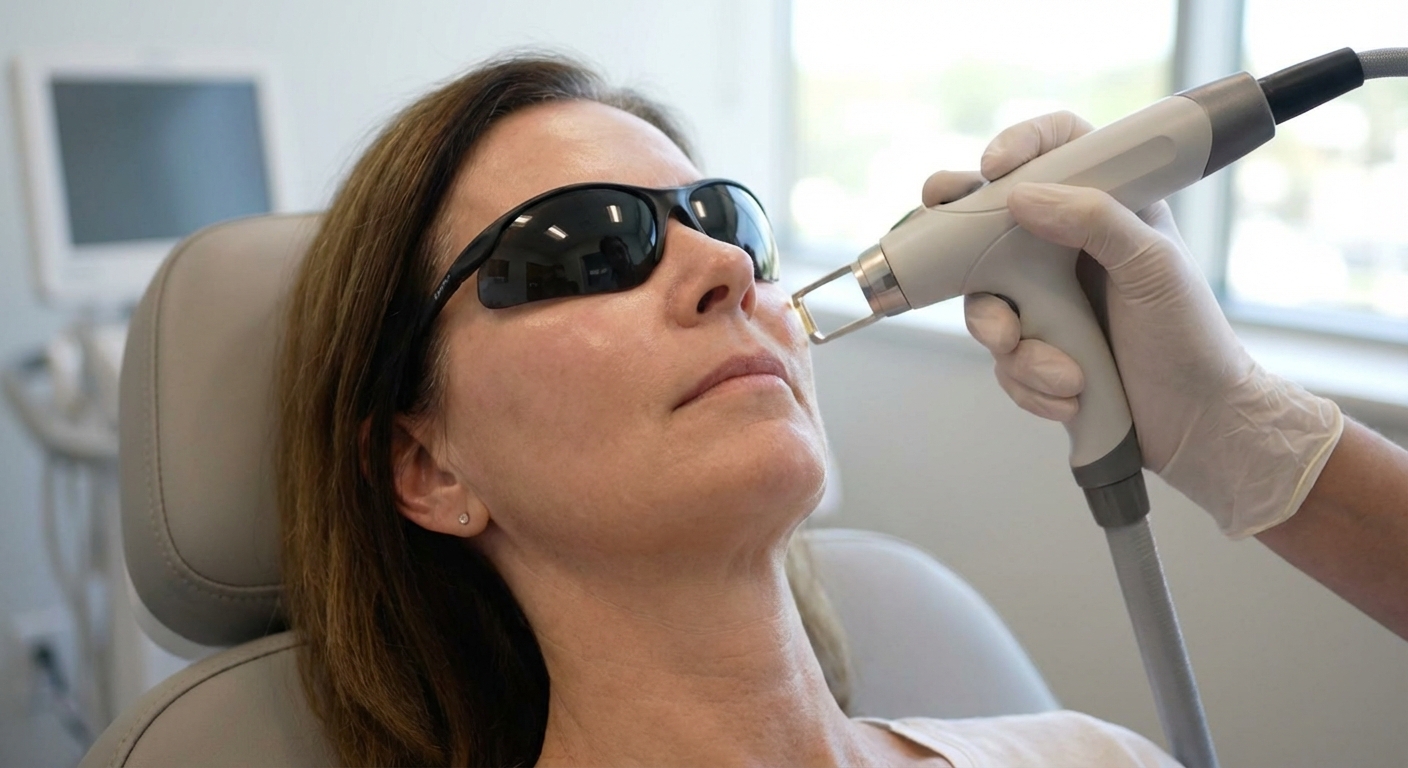
That’s when in-office options like hyaluronic acid fillers, fractional lasers, radiofrequency microneedling, or lower blepharoplasty surgery come into play. These should only be done by qualified professionals—preferably board-certified dermatologists or plastic surgeons.
I haven’t personally gone the filler or surgery route yet, but I’ve seen friends get subtle, natural results when they chose conservative providers. On the flip side, I’ve also seen what happens when someone lets a “discount injector” experiment on their tear troughs. Don’t do that to your face.
How to Build Your Eye Routine in 60 Seconds
If you’re feeling overwhelmed, here’s the cliff-notes version of what I’d suggest based on what’s worked for me and what’s backed by research:
Morning- Gentle cleanse
- Optional: vitamin C or brightening serum around the orbital bone
- Lightweight hydrating eye cream or your regular moisturizer
- Mineral sunscreen around the eyes + sunglasses
- Thorough but gentle makeup removal (no scrubbing)
- Hydrating eye cream or moisturizer
- 2–4 nights/week: low-dose retinoid around the orbital bone (if your skin tolerates it)
Layer on top of that:
- Better sleep and less salt for puffiness
- Silk pillowcase and non-smushy sleep position
- No aggressive rubbing, ever
Eye care doesn’t have to be fussy or wildly expensive. When I focused on consistency + smart ingredients + not abusing my skin, my delicate eye area stopped being the part of my face I wanted to crop out of photos.
And honestly, that alone was worth the effort.
Sources
- American Academy of Dermatology – How to apply eye cream - Application tips and basic guidance on caring for the eye area
- Mayo Clinic – Wrinkles: Symptoms and causes - Explains how aging, UV exposure, and facial movements contribute to fine lines
- National Institutes of Health – Topical retinoids in the management of photodamaged skin - Review of retinoids and their role in collagen production and wrinkle improvement
- Harvard Health – The science behind dark circles under the eyes - Breaks down the multiple causes of dark circles and what can realistically help
- Johns Hopkins Medicine – Protecting your skin from the sun - Evidence-based advice on sun protection, including around the eyes