Discover Slow Cooker Recipes for Busy Weeknights and Meal Prep
has basically saved my life.
I used to think slow cookers were just for your grandma’s pot roast and mystery church suppers. Then I started testing recipes for busy weeknights and meal prep, and I realized: this thing is a quiet, countertop magician.
When I tested a full week of slow cooker dinners and lunches—no takeout, no last‑minute scrambling—my grocery bill dropped by about 25%, and I spent maybe 20 minutes a day actually cooking. The rest of the work happened while I answered emails, commuted, or binge‑watched a show.
Let me walk you through the recipes, tricks, and honest pros/cons that actually make slow cookers worth the counter space.
Why Slow Cookers Work So Well for Weeknights
The slow cooker’s superpower is hands-off, low-and-slow cooking.
- It uses moist heat at relatively low temperatures (often between 170°F–280°F / 77°C–138°C), which is ideal for breaking down collagen in tougher cuts of meat.
- That collagen turns into gelatin, giving you silky sauces and ultra-tender meat without babysitting a pot.
When I first learned this from a food science book by Harold McGee, a lot of classic slow cooker advice suddenly made sense—like why chuck roast is better than lean sirloin here, or why chicken thighs beat breasts most of the time.
Is it perfect? Nope.
Pros:- Almost zero active cooking time
- Great for batch cooking and freezing
- Forgiving with cheaper cuts of meat
- Low learning curve
- Some recipes can turn mushy if you use the wrong ingredients
- Not everything benefits from long, wet cooking (looking at you, boneless chicken breasts)
- Older models can run hotter than advertised, so you might need to experiment
1. Set-and-Forget Weeknight Workhorse: Slow Cooker Salsa Chicken
This is the one recipe I recommend to absolutely anyone who’s “slow cooker curious.” When I tested this for the first time, I meal-prepped lunches for four days in under 10 minutes of actual work.
Basic formula (no need to measure obsessively):- 2–3 lbs (900g–1.3kg) boneless, skinless chicken thighs
- 1 jar (about 16 oz / 450g) salsa (I like a chunky tomato salsa or salsa verde)
- 1 tsp cumin + 1 tsp smoked paprika
- ½ tsp salt (adjust if salsa is salty)
- Optional: 1 can black beans (rinsed), 1 cup corn
- Dump everything into the slow cooker.
- Stir once, put the lid on.
- Cook on LOW 6–7 hours or HIGH 3–4 hours.
- Shred with two forks directly in the pot.
You get juicy, flavorful shredded chicken you can:
- Stuff into tacos or burritos
- Pile onto rice or quinoa bowls
- Serve over greens for a warm salad
Chicken thighs have more fat and connective tissue than breasts, so they stay juicy under long cooking. In my experience, using breasts on low for more than 4 hours often turns them stringy and dry.
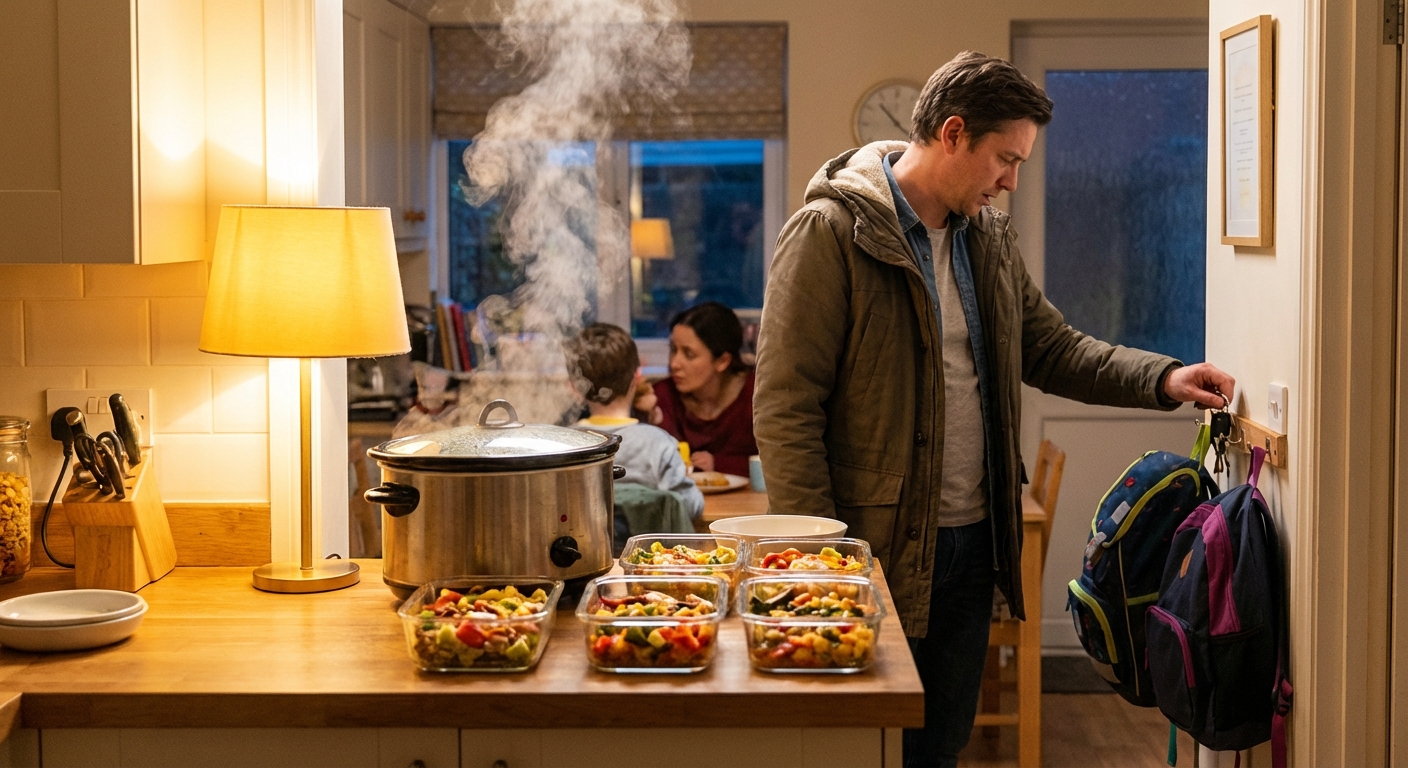
Meal prep tip:I portion this into 1–1½ cup containers and freeze half. It reheats shockingly well, especially with a squeeze of lime and a bit of fresh cilantro.
2. Cozy Comfort for Cold Nights: Hearty Slow Cooker Lentil & Veggie Stew
I recently discovered that slow cookers absolutely excel at legumes. They soak up flavor during long cooking, and you don’t have to watch a simmering pot for an hour.
Here’s the stew that converted even the “I need meat in every meal” person in my life:
Core ingredients:- 2 cups dry brown or green lentils (rinsed)
- 1 large onion, chopped
- 3 carrots, chopped
- 2 celery stalks, chopped
- 3 cloves garlic, minced
- 1 can (14–15 oz) diced tomatoes
- 4 cups low-sodium vegetable or chicken broth
- 1–2 tsp smoked paprika
- 1 tsp dried thyme or Italian seasoning
- Salt and pepper to taste
- Add everything to the slow cooker.
- Stir, cover, and cook on LOW 6–8 hours or HIGH 3–4 hours.
- Near the end, taste and adjust salt and acidity (a splash of red wine vinegar or lemon brightens it up).
- Lentils are packed with fiber and plant-based protein.
- This stew thickens naturally as it cools, so it packs really well.
- It tastes better the next day; the flavors meld.
Nutritionally, lentils are backed by a ton of data—studies have consistently linked higher legume intake to improved heart health and lower risk of chronic diseases. The USDA and many nutrition researchers highlight pulses (lentils, beans, chickpeas) as key players in healthy eating patterns.
I portion this into glass containers with a scoop of brown rice or crusty bread on the side. It’s my go-to “I have five minutes between meetings” lunch.
3. Meal-Prep Hero: Slow Cooker Shredded Beef for the Entire Week
When I tested slow cooker shredded beef for the first time, I accidentally created a monster—in the best way. One 3–4 lb chuck roast turned into:
- Tacos for Monday
- Beef bowls for Tuesday
- Stuffed baked potatoes on Wednesday
- Freezer emergency portions for the following week
- 3–4 lb (1.3–1.8kg) beef chuck roast
- 1 onion, sliced
- 4 cloves garlic, smashed
- 1 cup beef broth
- 1–2 tbsp tomato paste or ½ cup crushed tomatoes
- 1 tsp each: cumin, chili powder, smoked paprika
- 1–2 tsp salt (depending on broth)
- Optional but recommended: Sear the roast in a hot pan for 3–4 minutes per side. I skipped this once and the flavor was noticeably flatter.
- Layer sliced onions and garlic at the bottom of the slow cooker.
- Place the roast on top, add broth, tomato, and spices.
- Cook on LOW 8–10 hours.
- Shred, then let it sit in the juices on “warm” for at least 20 minutes.
Chuck is well-marbled with fat and connective tissue that benefit from low-and-slow cooking. Leaner cuts like round often end up dry and stringy.
How I stretch it through the week:- Day 1: Tacos with tortillas, cabbage slaw, and salsa
- Day 2: Rice bowls with roasted veggies and avocado
- Day 3: Over baked potatoes with a little cheese and Greek yogurt
- Day 4: Freeze leftovers in 1–2 cup portions
This is a classic example of batch cooking that dietitians and meal prep coaches rave about—one main protein, multiple different “assemblies” so you don’t feel like you’re eating the same thing on repeat.
4. Breakfast Made at Night: Slow Cooker Overnight Oats
The first time I tested slow cooker oats, I woke up to the smell of cinnamon and thought: this is what being a functioning adult must feel like.
What I use:- 1 cup steel-cut oats (not rolled oats—they turn mushy)
- 4 cups water or a mix of water and milk
- 1–2 tbsp maple syrup or honey
- 1 tsp cinnamon
- Pinch of salt
- Optional: chopped apples, raisins, or frozen berries
- Grease the slow cooker insert lightly (oats can stick).
- Add all ingredients and stir.
- Cook on LOW 6–7 hours overnight.
- In the morning, stir well, add more liquid if needed.
Portion into jars or containers and refrigerate up to 4–5 days. Add toppings like nuts, seeds, yogurt, or fresh fruit when serving.
Pro tip from hard experience: don’t use the “keep warm” setting more than 1–2 hours after cooking. Oats can overcook and get gluey.
Safety, Food Quality & What Doesn’t Work So Well
To keep this honest: slow cookers are amazing, but not magic.
Food safety:- The USDA has guidance on safe minimum internal temperatures—poultry should reach 165°F (74°C), ground meats 160°F (71°C). A cheap instant‑read thermometer is your best friend.
- Don’t put frozen large chunks of meat directly into the slow cooker. Thaw in the fridge first. Frozen meat can stay too long in the “danger zone” (40–140°F / 4–60°C).
- Delicate veggies like zucchini, peas, and spinach: add them near the end, or you’ll get mush.
- Pasta: tends to go soft and mushy; better to cook separately.
- Boneless, skinless chicken breasts: on low all day = stringy and dry in my experience. If you must use them, cook on HIGH for a shorter time (2½–3 hours) and check early.
I like balancing the hype with reality: a slow cooker won’t fix terrible ingredients or bad recipes, but used well, it makes eating decently on busy days way easier.
Practical Tips to Make Your Slow Cooker Actually Work for You
These are the little tweaks that made the biggest difference for me:
- Prep the night before. I often chop onions, carrots, and garlic, and even measure spices into a small container. In the morning, I just dump everything in.
- Use liners or soak immediately. If you hate scrubbing, slow cooker liners help. If you skip them, fill the insert with hot soapy water as soon as you serve.
- Layer smartly. Dense veggies (carrots, potatoes) go at the bottom. Meats usually sit on top so they cook evenly.
- Don’t lift the lid constantly. Every time you do, you release heat and extend the cooking time by 15–20 minutes.
- Batch and freeze. Many slow cooker recipes freeze great—soups, stews, shredded meats. Freeze in flat bags or small containers.
When I finally committed to doing one big slow cooker recipe on Sunday and one mid-week, I felt like I’d upgraded my life without learning any new “chef skills.”
Why This Approach Is So Sustainable
From a bigger-picture angle, slow cookers quietly hit a lot of boxes:
- They use relatively low energy compared to an oven running for hours.
- They work fantastically with budget-friendly ingredients like beans, lentils, and tougher cuts of meat.
- They naturally support meal prep, which is linked in multiple studies to better diet quality and less reliance on ultra‑processed foods.
And honestly: they lower the friction between you and a real meal. When dinner is basically “reheat what Past You kindly made,” it’s a lot easier to skip the drive‑thru.
If you’ve got a slow cooker gathering dust in a cabinet, consider this your sign to drag it out and test just one of these:
- Salsa chicken for easy protein
- Lentil stew for cheap, filling lunches
- Shredded beef for endlessly remixable dinners
- Overnight oats for stress-free mornings
The best part? You don’t need to cook more. You just need to let the slow cooker do the work while you live your very busy life.
Sources
- USDA Food Safety and Inspection Service – Slow Cookers and Food Safety – Official guidance on safe slow cooker use and temperatures.
- Harvard T.H. Chan School of Public Health – Beans and Lentils – Evidence-based overview of lentils and legumes in healthy diets.
- Cleveland Clinic – Meal Prepping: Your Ultimate Guide – Expert tips on meal prep and its benefits for diet and lifestyle.
- BBC Good Food – Slow cooker tips – Practical advice and best practices for slow cooking.
- New York Times Cooking – Slow Cooker Recipes Collection – Curated set of tested slow cooker recipes and techniques.