Door Design Options for Interiors and Entryways
m. The whole apartment felt cheaper than it actually was. When I finally renovated my own place, changing the doors did more for the vibe than repainting the walls.
So if you’re staring at that builder-grade door wondering why your space still feels “meh” after new furniture and paint… yeah, I’ve been there.
Let’s walk through the main door design options for interiors and entryways—what actually works, what’s overrated, and what I’d choose again after testing this stuff in real homes.
Solid-Core vs Hollow-Core: Start With What You Can’t See
The first big fork in the road: what’s inside the door.
In my experience, people obsess over panel styles and colors and totally forget the core. But the core affects sound, weight, security, and even how “expensive” a door feels.
Hollow-core doors
These are what you typically get in budget builds and rentals: a thin wood or MDF skin over a honeycomb cardboard core.
- Very affordable
- Lightweight (easy to install, easy on hinges)
- Fine for closets or rarely used rooms
- Poor sound insulation (I could hear every word of my neighbor’s phone calls)
- Feel cheap when you close them
- Dent easily
A 2019 report from the National Association of Home Builders (NAHB) actually lists hollow-core as the most common interior door type in new construction primarily because of cost and ease of installation.
Solid-core doors
These have a solid composite or wood-based core. Not pure solid wood, but much denser than hollow.
When I swapped just two hollow bedrooms doors for solid-core ones in a small condo, the noise difference was ridiculous—my partner could finally take Zoom calls without me hearing every client’s voice.
Pros:- Much better sound reduction (some rated around STC 30–34, depending on construction)
- Heavier, more substantial feel
- More durable
- More expensive
- Heavier to hang (I learned that the hard way trying to DIY one solo—don’t)
If your budget is tight, my honest recommendation: keep hollow-core for closets, go solid-core for bedrooms, home offices, and bathrooms. You’ll feel the upgrade every single day.
Panel Styles: The “Face” of Your Interior Doors
Once you pick the core, the next decision is style. This is where people have fun—or totally clash with their home’s architecture.
Flat / flush doors
I used to think flat doors were boring… until I saw them in a minimalist apartment with tall ceilings and black hardware. Suddenly they looked intentional, not cheap.
Best for:
- Modern, mid-century, minimalist interiors
- Spaces where art and furniture are the stars
2-panel, 3-panel, and 5-panel doors
Classic raised or recessed panel doors are everywhere for a reason: they play nicely with almost any décor.
- 2-panel (arched or squared): Slightly traditional, great in farmhouses or transitional homes.
- 3-panel: A bit more modern but still timeless.
- 5-panel (often horizontal): I used these in a 1920s house reno—felt period-appropriate but updated.
Insider tip: If you’ve got chunky window trim and baseboards, a paneled door usually looks more cohesive than a dead-flat one.
Shaker-style doors
Technically a type of recessed panel, but with clean, straight lines. If I had to pick one “can’t go wrong” style for resale, I’d pick a white Shaker door with black or brushed hardware.
It’s like the white sneaker of doors—works with almost anything.
Sliding, Pocket, and Barn Doors: Space-Savers (and Statement Pieces)
When I tested sliding and barn doors in a small townhouse project, I discovered they’re not just about aesthetics—door swing eats floor space.
Pocket doors
These slide into the wall cavity and completely disappear.
Where they shine:- Tight bathrooms and laundry rooms
- Walk-in closets
- Between a kitchen and dining room when you sometimes want separation
- Zero swing space
- Clean look
- Trickier and pricier to install (you need the right wall structure)
- Harder to repair if hardware fails inside the wall
I only recommend pocket doors for long-term homes or major renos where you’re already opening walls. Retrofitting one just for the aesthetic usually isn’t worth the mess.
Sliding surface-mount doors
These ride on a track in front of the wall instead of disappearing into it.
Good for:
- Condos and apartments where you can’t modify walls much
- Wide openings between rooms
Downside: You lose some wall space along the track since artwork or shelving can’t sit flush there.
Barn doors
Barn doors had their Pinterest moment, and I’ll be honest—I’ve seen them overused. But when they’re done with restraint, they can be fantastic.
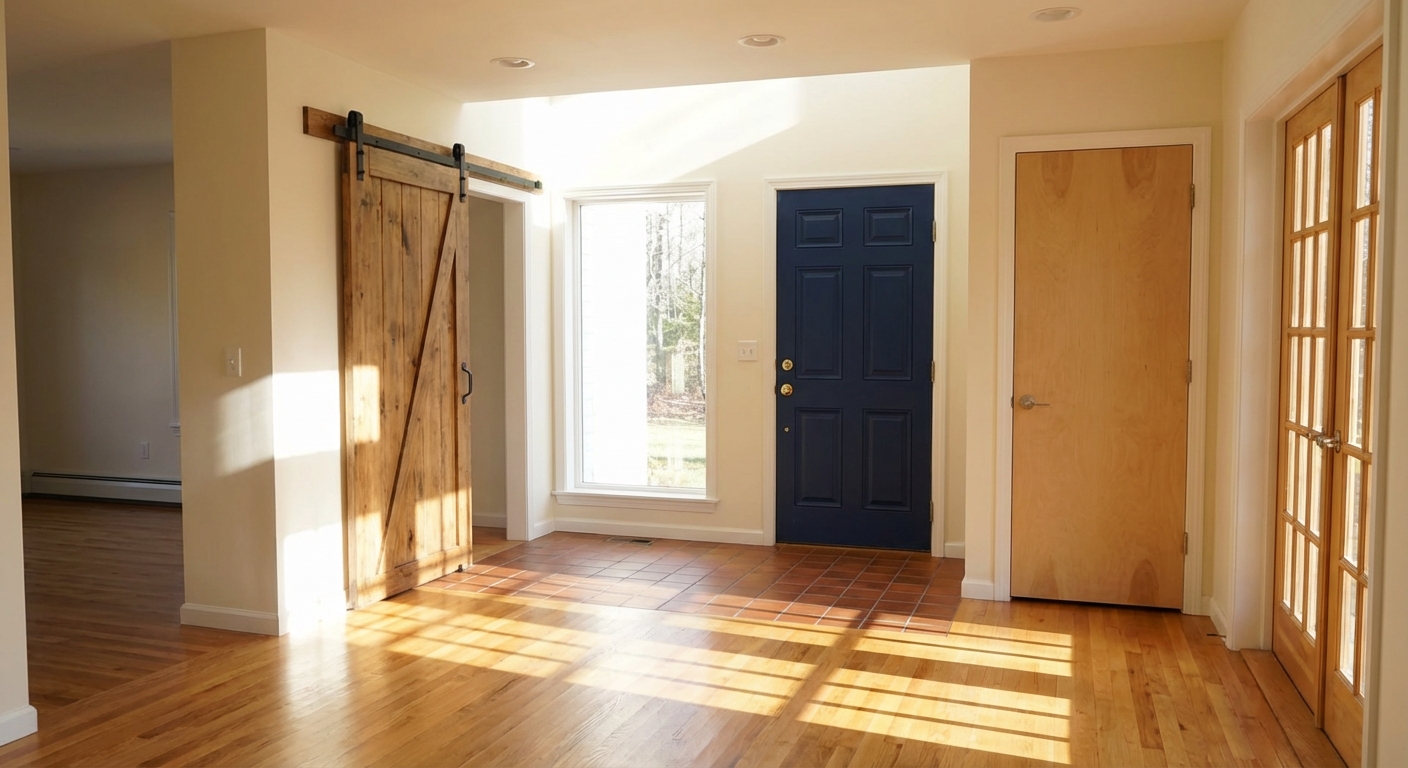
When I installed a simple stained wood barn door for a basement media room, it instantly made the space feel designed, not just “finished.”
Pros:- Big visual impact
- Great for wide openings
- Easier to DIY than pocket doors
- Limited sound and light blocking (don’t use for bathrooms if privacy is key)
- Trend-sensitive—some styles may date quickly
If you want staying power, avoid overly distressed “farmhouse TV set” styles and stick with clean, solid wood or painted panels.
Interior Glass Doors: Light Without Losing Separation
I recently tested glass doors between a dark hallway and a home office, and the difference in natural light was enormous. I didn’t even need the hallway light on during the day anymore.
French doors
Two doors with multiple glass lites—classic and charming.
Best for:
- Home offices
- Dining rooms
- Sunrooms
Choose clear glass if privacy isn’t an issue, or frosted/reeded glass if you want light but don’t want to see every cable and paper pile.
Single glass panel doors
These are perfect when you want a modern look with maximum light. I used a full-lite frosted glass door on a bathroom in a loft with zero windows in the hallway—it felt like the space finally exhaled.
Pros:- Brighten dark interiors
- Make small spaces feel larger
- Less sound blocking than solid doors
- You’ll see fingerprints more (this is real life, not a catalogue)
Entry Doors: Where Curb Appeal Meets Security
Your front door has to do a lot: look good, keep you safe, keep weather out, and handle daily abuse.
When I replaced an old, warped wood entry door with a modern fiberglass one, the draft issue all but disappeared. My winter heating bill actually dropped—nothing dramatic, but noticeable enough that I checked the utility statement twice.
Common entry door materials
1. Solid woodFeels luxurious, customizable, and ages beautifully if you maintain it.
- Pros: Warm, natural look; easy to refinish; high-end feel
- Cons: Can warp or crack with moisture and sun; needs regular sealing or painting
I love wood doors for covered porches or milder climates. On a fully exposed south-facing wall in a harsh climate, they’re high-maintenance.
2. FiberglassThe quiet hero of front doors. The U.S. Department of Energy notes fiberglass doors often have better insulation than solid wood, especially models with foam cores.
- Pros: Excellent energy efficiency; very low maintenance; can mimic wood grain
- Cons: Cheap versions can look plasticky; harder to repair if severely damaged
For most suburban homes, a good-quality fiberglass door is the practical sweet spot.
3. SteelOften the most secure-feeling option.
- Pros: Strong, relatively affordable; good for security; resistant to warping
- Cons: Can dent; can rust if finish is compromised; feels colder to the touch
I’ve used steel doors on side and garage entry doors more than front doors—they do their job quietly without demanding attention.
Security, Hardware, and Smart Features
A good door with bad hardware is like a fancy car with bargain tires.
When I upgraded just the locks and strike plates on my front door (without changing the door itself), the police officer who did a neighborhood safety walkthrough actually commented that the reinforced strike plate was one of the best simple upgrades homeowners skip.
Hardware basics that matter
- Solid metal handles and hinges: No hollow, ultra-light hardware if you want longevity.
- Reinforced strike plate: Longer screws (2.5–3 inches) that bite into the wall stud, not just the jamb.
- Deadbolt: Look for ANSI/BHMA Grade 1 or 2 deadbolts for real security.
Smart locks
I resisted smart locks at first—felt gimmicky. Then I locked myself out for the third time at a client project and finally installed one on my own place.
Upsides:- Keyless entry
- Temporary codes for guests, cleaners, or dog walkers
- Activity logs on some models
- Batteries to maintain
- Tech can glitch (I always keep a physical backup key)
Brands like Schlage, Yale, and August are widely used, and security experts often suggest sticking with known brands that undergo third-party testing.
Color and Finish: Where Personality Sneaks In
I used to default to “just paint it white” until I tried a deep navy entry door with brass hardware on a boring brick façade. Neighbors literally stopped to ask about it.
Interior door colors
- White / off-white: Safe and timeless but can feel flat if everything else is also white.
- Soft greige or taupe: Warmer, hides fingerprints a bit better.
- Bold colors (charcoal, deep green, navy): Great for modern or eclectic spaces.
If you’re nervous, paint just one feature door—a pantry, a home office door, or a hallway linen closet—as a test.
Exterior door colors
According to a 2022 Zillow paint color analysis, certain door colors (like black and charcoal) have actually been associated with slightly higher perceived home values in buyer surveys. That doesn’t mean you’re locked into black, but it does show buyers notice doors.
Just remember: exterior paint needs to be rated for UV exposure and weather, and dark colors on full-sun doors will fade faster.
How I’d Prioritize If You’re On a Budget
If I had to rank door upgrades after doing this in multiple homes, I’d go in this order:
- Solid-core doors for bedrooms and offices – daily comfort and privacy.
- Front door upgrade (or at least weatherstripping and hardware) – security + energy + curb appeal.
- One statement door – maybe a glass office door or a bold-color entry to shift the whole feel.
- Consistent hardware finish throughout – brushed nickel, black, brass; pick one and repeat.
Not every door needs to be a showstopper. But even a few smart upgrades can nudge a home from “fine” to “wow, this feels put together.”
If you’re standing there staring at fifteen options on a showroom wall, remember: start with function (core, material, privacy, space) and then layer on style.
Your future self, closing a solid, quiet, good-looking door at the end of a long day, will thank you.
Sources
- U.S. Department of Energy – Energy-Efficient Doors - Overview of materials, insulation, and performance for exterior doors.
- National Association of Home Builders – 2019 What Home Buyers Really Want - Data on common materials and buyer preferences (registration or purchase may be required).
- Consumer Reports – Buying Guide: Entry Doors - Comparative insights on wood, fiberglass, and steel entry doors.
- Zillow – 2022 Paint Color Analysis - Research on how door and paint colors influence buyer perceptions.
- Yale University – Residential Door Hardware Standards (via Yale Locks & Hardware) - Example of smart lock offerings and security-focused design from a major manufacturer.