Elegant Church Suits for Women Guide
actually paused, smiled, and whispered, “Now that’s a look.” I’d spent weeks obsessing over fabric, hemlines, and jackets, and in that moment, it felt absolutely worth it.
If you’ve ever stood in front of your closet on a Sunday morning thinking, “Everything here is either too casual, too flashy, or too dated,” this guide is for you.
I’ve spent years testing brands, comparing fabrics, and yes, making a few truly tragic fashion mistakes in the pews. Here’s what I’ve learned about choosing elegant church suits for women that feel respectful, stylish, and completely you.
What Actually Makes a Church Suit “Elegant”?
When I started upgrading my church wardrobe, I noticed something: the suits that looked expensive and put-together all shared a few things in common.
1. Clean, structured linesIn my experience, elegance in churchwear isn’t about being extra; it’s about being intentional. A well-defined blazer, a slightly nipped-in waist, and a straight or A-line skirt instantly elevate the look. When I tested boxy, unstructured jackets, they always photographed frumpy in post-service photos.
2. Quality fabric that doesn’t scream or shineI learned the hard way that super-shiny polyester under church lighting can make you look like a disco ball. Medium-weight crepe, wool blends, ponte knit, or a high-quality polyester blend drape better and wrinkle less—especially after sitting through a long sermon.
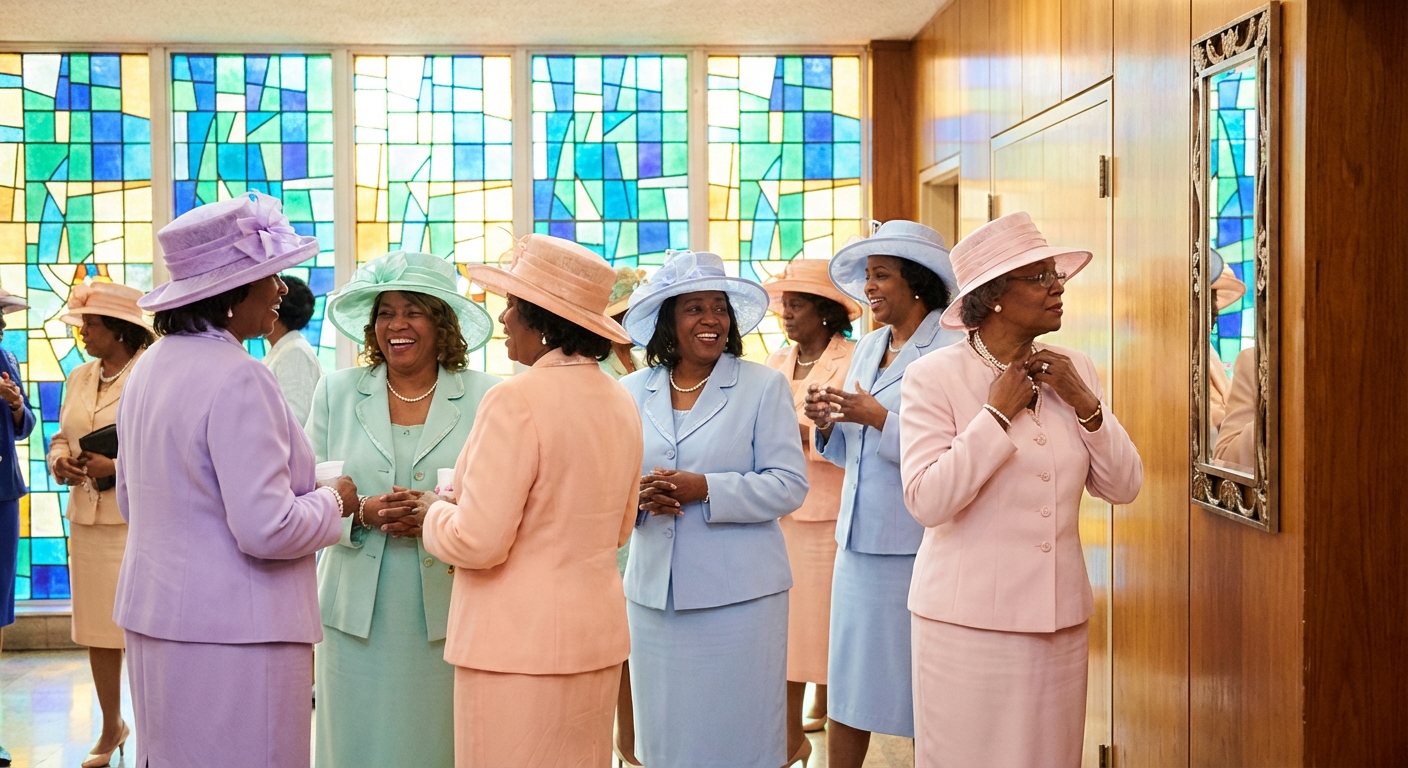
Most churches lean toward modesty, but that doesn’t mean hiding your entire body in a rectangle. In my experience, elegance comes from balance: a modest neckline, knee-length skirt, and tailored fit that follows your shape without clinging.
Decoding Dress Codes: From Traditional to Contemporary Churches
I’ve attended everything from highly traditional services with hats and gloves to modern, jeans-friendly congregations. The vibe of your church matters.
More Traditional / Historic Churches
Think older denominations, choirs in robes, and a more formal liturgy.
What’s usually appropriate:
- Skirt suits in midi length (hitting just below the knee)
- Coordinated hat or fascinator — I recently discovered that a neutral hat with a simple band works with almost every suit I own
- Subtle embellishments: a bit of lace, tasteful beading, or brocade
What often feels off:
- Bodycon silhouettes
- Loud neon colors or ultra-short skirts
- Overly casual fabrics like denim or thin jersey
Contemporary / Non-Denominational Churches
When I tested wearing a soft, tailored pantsuit to a modern worship service, no one blinked. In fact, two women asked me where I got it.
What usually works:
- Sleek pantsuits in navy, cream, or taupe
- Patterned blazers with solid skirts or trousers
- Jumpsuits with a blazer on top (as long as they’re modest)
What can be tricky:
- Super formal suits with heavy beading and matching hat — they can look too dressed up compared to the rest of the congregation
If you’re unsure, do what I did: spend one or two Sundays just observing what other women wear. Take mental notes, then shop with that baseline in mind.
Fabrics, Fit, and Construction: Where the Real Quality Hides
When I stopped impulse-buying cheap suits on sale and started paying attention to construction, everything changed.
Fabrics I’ve Found Worth Paying For
- Crepe – Drapes beautifully, doesn’t wrinkle easily, and moves well when you stand, sit, and kneel.
- Ponte knit – Structured but stretchy; amazing if you’re serving on hospitality or usher duty.
- Wool blends – Great for cooler months; they look polished and last for years if you hang them properly.
I try to avoid super thin, flimsy fabrics. They show every line of your undergarments and tend to cling in awkward places.
Fit Checks I Always Do in the Fitting Room
When I tested suits in-store versus ordering blindly online, I realized how many little fit issues I’d been tolerating:
- Sit test: I literally sit down like I’m in a pew. Does the skirt ride too high? Does the blazer pull across the shoulders?
- Reach test: I raise my arms like I’m worshiping. Do sleeves cut into my arms? Does the jacket lift weirdly?
- Lighting test: I face the mirror, then turn sideways. Is the fabric see-through under bright lights? Churches often use strong overhead lighting.
If something is 90% right, I buy it and budget $20–$50 for alterations. A $100 suit with $30 tailoring often looks better than a $300 suit worn straight off the rack.
Color, Print, and Style: Standing Out Without Showing Off
I used to think “church suit” meant black, navy, or boring beige. Then I saw a woman in a perfectly cut emerald-green skirt suit and realized color can be reverent and striking.
Color Strategies That Work
- Neutrals: Navy, black, charcoal, ivory, taupe – timeless and easy to restyle.
- Rich tones: Burgundy, emerald, royal blue, deep plum – look luxurious, especially in fall and winter.
- Pastels: Blush, soft blue, mint – gentle and pretty for spring services, Easter, or Mother’s Day.
In my experience, what doesn’t age well: very loud neon shades and super busy, cheap-looking prints. They date quickly and rarely photograph nicely.
Simple Style Formulas
When I’m in a rush, I fall back on three go-to formulas:
- Classic skirt suit + camisole + low heels – Works for almost every service.
- Pantsuit + silk blouse + statement brooch – My favorite for choirs or when I’m on stage; it looks sharp from a distance.
- Patterned blazer + solid skirt – Ideal when you want to rewear pieces without looking repetitive.
Where I Actually Shop: Brands and Price Ranges
I’ve tested everything from budget fast fashion to mid-range designer churchwear. Here’s how it’s shaken out for me.
Department Stores & Mainstream Brands
- Macy’s, Dillard’s, Nordstrom – Good for tailored basics and coordinated sets. I’ve found reliable suits from brands like Kasper and Calvin Klein here that hold up for years when dry-cleaned properly.
- Ann Taylor, White House Black Market – More modern and minimal. Great if your church skews contemporary.
Specialty Church & Dressy Brands
I recently discovered that some niche brands design specifically for church and special occasions. The cuts are more modest, the skirts are usually longer, and the jackets are more elaborate.
Common pros:
- Built-in modesty (no constant neckline checking)
- Coordinating hats or trims
Common cons:
- Can run pricey
- Some styles lean a little “Mother of the Bride” if you’re not careful with color and cut
Budget-Friendly Tips
When I tracked my own spending, I noticed I wasted more money replacing cheap suits than investing in 2–3 quality sets.
What’s worked better:
- Shopping end-of-season sales (especially for wool and heavier fabrics)
- Buying separates in neutral colors that mix and match
- Using a local tailor instead of buying another “almost right” suit
Styling Details: Shoes, Bags, and Accessories That Finish the Look
When I tested the same suit with different accessories, the difference was huge.
Shoes
I try to balance elegance with practicality. You’re walking, standing, and sometimes serving.
- 2–3 inch block heels or wedges feel polished but comfortable.
- Closed-toe pumps are still the safest bet for formal services.
- For choir or long services, I quietly switch to cushioned insoles—total game changer.
Bags
A structured medium-size handbag in black, taupe, or cognac leather works with nearly everything. I avoid giant slouchy totes on Sunday; they visually drag the outfit down.
Jewelry & Extras
I’ve learned less is usually more for church:
- One statement piece – either earrings, a brooch, or a necklace, not all three.
- Delicate bracelets or a watch – functional and pretty.
- Hats or fascinators – I treat them as the star accessory and keep jewelry minimal when I wear one.
Pros and Cons of Wearing Church Suits vs. Dresses
To be honest, I rotate between suits and dresses depending on the service.
Why I love suits:- They look instantly polished with minimal effort.
- The blazer gives structure (and warmth in aggressively air-conditioned sanctuaries).
- Pieces mix and match, so one suit can create multiple outfits.
- Good suits require alterations more often than dresses.
- They can feel a bit formal for very casual congregations.
- Quality suits are an investment; you feel it upfront.
That said, when I look back at church photos from weddings, milestones, and holidays, the days I wore a properly fitted suit are the days I look the most put-together.
Caring for Your Church Suits So They Actually Last
My first nice suit started pilling after a few months because I treated it like a T-shirt. Lesson learned.
Now I:
- Check the care label and follow it religiously (pun fully intended).
- Use garment bags and decent hangers, not wire ones from the dry cleaner.
- Spot clean small stains instead of constant full dry cleaning.
- Rotate suits so I’m not wearing the same one every week.
With this routine, I’ve kept a navy crepe suit looking new for almost four years.
Final Thoughts: Dress With Respect, Show Up As Yourself
After trying all the trends, matching sets, and questionable online finds, the best church suits I own all share one thing: they let me feel fully present in the service instead of worrying about my outfit.
Respectful, elegant, and still very much me.
If you remember nothing else, let it be this:
- Choose quality over quantity.
- Prioritize fit and comfort over labels.
- Match your church’s culture while still honoring your own style.
When you stand up for that hymn and your suit moves with you, your jacket sits right, and you’re not tugging at your skirt—trust me, you’ll feel the difference.
Sources
- Macy’s – Women’s Suits & Suit Separates - Reference for mainstream suit options and common fabrics
- Nordstrom – Women’s Suits & Separates - Example of current style trends and tailoring-focused brands
- Harvard Business Review – The Complicated Role of Dress Codes in the Workplace - Insight into formality, perception, and clothing choices
- Cornell University – Fiber Science & Apparel Design - Background on fabric properties and performance
- U.S. Federal Trade Commission – Clothing & Textile Care Labels - Guidance on understanding garment care and fiber labels