Flat-Pack Backyard Studios: Extra Space for Seniors
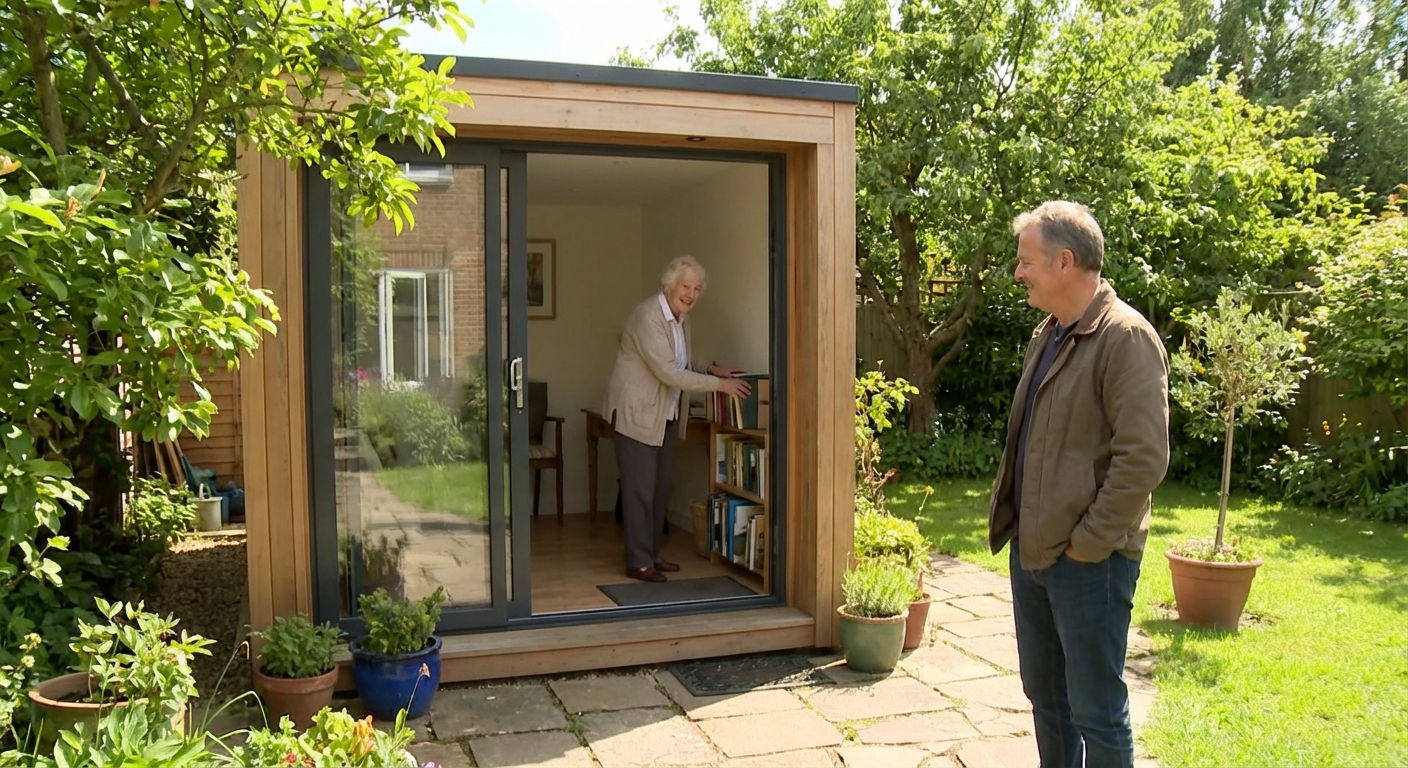
t “little cabin” turned out to be a flat-pack backyard studio her son had installed so she could have a private space for art, naps, and the occasional escape from grandkids.
When I tested the door (with her permission, I promise), it felt like stepping into a downsized, carefully curated apartment: bright windows, a recliner, a tiny desk, a kettle, and shelves full of photo albums. And that’s when it really hit me—these flat-pack studios aren’t just a design fad. They’re a serious, flexible housing option for seniors.
What Exactly Is a Flat-Pack Backyard Studio?
A flat-pack backyard studio is basically a prefabricated, modular building that arrives as a kit—walls, roof panels, insulation, windows, flooring—stacked on a pallet or in a crate. It’s assembled on-site, usually in a backyard, side yard, or larger garden.
Think IKEA meets tiny home, but (ideally) sturdier and with much better instructions.
Common features:
- Structural panels (often SIPs – structural insulated panels)
- Insulation baked into the walls
- Pre-cut openings for windows and doors
- Electrical pre-routing options
- Optional plumbing rough‑ins
Some companies market them as “backyard offices” or “garden rooms,” but a surprising number of families are now turning them into:
- Guest suites
- Caregiver quarters
- Semi‑independent living spaces for aging parents
Why Seniors (And Their Families) Are So Interested
I first started digging into this when a client told me they were trying to avoid a full home extension for her 81‑year‑old mom. The quotes she was getting for a traditional addition made her physically wince.
Here’s why flat-pack studios keep coming up in conversations:
1. Age in place, but not underfoot
Most older adults want to stay close to family, but not necessarily share the same kitchen, TV remote, and bathroom queue.
A 2021 AARP survey found that about 77% of adults 50+ want to remain in their homes as they age, and proximity to family is a huge part of that equation.
In my experience, a backyard studio hits a sweet spot:
- Close enough for quick help if someone falls or needs medication
- Far enough to preserve privacy and dignity for everyone
2. Potentially faster and cheaper than an addition
When I compared quotes for a modest 250–300 sq ft home extension versus a similar-sized flat-pack studio, I consistently saw:
- Traditional addition: $80,000–$150,000+ (depending on region, finishes, permits)
- Quality flat-pack studio shell: $25,000–$60,000 before utilities and interior fit‑out
That’s not pocket change, but the time savings are real. Many kits can be assembled in 3–10 days once the foundation is ready. A comparable addition can drag on for months.
3. Less disruption for seniors
I’ve sat through full-home renovations, and trust me: constant dust, noise, strangers walking in and out—it’s exhausting, especially for older adults.
With a backyard studio, most of the messy work happens outside the main house:
- Minimal demolition
- Fewer people tromping through indoor spaces
- Easier to “pause” the build if the senior gets overwhelmed
One woman I interviewed, whose 79‑year‑old dad has mild COPD, told me their flat-pack studio was a “game changer” because he didn’t have to live through months of drywall dust.
Design Features That Actually Work for Seniors
When I started evaluating these studios for senior use, I realized a lot of standard kits are designed for young professionals who want a cool Zoom background—not someone managing arthritis, a walker, or memory challenges.
Here are the features that made the biggest difference when I walked through real installs:
Step-free entry
The number one upgrade I recommend: a level threshold with a gentle ramp instead of steps. Even a 4–6 inch step can be a tripping hazard. Look for:
- Low or zero-threshold doors
- Non-slip ramp surface
- A small landing area that fits a walker comfortably
Wider doors and clear pathways
Ask the manufacturer if they can provide:
- 36" (about 91 cm) wide entry and interior doors
- At least 36" wide main circulation path inside
This makes it possible to navigate with a walker or wheelchair without “furniture Tetris.”
Real insulation and climate control
A lot of cheaper garden rooms are glorified sheds. For seniors, you need:
- Proper wall and roof insulation (R-values suitable for your climate)
- Sealed double-glazed windows
- A small, efficient heating/cooling unit (mini-split systems are popular)
Older adults are more vulnerable to temperature extremes. A well‑insulated studio isn’t just comfort; it’s safety.
Lighting that doesn’t fight aging eyes
When I tested one studio at dusk, the lighting was… moody. Great for Instagram, terrible for reading medication labels.
Look for:
- Plenty of overhead ambient lighting
- Task lighting near chairs and bed
- Rocker switches positioned a bit lower for easier reach
If night‑time bathroom trips are likely, motion-sensor path lights are worth every penny.
Bathroom or not?
This is the big decision. Some families just use the main house bathroom. Others add a compact en‑suite.
Pros of including a bathroom:
- More privacy and dignity
- Greater independence for the senior
- Fewer nighttime trips across a dark yard
Cons:
- Higher cost (plumbing is the budget killer)
- More complex permitting
- Higher risk of moisture issues if not ventilated properly
A middle option I’ve seen work well: a studio with a half bath (toilet and sink) in the backyard, plus a low‑threshold main bathroom in the primary house for showers.
The Less Glamorous Stuff: Zoning, Permits, and Rules
Now for the part that nobody puts on the brochure.
When I started calling around to planning departments, I quickly learned: you can’t just drop a studio in your yard and hope nobody notices.
You’ll need to check:
- Zoning rules / ADU laws: Many areas classify these as ADUs (Accessory Dwelling Units) or “granny flats.” Some states like California have passed laws to streamline ADU approvals (California’s major ADU reforms kicked off around 2017–2020).
- Setback requirements: How close to the property line you can build.
- Height limits and size caps: Some cities cap ADUs at a certain square footage.
- Utility connections: Separate electrical meters or shared? Sewage connection or septic? This can get messy quickly.
I strongly recommend:
- Calling your local planning or building department before you buy a kit
- Asking the flat-pack manufacturer which jurisdictions they’ve successfully installed in
If you’re in the U.S., local government sites usually have an “ADU” or “Accessory Structure” section with surprisingly readable guides.
Pros and Cons: No Rose-Colored Glasses
Big upsides
From what I’ve seen, when these studios are done thoughtfully, they can:
- Keep seniors close to family support
- Reduce loneliness without erasing independence
- Add usable space much faster than a full addition
- Potentially increase property value (especially where ADUs are in demand)
One family I spoke with called their backyard studio “the best compromise we’ve ever made”—their 84‑year‑old mother now lives 20 feet away instead of across town, and conflicts over shared kitchen space have basically vanished.
Real downsides and risks
But let me be blunt about the less shiny side:
- Cost creep: It’s very easy to underestimate. The kit is just the start—site prep, foundation, electrical, HVAC, permits, and furniture add up fast.
- Accessibility is often an afterthought: Many standard kits are not inherently senior‑friendly. You must customize.
- Resale uncertainty: Depending on your market, buyers might love the studio—or see it as a weird extra they don’t want to maintain.
- Care needs change: A backyard studio works well for relatively independent seniors. If dementia or significant mobility issues progress, living even 20–30 feet away can become impractical.
I’ve seen one case where an adult child invested heavily in a fully fitted studio for her father. Two years later, after a stroke, he needed 24/7 nursing care and moved into assisted living. The studio became a very expensive storage room.
Practical Tips If You’re Seriously Considering It
From all the stories, site visits, and slightly obsessive research I’ve done, here’s what consistently helps families get this right:
- Start with the person, not the structure. List out the senior’s current and likely future needs: mobility, bathroom access, sensory issues, medical equipment.
- Walk the actual path. Physically walk from the main house to the proposed studio location. Imagine that walk at night, in rain, or with a walker.
- Get an occupational therapist’s input. A quick consult (even one visit) can flag accessibility issues you and I wouldn’t think of.
- Prioritize comfort over Instagram. Real chairs, supportive mattresses, and glare-free lighting beat design trends every time.
- Talk openly about dignity and privacy. Ask your parent or grandparent what they actually want. Some will prefer a studio; others will feel isolated and anxious.
Who Flat-Pack Studios Are (And Aren’t) Great For
From what I’ve observed:
Good fit if:- The senior is mostly independent but benefits from nearby family
- You have a reasonably sized yard and cooperative zoning laws
- Everyone values a bit of personal space
- The senior has advanced cognitive decline and may wander or get disoriented
- Your climate is extreme and you can’t invest in serious insulation and HVAC
- Local rules make ADUs a bureaucratic nightmare
When I visited Helen’s studio again recently, she showed me the sketchbook she keeps by the window. She told me, “I love that I can shut the door and it’s my world, but I can also wave at my son in the kitchen.”
That combination—independence wrapped in proximity—is exactly why these flat-pack backyard studios are worth a serious look for seniors.
Sources
- AARP: 2021 Home and Community Preferences Survey - Data on older adults’ desire to age in place and housing preferences.
- California Department of Housing and Community Development – Accessory Dwelling Units - Overview of ADU laws and regulations in California.
- U.S. Centers for Disease Control and Prevention – Healthy Places: Aging in Place - Background on aging in place and built environment considerations.
- Harvard Joint Center for Housing Studies – Housing America's Older Adults 2023 - Research on housing challenges and solutions for older adults.
- U.S. Department of Energy – Insulation Fact Sheet - Guidance on insulation values and energy-efficient building for comfort and safety.