Forgotten Gadgets With Strong Resale Potential
gotchi, and a random Nintendo DS game cartridge. As a joke, I checked completed listings on eBay.
I stopped laughing when I saw what they were actually selling for.
That rabbit hole turned into a full‑on side hustle where I systematically tested which “forgotten” gadgets could still pull in real money. Some of the winners shocked me, and a few hyped items turned out to be duds.
What follows isn’t theoretical. It’s the shortlist of categories that, in my experience, consistently show strong resale potential if you know what to look for.
Why Some Old Tech Is Weirdly Valuable
I kept noticing the same pattern: gadgets hold value (or climb) when they’re:
- Nostalgic: They hit millennials or Gen X right in the childhood.
- Hard to replace: No modern product does exactly the same thing.
- Locked into an ecosystem: Think old consoles, lenses, or accessories.
- Limited or discontinued: Once production stops, collectors move in.
Completed listing data on platforms like eBay and Mercari back this up. eBay’s 2023 Recommerce Report, for example, found that categories like vintage electronics and gaming consistently rank among top‑performing resale niches for individual sellers.
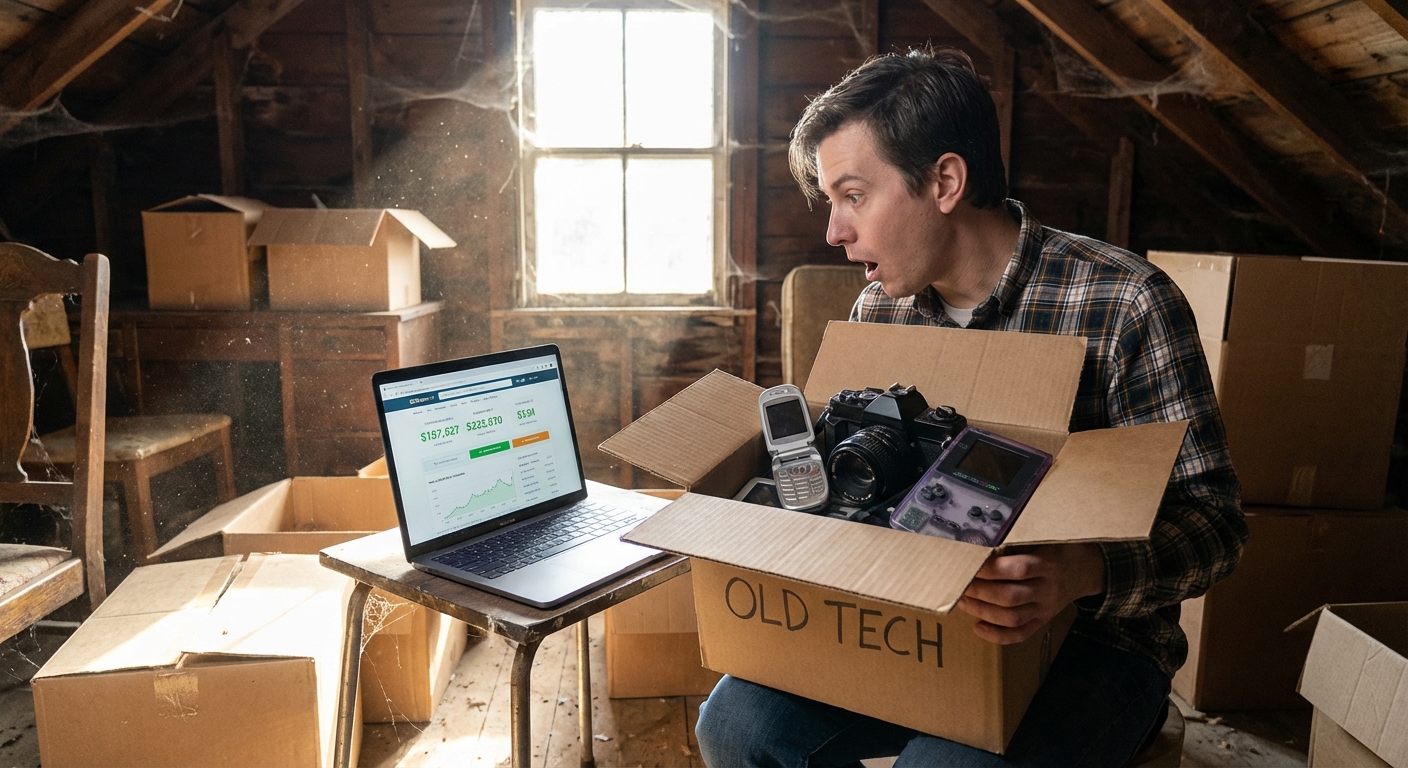
When I tested this myself—listing old cameras, routers, game consoles—I saw the same trend: some “trash” items turned into surprise bidding wars, while others barely got clicks.
Let’s go category by category.
1. Retro Game Consoles & Handhelds
The first time I listed a beat‑up Nintendo DS Lite, I expected maybe $20. It sold within 48 hours for more than double that—scratches, missing stylus, and all.
What tends to resell well
- Nintendo DS / 3DS, Game Boy Advance, PSP, PS Vita
- Older home consoles: NES, SNES, N64, GameCube, PS1/PS2, original Xbox
- Limited edition colorways and bundles
Nostalgia plus backwards compatibility is the secret sauce. For example, the Nintendo 3DS can play original DS games, which keeps demand high for both the console and the cartridges.
When I tested this, my 3DS with a cracked hinge still got multiple offers because it booted up and the screens were intact.
Pros
- Huge buyer pool; easy to research using eBay sold listings
- Even “for parts/not working” units can sell for repair or modding
- Games and accessories add up quickly in value
Cons
- Condition matters a lot for serious collectors
- Authenticity issues: repro cartridges and fake controllers are everywhere
- Need to pack very carefully to avoid damage in shipping
2. Old Apple Devices (Especially iPods & Macs)
I recently sold a 2009 iPod Classic 160GB that had been living in a drawer for a decade. It went for more than I originally paid—because audio nerds love the high‑capacity storage and the ability to rock a lossless music library offline.
Strong performers
- iPod Classic & iPod Video (especially 80GB/120GB/160GB models)
- Working iPod Shuffles and Nanos in good cosmetic condition
- Older MacBook Pros with user‑replaceable RAM and drives (2011–2015 era)
- PowerPC Macs and iMac G3s (for collectors and modders)
Specialized communities on Reddit and forums mod these devices with SSDs and fresh batteries. That modding culture keeps the second‑hand value surprisingly strong.
Pros
- Apple’s brand and design create built‑in collector demand
- Plenty of parts and guides for refurbishing
- Serial numbers make it easier to identify exact models
Cons
- Non‑functional batteries can tank the price if you can’t replace them
- iCloud‑locked devices are basically bricks for resale
- Cosmetic issues (dents, screen damage) matter more than on generic gadgets
When I tested this with two near‑identical iPod Classics, the one with fewer scratches pulled in about 30% more, even though both worked perfectly.
3. Point‑and‑Shoot Digital Cameras & Camcorders
I’d written off old digital cameras as landfill material—until I listed a 2010 Canon PowerShot I found at my parents’ house. It sold fast, to a buyer in another country. That’s when I realized there’s a whole wave of people chasing that early‑2010s “digital dump” aesthetic.
What holds value
- Canon PowerShot and Sony Cyber‑shot series
- Early mirrorless bodies (Sony NEX series, Micro Four Thirds)
- MiniDV and Hi8 camcorders, especially if they can still capture or play tapes
The retro, slightly noisy, point‑and‑shoot look has become a trend on TikTok and Instagram. That’s translating into resale demand, especially among younger buyers who never owned these cameras the first time around.
Pros
- Small, cheap to ship
- International demand can be strong
- Even older sensors can look great for social media
Cons
- Battery availability can be an issue; some are discontinued
- Dead pixels or lens errors will tank resale value
- Video export from old camcorders can be fiddly
From my own testing: cameras with working flash, clean sensors, and no lens error message consistently fetched the best prices—even if the megapixel count looked outdated.
4. Vintage Audio Gear: Receivers, Turntables, and CD Players
I picked up an old Sony stereo receiver at a garage sale for the price of a coffee, mostly because the knobs felt satisfyingly heavy. After cleaning it up and testing it with a pair of bookshelf speakers, I listed it and watched offers roll in.
There’s a real comeback happening for vintage hi‑fi gear. According to the Recording Industry Association of America (RIAA), vinyl record revenues in the U.S. jumped again in 2023, and that vinyl revival pulls old hardware along with it.
Items with strong resale potential
- Stereo receivers from brands like Pioneer, Marantz, Yamaha, Sony
- Fully manual or semi‑automatic turntables
- High‑end CD players and changers
- Cassette decks from reputable audio brands
Pros
- Audiophiles pay real money for well‑built, serviceable units
- Many issues are fixable: scratchy pots, dirty tape heads, loose belts
- Listing with detailed testing notes builds buyer trust
Cons
- Heavy and fragile—shipping is a pain and can eat into profits
- Some repairs require specialized tools or knowledge
- Counterfeits and “Frankenstein” units do exist at the higher end
When I tested resale on audio gear, units that I could describe like this—“tested with vinyl + CD, all inputs working, no crackle on volume knob”—sold faster and for higher prices than vague “untested, seems fine” listings.
5. Lenses and Camera Accessories
Camera bodies depreciate like cars; lenses are more like real estate. I’ve consistently seen higher, more stable resale value on glass compared to the cameras themselves.
I once sold a slightly dusty Nikon 50mm f/1.8D lens for nearly the same price I’d paid years earlier. Meanwhile, the DSLR body I used it with had dropped to about a third of its original value.
Strong resale candidates
- Fast prime lenses (like 35mm and 50mm with f/1.4 or f/1.8 apertures)
- Classic third‑party lenses from Sigma, Tamron, and Tokina
- Quality tripods (Manfrotto, Gitzo) and fluid video heads
- Speedlights and flashes from Canon, Nikon, Godox, Yongnuo
Pros
- Lenses cross generations of camera bodies via adapters
- Pros and hobbyists always hunt for affordable used glass
- Small(ish) and protectable with good packaging
Cons
- Fungus, haze, or serious scratching kills value quickly
- Autofocus motors or aperture blades can fail silently
- You need to test thoroughly on a real camera body
Whenever I list lenses, I upload close‑up photos of the glass under a strong light and explicitly note: “Tested for autofocus, aperture, and sharpness at different distances.” That extra detail consistently builds trust and reduces the “Is this still available?” messages.
6. Routers, Modems, and Smart Home Bridges
Networking gear sounds boring—until you realize that some routers and smart home bridges are effectively discontinued, but people still rely on them to keep their setups working.
I stumbled onto this when I sold a used SmartThings hub faster than any camera accessory. Home automation communities often recommend specific older hubs or bridges because they support protocols (like Z‑Wave or Zigbee) that newer all‑in‑one gadgets don’t handle as well.
Items that surprised me
- Standalone Wi‑Fi routers from brands like ASUS, Netgear, TP‑Link (especially gaming or mesh models)
- Smart home hubs/bridges: Philips Hue Bridge, SmartThings, Lutron Caséta
- Cable modems that match current ISP approved lists
Pros
- Easy to test: factory reset + confirm basic connectivity
- Compact and relatively safe to ship
- Some models are still in highly ranked “best router” lists years after release
Cons
- ISP‑locked hardware may have zero resale value
- Firmware support eventually ends, reducing security
- Buyers can be picky about exact model and hardware revision
In my experience, listings that clearly show the model number, hardware version, and screenshot of the admin page after reset convert far better than ones that just say “Wi‑Fi router, works great.”
How I Evaluate a Gadget’s Resale Potential
Whenever I pull some random tech from a drawer, I run it through this quick mental checklist:
- Can I power it on and test the basics? If not, I assume parts‑only pricing.
- Are there recent sold listings on eBay, not just active ones? I sort by “Sold items” and match condition.
- Is this part of a cult ecosystem? Old Apple, Nintendo, hi‑fi audio, and camera systems usually are.
- Does shipping make sense? A $40 profit on a 30‑pound receiver can vanish in shipping and packing material.
- Could firmware or account lock it? iCloud, carrier‑locked phones, or subscription‑tied devices can be landmines.
The more boxes something ticks, the more likely I am to bother cleaning, testing, and listing it.
Reality Check: Not Everything Old Is Gold
A quick honesty pass from my own experiments:
- Cheap Android tablets from random brands? Almost always worthless.
- Obscure MP3 players? Unless it’s a known brand with a cult following, they mostly sit.
- Old printers? Between dried ink and shipping costs, they’re usually more hassle than they’re worth—except some high‑end laser models.
Resale markets are also dynamic. Trends spike and fade. A device that’s hot one year might cool off once a company reissues a “retro” version or shuts down critical online services.
I’ve learned not to hoard based on speculation. I check real‑time data, sell when demand’s strong, and accept that sometimes I’ll miss a future price jump.
Final Thoughts Before You Start Digging Through Drawers
If you’re sitting on a closet full of forgotten gadgets, don’t assume they’re all junk—but don’t assume you’ve struck gold either. Research, testing, and honest descriptions are what turn clutter into consistent resale wins.
From my own trial‑and‑error, the big sleepers with surprisingly strong resale potential have been:
- Retro game consoles and handhelds
- Old Apple devices, especially iPods and certain MacBooks
- Point‑and‑shoot digital cameras and camcorders
- Vintage audio gear and standalone CD players
- Camera lenses and quality accessories
- Select routers, modems, and smart home hubs
The fun part is that your next sale might already be hiding in a shoebox under your bed. Just don’t toss that “ancient” iPod or yellowed game console shell before you’ve checked what people are actually paying for it.
Sources
- eBay 2023 Recommerce Report - Data on secondhand and recommerce trends.
- RIAA 2023 Year-End Music Industry Revenue Report - Vinyl and physical media growth statistics.
- Nintendo Corporate History - Official background on Nintendo hardware generations.
- Apple Support: Identify your iPod model - Official guide to model identification.
- Harvard Business Review: The Recommerce Opportunity - Analysis of used goods and circular economy trends.