Guide to Avoiding Overpriced Beauty Products at Sephora
ve been that person. More than once.
Over the last few years, though, I started tracking what I actually use, what really works, and what’s pure marketing. When I tested my own spending habits, I realized I was paying luxury prices for things that had near-identical formulas in the drugstore aisle or from less-hyped brands.
This guide is everything I’ve learned—both from my own experiments and from digging into the actual science and pricing behind beauty products—so you can walk into Sephora, enjoy it, and walk out without getting played by pretty packaging.
Step 1: Understand What You’re Really Paying For
When I first started comparing products, I assumed high price = better ingredients. That’s… sometimes true, but not nearly as often as you’d think.
You’re usually paying for:
- Branding and celebrity campaigns
- Retail markup (Sephora, like most retailers, has to make a margin)
- Packaging (frosted glass, magnetic closures, custom components)
- Fragrance and texture that make the experience feel fancy
What you’re not always paying for:
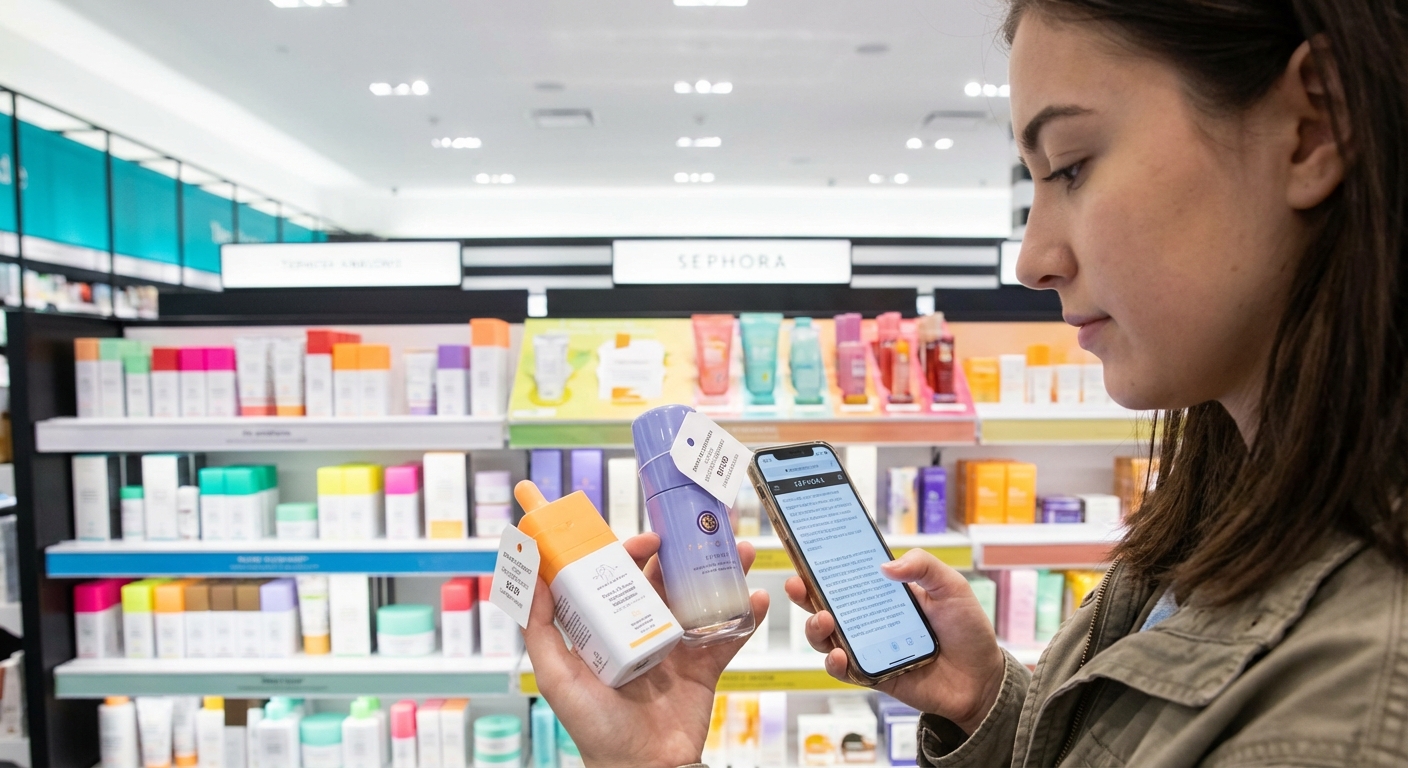
- Higher concentrations of active ingredients
- Clinically backed formulas
- Longer-lasting performance
A 2017 analysis published in the Journal of Cosmetic Science found that many mid-range products use the same contract manufacturers as prestige brands, just with different packaging and minor tweaks.
When I started reading INCI lists (the ingredient labels on products), I realized some $60 creams had nearly identical base formulas to $20 ones—same emollients, same humectants, same occlusives—just a different “hero” ingredient sprinkled in near the bottom of the list.
Step 2: Learn the “Red Flags” of Overpriced Products
When I tested products over a year and tracked cost per use, a few patterns kept popping up. These are my personal Sephora red flags.
1. Fancy Actives… in Teeny-Tiny Amounts
If a serum is marketed as a vitamin C powerhouse but ascorbic acid (or another vitamin C derivative) is buried in the middle or bottom of the list, it’s often more marketing than potency.
Look for:
- Actives in the first half of the ingredient list
- Transparency about percentages (e.g., “10% niacinamide”, “2% salicylic acid”)
Brands like The Ordinary built their whole model around listing active percentages. You don’t have to use them exclusively, but they’re a useful reference point for what reasonable concentrations look like.
2. Skincare in Makeup That’s… Basically Just Makeup
I recently tested a “serum foundation” that claimed to be skincare plus coverage. The marketing screamed: peptides! hydrating complex! skin-loving ingredients! When I checked the label, the formula was a standard silicone-based foundation with a tiny amount of peptide tossed in.
If you’re buying complexion products, prioritize:
- Shade match
- Finish (matte, natural, dewy)
- Wear time
Any skincare benefit is a bonus, not the main reason to spend $50+.
3. Products That Do Too Many Things at Once
Any time I see: “brightens, lifts, firms, resurfaced, anti-redness, anti-acne, anti-wrinkle, tightens pores” all in one jar, I get suspicious.
In my experience, multitasking products usually:
- Do a bunch of things mediocrely instead of a few things well
- Are priced like they’re replacing your whole routine (they’re not)
Dermatologists often recommend simple routines with targeted actives instead of a Swiss army knife cream. The American Academy of Dermatology (AAD) has repeatedly emphasized the effectiveness of straightforward regimens built around sunscreen, retinoids, and gentle cleansing.
Step 3: Know Which Categories Are Worth the Splurge
Not everything expensive is a scam. I’ve tested enough products to know where paying more actually made a difference for me—and where it didn’t.
Worth Splurging (Sometimes)
1. Sunscreen you’ll actually wear dailyI used to buy cheaper sunscreens that pilled, stung my eyes, or made me look like a disco ball. I never used them, so they were actually more expensive per use.
When I finally invested in a lightweight, elegant SPF (for me it was a Korean sunscreen and a Sephora mineral one), I wore it every single day. That’s a win for my skin and my wallet.
2. Foundation and complexion productsShade range, undertones, and long-wear technology cost money. Mid-to-high-end foundations often use more sophisticated pigment technology and film-formers. In my experience, complexion is where drugstore occasionally struggles, especially for very fair, very deep, or very olive undertones.
3. Pro-level toolsA solid brush set or one great foundation brush can outlast trends by years. My higher-end brushes have held their shape after hundreds of washes, while cheap ones started shedding after a few months.
Usually Not Worth the Splurge (For Most People)
1. Basic moisturizersIf your skin isn’t super sensitive or compromised, a simple moisturizer with glycerin, ceramides, squalane, or shea butter can be found at the drugstore. The AAD and multiple dermatologists consistently recommend affordable brands like CeraVe and Vanicream for daily moisture.
I tested a $70 cream against a $18 one for three weeks, one on each side of my face. No noticeable difference—except my bank balance.
2. Single-ingredient serumsNiacinamide, hyaluronic acid, basic peptide serums? You don’t need to spend $60+ for those unless you love the texture or packaging. The science behind these actives doesn’t magically change with a luxury label.
3. Toners and mists (most of them)Hydrating toners and facial mists feel amazing, but many are just water, humectants, and fragrance in luxe packaging. I still buy them sometimes because I like the experience, but I treat them as a treat, not a necessity.
Step 4: Use Cost-Per-Use and Ingredient Checking
When I started tracking cost per use, my entire mindset shifted. Suddenly, that $45 product I used daily for six months looked way more reasonable than the $22 impulse buy I used twice.
Here’s how I do it:
1. Estimate How Long It’ll Last
- Bottles: roughly 1–2 pumps per use, twice a day
- Tubes: a pea-sized amount for serums, more for cleansers
I literally wrote the “open date” on the bottom with a Sharpie and tracked empties.
2. Divide Price by Estimated Uses
Example from my own stash:
- $48 serum, lasted ~4 months using it once a day = about 120 uses → $0.40 per use
- $22 glittery highlighter I used 5 times and then forgot about = $4.40 per use
That changed how I see “expensive.” A high-quality, daily-use SPF or foundation can be a better investment than a trendy product you’ll use twice.
3. Ingredient Quick-Screen
Before I buy, I quickly check:
- Are there actual actives, not just botanical buzzwords? (e.g., retinol, azelaic acid, salicylic acid, L-ascorbic acid, niacinamide)
- Is fragrance high up on the list (potentially irritating, especially in skincare)?
- Does the formula rely heavily on alcohol denat. near the top, which can be drying for some skin types?
I don’t obsess over every ingredient, but I like knowing if I’m paying for function or fragrance.
Step 5: Compare Sephora Picks with Dupes Before You Buy
When I tested this strategy, I started pausing before checkout and checking for:
- A more affordable version with similar actives and textures
- A mid-range brand at Sephora vs a luxury one
- A drugstore or online brand with comparable ingredients
Example: Many vitamin C serums at Sephora are $50–$80. Then you have brands like La Roche-Posay and Vichy (often in pharmacies) using similar concentrations, sometimes with supporting data, for less.
Also, a lot of Sephora brands and drugstore brands share contract manufacturers. A former colleague in product development once told me, “The formula families are often cousins—same base, different perfume and packaging.” It’s not always that simple, but it happens more than you’d think.
Step 6: Use Samples and Minis Strategically
I used to hoard samples like a dragon and then never use them. Now I treat them like test drives for expensive stuff.
My sample rules:
- Only accept samples in categories I’m actually shopping (no more random glitter primers)
- Test for at least a week if it’s skincare—some ingredients (like retinoids or acids) can irritate over time
- With makeup, wear it on a normal day, not just under perfect lighting
Minis are great for:
- High-risk products (foundations, concealers, pricey serums)
- Travel kits that actually replace full-size products for a trip
But full-size is usually better value if you know you love it.
Step 7: Remember: You’re Not Buying a Personality
This is the part I had to be brutally honest with myself about.
I realized I was sometimes buying a feeling—“clean girl,” “French pharmacy chic,” “haute skincare nerd” — more than I was buying performance. Sephora’s whole environment is designed to make you feel like you’re curating a lifestyle, not just a cleanser.
There’s nothing wrong with loving pretty packaging or vibey branding. I still fall for it sometimes. But now I ask myself:
- If this had plain packaging and a different logo, would I still want it?
- Is this filling a real gap in my routine, or is it just “new”?
- Am I trying to fix a skin concern, or am I trying to buy confidence in a bottle?
The answer has stopped me from overspending more than once.
The Takeaway: Shop Sephora Like a Pro, Not a Victim
From what I’ve seen—on my own face and in the research—Sephora can absolutely be worth it. There are standout products, innovative formulas, and brilliant textures that are tough to find elsewhere.
But once you:
- Understand what you’re paying for
- Learn basic ingredient literacy
- Calculate cost per use
- Compare before you commit
…you’ll start walking out with a thoughtful, effective routine instead of a bag full of almost-duplicates and regret.
I still love wandering the aisles, swatching lipsticks, and smelling way too many perfumes. I just do it with a calculator (mental or actual) in the background—and my skin and my budget are both better for it.
Sources
- American Academy of Dermatology – Skin care: Tips for healthy skin - Evidence-based basics on skincare routines and effective ingredients.
- Harvard Health Publishing – The science of cosmetics - Overview of cosmetic ingredients, regulation, and what claims really mean.
- U.S. Food & Drug Administration – FDA Authority Over Cosmetics - How cosmetics are regulated in the U.S., including labeling and safety requirements.
- La Roche-Posay – Clinical Studies - Example of how some brands publish clinical testing behind their formulations.
- The New York Times – Are You Overpaying for Skin Care? - Reporting on price vs performance in skincare, with dermatologist input.