Guide to Balancing Versatile Styles and Functions in Handbags
Too big. Too small. Too heavy. Too “I’m-going-to-a-board-meeting” when I’m literally just grabbing coffee.
Over the last few years, I’ve treated handbags almost like a design experiment—testing different shapes, materials, and layouts to figure out what actually works in real life, not just on Instagram. This guide is everything I wish someone had told me before I bought that gorgeous but completely useless micro bag that barely fits a key.
Step 1: Start With Your Real Life, Not the Aesthetic
When I first got serious about buying fewer, better bags, I did something very unsexy: I tracked my days for a week.
I noted:
- How often I carried my laptop
- Whether I needed snacks (yes, always)
- How much walking/public transport I did
- If I was going straight from office to dinner
Here’s what I discovered when I tested this on myself:
- 70–80% of my days were “hybrid”: work + errands + maybe drinks
- I needed at least one bag that could handle a 13" laptop without looking like a corporate tote
- I kept using only 2–3 bags on rotation, even though I owned about 12
This matched what retail consultants have been saying for years: most people consistently use 20–30% of their wardrobe and accessories. A 2016 article in The Wall Street Journal referenced similar behavior patterns in closet usage, and handbags are no exception.
So before you fall for another trending crescent bag, ask:
- What does a normal Tuesday look like for me?
- What absolutely must fit in my bag? (Phone, keys, wallet, charger, meds, laptop, notebook, makeup… be brutally honest.)
- How much walking or commuting am I doing with this bag?
Once you answer these, the “style vs function” question stops being theoretical and becomes very practical.
Step 2: Know Your Core Handbag Roles
I’ve tried to be a “many bags” person. I’m not. I circle back to the same roles every time:
- Everyday crossbody – for errands, brunch, travel
- Workhorse tote – for laptop days or meetings
- Polished small bag – for dinners, events, nights out
When I finally accepted that these three roles cover 90% of my life, I stopped impulse-buying random shapes that didn’t fit any purpose.
Everyday Crossbody: The Real MVP
When I tested different crossbodies, a few things made a huge difference:
- Drop length matters: A 20–23 inch strap usually hits at a comfortable hip level for most heights. Too short and it feels awkward, too long and the bag swings like a pendulum when you walk.
- Internal organization: At minimum, I want a zip pocket and a slip pocket. Bonus points for a key leash. When I switched to a crossbody with a built-in key hook, I stopped doing the “angry key scramble” at my front door.
- Width over height: A slightly wider base (around 2.5–4 inches) gives you functional space without ballooning into a black hole.
From a style perspective, I’ve found mid-structure works best. Super floppy slouch bags look chic but turn into shapeless blobs when filled. Ultra-rigid bags look sharp but can be unforgiving if you overpack.
Step 3: Design Details That Quietly Make or Break Function
Over time, I’ve learned that tiny design details have a huge impact on whether I reach for a bag or avoid it.
1. Weight (Before You Even Put Anything In It)
In my experience, anything over 1.5–2 lbs empty starts to feel heavy on long days, especially with laptops or water bottles. Some popular full-grain leather totes look incredible but can hit that range before you add a single item.
Brands like Cuyana and Everlane have leaned into lighter leathers and streamlined construction for this exact reason—customers complained about shoulder pain from heavy bags.
2. Closure Style
I used to underestimate closures until I spent a week in a busy city with a completely open tote. Never again.
- Zipper – Most secure, great for travel and commuting. Slightly less elegant-looking on very structured bags, but worth it if you’re in crowded spaces.
- Magnetic snap – My sweet spot for everyday totes and crossbodies. Easy to open one-handed, enough security for normal situations.
- Flap only – Chic, but I treat these as lower-security. I love them for dinners and low-risk environments, not packed trains.
A 2018 pickpocketing advisory by the U.S. State Department actually flags open-top bags as higher risk in tourist-heavy areas.
3. Pocket Strategy (Internal Architecture)
When I started really looking inside the bags I loved, I noticed a pattern:
- 1 main compartment
- 1 secure zip pocket for valuables
- 1–2 slip pockets for phone/cards
Multi-compartment bags seem more organized, but I’ve found they can feel limiting. I once bought a tri-compartment satchel that looked logical on paper; in reality, my stuff ended up in the wrong sections and the center zip made the bag weirdly rigid.
If you carry tech, look for:
- Padded laptop sleeve (or at least a dedicated compartment)
- Cable/charger pocket – Even a small slip pocket can keep cords from tangling with lipstick and pens
Step 4: Materials That Balance Style, Durability & Maintenance
I’ve owned everything from delicate lambskin to indestructible coated canvas. Here’s how they’ve held up when tested in actual daily chaos.
Leather (Different Types, Very Different Lives)
- Full-grain leather – Ages beautifully, more resistant to wear, can be heavier. My full-grain tote from 2018 has scuffs, but in a “lived-in” way, not a ruined way.
- Top-grain leather – Slightly corrected surface, often lighter, more uniform look. Great middle ground.
- Lambskin – Luxurious, but scratches easily. My lambskin mini bag looks amazing but I treat it like a baby and never wear it with rough fabrics.
A 2017 piece in The New York Times on leather care noted that well-maintained leather bags can easily last a decade or more with basic conditioning and storage.
Non-Leather Options
I tested a coated canvas tote during a rainy season, and honestly, it was a revelation:
- Lighter than leather
- Wipes clean
- Less “formal” but super practical
Nylon and recycled synthetics have improved massively in feel. Many modern nylon bags don’t scream “gym bag” anymore. Brands have started blending recycled materials that look much more polished, especially in black or deep neutrals.
If you’re aiming for versatility, I’ve found this balance works well:
- 1 leather bag for polish
- 1 fabric/nylon or coated canvas bag for rough days, travel, or unpredictable weather
Step 5: Color and Style That Actually Go With Your Wardrobe
When I recently did a closet audit, I realized most of my clothes were:
- Black, white, beige, denim
- With occasional pops of rust, olive, and blue
Yet for years, I kept buying statement bags that clashed with what I actually owned.
Once I got honest about my palette, I focused my “core” bags on:
- Black – For work, nights out, and when I don’t want to think
- Warm neutral (tan/camel) – Pairs well with denim, white, and softer outfits
- One accent color that complements my actual clothes (not just trends)
I still give myself permission to have one “fun” bag, but now I treat it as dessert, not the main meal.
Step 6: The Try-On Test No One Talks About
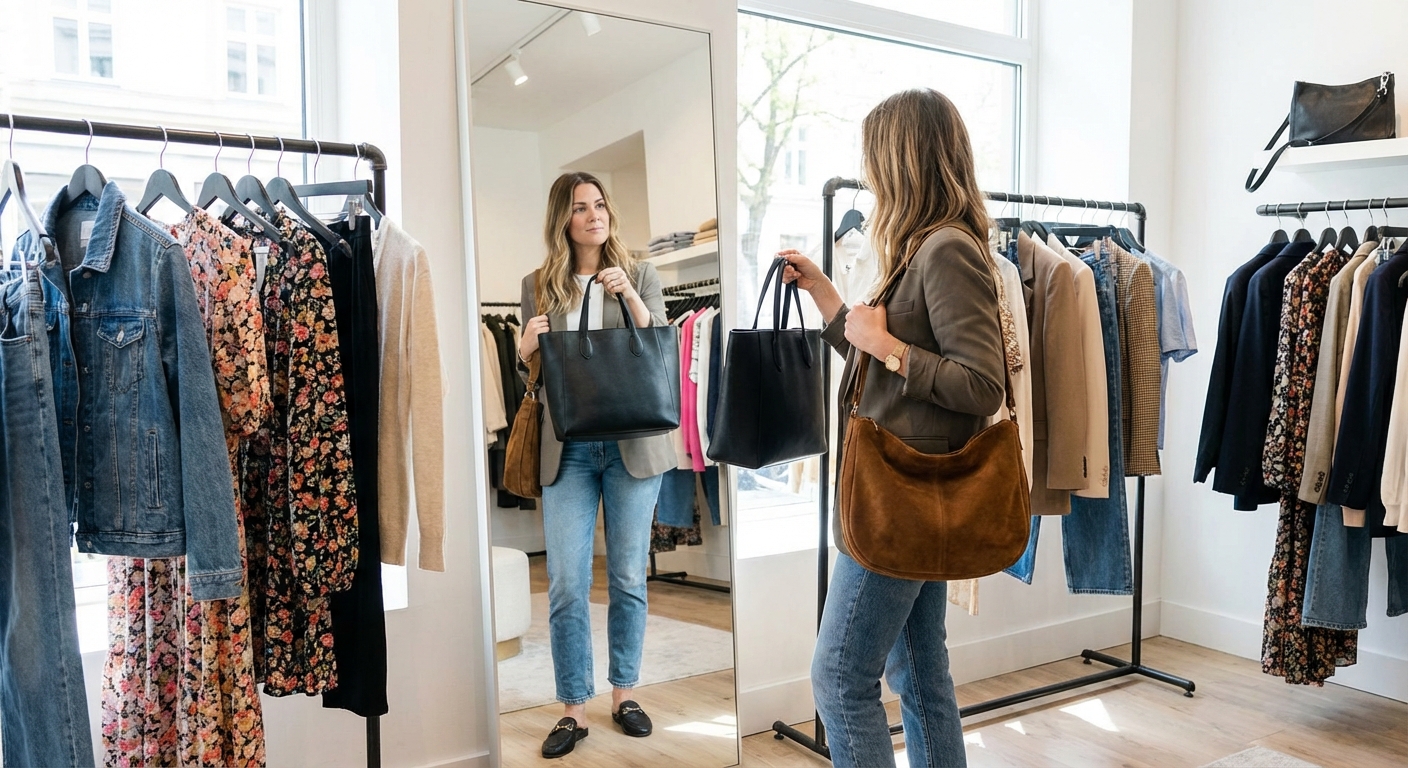
One of the most useful things I’ve done is a simple 5-minute in-store or at-home test before committing:
- Load it with your real stuff – Phone, wallet, keys, water bottle, whatever you normally carry.
- Wear it three ways (if possible) – Shoulder, crossbody, hand-carry.
- Walk around for 3–5 minutes – Swing your arms, sit down, stand up.
- Access test – Try to get your phone, then your keys, then your wallet without taking the bag off.
When I started doing this, I returned or skipped about 30–40% of bags that I initially thought were “perfect.” They either dug into my shoulder, slipped off constantly, or became impossible to access when wearing a coat.
There’s research in retail psychology showing that tactile interaction and mobility testing significantly reduce buyer’s remorse, and it absolutely tracks with my experience.
What I’ve Landed On (And What I Avoid Now)
Through a lot of trial, error, and slightly embarrassing impulse purchases, here’s where I’ve landed:
I look for:
- Medium-sized crossbody with adjustable strap, 2–3 pockets, light-to-midweight leather or nylon
- Structured-but-not-boxy work tote with zipper or strong magnet, fits my laptop horizontally
- Small, simple evening bag that fits my actual essentials (phone, cards, keys, one makeup item)
I’m more cautious with:
- Super-heavy full-grain leather totes with no closure
- Micro bags that don’t fit my phone (they photograph well, but that’s about it)
- Overly compartmentalized designs that restrict how I pack
Balancing style and function in handbags isn’t about finding one mythical “perfect” bag. In my experience, it’s about building a small ecosystem of bags that genuinely match your life, not your fantasy life.
And once your bags are working for you instead of against you, getting dressed starts to feel weirdly… easy.
Sources
- The Science of Shopping: How We Really Buy - New York Times article discussing consumer behavior and usage patterns
- Tips for Protecting Valuables Abroad - U.S. Department of State guidance that includes advice on bags and theft prevention
- The Leather Handbook: Care and Maintenance - Colorado State University Extension article on leather care and longevity
- How Luxury Brands Are Responding to Consumer Demand for Practicality - Forbes analysis on shifting trends in luxury and functional design
- Ergonomics and Bag Weight Recommendations - NIOSH/CDC guidance related to loads and musculoskeletal strain