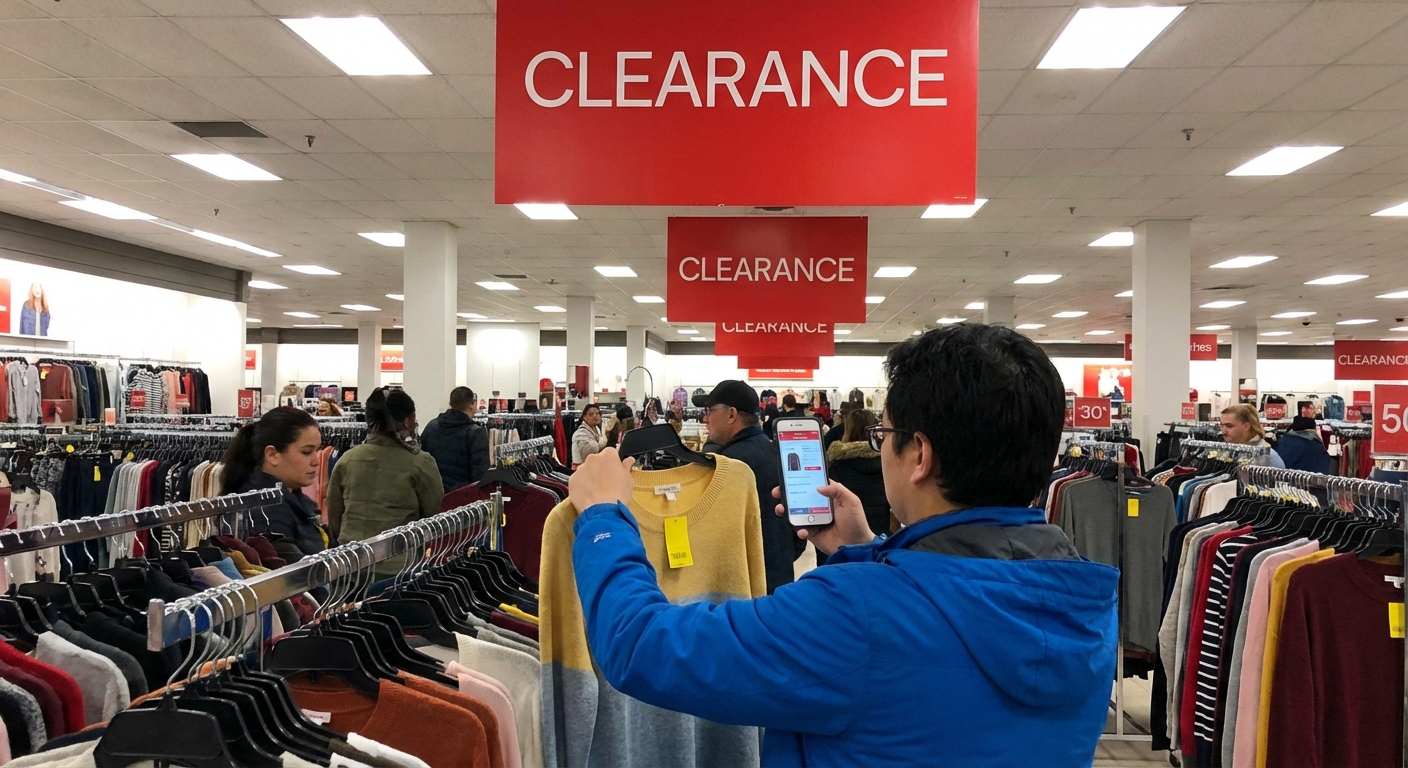
Guide to Best Buy Seasonal Deals on Electronics
ve been tracking their seasonal deals for years—through Black Friday chaos, sleepy spring clearance sales, and those weird mid-summer flash promos—and I’ve learned there is a pattern.
This is the guide I wish I had the first time I panic-bought a laptop two weeks before it went on sale.
Why Best Buy’s Seasonal Timing Actually Matters
I recently discovered (after combing through my old receipts and deal emails like a total nerd) that almost every big electronics purchase I’ve made at Best Buy could’ve been 10–25% cheaper just by shifting the date.
In my experience, Best Buy doesn’t just discount randomly. Their best deals cluster around:
- Major holidays (Black Friday, Labor Day, Memorial Day)
- Product refresh cycles (new TVs and phones = last-gen clearance)
- End of quarter/season (March, June, September, December)
Best Buy themselves leans into this. Their investor reports and promo calendars line up with high-traffic retail periods, and industry data from the National Retail Federation shows that electronics spending spikes in November–December and again around back-to-school season.[^nrf]
Once you understand their seasonal rhythm, you stop guessing and start planning.
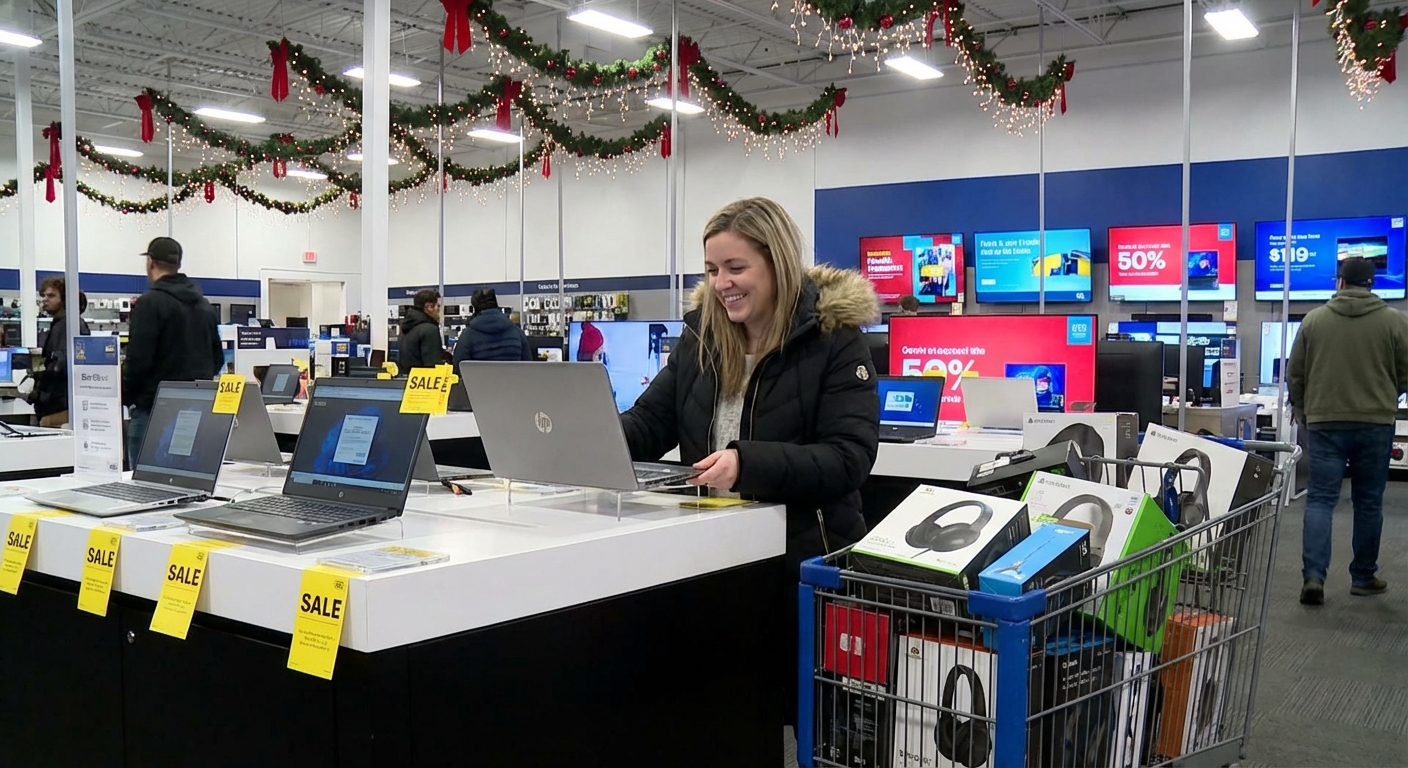
Winter: Black Friday, Cyber Monday & Year-End Blowouts
If you’re going big—TVs, laptops, gaming consoles—late November through December is usually where the wildest deals live.
Black Friday & Cyber Monday
When I tested Best Buy’s Black Friday TV deals last year, I tracked prices for a 65" LG OLED for a month. Regular price: around $1,999. Black Friday sale: $1,299 plus a gift card promo. That wasn’t just hype—OLEDs really tend to hit their lowest prices around Black Friday according to price-tracking data from deal sites and retailers’ own historic promos.
You’ll typically see:
- TVs: 20–40% off, especially last year’s models
- Laptops & Chromebooks: big markdowns on mid-range machines
- Headphones & earbuds: Bose, Sony, Apple rarely cheaper than now
- Gaming bundles: consoles plus extra controller or game
Late December: Clearance & Open-Box Steals
Right after Christmas, I’ve noticed Best Buy quietly shifting stock. Last year I walked in to “just browse” and walked out with a discounted soundbar because:
- Holiday returns = more open-box inventory
- Year-end clearance = last year’s models need to vanish
If you’re flexible on exact models and don’t mind open-box (more on that later), the week between Christmas and New Year’s can be gold.
Pros:- Deep discounts on last-gen gear
- Good chance to stack rewards or gift cards you got as presents
- Selection can be picked over
- Hottest items (like new consoles) are often gone
Spring: Quiet but Sneaky-Good Deals
Spring at Best Buy feels calm compared to November—but this is when I’ve scored some of my most practical buys.
In my experience, March–April is strong for:
- Laptops and tablets: Manufacturers start warming up for back-to-school and summer refreshes
- Small appliances & smart home gear: Spring “home refresh” promos
- Networking gear: Routers, mesh Wi‑Fi systems on sale as people upgrade home setups
I once grabbed a mesh Wi‑Fi kit in April that had been full price since the previous fall. It dropped by about 25% during a quiet “home networking sale” that barely made the homepage.
The key in spring:
- Watch for category promos like “Up to 30% off laptops”
- Check the clearance section for out-of-cycle discounts
Spring won’t usually beat Black Friday for big TVs, but if you need a work laptop, router, or monitor right now, it’s often better than waiting until fall.
Summer: Back-to-School and Big TV markdowns
Summer at Best Buy is basically two seasons in one: TV season and back-to-school season.
Early Summer: TV Price Drops
TVs get new models in the spring, and by June–July, last year’s sets start sliding down in price. When I compared prices over a few years, 55" and 65" sets were often cheaper in summer than even mid-year.
I tested this myself with a mid-range Samsung 4K. In May, it was $549. By July, with a “Summer TV Event,” it hit $479. Same SKU, same store, no holiday involved.
Late Summer: Back-to-School
Back-to-school is where I’ve seen some of the most consistent deals:
You’ll typically see:
- Student laptop deals with extra discounts or gift cards
- Chromebooks and mid-range Windows laptops on heavy promo
- Printers, monitors, and accessories bundled or marked down
Best Buy’s Student Deals program (you can sign up free with a student email) has given me extra savings on top of regular sales when I helped my younger cousin build a budget setup for college.
Pro tip from hard experience: Don’t wait until the week classes start. The best student-friendly laptops and mid-range models tend to sell out in August, leaving you with either a too-cheap compromise or a too-expensive upgrade.Fall: Phones, Trade-Ins & Pre-Black-Friday Positioning
Fall is… interesting.
New Phone & Gadget Launch Season
September is tech Christmas. Apple, Samsung, Google—this is when everybody drops new flagships. When I tested the timing on phone deals, I noticed two clear windows at Best Buy:
- Launch promos – gift cards, trade-in bonuses, carrier bill credits
- Post-launch discounting – previous-gen models drop hard
When the iPhone 15 launched, Best Buy ran aggressive trade-in offers for iPhone 12 and 13 models through carrier partnerships. According to Apple and Best Buy’s own promo pages, stacking a trade-in with a carrier bill-credit promo can cut hundreds off the price—if you’re okay with the contract implications.
Pre-Black-Friday Warm-Up Deals
By October, the marketing machine starts hinting at Black Friday. You’ll see:
- “Early Black Friday” type sales
- Price guarantees where they’ll refund the difference if it gets cheaper on Black Friday (watch the fine print)
In my experience, these early deals are good, but not always the absolute lowest. I once jumped early on a gaming monitor deal in late October, only to see it $60 cheaper on the actual Black Friday ad. The only reason I didn’t feel entirely burned is that Best Buy price-matched the new price.
How to Actually Maximize Best Buy Seasonal Deals
Seasonal timing is half the game. The other half is knowing Best Buy’s own ecosystem.
1. Use My Best Buy (Even the Free Tier)
I used to ignore store memberships. But Best Buy’s free My Best Buy program has saved me actual cash via:
- Members-only prices on certain items
- Extra points that turned into $5–$20 reward certificates
Their paid tiers (like My Best Buy Plus and My Best Buy Total) add things like extended returns, protection plans, and free shipping. Those only made sense for me when I was doing a big multi-item upgrade (TV + soundbar + console). Otherwise, the free tier has been enough.
2. Master Open-Box and Clearance
When I tested open-box vs. new pricing across a few product categories, I saw typical savings of 10–30%, sometimes more on high-end gear.
My own rules for open-box:
- Stick to Open-Box Excellent or Open-Box Satisfactory with full functionality
- Check return windows and warranty status before you buy
- Inspect in-store when possible: I once rejected a “like new” monitor that had a visible scratch
I’ve bought an open-box soundbar, monitor, and router this way with zero issues—and noticeable savings.
3. Stack Price Matching & Credit Card Perks (Carefully)
Best Buy will often price match major competitors (Amazon, Walmart, Target, etc.) when it’s not a limited-time doorbuster. I’ve used this during non-peak times when Amazon had a flash sale but I wanted in-store pickup.
On top of that, some credit cards offer:
- Extra cashback on electronics or retail
- Extended warranty benefits
I once used a card that doubled the manufacturer’s warranty and stacked it with Best Buy’s sale price, giving me effectively two extra years of coverage without buying an extended plan.
The catch: read the fine print. Not every promo is price-matchable, and some credit cards exclude certain types of purchases.
When Best Buy Seasonal Deals Aren’t Worth It
To keep this honest: Best Buy isn’t always the best move.
Downsides I’ve personally run into:- Doorbusters with tiny quantities; by the time you click, they’re gone
- Some bundle deals where the “free” item is an off-brand accessory you wouldn’t have bought anyway
- Aggressive add-on pitches in-store (protection plans, cables, etc.) that can quietly wipe out your “savings”
Also, some categories—like low-end TVs or bargain-bin laptops—can look cheap but perform poorly. When I tested a budget 4K TV that was heavily discounted, the HDR performance and motion handling were bad enough that I eventually returned it and spent a bit more on a mid-range model.
My rule now: I never let the size of the discount distract me from the actual quality of the product.
Quick Seasonal Cheat Sheet (Based on My Experience)
If I had to boil my Best Buy seasonal strategy down, it’d look like this:
- Big TV, premium headphones, gaming consoles → Target Black Friday/Cyber Monday or summer TV events for last year’s models
- Student laptops, Chromebooks, printers → Aim for July–August back-to-school promos
- Work laptops, routers, monitors → Watch for spring and early summer sales
- Phones & wearables → Time around fall launches and trade-in promos
- Random upgrades or accessories → Stalk open-box and clearance year-round, especially late December and end-of-quarter
When I follow this general map, I almost never feel like I overpaid—and I’ve stopped that awful habit of buying something big and then refusing to look at prices for a month out of fear I’ll see it cheaper.
If you’re willing to be a little patient, watch the seasonal waves, and learn how Best Buy structures its promos, you can time most big electronics purchases to hit the sweet spot of price, stock, and sanity.
Sources
- National Retail Federation – Winter Holidays Data Center - Seasonal consumer electronics spending trends
- Best Buy – My Best Buy Membership Program - Details on membership tiers and benefits
- Consumer Reports – Best Time to Buy Things - Independent guidance on seasonal deal timing
- Wirecutter (NYTimes) – How to Shop on Black Friday - Expert strategies for evaluating Black Friday deals
- Federal Trade Commission – Shopping Online - Government tips on safe, smart shopping and avoiding misleading deals
[^nrf]: National Retail Federation, "Winter Holidays Data Center," showing seasonal spikes in consumer holiday spending including electronics.