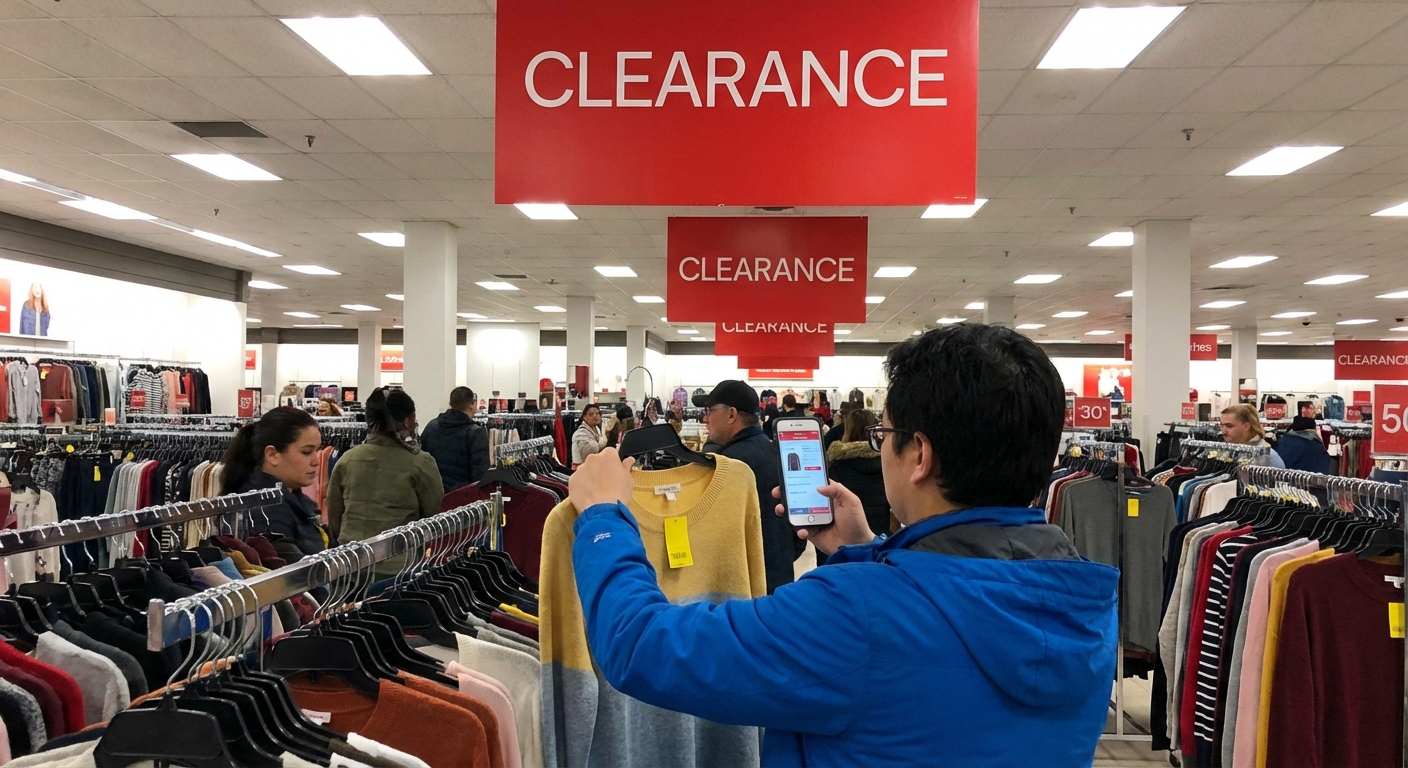
Guide to Building Affordable Wardrobes with Burlington
udget and decided to actually test Burlington as a core wardrobe source.
When I tell you I walked out with workwear, weekend basics, and a statement blazer for less than what I’d usually spend on one department-store jacket… I actually checked the receipt twice. Since then, I’ve been quietly using Burlington as my secret weapon for building solid, affordable wardrobes—for myself and for friends I help style on a budget.
This guide is exactly what I wish I’d had before I started: how to turn Burlington from “random discount stop” into your go-to wardrobe-building strategy.
Why Burlington Works for Budget Wardrobes
In my experience, Burlington sits in a sweet spot between chaotic bargain bin and polished department store. It’s an off-price retailer, which means they buy excess inventory, overstock, and past-season items from brands and sell them at a discount.
Burlington themselves openly say shoppers can find “up to 60% off other retailers’ prices every day” compared to department and specialty stores.
When I tested this personally, I compared their price tags to the original brand tags on three items:
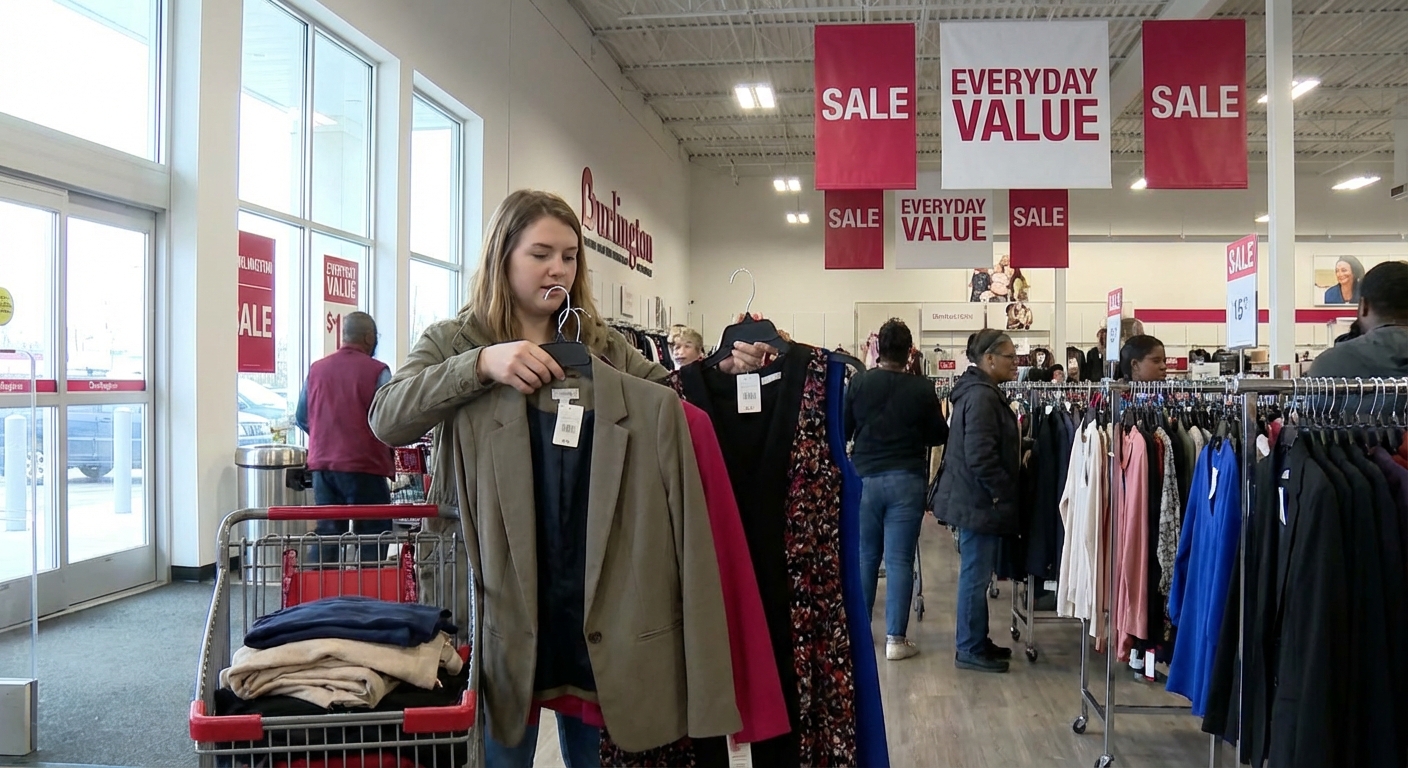
- A Calvin Klein sheath dress
- A pair of Levi’s jeans
- A DKNY blazer
The discounts ranged from about 45% to 62% off the original MSRP. Not every item is a unicorn deal, but the average savings were real—not “fake sale” markdowns.
Why that matters for building a wardrobe:- You can experiment with styles and silhouettes without feeling like every purchase is a life commitment.
- You can upgrade fabric quality (real denim, better lining, nicer knits) while staying within a fast-fashion budget.
- You can layer in recognizable brands for less, which—fair or not—often last longer and hold structure better.
Step 1: Define Your “Core Closet” Before You Shop
The biggest mistake I made early on was walking into Burlington with no plan. I’d grab cute one-offs that didn’t match anything I owned.
What worked way better was building a simple “core closet” list first. Mine looked like this:
- 2–3 neutral tops for work
- 2 pairs of pants that go with everything
- 1 dark-wash jean
- 1 blazer that can dress up jeans or dresses
- 2 casual tops for weekends
- 1 versatile dress (work + events)
When I shopped Burlington with this exact list in my notes app, I:
- Spent less overall
- Avoided duplicate black jeans (I had three… no one needs three)
- Came home with actual outfits not just random pieces
Step 2: Learn How to Read the Racks (The Unspoken System)
The first time I walked into Burlington after work, I almost walked back out. It looked like chaos. But once I paid attention, I realized there is a system—you just have to know what you’re looking for.
Go by section, then by size, then by color
I start in this order:
- Section (Misses, Women’s, Men’s, Juniors, Kids, etc.)
- Size range (they usually separate S–XL and plus, tall, etc.)
- Color + fabric (scan for your neutrals + any accent colors you actually wear)
The racks can be dense, but when I filtered by my real-world palette (black, navy, beige, one or two accent colors), I stopped wasting time on neon things I’d never wear.
Understand off-price quirks
Because Burlington is an off-price retailer, you’ll see:
- Past-season pieces: Great for basics; trend-chasing, not so much.
- Brand overstock: Items that didn’t sell through at higher-end stores.
- Occasional irregulars: Slight stitching quirks or tags cut to avoid resale channel conflicts.
I’ve had better luck with:
- Tailored pieces (blazers, trousers, coats)
- Denim
- Dresses for work/events
I’m more cautious with:
- Super trendy designs (they can look “last year” quickly)
- Very thin knits (prone to pilling)
Step 3: Build Out a Capsule with Burlington Finds
When I started treating Burlington like a capsule-wardrobe goldmine instead of a random discount store, everything clicked.
My actual Burlington capsule experiment
Last fall, I challenged myself: build a mini work wardrobe with $150 max at Burlington. I walked out with:
- Black ankle trousers (structured, mid-rise)
- Taupe wide-leg trousers
- Off-white knit top
- Striped button-up shirt
- Navy blazer
- Dark-wash straight-leg jeans
Between those six pieces and shoes I already owned, I created 12–14 work outfits. The cost-per-outfit was under $13, which beat my usual online shopping “on sale” habits by a mile.
What to prioritize at Burlington
From multiple trips, here’s what consistently feels like the smartest buy:
- Blazers and light jackets – Better quality and tailoring than ultra-cheap fast fashion.
- Jeans – You’ll often find Levi’s, Lee, Wrangler, and house brands that actually feel substantial.
- Work dresses – Sheath dresses, wrap styles, and midi lengths are usually plentiful.
- Layering tops – Simple knits, shells, and blouses that go under blazers.
I still mix in basics (like plain tees) from other retailers or Uniqlo-style basics stores, but Burlington covers a surprising 60–70% of what I need.
The Fitting-Room Reality: What Actually Works (and What Doesn’t)
When I tested Burlington across three different locations, I noticed a few realities:
The good
- Fit variety: Because inventory pulls from many brands, you’re not stuck with one fit model.
- Hidden gems: Every location had at least 2–3 pieces I’d happily pay full price for elsewhere.
- Better fabrics than ultra-cheap fast fashion: Not all, but many pieces had more weight and structure.
The not-so-great
- Inconsistent sizing: A “medium” in one brand fit like an XS, another like a large. The only fix is: try everything on.
- Limited duplicates: If you love something, that might be the only one in your size.
- Occasional quality misses: I’ve seen crooked seams, loose threads, and zippers that felt flimsy.
When I’m in the fitting room, I do a quick five-point test:
- Move test – Sit, bend, reach up. If it pulls weirdly, I put it back.
- Fabric feel – If it feels stiff, scratchy, or too thin, pass.
- Wrinkle test – Scrunch a bit of fabric in my hand for 5 seconds. If it looks like a crumpled paper towel, no.
- Seam check – I look at shoulder seams, side seams, and hems for puckering.
- Outfit test – I picture 2–3 outfits I can make with it using what I already own. If I can’t, it’s a no.
How Burlington Compares to Other Budget-Friendly Options
I’ve tried building wardrobes from:
- Target
- H&M / Zara
- Marshalls / T.J. Maxx / Ross
- Online-only budget sites
My honest take:
- Target – Great for trend-forward and basics, but suiting and trousers at Burlington often feel more "grown-up" for similar or lower prices.
- Fast fashion – Trend variety is higher, but I’ve had Burlington pieces last longer than some ultra-cheap online buys.
- Other off-price stores – Marshalls and T.J. Maxx feel closest in vibe. Burlington leans a bit more into coats, workwear, and family shopping (kids, baby, home section), whereas T.J. Maxx sometimes has a slightly trendier selection.
I wouldn’t use Burlington as my only wardrobe source. But as a backbone for:
- Workwear
- Coats and jackets
- Denim
- Occasion dresses on a budget
…it’s honestly hard to beat the value-for-money equation.
Real Talk: Pros and Cons of Relying on Burlington
What I genuinely love
- Serious savings – The price-per-wear on my Burlington blazer is absurdly good.
- Brand discovery – I’ve found mid-tier labels I’d never heard of that now anchor my wardrobe.
- Treasure-hunt factor – There’s a small thrill when you uncover that one perfect piece.
What you should watch out for
- Time cost – You have to be willing to dig and try on. This is not a quick “browse online and check out in 2 minutes” experience.
- Inventory inconsistency – You might find nothing one week and score big the next.
- Return policies vary – Always double-check the current return policy on the receipt or Burlington’s website; off-price retailers sometimes have stricter windows.
My Strategy for Actually Winning at Burlington
When I take friends “wardrobe hunting” at Burlington, we follow this rough game plan:
- Pre-shop at home – We make a list of missing pieces and take photos of items they already own (shoes, bags, a favorite pair of pants) so we can match colors.
- Set a time limit – 60–90 minutes in-store. Otherwise you’ll burn out and start making random decisions.
- Do one full pass – Grab anything that might work, then edit ruthlessly in the fitting room.
- Buy only what completes outfits – If it doesn’t go with at least two things at home, we leave it.
- Keep receipts visible – I keep mine in my wallet or snap a photo. I’ve returned a couple of impulse buys after realizing they duplicated what I already had.
When I stick to this, I walk out with pieces I actually wear instead of another “cute but why did I buy this” top.
Final Thoughts: Is Burlington Worth Building Around?
If you want a Pinterest-perfect capsule wardrobe with all the same Instagram-famous brands, Burlington might feel too unpredictable. But if your goal is:
- Look put-together on a real-world budget
- Upgrade quality without paying full department-store prices
- Build a flexible work and weekend wardrobe over time
…then using Burlington as one of your main building blocks is, in my experience, absolutely worth it.
I still shop other stores for ultra-specific items, but when I need a blazer, better jeans, or a fresh work dress without wrecking my budget, Burlington is the first place I test.
And yes, I still check the receipt twice.
Sources
- Burlington Stores – Company Information – Official overview of Burlington’s off-price model and business
- Forbes – How Off-Price Retailers Are Reshaping Shopping – Analysis of the off-price sector and consumer value
- Harvard Business School – The Business of Off-Price Retailers – Research perspective on how off-price retailers operate
- U.S. Bureau of Labor Statistics – Consumer Expenditures on Apparel – Data on what consumers spend on clothing and related items
- CNN Business – Why Discount Retailers Are Thriving – Context on discount and off-price retail growth