Guide to Bungalow Designs for Modern Living
ovate a 1950s bungalow into a light-filled, open-plan space that suddenly made everyone in our group chat say, “Wait… I want that.” That project completely changed how I look at single-story living.
This guide is me distilling what I’ve learned from walking countless bungalow tours, talking with architects and builders, and yes—making some painful design mistakes in my own small home. If you’ve ever wondered whether a bungalow can work for modern living (or even feel a bit luxurious), the answer is a very loud yes.
Why Bungalows Work Shockingly Well for Modern Life
In my experience, once people spend a week in a well-designed bungalow, they don’t want to go back to stairs.
1. Single-level living = real everyday comfort
No stairs means:
- Easier aging in place (your future knees will thank you)
- Safer for kids (and clumsy adults—I’ve had my share of stair incidents)
- Better accessibility for guests with mobility issues
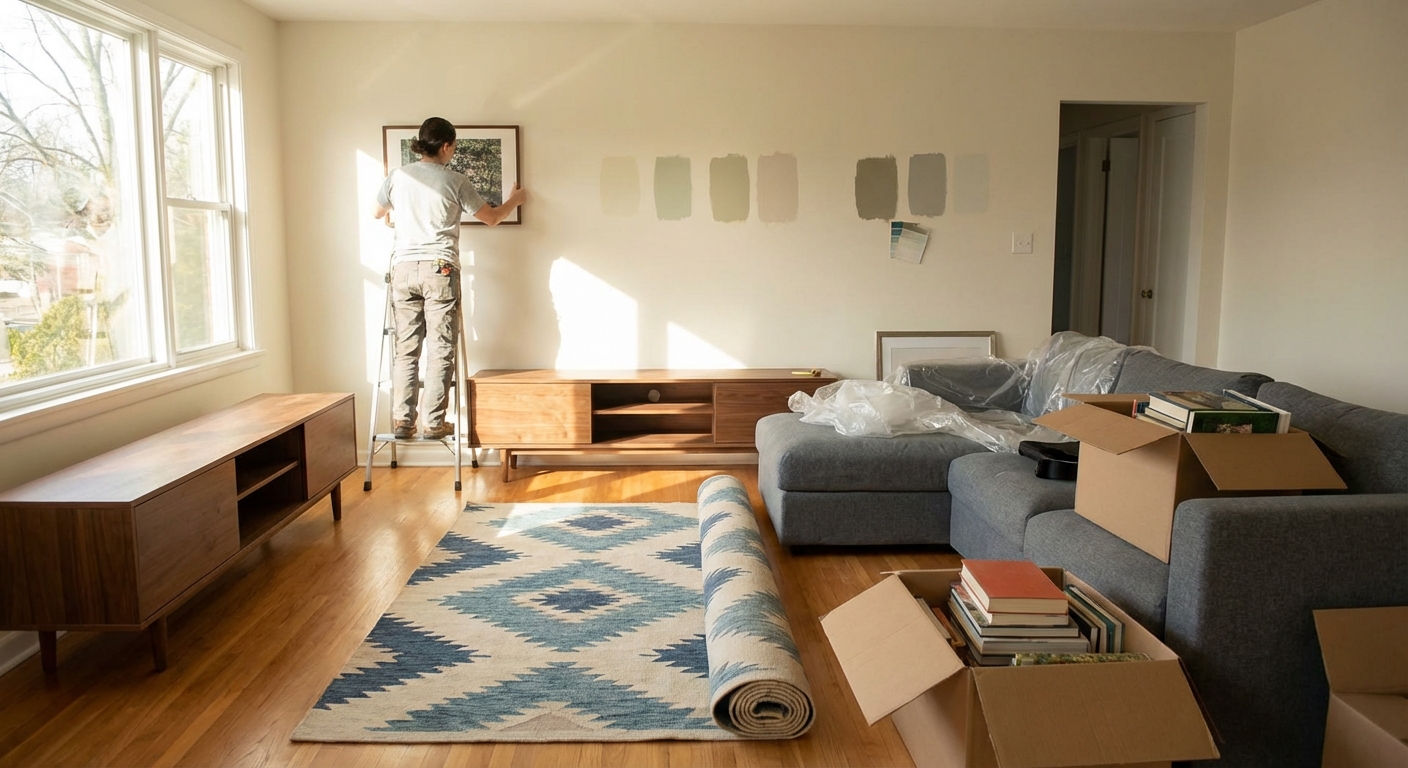
When I tested furniture layouts in a friend’s 900 sq ft bungalow, we realized something: the absence of circulation space for stairs gave us way more usable living area than her old two-story townhouse with the same square footage.
2. Smaller footprint, smarter design
A lot of classic bungalows clock in between 800–1,400 sq ft. That may sound tiny, but with modern planning—open-concept living, built-in storage, and clever zoning—it can feel surprisingly generous.
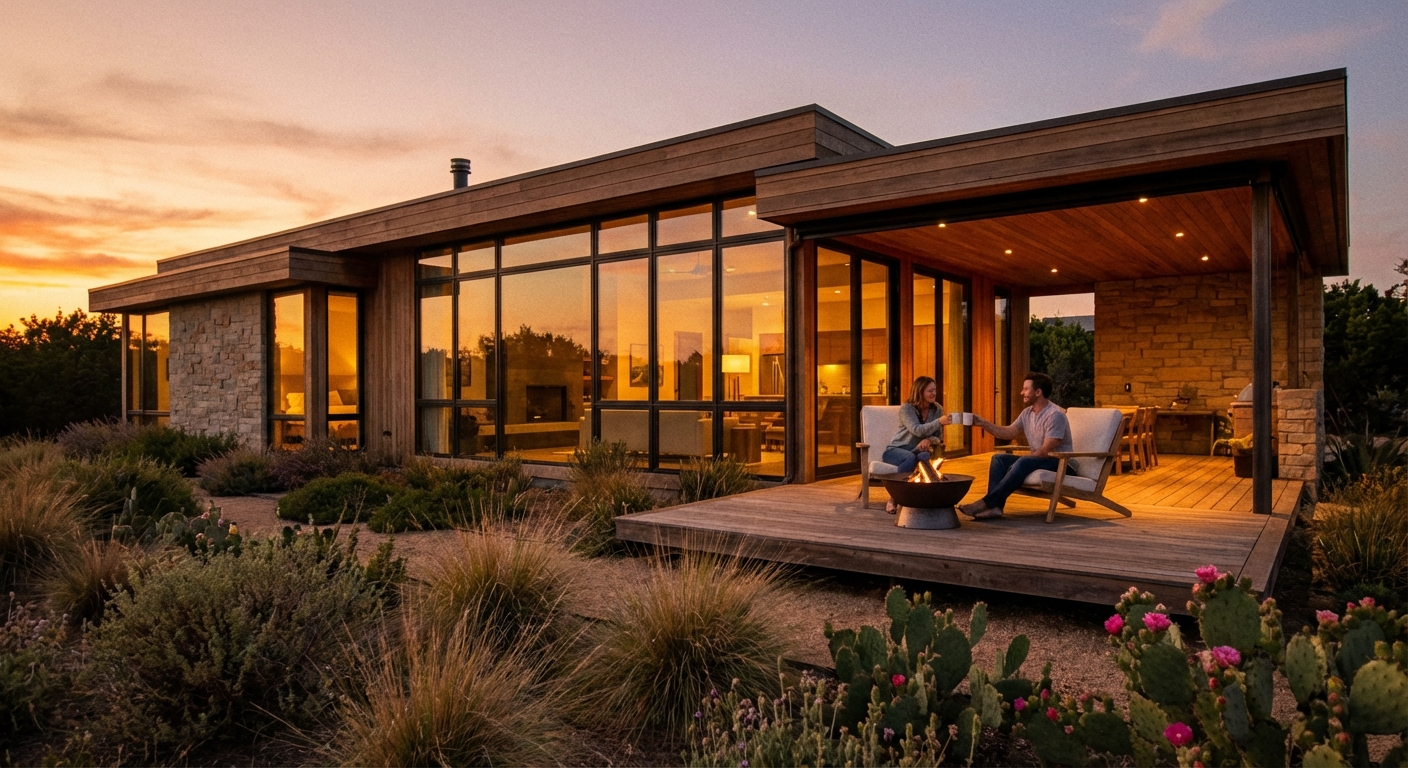
Architects love bungalows because the compact envelope makes passive design strategies (daylighting, natural ventilation, thermal mass) easier to implement. You’re working with one simple form instead of a stack of awkward volumes.
3. Relationship with the garden
Bungalows naturally blur indoor and outdoor space. Lower rooflines, long porches, and easy access to the yard make it simple to treat the garden as an extra room.
When I upgraded a rental bungalow’s sad patchy lawn into a small gravel courtyard with planters and string lights, the perceived living area almost doubled—even though I didn’t add a single interior square foot.
Key Bungalow Styles (And How to Modernize Each One)
I’ve noticed most bungalows for sale or renovation fall into a few recognizable style buckets. Knowing what you’ve got (or what you want) helps you make smart design choices instead of fighting the house.
Craftsman bungalow
Looks like: Deep porch, chunky tapered columns, exposed rafter tails, low-pitched gable roof. Modern design moves that work well:- Keep: The porch, original wood trim, built-ins (bookcases, window seats). These are gold.
- Update: Dark, heavy interiors. I’ve had success painting trim a warm off-white while leaving key elements—like a gorgeous oak mantle—natural.
- Open sightlines without gutting: Many Craftsman bungalows are full of small, chopped-up rooms. Instead of removing every wall, I’ve seen great results from widening doorways and adding cased openings that respect the period character.
Mid-century bungalow (1950s–60s ranch-style)
Looks like: Low-slung roofs, big picture windows, carport or attached garage, simple lines. Modern design moves:- Embrace: Clean lines and connection to the yard. These homes are perfect for large sliders to the patio.
- Correct: Choppy kitchen layouts and low-quality paneling. I recently walked a 1960s ranch where we removed one non-load-bearing wall, added a large peninsula, and suddenly the home felt like new construction.
Contemporary infill bungalow
These are new builds that borrow the one-story layout but update almost everything else.
Common features:- Open-plan living/kitchen/dining
- Vaulted or cathedral ceilings to add drama and light
- Large glazing, sometimes with clerestory windows
If you’re building new, this is where you can really flex with energy performance—think insulated slab, heat pump, high-performance windows, and thoughtful orientation to the sun.
Floor Plan Ideas That Actually Work Day to Day
I’ve tested a lot of layouts on paper and in real homes, and some patterns keep winning.
Open, but with zones
A fully open box can feel chaotic. The sweet spot I keep coming back to is:
- Open kitchen, dining, and living
- Visual separation through islands, low bookcases, or ceiling treatments
- Clear sightlines to the garden from at least two main spaces
One couple I worked with used a double-sided fireplace between the living and dining areas. It kept everything connected but created just enough separation that a mess on the dining table didn’t visually dominate the whole house.
The “front social / back private” rule
In bungalows, I’ve found this flow almost always feels right:
- Public/social spaces near the front
- Bedrooms and office toward the back
- Bathrooms grouped around a short internal hall for plumbing efficiency
It’s not revolutionary, but it works—and it also helps with sound insulation when someone’s watching a movie while another person’s trying to sleep.
Don’t forget vertical space
Modern bungalows don’t have the height of a three-story house, so ceiling strategy really matters.
What’s worked well for me:
- Slightly higher ceilings (9–10 ft) in social spaces, standard in bedrooms
- Vaulted ceiling in just one key area (usually living room) for drama without blowing the whole energy budget
- Adding skylights strategically—over circulation areas or kitchens, not bedrooms (ask me how I know; that sunrise skylight experiment was… bold).
Exterior Design: Curb Appeal Without Going Fake-Modern
I recently walked past a “modernized” bungalow with a tacked-on cube at the front and black metal everything. It looked like two different houses on a first date.
Modernizing doesn’t mean erasing character.
Materials that age gracefully
What I’ve consistently seen hold up well:
- Wood or fiber cement siding paired with a muted, warm palette (think soft greens, clay, greige)
- Real or high-quality faux stone used sparingly at the base, not slathered everywhere
- Metal roofing on porches or accents; asphalt or tile for the main roof depending on climate
The U.S. Department of Energy notes that cool roofs and well-insulated envelopes can significantly reduce energy bills, particularly in hot climates (energy.gov, 2023). Upgrading your roof and insulation during an exterior refresh is one of the most cost-effective moves you can make.
The modern porch formula
Every great bungalow I’ve admired, photographed, or mentally moved into had one thing in common: the porch felt intentional.
My go-to checklist:
- Deep enough to actually sit on (at least 6–8 feet)
- One clear seating area, not six mismatched chairs scattered around
- Good lighting that’s warm (2700–3000K), not interrogation-room white
- Simple but lush planter strategy—one or two large statement pots beat ten tiny ones
Making the Most of a Small Bungalow Footprint
A lot of people ask me, “Can a bungalow really work for a family?” My honest answer: it depends on your stuff and your expectations.
Storage: the make-or-break factor
In my experience, the happiest bungalow owners treat storage as architecture, not an afterthought.
What consistently works:
- Built-in bench with hidden storage in the entry
- Floor-to-ceiling wardrobes instead of multiple small closets
- Shallow storage (10–14 inches deep) along hallways for linens, cleaning supplies, and seasonal items
- Attic storage with pull-down access for rarely used items
I’ve seen families of four thrive in a 1,100 sq ft bungalow because every inch was working. I’ve also seen a couple feel cramped in 1,400 sq ft because there was nowhere to put anything.
Multi-use rooms that don’t feel compromised
The trick I’ve learned is to design for the primary use and then layer in the secondary.
Examples I’ve seen work well:
- Guest room that’s 90% office, with a high-quality sofa bed instead of a permanent bed
- Dining room with a built-in banquette and hidden drawers for board games and table linens
- Wide hall niches turned into study desks or reading nooks
When I tested a true “everything room” (office + guest + workout space), it turned into a clutter vortex. Two uses is manageable; three usually isn’t, unless you’re extremely disciplined.
Energy Efficiency and Sustainability in Bungalows
Because bungalows are compact and single-story, they’re prime candidates for high-performance upgrades.
Why they’re efficiency-friendly
- Simpler roof form = easier and often cheaper to insulate properly
- Less vertical heat stratification than tall homes
- Easier to retrofit windows and doors because you’re not up on scaffolding
According to the U.S. Energy Information Administration, residential buildings account for roughly 21% of U.S. energy consumption (EIA, 2022). Even modest improvements—like upgrading to a heat pump or tightening the building envelope—can noticeably reduce bills and emissions.
Quick-win upgrades I’ve seen pay off
- Air sealing + attic insulation: Usually the best first move in older bungalows.
- Window upgrades or storm windows: Especially on leaky single-pane originals.
- Heat pump systems: I’ve seen homeowners cut their heating and cooling energy use significantly by switching from old resistance heaters or inefficient furnaces.
- Shading and landscaping: A well-placed deciduous tree can reduce summer cooling loads; the U.S. Department of Energy highlights strategic landscaping as a legit efficiency strategy, not just a nice-to-have.
Pros and Cons of Modern Bungalow Living
To keep this honest, let’s talk about both sides. Bungalows aren’t magic.
The upsides
- Accessible and future-friendly: Single-level layouts are ideal for aging in place.
- Strong connection to the garden: Outdoor space feels natural and easy to use.
- Efficient and cozy: Easier to heat, cool, and maintain compared to sprawling multi-story homes.
- Character and charm: Especially in historic neighborhoods with mature trees.
The trade-offs
- Lot size requirements: Single-story often means a bigger footprint; tight urban lots can be challenging.
- Privacy can be tricky: All bedrooms on one level near social areas; thoughtful soundproofing helps.
- Expansion limitations: Adding up (a second story) can be costly; adding out eats yard space.
- Storage pressure: You have to be disciplined with possessions or very clever with built-ins.
I’ve watched people fall completely in love with bungalow living, and I’ve also seen some decide they miss the “escape” of an upstairs level. Being honest about your lifestyle—how you work, host, relax—matters more than the Pinterest photos.
How to Start Designing Your Modern Bungalow
If I had to boil down all my bungalow experiments, wins, and facepalms into a quick roadmap, it’d be this:
- Decide your non-negotiables. Is it three bedrooms? A real home office? A big kitchen? List them before you look at any floor plans.
- Walk through examples in person. Open houses, friends’ homes, model units—see how single-level living actually feels.
- Prioritize light and flow over square footage. A well-lit 1,000 sq ft bungalow can feel better than a dark 1,500 sq ft one.
- Invest in storage from day one. Built-ins beat random furniture later.
- Plan for your future self. Even if you’re 30 and fit, think: wide doorways, minimal level changes, comfortable bathroom layouts.
When I stopped trying to make every bungalow behave like a two-story suburban house and instead leaned into what bungalows do best—cozy, connected, simple, and smart—my design decisions got easier and the results felt a lot more livable.
If modern living to you means less wasted space, stronger connection to your garden, and a home that quietly supports your everyday routines, a well-designed bungalow might be exactly the upgrade you didn’t know you were looking for.
Sources
- U.S. Energy Information Administration – Residential Energy Consumption Overview - Data on how homes use energy
- U.S. Department of Energy – Energy Saver: Home Cooling - Guidance on efficient home cooling and building envelope
- National Park Service – Preservation Brief 37: Maintaining the Exterior of Small and Medium Size Historic Buildings - Best practices for historic bungalow exteriors
- Harvard Joint Center for Housing Studies – Housing America's Older Adults 2023 - Insights on aging in place and home design
- Architectural Digest – The Enduring Appeal of the American Bungalow - Background on bungalow style and evolution