Guide to Buy Now Pay Later Phone Options
en I cracked my screen twice in one year and suddenly the idea of dropping $1,200 in one shot on a new device felt… painful.
So I did what I do best: I went down a research rabbit hole, tested a couple of BNPL options myself, grilled a few friends in fintech, and turned the whole thing into a guide.
This is the breakdown I wish I’d had the first time I clicked “Pay in 4.”
What “Buy Now Pay Later” for Phones Actually Means
When I first saw BNPL at checkout, I assumed it was just a glorified layaway. It’s not.
BNPL is a type of short-term installment loan. You get the phone now, and pay it off over a set period (weeks or months). The pitch usually sounds like this:
- Low or 0% interest (if you qualify and follow the rules)
- Instant approvals with soft credit checks (usually)
- Split payments: often 4 payments over 6 weeks, or monthly over 6–24 months
Under the hood, companies like Affirm, Klarna, Afterpay, PayPal Pay in 4, and even Apple’s own financing partner (in many regions, that’s Citizens One or carrier financing) are essentially lending you money.
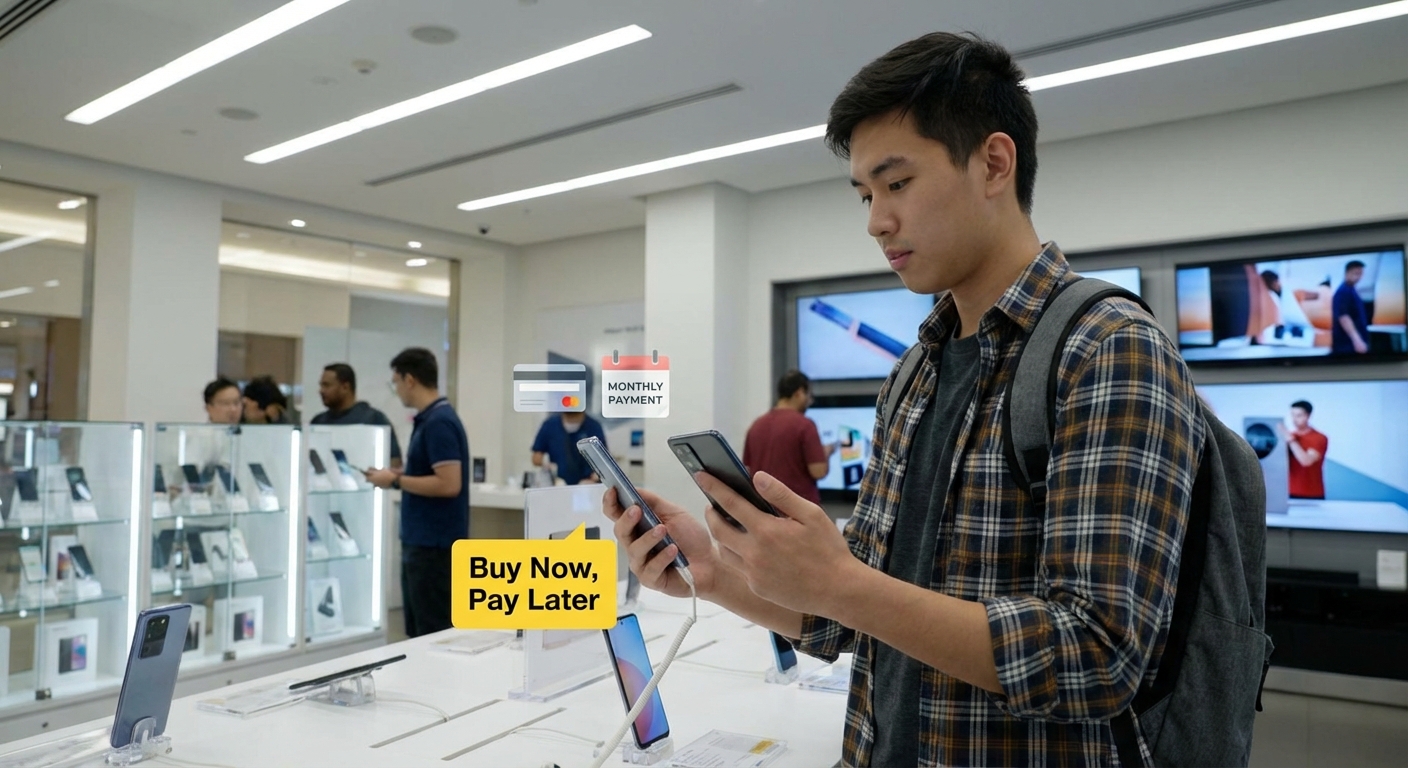
When I tested Klarna and Affirm myself, the experience felt weirdly frictionless: a couple of clicks, instant approval, and boom—new phone secured. That smoothness is exactly why you have to be extra alert.
Main Ways to Get a Phone with BNPL
1. BNPL at Checkout (Retailers & Online Stores)
When I upgraded my phone last year, I tried Affirm at checkout on a major electronics site just to see how painful it was. It took under 60 seconds.
How it works:- You choose your phone.
- At checkout, you pick a BNPL provider (Affirm, Klarna, Afterpay, PayPal, etc.).
- You see a payment plan, like: “$80/month for 12 months at 0–15% APR.”
- Soft credit check, instant decision.
- Crazy fast and simple.
- Occasionally real 0% APR promos on specific models.
- Works with unlocked phones from Amazon, Best Buy, carrier stores, and official brand sites.
- If you’re not approved for the 0% offer, the APR can jump into credit card territory.
- Easy to stack multiple BNPL orders across different stores and lose track.
- Some providers charge late fees or may send missed payments to collections.
When I tested Affirm, the UI showed total cost very clearly (including interest). Klarna, in contrast, felt more “friendly” but a bit less upfront with the total borrowing cost at first glance—you have to tap through to see all the details.
2. Carrier Installment Plans (AT&T, Verizon, T-Mobile, etc.)
Before BNPL went viral, carrier financing was the original “pay later” option.
How it works:- You get a phone through your carrier.
- They spread the cost over 24–36 months.
- Sometimes 0% interest with bill credits if you stay on your plan.
When I briefly switched carriers two years ago, I financed an iPhone over 30 months. It felt annoyingly long, but the 0% APR was legit.
Pros:- Often true 0% interest on flagship phones.
- You can pair it with trade-in deals and bill credits.
- Payments are bundled into your monthly bill—easy to track.
- You’re basically tied to that carrier until the phone is paid off.
- Early payoff rules can be confusing.
- If you miss a bill, you’re not just late on the phone—you’re late on service too.
Carriers aren’t usually marketed as BNPL, but functionally, they’re a long-term, zero-interest installment loan.
3. Official Brand Financing (Apple, Samsung & others)
When I tested Apple’s upgrade path, it felt like BNPL but with more polish and less flexibility.
Apple (in the US):- Apple offers iPhone financing through partners like Citizens One and via the Apple Card Monthly Installments.
- Typical terms: 0% APR, split over 24 months for eligible customers.
- Samsung partners with providers like Affirm in the US and Klarna in some regions.
- Regular promos with 0% APR on Galaxy phones and bundles.
- Highly integrated: you’re in the brand ecosystem, which is smooth.
- Genuine 0% APR offers if your credit is solid.
- Sometimes bundled with premium services or upgrades.
- Often requires good to excellent credit.
- Fewer options if your credit score is shaky.
- Locked into one brand’s ecosystem.
When I tested Apple’s monthly installments, the approval took a bit longer than Klarna—but the transparency around 0% APR and total costs was better.
4. Generic BNPL Apps You Use Anywhere
This is the part most people don’t realize: some BNPL apps give you a virtual card you can use at almost any online phone retailer.
Examples:- Klarna “One-time card”
- Affirm virtual card
I tried Klarna’s one-time card on a smaller online retailer that didn’t even list a BNPL option at checkout. It still worked.
Pros:- You’re not limited to big stores.
- Sometimes more flexible terms (3–24 months).
- Interest can kick in quickly.
- Very easy to overextend because it’s not tied to one purchase ecosystem.
How BNPL Really Impacts Your Wallet (and Credit)
When I started digging into BNPL, I was surprised by how messy the credit impact can be.
- Soft vs hard checks: Many BNPL providers (like Klarna’s “Pay in 4” or PayPal Pay in 4) use a soft credit check that doesn’t hurt your score. But longer-term plans (6–24 months) may involve a hard inquiry.
- Credit reporting: Some BNPL companies have started reporting to major bureaus like Experian and TransUnion. This means your on-time payments can help, and missed payments will hurt. Policies are evolving quickly.
A 2022 report from the Consumer Financial Protection Bureau (CFPB) flagged that BNPL users are more likely to also use high-interest products like credit cards and payday loans, and sometimes juggle multiple BNPL loans at once.
From my own budgeting test (I ran a simple spreadsheet comparing a BNPL plan vs just saving and paying upfront in 3 months), I noticed two big things:
- The psychological comfort of small payments made me more willing to choose a higher-end model.
- One late payment fee during a busy month would have erased the benefit of the “0%” pitch.
Smart Rules Before You Click “Pay in 4” on a Phone
These are the filters I now use personally whenever I consider BNPL for a phone.
1. Only Finance What You Could Afford in Cash in 3–6 Months
If the phone is so expensive that even a 12-month split feels like a stretch, that’s a red flag. When I tested this rule on myself, it pushed me to pick the mid-tier model instead of the ultra-premium one.
2. Check the Total Cost, Not Just the Monthly Number
I never trust the friendly-looking “only $39.99/month!” anymore. I:
- Compare the cash price vs financed price.
- Check the APR and the total interest over the term.
If the financed total is more than ~10% above the cash cost and it’s not an emergency, I skip.
3. Use BNPL for Needs, Not FOMO Upgrades
Broken phone? Stolen? Need it to work? I’d seriously consider BNPL if I don’t want to drain my emergency fund.
Just feeling tempted by the newest camera bump? I pass. When I tested delaying my upgrade by 6 months, I found better carrier deals and trade-in promos anyway.
4. Automate Payments Immediately
Every time I signed up for BNPL, I immediately:
- Turned on auto-pay.
- Connected a bank account or card I actually use.
- Set calendar reminders a day or two before each due date (paranoid, but effective).
One missed payment can trigger late fees or interest, and possibly negative marks on your credit.
5. Don’t Stack Multiple BNPL Plans
The biggest danger I’ve watched friends fall into: three or four small BNPL payments that together equal a full-blown car payment.
I have a one-at-a-time rule: if I already have an active BNPL loan, I don’t start another until that one’s done.
When BNPL for Phones Makes Sense (and When It Really Doesn’t)
BNPL can make sense when:- Your current phone is broken or unreliable and you genuinely need a working one.
- You can comfortably afford the installments from your current income.
- The plan is 0% APR, clearly stated, and from a reputable provider.
- You’re using it as a timing tool, not as invisible extra money.
- You’re choosing a model you couldn’t reasonably buy within 3–6 months in cash.
- You already have credit card debt or other BNPL plans.
- You’re tempted by “just $20 more per month” upgrades.
- You’re not a details person and tend to forget due dates.
In my experience, BNPL is like power tools: super useful if you know what you’re doing, hazardous if you don’t.
My Personal Take After Testing BNPL for Phones
After trying Affirm and Klarna for tech purchases (including a phone), plus comparing it to carrier financing and just paying upfront, here’s where I landed:
- I do use BNPL occasionally for phones, but only on 0% APR and when I can cover the full balance from savings if something went wrong.
- I avoid long-term (24–36 month) plans unless it’s a carrier deal where the math clearly checks out.
- I treat BNPL like a tool, not a discount. The “deal” isn’t real unless the total cost matches (or nearly matches) the cash price.
If you take one thing from this guide: don’t let the small monthly number hypnotize you. Do the boring math. The best phone is the one that fits your actual life and budget—without future-you cursing past-you every month.
Sources
- Consumer Financial Protection Bureau – Buy Now, Pay Later: Market trends and consumer impacts (2022 report) - Detailed analysis of BNPL usage and risks.
- Forbes – What Is Buy Now, Pay Later? - Overview of how BNPL works and its pros/cons.
- Apple – Apple Card Monthly Installments for iPhone - Official info on Apple’s 0% iPhone financing structure.
- Samsung – Financing with Affirm - Samsung’s official page explaining its phone financing options and terms.
- Federal Trade Commission – Buy Now, Pay Later: Consider the Risks - Government consumer guidance on BNPL products and potential pitfalls.