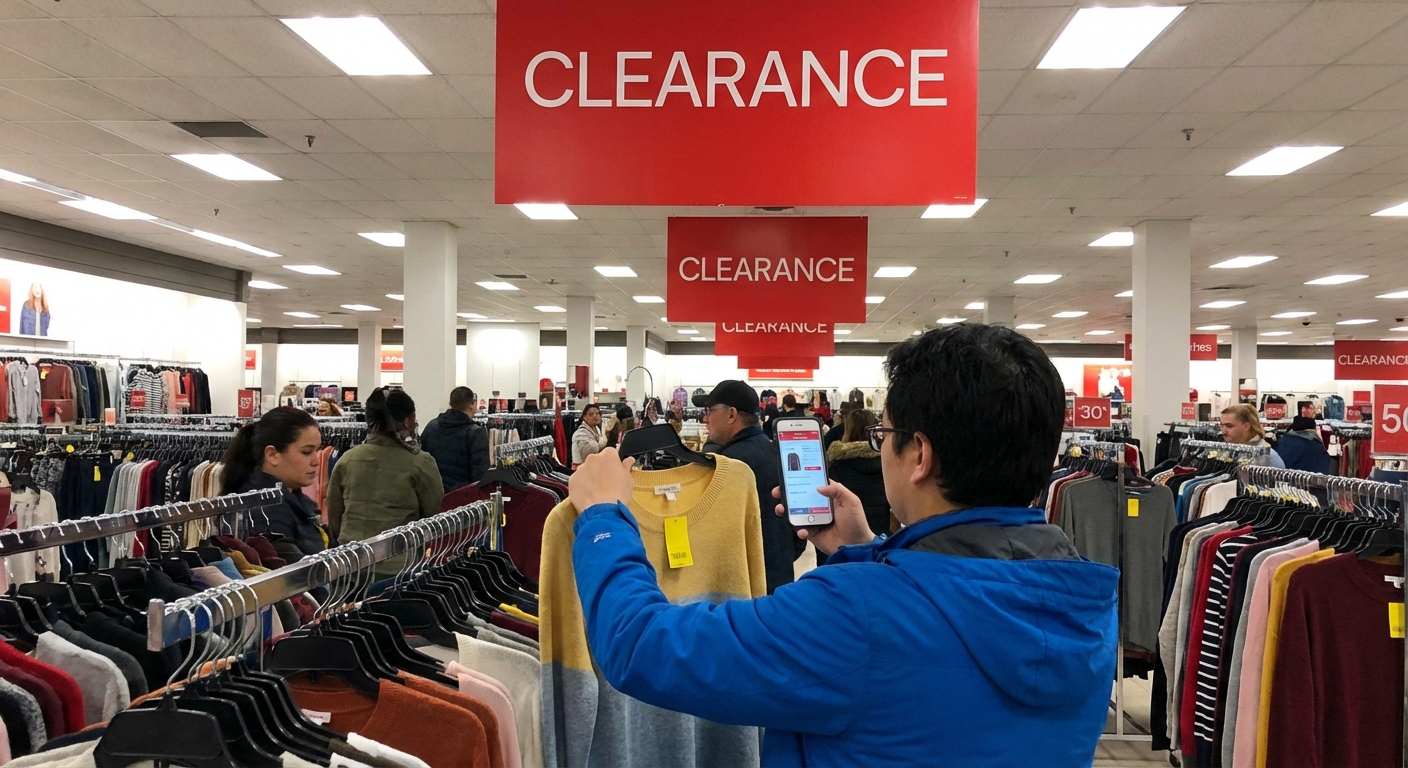
Guide to Buying Big-Ticket Items: Timing Purchases Around Retail Sales Cycles
new fridge, laptop, and mattress.
Spoiler: it wasn’t luck. It was timing.
When I finally pulled the trigger on that fridge, I paid $780 less than the price I’d screenshotted three months earlier. Same model. Same store. Just… smarter timing.
This guide is exactly what I wish I’d had before dropping thousands of dollars at the wrong time.
Why Timing Matters More Than Coupon Codes
When I tested different ways to save — coupon stacking, cashback apps, loyalty programs — nothing came close to just buying at the right time of year.
Here’s what I noticed after tracking prices across Best Buy, Home Depot, Amazon, and Costco:
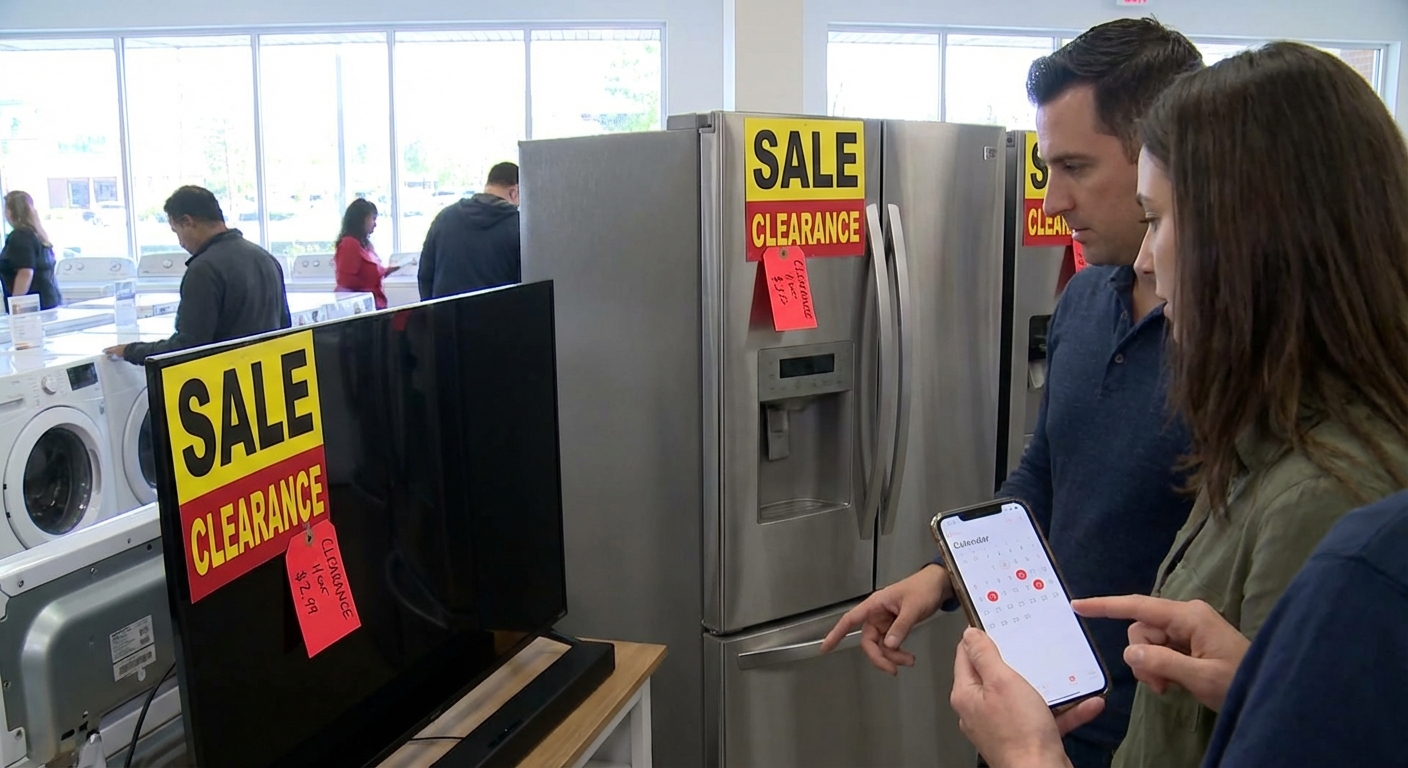
- Big-ticket items (appliances, TVs, furniture, laptops) move in predictable cycles tied to holidays, model releases, and fiscal quarters.
- The price swings are dramatic. Appliances, for example, can vary 20–35% throughout the year.
- The best discounts often aren’t during the flashy “biggest sale ever” ads, but during quieter transition periods.
The Consumer Price Index data from the U.S. Bureau of Labor Statistics even backs this up — durable goods like appliances and electronics show consistent seasonal price patterns, not random chaos.
Once I started treating big purchases like a timing game instead of a “hope there’s a coupon” moment, everything changed.
The Big Picture: Annual Retail Sales Cycle (In Plain English)
Here’s the quick-and-dirty calendar I now keep in my notes app. Is it perfect? No. Is it weirdly accurate most years? Yep.
- January: Clearance on last year’s electronics, fitness gear, bedding
- February: TVs and sound systems (post-Super Bowl promos), mattresses start creeping on sale
- March–April: Tax refund promos, laptops, some home office gear
- May: Big appliances (Memorial Day), some furniture
- June–July: TVs (graduation & July 4th), laptops, outdoor furniture, grills
- August: Back-to-school tech (laptops, tablets, printers)
- September: Major appliance model changeover, Labor Day sales
- October: Outdoor stuff clearance, early TV deals
- November: Black Friday/Cyber Monday — broadly good, especially for tech
- December: High-end electronics, last-minute deals, some luxury items
Is this universal? No. But when I compared price histories on tools like CamelCamelCamel (for Amazon) and various price trackers, these patterns showed up over and over.
Appliances: When I Saved Hundreds Just by Waiting 3 Weeks
When my old washer started screaming like a jet engine, I wanted to replace it that weekend. Instead, I checked the calendar.
It was early May.
I’d recently discovered from a Lowe’s sales associate that big appliance promos are typically tied to Memorial Day, Labor Day, and Black Friday, with brand-specific promos in between.
So I waited.
Three weeks later, that $1,299 washer dropped to $949, plus a gift card rebate. The salesperson even said, “Yeah, this is the price range we target around Memorial Day every year.”
Best Time to Buy Major Appliances
In my experience (and backed up by Home Depot and Lowe’s promo calendars):
- Best months: May (Memorial Day), September (Labor Day), November (Black Friday)
- Secondary windows: January (floor models, discontinued SKUs)
- Why: New models are often released in September–October, so stores discount older models around Labor Day and into fall.
TVs & Electronics: The Super Bowl Trap I Fell For (Once)
One year, I was convinced the Super Bowl was the best time to buy a TV. The marketing absolutely got me.
When I tested that assumption later by comparing price histories (using archived deals from sites like Slickdeals and price trackers), I realized I’d paid almost the same as I would have in November. Worse, a similar model dropped another $150 during Black Friday that same year.
What Actually Happens With TV Pricing
From tracking multiple brands (Samsung, LG, Sony) across two years:
- New TV models usually launch in spring (March–May).
- That means last year’s models hit their steepest discounts from August through November.
- Black Friday/Cyber Monday still tend to get the biggest doorbuster deals, especially on mid-range sets.
Consumer Reports and Wirecutter consistently point to November as the sweet spot for TVs. Based on my own price screenshots, I agree.
My Go-To Timing for Electronics
- TVs: August–November, with a strong lean toward Black Friday if you’re willing to compete
- Laptops & tablets:
- March–April (tax refund promos)
- August (back-to-school)
- November (Black Friday/Cyber Monday bundles)
- Headphones, wearables, peripherals: Black Friday, Amazon Prime Day (July-ish), and random brand anniversaries
One thing I’ve noticed: the headline deals on Black Friday are great, but the week before and after often quietly match or nearly match those prices without the chaos.
Furniture & Mattresses: The Sneaky Holiday Game
Buying a mattress was the purchase that made me obsessive about timing. I walked into a mattress store in February, laid on something that felt like a cloud, and the salesperson casually said, “If you can wait until Memorial Day, this will probably be 20–30% off.”
So I tested it.
I checked prices monthly for that exact model. By Memorial Day, it was 28% off, with free delivery and a nicer base.
When Furniture & Mattresses Go On Sale
From my tracking and endless showroom visits:
- Best for mattresses: Presidents’ Day, Memorial Day, Labor Day, Black Friday
- Best for furniture: January (post-holiday clearance), July (Mid-year/July 4th), and major three-day weekends
Why? These industries are incredibly promotion-driven. Many brands build sales into their pricing model — which is why that mattress somehow is “50% off” six times a year.
If a mattress is always on sale, is it really on sale? Sort of. But the stacking matters: sale price + free pillows + upgraded base + free delivery can be a real difference.
Caution from experience: I’ve seen some retailers bump the “regular” price just before a holiday weekend to make discounts seem bigger. Use price history tools or check third-party sellers to sanity-check the deal.Cars: The End-of-Month, End-of-Quarter Dance
When I bought my last car, I deliberately went in on the 29th of the month, which also happened to be end-of-quarter.
That wasn’t an accident.
Auto industry insiders (and a lot of reporting from outlets like Edmunds and Forbes) have talked for years about how sales quotas work:
- Salespeople and dealerships often have monthly and quarterly targets.
- Hitting those targets can trigger big bonuses.
- That gives them more incentive to discount near the end of those periods.
Here’s what worked for me:
- I got written quotes via email mid-month.
- I waited until the last few days of the quarter.
- I went back with the lowest quote and calmly asked if they could beat it “to help me sign before month-end.”
They dropped the price another $1,200 and threw in all-weather mats.
Strong Timing Windows for Cars
Based on my experience and industry data:
- Best timing:
- End of month
- End of quarter (March, June, September, December)
- Model-year changeover (often late summer–fall)
- Extra leverage: Bad weather days (showrooms are quieter), last days of holiday sales events
Downside: If you need a car now because yours died, you may not have this luxury. But even then, going at the end of the month instead of the 10th can matter.
How I Actually Plan Big Purchases Now (Simple Framework)
Here’s the low-drama system I use so I don’t get sucked into every sale ad.
1. Decide What, Then Pick Your Window
I start with the item (fridge, TV, sofa), then match it to its strong sale windows rather than chasing random deals.
Example I used recently: I knew I wanted a new laptop. I wasn’t in a rush, so I aimed for August (back-to-school) or November. I ended up grabbing it during a back-to-school promo with a student discount via a friend.
2. Track Prices for 30–60 Days
I don’t trust a red tag without context.
What I actually do:
- Add the item to wishlists (Amazon, Best Buy, Costco)
- Turn on price alerts (CamelCamelCamel, Honey, or browser extensions)
- Screenshot prices every couple of weeks if there’s no tracker
When I tested this for my TV, the so-called “flash sale” price turned out to be the normal low that appeared every few weeks.
3. Make a “Will Buy At” Number
Before the sale frenzy starts, I decide: If this hits $X, I’m buying.
That prevents the “maybe it’ll be $50 cheaper next week” spiral. I’ve missed tiny extra discounts, sure, but I’ve also avoided months of overthinking.
4. Always Check Total Cost, Not Just Tag Price
In my experience, the sneaky killers are:
- Delivery & installation
- Haul-away fees (for appliances)
- Extended warranties you maybe don’t need
Twice now I’ve seen a “cheaper” appliance store end up more expensive than a big-box retailer once delivery, install, and haul-away were included.
When You Shouldn’t Wait for the Perfect Sale
I’m obsessive about timing, but I’m not unrealistic.
Times I’ve Pulled the Trigger Early
- When safety was involved (I replaced faulty brakes ASAP, not at quarter-end)
- When a hard deadline existed (moving date, baby due date, short-term rental ending)
- When a legit unicorn deal showed up (open-box high-end TV with full warranty at 40% off)
There’s also a mental cost to spending six months hunting the mythical best price. At some point, “good enough discount, reliable brand, right timing for my life” beats theoretical perfection.
Quick Timing Cheat Sheet (Based on My Experience)
Not gospel, but a pretty solid starting point:
- Appliances: May, September, November
- TVs: August–November (with a nudge toward Black Friday)
- Laptops & Tech: March–April, August, November
- Furniture: January, July, long holiday weekends
- Mattresses: Presidents’ Day, Memorial Day, Labor Day, Black Friday
- Cars: End of month, end of quarter, model-year changeover
I’ve personally used every one of these windows to save anywhere from 15% to 40% compared to the highest prices I tracked.
If you treat big purchases like a strategy game instead of an emergency reaction, you’ll almost always walk away with more money still in your account — and way less buyer’s remorse.
Sources
- U.S. Bureau of Labor Statistics – Consumer Price Index Databases - Official data showing seasonal price patterns for consumer goods
- Consumer Reports – Best Time to Buy Things - Month-by-month guidance on when various products are typically discounted
- Forbes – When Is the Best Time to Buy a Car? - Explains dealer incentives and end-of-month/end-of-year timing
- Wirecutter (NYTimes) – The Best TV Deals - Analysis of TV pricing trends and best times to buy
- Federal Trade Commission – Shopping for a New Car - Government guidance on negotiating and structuring major car purchases