Guide to Choosing Bohemian Rugs for Interiors
room, with the wrong padding, under the wrong furniture. That rug taught me the hard way that Bohemian style might look carefree, but choosing the right piece is actually pretty strategic.
This guide is everything I wish I’d known before I started layering rugs like a Pinterest board come to life.
What Actually Makes a Rug Bohemian?
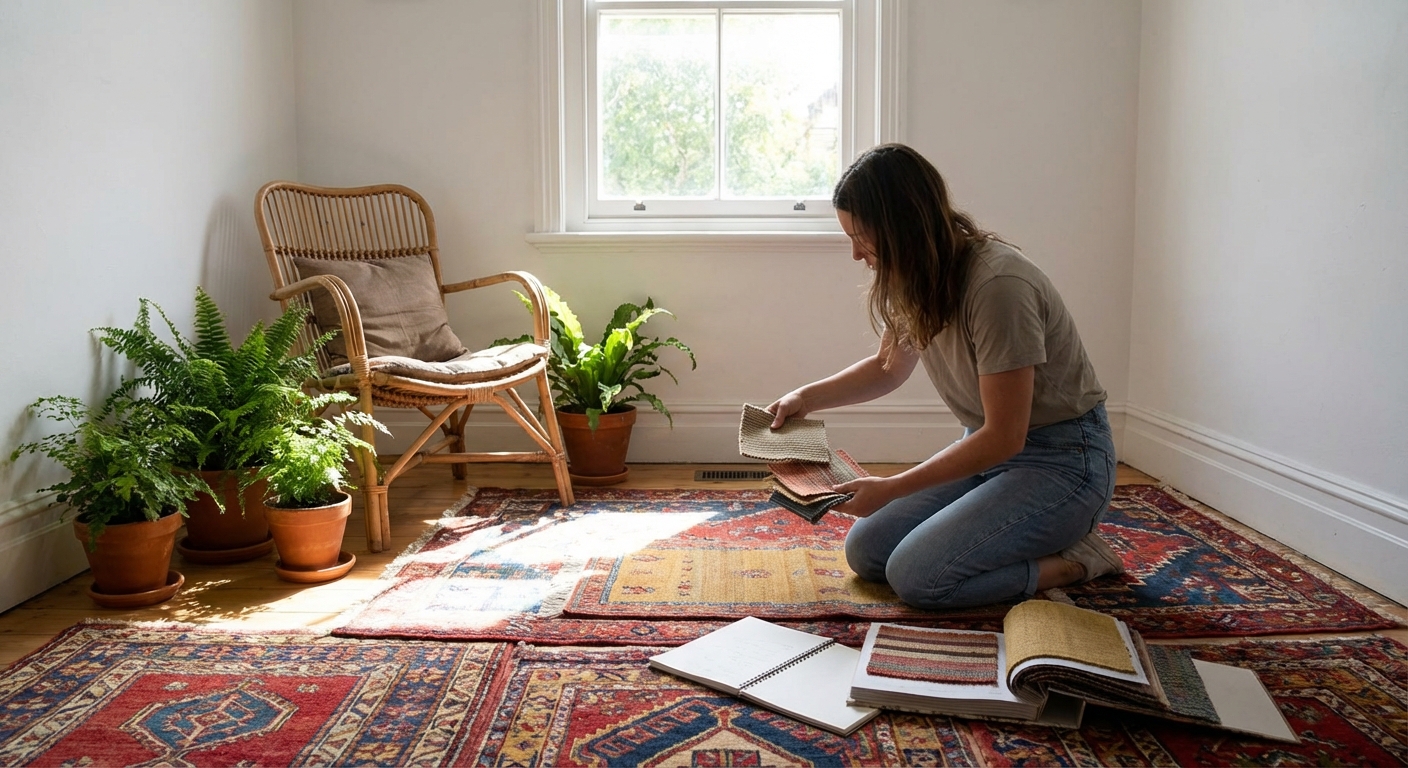
When I first started sourcing Boho rugs for clients, I made the mistake of thinking “Boho = chaos.” It’s not. The best Bohemian interiors feel collected, not cluttered.
In my experience, truly Bohemian rugs usually share a few traits:
- Global inspiration – Moroccan, Turkish, Persian, Berber, Indian dhurries, Beni Ourain, kilims. You see these a lot because Boho style borrows from travel and craft traditions.
- Artful imperfections – Abrash (those slight color variations in hand-dyed wool), worn patches, asymmetric motifs. These “flaws” are actually what make the rug look soulful.
- Layered color and pattern – Geometrics, tribal motifs, florals, medallions. Often mixed in unexpected ways.
- Tactile comfort – Shag pile, flatweaves with texture, chunky wool. Boho interiors are meant to be lived in, not just looked at.
When I tested different rugs in my own living room, the ones that truly pulled the space together weren’t the loudest. They were the ones that looked like they had a story before they got to my floor.
Choosing the Right Size (the Step Most People Rush)
If there’s one place people go wrong with Boho rugs, it’s size. They pick what’s cute, not what fits.
Here’s what’s worked consistently for me:
Living Room
I once tried using a tiny 5' x 7' vintage rug in a fairly large living room. It looked like a postage stamp floating in the middle of the floor.
- Aim for 8' x 10' or larger in most living rooms.
- Front legs of sofas and chairs should sit on the rug. It visually connects the seating.
- If you’ve got a stunning small Boho rug, use it layered over a larger neutral jute or sisal base.
Bedroom
When I tested layouts for a client’s small bedroom, a narrow runner on each side of the bed beat a full-size area rug for comfort and cost.
- Queen bed: 8' x 10' works well if you want the rug to frame the bed.
- Smaller budgets: two runners on each side of the bed and maybe a small rug at the foot.
Dining Room
Spilled wine on a wool rug taught me this one.
- The rug should extend about 24" beyond all sides of the table so chairs stay on the rug when pulled out.
- Flatweave or low pile is your friend here—easier to clean and easier for chairs to slide.
Pattern, Color, and How Not to Overdo the “Boho”
I once installed a rich red Persian-style rug under a jewel-toned sofa and heavily patterned curtains. The effect? Circus.
What’s worked better for balanced Boho:
1. Pick Your Star
Decide what’s the main visual focus: rug, sofa, or walls. Only one gets to be loud.
- If the rug is bold (multi-color kilim, bright Moroccan), keep the big furniture more muted.
- If your sofa is emerald velvet or rust orange, a soft neutral Moroccan Beni Ourain or faded Turkish Oushak calms everything down.
2. Use a Limited Color Story
When I style rooms, I usually pull 2–3 main colors from the rug and repeat them in pillows, throws, lamps, or art. It looks intentional instead of chaotic.
Example:
- Rug has deep blue, terracotta, and cream.
- Sofa: linen or sand color.
- Pillows: a mix of terracotta and blue.
- Art: black-and-white with a touch of terracotta.
3. Mix Patterns by Scale
Boho loves pattern mixing, but if you mix all small, busy patterns, your eyes don’t know where to land.
What’s worked for me:
- One large-scale pattern (the rug or curtains).
- One medium scale (throw, cushions).
- One small or subtle pattern (bedspread, smaller decor).
Materials: What Feels Good vs. What Actually Survives
When I tested different rug materials in high-traffic spaces, some looked great for about… a week.
Here’s how I weigh the options:
Wool
My go-to for Boho interiors.
- Pros: Naturally stain-resistant, durable, soft underfoot, ages beautifully.
- Cons: Usually pricier. Can shed at first.
- Wool’s natural stain resistance is supported by rug industry testing; lanolin in wool helps repel liquids.
Cotton & Flatweaves (Dhurries, Kilims)
I love flatweaves for layered Boho looks.
- Pros: Lightweight, reversible, often more affordable, easy to shake out or roll up.
- Cons: Less plush, can slide without a rug pad, can show wear faster in busy areas.
Synthetic (Polypropylene, Polyester)
I tested a polypropylene “Moroccan-style” rug in a rental with pets. It survived everything.
- Pros: Budget-friendly, very stain-resistant, good for kids/pets, works outdoors too.
- Cons: Doesn’t age as gracefully as wool, can look shiny or flat in some lights, not as eco-friendly.
Natural Fibers (Jute, Sisal)
I often use a big jute base and then layer a smaller Boho rug on top.
- Pros: Great texture, neutral color, grounding base for bold Boho patterns.
- Cons: Not super soft, jute doesn’t love moisture, sisal stains.
Vintage vs. New: The Real Trade-Offs
I remember unrolling a vintage Turkish kilim I’d hunted down for weeks. It had this perfect faded rose and indigo palette… and also three small holes.
Vintage / Antique Rugs
- Pros: Unique, sustainable, already worn in (in a good way), colors often softer and complex from natural dyes.
- Cons: Can be pricey, sometimes fragile, sizes may be odd, requires more careful cleaning.
If you go vintage, I always recommend:
- Ask for detailed photos of edges and backing.
- Check if it’s been professionally cleaned.
- Use a good rug pad to reduce stress on the fibers.
New “Boho-Style” Rugs
- Pros: Predictable sizing, often more affordable, easy to find online, can mimic vintage looks.
- Cons: Some look a bit too “printed” or flat up close, quality varies a lot.
When I tested a few big-box “Boho” rugs, the ones that looked most convincing usually had:
- Slight variation in pile height.
- Non-perfect patterns (tiny irregularities printed in).
- A more matte finish instead of high sheen.
Room-by-Room: Where Bohemian Rugs Work Best
Living Room
This is where I go bolder. A statement Boho rug can anchor an otherwise simple room.
What’s worked for me:
- One strong, patterned rug.
- Softer surrounding textiles so the room doesn’t fight with itself.
Bedroom
I lean more toward softer palettes here: creamy Moroccan shags, faded Turkish, or muted kilims.
Tip from experience: if you choose a shaggy Beni Ourain, a robot vacuum that can handle medium pile is life-changing.
Entryway
Boho runners in entryways look amazing if you pick wisely.
- Avoid super shaggy piles (they trap all the dirt coming in).
- Flatweave or low pile wool holds up best.
Kitchen
I was skeptical about rugs in kitchens until I tested a washable runner in a high-use cooking space.
- Washable synthetics or cotton runners can work.
- Vintage rugs look gorgeous, but only if you’re okay with patina and potential stains over time.
Practical Stuff People Don’t Talk About (But I Learned the Hard Way)
1. Rug Pads Are Non-Negotiable
I put a heavy wool rug down once without a pad… and then nearly ice-skated across my living room.
Rug pads:
- Keep rugs from sliding.
- Extend rug life by reducing friction with the floor.
- Make thin rugs feel more luxurious.
2. Cleaning Reality Check
According to the Carpet and Rug Institute, regular vacuuming is still the best basic maintenance. That said:
- Vintage wool: vacuum without the beater bar if the pile is delicate.
- Shag rugs: vacuum with the suction only, or shake outside if possible.
- Spills: blot, don’t rub. A mild wool-safe cleaner is worth keeping at home.
Be honest with yourself: if you have three dogs and two toddlers, a delicate antique in the main play area might not be the right move.
Where I Actually Look for Boho Rugs
Not sponsored, just what’s worked well during my own hunting:
- Local flea markets & estate sales for hidden vintage pieces (often cheaper than online).
- Specialized rug dealers for properly cleaned and documented vintage and antique rugs.
- Reputable online brands that show close-up photos, front and back, and share fiber content clearly.
I always cross-check sizing, fiber, and care instructions before hitting purchase. If a listing doesn’t clearly say what the rug is made of, I treat that as a red flag.
Final Thoughts from My Own Floors
After years of testing Boho rugs in real homes (and occasionally abusing them with red wine, muddy shoes, and one determined cat), here’s what’s consistently held up:
- Choose size and proportion first, style second.
- Let one main piece be the pattern star.
- Favor wool or well-made flatweaves in high-traffic areas.
- Use rug pads like it’s a religion.
- Accept that Boho is about character, which sometimes means a little wear, a little fading, and a story in every stain you managed to get out.
When a Bohemian rug is right, the room just feels… lived-in, layered, and a bit like you’ve collected it all over time—even if you just ordered it last week.
Sources
- Carpet and Rug Institute – Carpet and Indoor Air Quality - Industry insights on carpet materials and maintenance
- The New York Times – A Guide to Buying a Rug - Practical advice on rug selection and sizing
- Smithsonian Magazine – The History of Oriental Rugs - Background on traditional rug-making and cultural origins
- Good Housekeeping – How to Clean Every Type of Rug - Evidence-based cleaning and care tips
- MIT – Materials and Sustainability - Context on material impact and sustainability considerations