Guide to Choosing Door Designs That Fit Your Space
properly, didn’t think about privacy, and definitely didn’t think about sound. The result? A very bright hallway... and a clear view straight into the laundry chaos. Lesson learned.
So when I say I’ve tested my way through door mistakes, I mean it. This guide pulls from those experiments, plus what I’ve picked up from builders, interior designers, and a very patient carpenter who’s watched me overthink more than one doorway.
Start With the Three Questions No One Asks First
Whenever I walk into a client’s home to talk doors, I don’t start with style; I start with:
- What does this door actually need to do? (Privacy, sound control, light, security?)
- How much swing space do we realistically have? (Not “dream” space. Real space.)
- What’s the vibe of the surrounding architecture? (Farmhouse? Mid-century? 90s builder basic?)
When I skipped these questions in my own home office, I chose a solid-core door just for soundproofing. It worked—but the room became a cave. Now I use a solid-core door with a narrow frosted glass panel. Still quiet, but with a soft wash of light.
Think of a door as a working piece of furniture: it has a job, it takes up room, and you’ll interact with it dozens of times a day.
Door Types: How to Match Design to Space
1. Hinged Swing Doors (The “Default” That Still Matters)
Most interior doors you see are standard hinged swing doors. They’re simple, relatively cheap, and very forgiving to install.
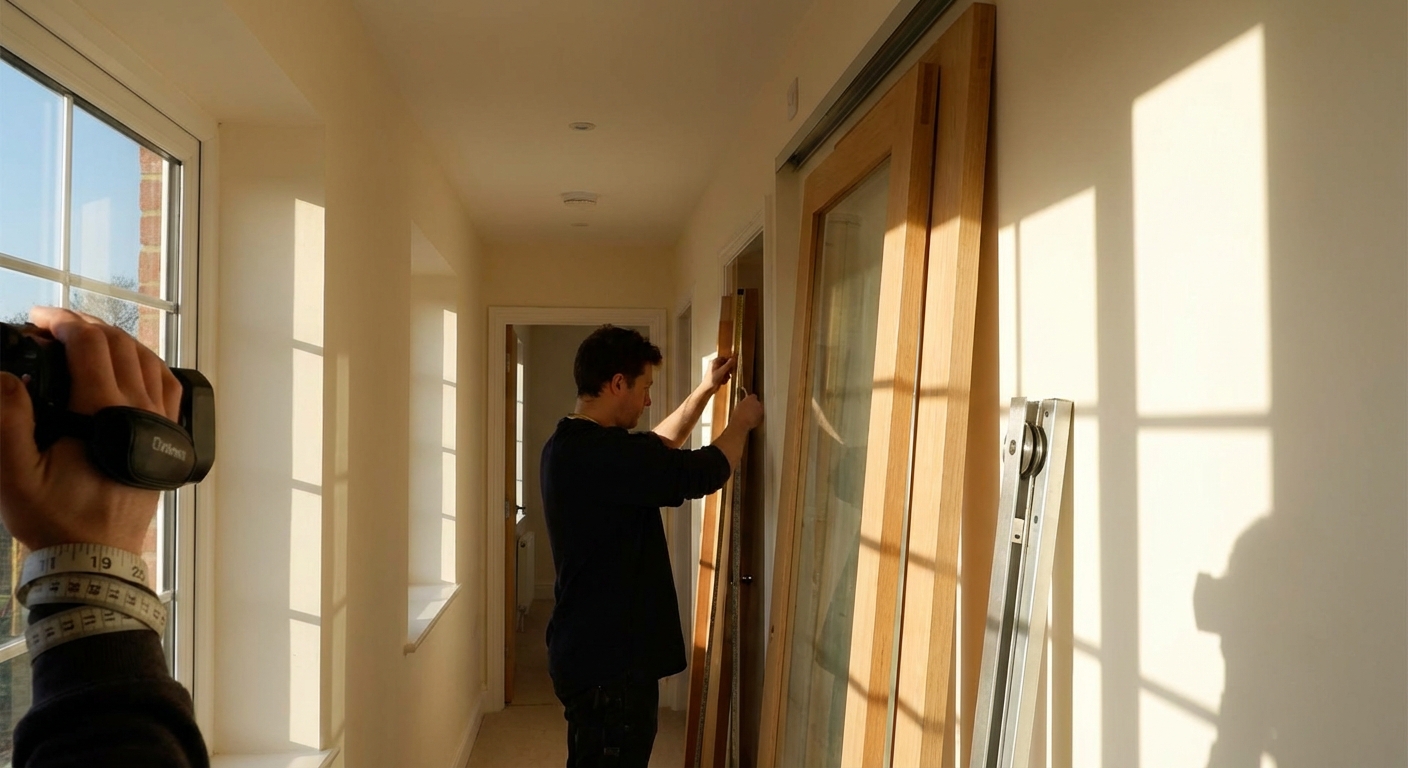
- You have enough clearance for the door to swing open fully
- You want good privacy and acoustic control
- You don’t want to mess with tracks or hardware
- Always check the swing direction. I once had a bedroom door that opened right into the path of a wardrobe. Every morning became a weird door-dance.
- For tight hallways, I’ve seen designers use doors that swing into rooms instead of into traffic areas. It sounds obvious, but it’s incredible how many homes get this wrong.
If you don’t know what to choose and you’re overwhelmed, a classic hinged door—chosen thoughtfully—is still the safest bet.
2. Sliding and Pocket Doors (Space-Savers with Quirks)
When I tested a pocket door in a narrow bathroom hallway, I fell in love with the extra floor space. No more door blocking the corridor.
Pros:- Great for tight spaces: small bathrooms, pantries, laundry rooms
- No swing radius, so furniture placement is easier
- Clean, modern look
- Harder to get good sound insulation
- More complex to repair if the track fails (everything’s inside the wall)
- Not ideal where you need real privacy or security
For sliding barn doors (the Pinterest favorite I’ve actually installed twice):
- They’re visually strong and can totally change a room
- But they almost always have light and sound gaps
I use them where privacy is “nice” but not essential—like between a kitchen and a mudroom—not between a main bathroom and a hallway.
3. French Doors and Glass Doors (Light First, Privacy Second)
I recently replaced a solid back door with a half-lite (glass in the upper half) door. The difference was wild—the kitchen suddenly felt like it gained an extra window.
Glass or French doors are great when:- You want to borrow light from another room or exterior
- You need visual connection: dining → living, office → hallway
- Full-lite glass doors are amazing for home offices if you add a curtain or sheer for Zoom privacy
- Frosted or reeded glass hits the sweet spot between daylight and discretion in bathrooms or laundry rooms
If you have kids, pets, or high-traffic zones, look for tempered or laminated glass for safety. Many building codes now require this in hazardous locations (near floors, bathrooms, stairs).
4. Bifold and Accordion Doors (Use Carefully)
I’ve used bifold doors on closets when space was tight, and they’re… fine. Functional, not thrilling.
Where they work:- Linen closets
- Utility closets
- Laundry niches where a full swing or slider won’t work
- They can feel flimsy if you go too cheap
- The tracks collect dust and lint
If you go this route, don’t skimp on hardware. A solid track and hinges make a dramatic difference over time.
Material Matters: Wood, MDF, Glass, and More
This is where the “door is just a door” myth falls apart.
Solid Wood vs. Solid-Core vs. Hollow-Core
When I renovated a rental unit, I chose hollow-core doors to save money. They looked okay but sounded like cardboard when you closed them, and tenants could hear everything.
Then I upgraded my own bedroom door to a solid-core model. The difference in sound reduction was almost comical.
Hollow-core doors:- Light, affordable, easy to hang
- Weak sound insulation and cheaper feel
- Heavier, more substantial, better for sound
- Cost more, but still cheaper than solid wood
- Beautiful, can be refinished, naturally strong
- Can warp with moisture if not properly finished; higher cost
For most homes, solid-core is the best value, especially for bedrooms, bathrooms, and offices where privacy and quiet matter.
Exterior Doors: Don’t Just Think Pretty
For exterior doors, function is non-negotiable: security, durability, and energy efficiency.
From both my own projects and builder conversations:
- Fiberglass doors are workhorses: stable, energy-efficient, can mimic wood, and low maintenance
- Steel doors offer strong security and great insulation, but can dent and feel colder visually
- Wood doors are stunning but need more maintenance and a good overhang to protect from weather
Look for an ENERGY STAR–rated door and check the U-factor (insulation performance) and air leakage numbers if you live in a climate with big temperature swings.
Size, Proportion, and Ceiling Height: The Visual Tricks
I once helped a friend with 9-foot ceilings replace her standard 80-inch doors. We switched to taller 8-foot doors, and the house instantly looked more expensive.
A few guidelines I use:- Higher ceilings can handle taller doors; they help reduce that “short door, tall wall” look
- In compact spaces, a simple flat or one-panel door can feel less busy than a six-panel design
- Oversized handles or vertical pulls can make even a basic door look custom
If you’re stuck, take photos of your hallway or room and sketch different door proportions on top. I’ve done this on my tablet more times than I can count.
Style: Let Your Architecture Lead, Not Pinterest
When I tested ultra-modern, flush doors in a 1950s bungalow, they looked a bit like a spaceship landed in a cozy suburb. Nice in isolation, wrong in context.
Match the door to your home’s bones:- Traditional homes usually suit paneled doors (2-panel, 4-panel, 6-panel)
- Mid-century and contemporary homes lean toward flat or minimal-panel designs
- Farmhouse or cottage styles play well with shaker doors and simple trim
You can absolutely mix styles, but I try to keep some consistency:
- Similar panel style and color
- Same hardware finish throughout a floor (black, brass, brushed nickel)
Doors don’t all have to be identical, but they should feel like they know each other.
Hardware: Small Part, Big Impact
When I swapped shiny brass knobs for matte black levers in one house, people assumed I’d replaced the doors. Hardware is that powerful.
Consider:
- Lever vs knob: levers are more accessible and feel modern; knobs feel classic
- Finish: mixed metals are fine, but don’t mix too randomly in one sightline
- Privacy vs passage vs dummy sets: don’t accidentally put a locking knob on a closet (I’ve seen it, I’ve done it).
Good latches and hinges also change the feel. A solid “click” when you close the door signals quality more than most people realize.
Pros and Cons by Space
Based on projects I’ve actually lived with:
Bedrooms & Offices- Best: solid-core hinged doors (privacy + sound)
- Avoid: glass unless you’re okay layering curtains or films
- Best: solid-core, good latch, sometimes pocket if space is tight
- Watch out: barn doors here almost never feel private enough
- Best: French doors, half-lite doors, or wide cased openings with no doors
- Consider: glass for light, but think about grease and fingerprints
- Best: bifolds or simple hinged, depending on swing room
- Consider: sliders for wide closets where you don’t need full access at once
Budget vs. Impact: Where to Splurge and Where to Save
When I renovated on a tight budget, I learned to prioritize:
Worth splurging on:- Front door (curb appeal + security + energy savings)
- Bedroom and office doors (sound + privacy)
- Hardware (touches every day, noticeable quality)
- Closet doors (as long as they function)
- Secondary utility spaces (garage entries, pantries)
Sometimes just painting existing doors, upgrading hinges, and adding new handles transforms the feel of the whole house without touching the frames.
When to Call a Pro (and When DIY Is Fine)
I’m comfortable hanging prehung interior doors now—but I still call a pro for:
- Exterior doors (security, weatherstripping, threshold alignment)
- Pocket doors (framing needs to be right from the start)
- Old houses where nothing is square and “just replacing a door” awakens structural surprises
For simple interior swaps where the frame stays, a careful DIYer can usually manage with patience, shims, and a level. But if a door sticks, scrapes, or won’t latch properly after hours of adjusting, you’ll wish you had a carpenter on speed dial.
Choosing door designs that fit your space isn’t about chasing trends—it’s about balancing how you live with how you want your home to feel. Once you start seeing doors as functional design tools instead of flat rectangles, the whole house starts to come together.
Sources
- U.S. Department of Energy – Doors and Energy Efficiency - Guidance on energy-efficient exterior door choices and ratings
- This Old House – How to Choose an Interior Door - Practical breakdown of door types and materials from renovation experts
- Architectural Digest – The Complete Guide to Door Types and Styles - Design-focused overview of common door styles and where they work best
- International Association of Certified Home Inspectors – Types of Doors - Technical and performance-oriented explanations of residential door options