Guide to Choosing Handbags for Different Occasions
day a strap snapped in the middle of a client meeting and half my life spilled across the conference room floor. That’s when I finally sat down and figured out how to choose the right handbag for the right occasion.
This guide is basically the handbook I wish I’d had years ago.
Step 1: Know the Core Handbag Categories
When I started paying attention, I realized most bags fall into a few functional buckets. Understanding these makes shopping SO much easier.
1. Everyday / Work Bags
These are your practical heroes: totes, satchels, structured shoulder bags.
What I look for when I test them:- Structure: A bit of rigidity so documents and laptops don’t get bent. When I tested a slouchy hobo bag for work, my laptop corners dug into the leather and it aged horribly in six months.
- Size: Big enough for a 13" laptop, notebook, water bottle, and a small pouch.
- Straps: One shoulder strap plus a top handle if possible. I’ve noticed bags with at least a 9–10" strap drop feel more comfortable over blazers and coats.
Industry folks often call this a day bag or work tote. Brands like Tory Burch, Cuyana, and Everlane design specifically for this category.
2. Evening / Occasional Bags
Clutches, mini shoulder bags, and small top‑handle bags live here.
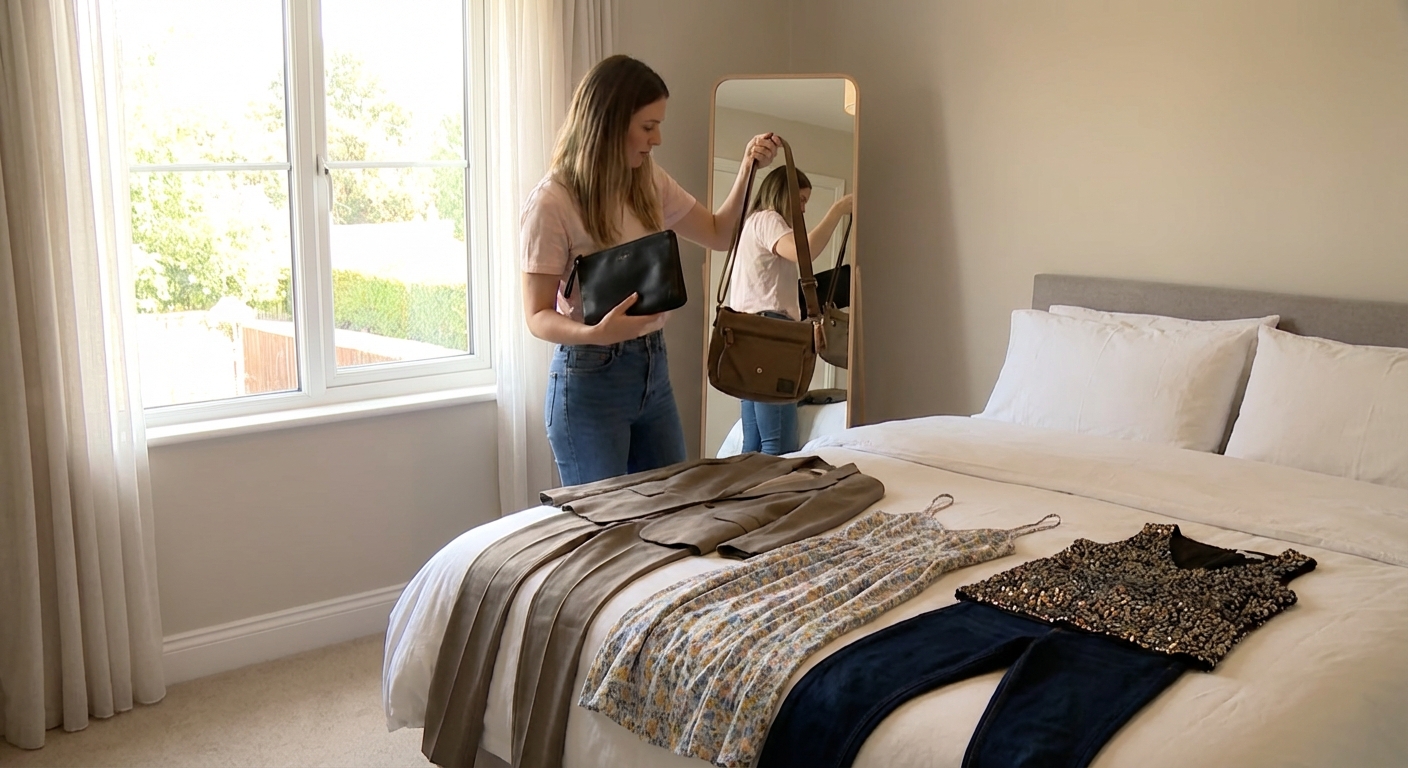
- Small but not useless: enough room for phone, keys, cardholder, lipstick.
- A chain or detachable strap. Every time I ignore this, I end up awkwardly tucking a clutch under my arm on the dance floor.
- Subtle hardware that won’t clash with jewelry.
3. Travel & Weekend Bags
Think crossbody, belt bag, or a medium backpack.
When I tested different bags on a five‑day city trip, the clear winners were:
- A zip‑top crossbody worn close to the body (for safety and comfort)
- A lightweight backpack with hidden back pockets for passport and wallet
The crossbody kept my hands free for coffee and Google Maps, while the backpack took the heavy lifting.
4. Special‑Purpose Bags
Gym bags, diaper bags, camera bags, laptop sleeves with straps. These don’t need to be pretty all the time—but if they can be both practical and good‑looking, you’re winning.
Step 2: Match the Bag to the Occasion
Handbags for Work & Office Settings
When I switched from a creative agency to a more corporate environment, my giant canvas tote suddenly felt…too casual.
What works best in my experience:- Structured leather tote or satchel in black, tan, navy, or deep burgundy
- Minimal branding—tiny logo at most
- Internal laptop sleeve or a padded insert (I use an insert so I can rotate bags)
According to a 2019 survey by The NPD Group, consumers ranked functionality and versatility as top factors when buying handbags, especially for work. I definitely feel that—if a bag can’t transition from commuting to meeting to lunch, it just sits in my closet.
Pros of a structured work bag:- Polished instantly, even with jeans
- Protects tech and documents
- Usually age better than slouchy bags
- Heavier, especially full‑grain leather
- Can feel stiff or formal in casual workplaces
If your job is more creative or hybrid, a high‑quality canvas or nylon tote (think Longchamp Le Pliage or Tumi styles) can be a great middle ground.
Handbags for Weddings, Parties & Formal Events
I once tried to bring a big shoulder bag to a wedding because I “needed options.” Photos later revealed I was essentially carrying airport luggage in every shot.
For formal events, I now stick to:
- Small clutch or minaudière for black‑tie
- Mini shoulder bag with a thin chain for semi‑formal
- Does it fit my phone flat? If the bag bulges, I pass.
- Is there at least one secure closure (zip or strong magnetic snap)?
- Is the hardware color compatible with my jewelry (gold vs. silver)?
There’s also a sustainability angle. The Boston University School of Public Health highlights the environmental impact of fast fashion accessories. When I buy an occasion bag now, I choose more timeless shapes and colors so I can reuse them for multiple events instead of panic‑buying something trendy each time.
Pros of small event bags:- Force you to edit down to essentials
- Look better in photos and don’t overpower dresses
- Not great if you’re the kind of friend who always ends up holding everyone else’s stuff
Handbags for Errands & Casual Days
For grocery runs, coffee meets, and “I’m just out for an hour,” I reach for:
- Crossbody bag: My number one choice—keeps hands free and body balanced
- Belt bag / sling bag: I was skeptical, then I tried one at a music festival and I’m fully converted
Security experts often recommend bags that can be worn close to the body and zipped shut, especially in crowded areas. The U.S. Department of State actually suggests this type of bag in their general travel safety guidance.
What’s worked well for me:- Water‑resistant nylon or coated canvas
- Dark colors that hide scuffs
- Exterior pocket for transit card or keys
Handbags for Travel & Commuting
When I stress‑tested travel bags on a 14‑hour travel day, I learned fast what doesn’t work: open totes with no zipper and heavy, unpadded straps.
What’s performed best over time:
- Medium crossbody with multiple compartments for passport, phone, and cash
- Backpack or roomy tote that slides over a suitcase handle
- Zip closure—non‑negotiable in airports and trains
Airlines don’t always count a “personal item” the same way, but dimensions generally hover around 18 x 14 x 8 inches (check your specific carrier). I’ve avoided extra fees by choosing soft, compressible bags that fit under the seat.
Pros of a good travel bag:- Saves time at security (everything has a place)
- Reduces shoulder strain when properly balanced
- High‑quality travel bags can be pricey up front
- Ultra‑light materials sometimes show wear after a few years
Step 3: Materials, Quality & Longevity
The material of a handbag affects not just looks, but durability, weight, and maintenance.
Leather
When I tested full‑grain leather vs. “genuine leather” (which sounds good but is usually lower‑grade), the difference after a year was huge. Full‑grain aged beautifully; the cheaper leather peeled at the corners.
Leather pros:- Long‑lasting with proper care
- Develops a nice patina
- Heavier
- Not ideal in heavy rain unless treated
- Ethical and environmental questions
According to the Ellen MacArthur Foundation, extending the life of a fashion item by just nine months can significantly reduce its environmental footprint. I’ve started buying fewer, better leather bags and maintaining them—conditioning twice a year changed everything.
Fabric, Nylon, Vegan Materials
High‑quality nylon (like what Tumi or Prada use) can be incredibly durable and light. I have a nylon work bag that still looks new after five years of rough commuting.
Vegan leathers have come a long way—brands use polyurethane (PU), cactus leather, apple leather, and more. They’re not perfect, but some are impressively realistic.
Pros:- Often lighter and more affordable
- Easier to wipe clean
- Some cheaper faux leathers crack or peel
- Longevity can be unpredictable
Step 4: Functionality Details People Quietly Regret Skipping
The little details are where I’ve made most of my expensive mistakes.
Check these before you commit:
- Weight empty: If it feels heavy before you’ve added anything, walk away. My heaviest bag is gorgeous and spends 90% of its life on a shelf.
- Strap adjustability: Being able to tweak drop length is critical if you’re short, tall, or wear heavy coats.
- Pocket layout: I like one exterior pocket for quick‑grab items and at least two interior compartments. Too many pockets, though, and I start losing things inside my own bag.
- Closure type: Zips are safest; magnets are convenient; open tops are a risk in crowds.
A 2023 report on global handbag trends from Statista noted rising demand for “functional luxury”—people want bags that look good and work hard. When I buy now, I literally ask: will this make my day easier, or is it just Instagram bait?
Step 5: Building a Small but Powerful Handbag Wardrobe
If you don’t want 20 different bags, here’s the 4‑bag system that’s worked well for me:
- Structured work tote in a neutral color
- Medium crossbody for errands and travel
- Evening bag (clutch or mini shoulder) in black or metallic
- Weekender / travel bag that fits under an airplane seat
With those four, I’ve covered:
- Office and meetings
- Day‑to‑day city life
- Weddings, parties, fancy dinners
- Weekend trips and flights
Are there gaps? Sure. If you’re a new parent, you might need a diaper backpack. If you go to the gym daily, a washable duffel becomes essential. But this small lineup prevents that “closet full of bags and nothing works” feeling.
Final Thoughts From Someone Who’s Bought Too Many Bags
When I look at the handbags that truly earn their place in my rotation, they all have three things in common:
- They match a specific occasion or need.
- They’re comfortable to carry for more than 20 minutes.
- They’ve survived at least one chaotic day without failing me.
Trends will come and go—micro‑bags, giant totes, logo mania—but if you start by asking, “Where am I actually going, and what do I really need to carry?” you’ll make better choices immediately.
And if your current everyday bag is one strap away from exploding in public? Consider this your sign to upgrade—strategically this time.
Sources
- The NPD Group – U.S. Handbag Market Trends - Data on consumer preferences in handbags
- Boston University School of Public Health – The Environmental Footprint of Fast Fashion - Overview of sustainability concerns in fashion accessories
- U.S. Department of State – Travel Safety Tips - Guidance relevant to choosing secure travel bags
- Ellen MacArthur Foundation – A New Textiles Economy - Report on extending product life cycles in fashion
- Tumi Official Website – Travel Bags & Personal Item Guidelines - Examples of functional travel-focused handbag design