Guide to Choosing High Value Skincare at Sephora
I’ve tested an embarrassing amount of skincare from Sephora over the years—some genuinely worth the hype, some that felt like I’d just paid $80 for nice packaging and a light fragrance. This guide is everything I wish someone had told me before I started swatching serums on the back of my hand like it was a science fair.
My goal: help you find high value skincare at Sephora—not just expensive, not just trendy, but products that actually earn their price tag.
What “High Value” Actually Means (Beyond the Hype)
When I say high value, I don’t mean cheapest. I mean best return on investment for your skin and your wallet. In my experience, that comes down to:
- Clinically backed ingredients (like retinol, niacinamide, vitamin C, ceramides)
- Concentration + formulation (is there enough of the active to do anything?)
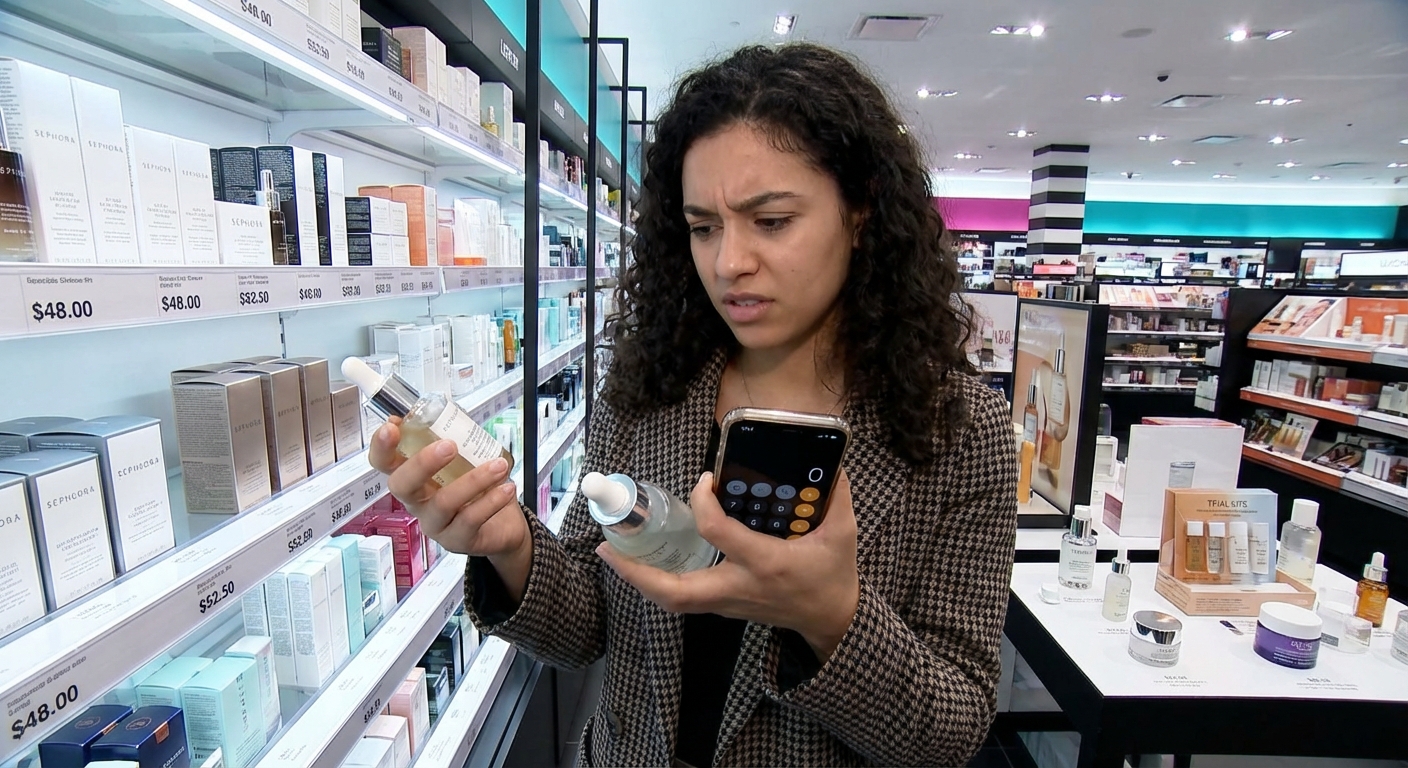
- Cost per milliliter/ounce (you’d be shocked how tiny some “luxury” serums are)
- Packaging that protects the formula (especially for unstable ingredients like vitamin C and retinoids)
- Realistic performance (does it actually improve your skin over 8–12 weeks?)
When I started checking those five things instead of “TikTok made me buy it,” my skin got better and my receipts got less offensive.
Step 1: Know Your Skin Type (For Real, Not Just a Vibe)
The fastest way to waste money at Sephora is to buy products for the skin you wish you had, not the skin you actually have.
In my experience, Sephora’s mini quizzes are fun but not super precise. A better quick test:
- Oily: Shiny within a few hours of washing, especially T-zone
- Dry: Feels tight after cleansing, may have flaking
- Combination: Oily T-zone, normal-to-dry cheeks
- Sensitive: Stings easily, reactive to fragrance/acids/retinoids
I once bought a super-rich, occlusive moisturizer that was perfect… for extremely dry skin. My combo skin responded by breaking out in little closed comedones along my cheeks for three weeks. That $65 “glow cream” became an expensive hand cream.
High value means it works with your skin type, not against it—no matter how pretty the jar.
Step 2: Learn the Big-Impact Ingredients (So Marketing Can’t Trick You)
Sephora shelves are full of buzzwords: “clean,” “natural,” “non-toxic,” “detox,” “cruelty-free,” “microbiome-friendly.” Some matter ethically, but from a skin results standpoint, here’s what consistently pulls weight.
Heavy-hitter actives worth paying for
When I tested different price points and brands, these ingredients gave the most noticeable, repeatable results:
- Retinoids (retinol, retinaldehyde, adapalene)
Gold standard for fine lines, texture, acne. Dermatologists have been using them for decades. A 2016 review in Dermatology and Therapy found topical retinoids improve photoaging and collagen production over time.
- Vitamin C (L-ascorbic acid 10–20%)
Brightening, antioxidant protection. Needs stable packaging (dark, airtight) and proper pH. When I switched from a “natural vitamin C” oil to a properly formulated L-ascorbic serum, the difference in hyperpigmentation over 3 months was very obvious in my before/after photos.
- Niacinamide (2–10%)
Barrier support, oil regulation, redness reduction. This one plays well with nearly everything, and it’s often where I find the best value in mid-range brands.
- Ceramides + cholesterol + fatty acids
Barrier repair. I reach for these every time I’m over-exfoliated or retinol-irritated.
- Azelaic acid
Great for redness, PIH (post-inflammatory hyperpigmentation), and mild acne. It’s one of the few ingredients that helped my hormonal breakout redness calm down without wrecking my barrier.
If a product at Sephora is charging $80+ and none of these or other evidence-backed actives are near the top of the ingredients list, I mentally put it in the “paying for branding” bucket.
Step 3: Decode the Label Like an Insider
When I started writing beauty content professionally, cosmetic chemists and derms ruined me (in a good way). Now when I pick up a product at Sephora, I automatically check:
- Where are the actives on the list?
Ingredients are listed in descending order by concentration (with some nuance). If a star active is listed after “fragrance” or a bunch of plant extracts, you’re likely getting a sprinkle, not a treatment level.
- Packaging vs ingredient stability
Vitamin C or retinol in a clear jar? Big red flag. Air and light degrade them. I strongly prefer pumps, opaque bottles, or airless packaging.
- Percentage callouts
Brands like The Ordinary made it normal to share percentages. Not all Sephora brands do, but if a product claims “high strength” and refuses to say what that means, I’m suspicious.
I once tested two vitamin C serums side-by-side: a luxe one at nearly $100 and a more clinical-style one around $40. Packaging on the expensive one was gorgeous but in a clear bottle; by week six it had oxidized (turned orange-brown) and my skin gains stalled. The cheaper, opaque bottle serum kept delivering brightness for months.
Pretty doesn’t equal potent.
Where to Splurge at Sephora (And Where to Save)
Worth the splurge (usually)
These are categories where, in my experience, formulation nuances really matter:
- Retinoid serums: Texture, stabilization, and irritation buffers are key. Many mid- to higher-end Sephora brands actually put thought (and money) into this.
- Vitamin C serums: A good one needs stabilized L-ascorbic acid, proper pH, and protective packaging. That tech costs more than a basic moisturizer.
- Targeted treatment serums: Pigmentation, firming, or advanced anti-aging products often justify their price with multiple actives and good delivery systems.
Save your money on
- Basic cleansers: As long as it’s gentle, pH-appropriate, and non-stripping, you don’t need a $40 face wash. It’s on your skin for 30–60 seconds.
- Mists and toners with minimal actives: Hydrating sprays are nice but rarely high value unless loaded with proven ingredients.
- “Luxury” moisturizers that are just basic creams with fragrance: Compare ingredients to more affordable brands—you’ll be surprised how similar they are.
I personally shifted my Sephora budget from fancy cleansers and moisturizers to solid serums and long-term workhorse ingredients. My skin looked better in 2–3 months, not just right after application.
How I Test Skincare from Sephora Without Wasting Money
When I tested a bunch of Sephora skincare for an article, I used three rules that saved my skin and my bank account.
1. Sample and travel sizes are your best friend
Sephora is generous with samples, and travel sizes are often enough for 3–4 weeks—long enough to see early signs of improvement or irritation. I do this especially with retinoids and vitamin C.
2. One new active at a time
When I got excited and added a strong exfoliating toner, a retinol, and a vitamin C serum in the same week, my skin peeled, burned, and generally revolted. Now I:
- Introduce one “strong” product at a time
- Patch test (side of neck or behind ear)
- Use it 2–3 times a week for the first couple of weeks
3. Give it 6–12 weeks before judging
High value skincare is rarely “overnight wow.” Most clinical studies on retinoids and vitamin C look at 8–12 week windows.
I track with:
- Before/after photos in similar lighting
- Notes on irritation, breakouts, redness
- Whether I’m actually reaching for the product, or dreading it
If something hasn’t done anything by week 12—no improved texture, tone, or hydration—it’s not high value for me, even if other people swear by it.
Red Flags That a Product Is Overpriced for What It Does
When I’m scanning Sephora’s “Just Dropped” page, here’s what makes me close the tab:
- Lots of vague claims, few specific actives
Phrases like “charges your skin with energy” or “detoxifies impurities” with no mention of how or with what.
- “Proprietary complex” with no breakdown
If a brand won’t tell you the actual ingredients/percentages, you’re trusting vibes over data.
- Fragrance-heavy formulas marketed to sensitive skin
Not automatically bad, but for redness-prone or reactive skin, I’ve seen fragrance be the difference between “wow” and “why is my face on fire?”
- Tiny amounts for big prices
A 15 ml serum for $90 might still be worth it if it’s truly transformative, but do the math on cost per ml and compare to similar options.
High value isn’t anti-luxury—it’s pro-transparency and pro-results.
Brand Patterns I’ve Noticed at Sephora
I’m not going to crown a single “best” brand because skin is wildly individual, but from testing and interviewing derms and formulators, here are patterns I’ve seen:
- "Clinical-leaning" brands often give good value in actives and research-backed formulas, especially for retinoids and vitamin C.
- "Clean" brands can be fantastic or mostly marketing; I always verify actives and their placement on the list.
- Indie brands sometimes over-deliver on formula to stand out, but do your homework on stability and testing.
The win for you: Sephora’s return policy is generally pretty forgiving. If your skin absolutely hates something, don’t just suffer—take it back.
Building a High Value Routine at Sephora (Example)
Here’s how I’d build a results-focused but not ridiculous routine using only Sephora-style products, based on what’s given me the best payoff:
- AM
- Gentle, non-stripping cleanser
- Vitamin C serum (properly packaged, 10–20% L-ascorbic acid)
- Lightweight moisturizer with ceramides or niacinamide
- Broad-spectrum SPF 30+ (this is non-negotiable if you’re investing in actives)
- PM
- Cleanser (or double cleanse if wearing heavy makeup/sunscreen)
- Retinoid serum 2–4x/week (build up slowly)
- Barrier-supporting moisturizer
Optional add-ons if your budget and skin allow:
- Azelaic acid serum for redness or pigmentation
- Gentle exfoliating acid once a week (not on retinoid nights)
Honestly, that simple structure—from Sephora shelves or anywhere else—has outperformed every 10-step routine I tried for content.
Final Thoughts: Treat Sephora Like a Lab, Not a Candy Store
Whenever I walk through Sephora now, I still appreciate the gorgeous packaging and the limited-edition sets, but my brain is doing quiet math in the background:
- How strong are the actives?
- Is the packaging protecting my investment?
- Does this fill a gap in my routine, or is it a duplicate in prettier clothing?
High value skincare at Sephora absolutely exists. I’ve seen it even out my own post-acne marks, soften fine lines, and calm down a very moody moisture barrier. But the value came from being picky—using samples, reading labels, checking actives, and giving products enough time to prove themselves.
Walk in with a plan, not just a basket, and Sephora stops being a money pit and starts being a pretty fun skincare lab for your face.
Sources
- American Academy of Dermatology – Retinoids: What they are and how they work - Overview of retinoids and their role in photoaging and acne
- National Center for Biotechnology Information – Topical Vitamin C and the Skin: Mechanisms of Action and Clinical Applications - Review of vitamin C stability, concentrations, and clinical outcomes
- Cleveland Clinic – Niacinamide for Skin - Explanation of niacinamide benefits and tolerability
- Harvard Health Publishing – Sunscreen: How to Help Protect Your Skin from the Sun - Evidence-based guidance on sunscreen use and daily protection
- U.S. Food & Drug Administration – Is It a Cosmetic, a Drug, or Both? - Clarifies how cosmetic claims are regulated vs. drug-level claims