Guide to Choosing Power Scissors for Gardening
e row of roses with dull hand pruners, and a friend handed me her cordless power scissors. When I tested them on my overgrown herb bed, I went from “these are silly” to “why didn’t I buy these sooner?” in about 90 seconds.
If you're wondering whether power scissors are worth it and how to pick the right pair, I’ve been exactly where you are. I’ve bought the wrong ones, returned a few, and finally figured out what actually matters.
What Exactly Are Power Scissors for Gardening?
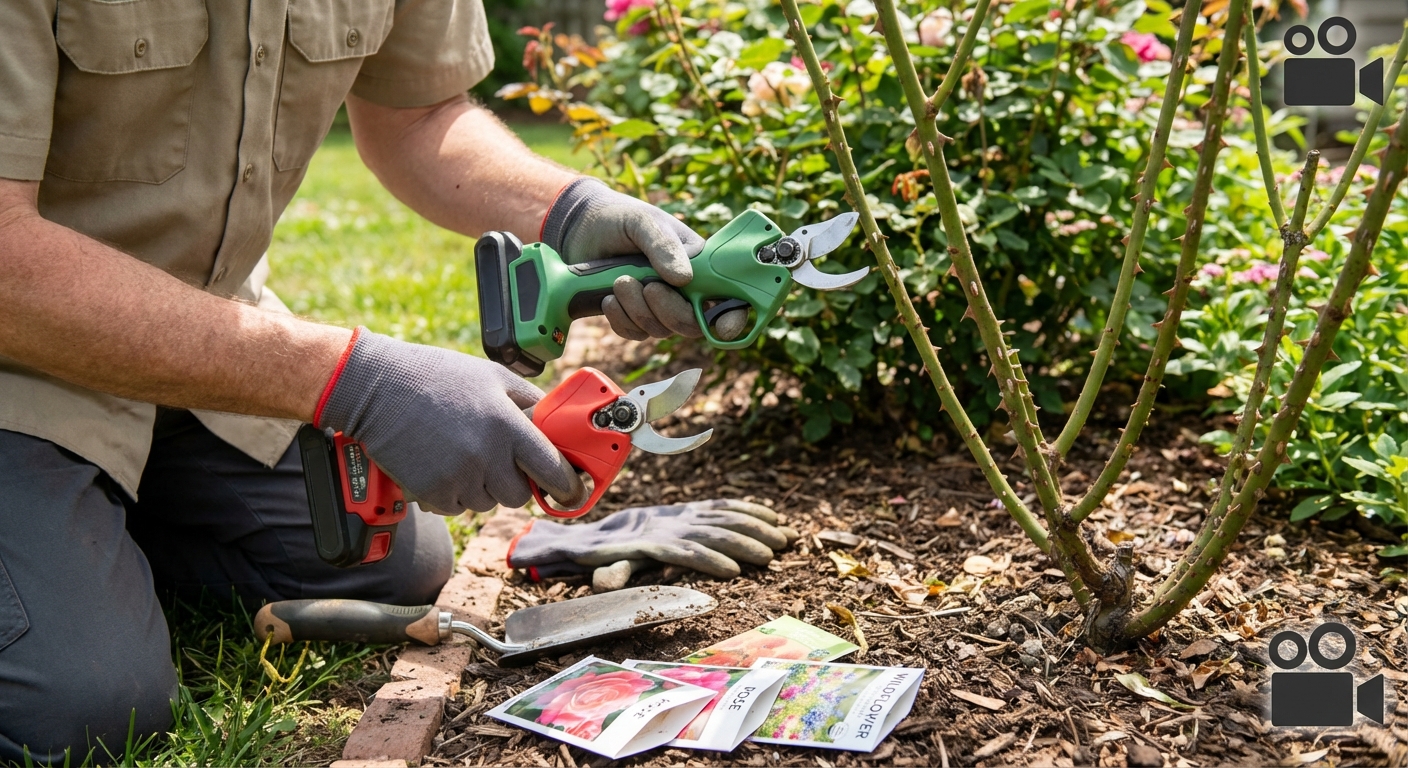
When I say power scissors, I’m talking about compact, motorized cutting tools that look like beefed-up scissors or tiny hedge trimmers. They’re usually:
- Battery-powered (most often 3.6V–12V lithium-ion)
- One-handed tools with a trigger
- Designed to cut stems, soft branches, thin woody growth, and sometimes light plastics or fabric for garden use
They’re different from full-size hedge trimmers and different from big loppers. Think of them as the sweet spot between scissors and pruners: faster than hand tools, but lighter and friendlier than big power tools.
The two main types I see most in real gardens:
- Power pruning scissors / shears – Narrow nose, meant for stems, deadheading, light pruning.
- Multi-purpose power cutters – Wider blades that can also cut garden ties, landscape fabric, cardboard boxes full of mulch, etc.
When I tested both styles side by side in my yard, the pruning-style tools were better for precision in tight spaces (roses, herbs, tomatoes), while the multi-purpose cutters were great for “project days” when I was opening bags, trimming drip line, and cleaning up.
Step 1: Be Brutally Honest About What You’ll Actually Cut
In my experience, most people either:
- Overestimate what they’ll cut: think they’re buying mini chainsaws.
- Underestimate it: buy something too weak and burn it out in a season.
Ask yourself three questions:
- What’s the thickest material you need to cut regularly?
Measure a typical branch or stem. A lot of quality power scissors top out around 0.4–0.75 inches (10–19 mm). If you routinely prune woody branches thicker than your thumb, you might actually need bypass pruners or a small pruning saw instead.
- Soft, woody, or tough?
- Soft: herbs, flowers, leafy greens → almost any power scissors will work.
- Semi-woody: roses, lavender, small shrubs → look for a clearly stated maximum cut diameter and higher torque.
- Tough: bamboo, mature shrubs, old fruitwood → step up to pruners or saws; power scissors are not miracle workers.
- Yard size and frequency?
For a balcony garden, a tiny 3.6V tool may be plenty. For a 1/4 acre with lots of beds, you’ll want more battery capacity and a more robust build.
When I finally admitted that most of my actual cuts were rose canes under 1/2 inch and endless deadheading, it became much easier to ignore the overpowered, overpriced tools.
Power: Voltage, Torque & Why Specs Can Be Misleading
Tool makers love big numbers, but they don’t always tell the whole story.
Voltage (V)Most consumer gardening power scissors are 3.6V, 7.2V, 8V, or 12V. Higher voltage often means:
- More power for tougher stems
- Slightly heavier tool
But voltage alone doesn’t guarantee better cutting. I’ve tested a 7.2V model that outperformed a cheap 12V thanks to better gearing and blade design.
Battery capacity (Ah or mAh)This determines how long it runs.
- 1.5–2.0 Ah: fine for small gardens or short sessions
- 2.0–4.0 Ah: better for people who do big weekend projects
When I pruned an entire hedge of spirea with a 2.0 Ah battery on a 7.2V power shear, I got about 45 minutes of use with steady, frequent cuts.
Torque & motor qualityMost brands don’t publish torque, but you’ll feel it in whether the tool stalls on slightly thicker or fibrous stems. Reading independent reviews and tests helps a lot here—I’ve had “high power!” tools slow to a sad whine on lavender.
If you have any hand or wrist issues (I do after a minor injury), a slightly more powerful model can actually be safer because it doesn’t force you to push and twist as much.
Blades: Where the Magic (or the Mess) Happens
The blade is where cheap tools are exposed.
Look for:
- Material: Hardened steel or high-carbon steel blades hold an edge longer. Stainless resists rust better, but not all stainless is created equal.
- Blade style: Scissor-like for fine work, more “jaw”-like for heavier cuts.
- Sharpenability: Some blades are effectively disposable. I strongly prefer models where the blade can be removed, sharpened, or replaced.
When I tested a bargain-brand pair on fresh rose canes, it cut beautifully for about two sessions… then started mashing instead of slicing. My mid-range pair with hardened steel blades is still going strong after three seasons with one light sharpening.
Also pay attention to sap buildup. Rosy and fruitwood sap can gum up blades quickly. Tools with a non-stick or PTFE-like coating clean up much faster with a bit of rubbing alcohol.
Ergonomics: Don’t Ignore This (Your Hands Will Hate You)
The first “good deal” power scissors I bought had one fatal flaw: after 20 minutes, my hand felt like it had been in a vise.
Now, I check:
- Grip size & shape: If you have smaller hands, some bulkier models feel awkward and force strange wrist angles.
- Weight: Most garden power scissors land between 0.8–2.5 lbs (0.36–1.1 kg). Lighter isn’t always better—too light can feel twitchy—but anything over ~2 lbs gets tiring fast.
- Trigger sensitivity: Some are hair-trigger, others stiff. I prefer a short, smooth pull; less strain on my index finger.
- Vibration & noise: My best pair has a low, even hum. The cheap one sounded like a toy drone and left my fingers buzzing.
If you have arthritis, carpal tunnel, or just aging joints, power scissors can be a game changer if the ergonomics are right. I actually bring gardening gloves when I try display models in-store because that’s how I’ll really use them.
Cordless vs. Corded vs. Manual Backup
I’ve tried all three approaches around my yard.
Cordless (battery-powered) – This is what most gardeners will want. Pros:- Freedom to move anywhere
- Safer—no cord to cut
- Great for raised beds, borders, balcony gardens
- Battery eventually needs replacement
- Power drops as battery drains on cheaper models
- Unlimited runtime
- Often cheaper
- Extension cords in wet grass are a hazard
- Constant cord management; I almost sliced through one years ago with a hedge trimmer
Personally, I always keep manual pruners or scissors on hand. Power tools are amazing until you hit a branch just above their limit or the battery dies when you’re halfway through a bed.
Safety Features You Really Do Want
When I recently showed a neighbor my power scissors, he immediately asked, “Are those safe?” Fair question.
I look for:
- Two-step activation: Often a safety switch plus trigger. It’s a tiny bit less convenient but massively reduces accidental starts in a tool bag.
- Blade guards: Especially on multi-purpose cutters; some come with a removable guard that’s actually useful for storage.
- Automatic stop: If the blade jams, the motor should cut out rather than grind and overheat.
Even with these features, I treat power scissors like any powered blade:
- No loose sleeves or jewelry dangling near the tool
- No freehand cutting tiny pieces near fingers
- No letting kids “try” them, no matter how curious they are
The U.S. Consumer Product Safety Commission has reported tens of thousands of emergency-room visits annually from garden tools in general; powered cutting tools deserve respect.
Brand, Warranty & Price: Where to Spend vs. Save
I’m not loyal to any one brand, but patterns do show up over time.
Reputable garden/power tool brands (think Bosch, Black+Decker, Ryobi, Gardena, etc.) tend to offer:- Better battery tech and chargers
- More accurate cut-capacity claims
- Replacement parts and blades actually available
- 2–3 year warranties that are honored
Budget brands can still be worth it if:
- You’ll use them lightly (small balcony garden)
- You accept that they might be semi-disposable
- You prioritize low upfront cost over long life
When I bought my current main pair, I aimed for mid-range: not the cheapest, not the flagship. I paid roughly the cost of a nice dinner out, got a 3-year warranty, and I’ve used them heavily for three growing seasons with one replacement battery.
As a rough guide:
- Low end: Under $30 – fine for craft use, very light garden work.
- Mid-range: $40–$90 – best value for most home gardeners.
- High end: $100+ – usually part of a pro or modular system; worth it if you already own that ecosystem or do tons of pruning.
Real-World Pros and Cons
Having lived with these tools in my own slightly chaotic garden, here’s the honest rundown.
What I love:- Deadheading goes from chore to quick sweep.
- My hands and wrists stay much happier during big seasonal cleanups.
- They’re surprisingly good at “non-plant” jobs: trimming garden fabric, cutting twine, opening mulch bags.
- You must keep blades clean; sap buildup turns clean cuts into chewing.
- Very fine, soft stems (like some annuals) sometimes get pushed over instead of cut cleanly.
- Batteries age. After a few years, expect some drop in runtime.
I see power scissors as part of a toolkit, not a total replacement for everything with a blade. Manual pruners, a folding saw, and basic scissors still live in my garden caddy.
How I’d Choose a Pair Today (Quick Checklist)
If I were buying right now, I’d walk through this checklist:
- Measure typical branches I cut; confirm the tool’s max cut is at least 20–30% thicker.
- Pick cordless, 7.2–12V, with at least a 2.0 Ah battery for my medium-sized yard.
- Choose hardened steel blades, ideally replaceable.
- Test grip and weight if possible; if buying online, I read reviews specifically mentioning hand size and comfort.
- Look for a 2–3 year warranty and a known brand or at least a responsive seller.
- Check real reviews and at least one independent test, not just product page hype.
If you mostly garden in containers or a small yard, you can absolutely drop the battery size and price. If you’re managing lots of shrubs and perennials, mid-range power and decent blades will pay for themselves the first time you tackle spring cleanup without aching hands.
And if your first pair isn’t perfect, don’t feel bad. My first set lived a short, slightly embarrassing life in the back of my shed before I learned what I actually needed. That learning curve is normal.
Sources
- U.S. Consumer Product Safety Commission – Yard and Garden Safety - General safety guidance and injury data for garden tools.
- University of Minnesota Extension – Pruning Trees & Shrubs - Explains proper pruning techniques and typical branch sizes, helpful for matching tools to tasks.
- Royal Horticultural Society – Pruning: Cutting Tools - Overview of cutting tools and their uses from a leading horticultural organization.
- Black+Decker Official Site – Cordless Garden Shears - Example specifications and features for mainstream cordless power scissors/shears.
- Bosch Garden Tools – Cordless Shrub & Grass Shears - Technical details on battery systems and blade options for compact powered shears.