Guide to Choosing Practical Multi Use Power Tools
tool, the whole orchestra. Then I looked at my bank account, my tiny garage, and the pile of half‑used tools I barely touched.
That’s when I got obsessed with multi use power tools.
Over the past few years I’ve tested multi-tools on decking projects, a bathroom remodel, built‑ins, and more sketchy DIY experiments than I should probably admit. Some were game‑changers. Some were overpriced paperweights. This guide is the one I wish I’d had before I spent hundreds of dollars “learning the hard way.”
Start With Your Real Projects, Not the Hype
When I first bought a multi use tool, I did what most people do: I watched a couple of viral videos of some contractor cutting through a door jamb in slow motion and thought, “Yup, I need that.”
Then it sat in a case for six months.
The tool itself wasn’t bad – I just hadn’t matched it to what I actually do. Your starting point shouldn’t be, “What’s the coolest tool?” but:
> What 3–5 tasks do I repeatedly struggle with at home?
For home & garden folks, the usual repeat offenders are:
- Hanging shelves, TVs, curtains, and wall décor
- Light carpentry (trim, shelves, garden planters, repair work)
- Fixing sticky doors, cutting around flooring, patching drywall
- Outdoor projects (decking repairs, fencing, pergolas, raised beds)
Once you list your top tasks, you can match them to the right style of multi use power tool instead of buying the Swiss Army knife of chaos.
The Big Three Types of Multi Use Power Tools
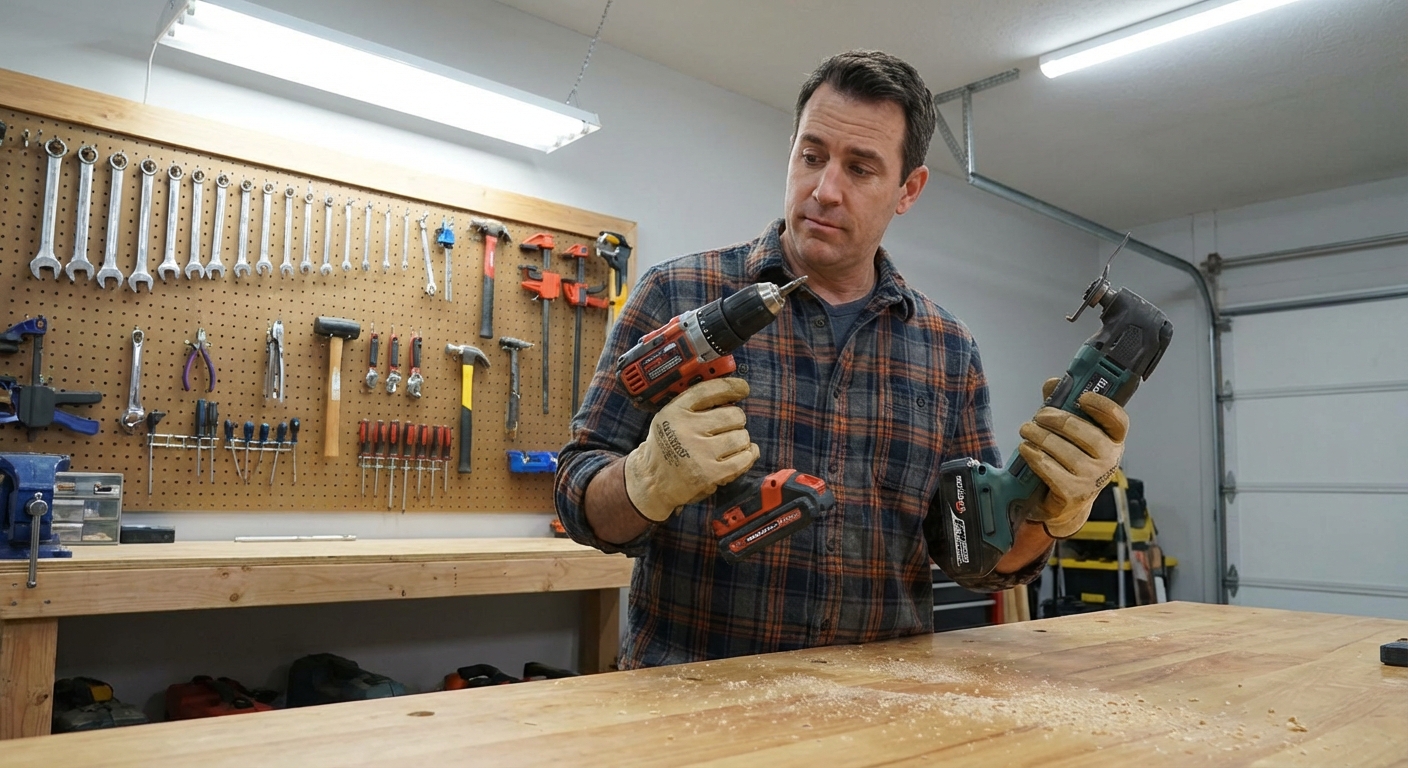
1. Cordless Drill/Driver Systems – The Workhorse
If you only buy one power tool, make it a cordless drill/driver on a good battery platform. When I renovated my small kitchen, 80% of the work involved a drill: screwing cabinets, drilling pilot holes, driving structural screws for ledger boards.
What makes it “multi use” is the system around it:
- Drill/driver body
- Impact driver
- Optional hammer drill
- Swappable batteries that also power lights, inflators, saws, trimmers, even lawnmowers on some platforms
In my experience, the battery ecosystem matters more than the drill’s brag sheet. Once you’re locked into, say, DeWalt 20V MAX, Makita LXT, Milwaukee M18, or Ryobi One+, every future tool is cheaper because you’re mostly buying bare tools without extra batteries and chargers.
What to look for:- 18V/20V class batteries (sweet spot for home use)
- At least 2.0Ah batteries (4.0Ah+ if you’ll run saws or outdoor tools)
- 2-speed gearbox and adjustable clutch
- Brushless motor if you can afford it – longer life, better runtime
2. Oscillating Multi-Tools – The Problem Solvers
I recently had to undercut a door jamb for new vinyl flooring. Ten years ago I’d have attacked it with a handsaw and a lot of regret. Now? Oscillating multi-tool. Done in 30 seconds.
An oscillating multi-tool (OMT) uses a rapid side‑to‑side motion to power different attachments: wood/metal blades, grout removal blades, sanding pads, scrapers, even rasps.
Jobs I’ve personally used mine for:
- Cutting drywall for perfectly square electrical box openings
- Trimming door jambs and casings to fit new floors
- Flush-cutting old nails and screws in tight spaces
- Scraping stubborn old caulk and adhesive
- Sanding into corners where my orbit sander couldn’t reach
From a practical standpoint, an oscillating tool is the most “Oh wow, that fixed my problem in 2 minutes” tool I own.
Key features I’ve learned to care about:- Tool-free blade change: When I tested a cheaper model that used an Allen key, I wanted to throw it through the wall after the fifth blade swap.
- Variable speed: Slower for control on plastics and soft woods, faster for metal and aggressive cutting.
- Vibration control: Cheaper tools will turn your hands into tuning forks.
- Starlock or universal interface: Better grip on the accessory, less slipping.
- The blades aren’t cheap, especially bi‑metal ones for nails and screws.
- It’s not a “bulk removal” tool – cutting a whole sheet of plywood with an OMT is madness.
- They’re noisy and a bit dusty unless you pair them with dust extraction.
For pure versatility on home repairs, though, an oscillating multi-tool is top‑tier.
3. Multi‑Head & 4‑in‑1 Tools – Compact All‑Rounders
The third category is what I call the “transformer” tools: multi‑head drills and multi‑function kits. Think of one motor body that accepts different heads:
- Drill/driver head
- Offset head for corner screws
- Right‑angle head for awkward spots
- Sometimes an impact or hammer head
I tested a Bosch multi‑head drill while building a pantry and it saved me from contorting myself to drive screws inside tight cabinet corners. Is it as strong as a dedicated impact driver? No. Did it let me do 95% of indoor fastening tasks with one compact tool? Yes.
Pros:
- Great if you live in an apartment or have very limited storage
- One battery, one charger, multiple functions
- Surprisingly capable for furniture, cabinets, and basic DIY
Cons:
- Generally less powerful and durable than pro‑grade single‑purpose tools
- Attachments can be pricey or limited to that one brand
- Not ideal if you’re framing decks or doing heavy structural work
If you’re mostly assembling IKEA, hanging shelves, and building the occasional planter or closet organizer, a multi‑head system can be a smart, space‑saving choice.
Corded vs Cordless: The Power Trade‑Off
When I started, I assumed corded tools were always more powerful. That used to be true. But with modern lithium‑ion packs and brushless motors, cordless has caught up for almost everything a homeowner does.
Here’s how it’s shaken out in my own projects:
- Cordless wins for 90% of home & garden work: no hunting for outlets, no tripping over cords on a ladder, portability in the yard.
- Corded still makes sense if you’re doing long sanding sessions, heavy grinding, or you’re on a tight budget and don’t want to invest in batteries.
A 2019 U.S. DOE report on battery technology pointed out how lithium‑ion energy density has steadily climbed while costs have dropped (U.S. Department of Energy, 2019). That’s exactly why we can now run lawnmowers and chainsaws off battery packs that used to only be good for drills.
For most homeowners: go cordless for your main platform, and maybe keep one or two cheap corded “specialty” tools (like a corded sander) for long, power‑hungry tasks.
Matching Brands to How You Actually Use Tools
Here’s the part no one likes to admit: brand ecosystems matter more than the logo on any single tool. Once you choose a battery platform, you’re financially nudged to stay there.
From my own workshop and friends’ setups, a rough breakdown:
- Ryobi One+ (18V): Best for budget‑conscious homeowners and gardeners who want lots of tool options. Not as refined or compact, but fantastic value.
- DeWalt 20V MAX / FlexVolt: Great mix of pro‑grade performance and wide availability. Popular with contractors and serious DIYers.
- Milwaukee M12/M18: Excellent quality, especially for pros and heavy users. Tons of specialized tools. More expensive.
- Makita LXT: Smooth, reliable, particularly for woodworkers. Slightly less visible at big-box stores in some regions but beloved in the trades.
Consumer Reports and outlets like Popular Mechanics routinely test these brands head‑to‑head, and the top four above consistently land in the recommendation lists.
My advice if you’re just starting:
- Pick a mid‑tier or better brand with a healthy tool lineup.
- Start with a 2‑tool kit (drill/driver + impact driver, 2 batteries, charger).
- Add an oscillating multi‑tool on the same battery system.
- Only then branch into saws, outdoor gear, or multi‑head specialty tools.
Safety, Noise, and Dust – The Boring Stuff That Actually Matters
When I tested my first oscillating tool on a door jamb without ear protection, my ears rang for an hour. Lesson learned.
Power tools aren’t toys, even if they are a lot more fun than they should be. OSHA’s guidelines on noise exposure and dust aren’t just for construction sites – they matter in your garage too.
Bare minimum kit I keep in my tool drawer:
- Safety glasses with side protection
- Hearing protection (foam plugs or earmuffs)
- Dust mask or respirator for cutting MDF, treated wood, or sanding old paint
- Work gloves for demolition and metal cutting
OSHA reports that long‑term noise exposure above 85 dB can contribute to hearing loss, and plenty of tools casually exceed that without you noticing until it’s too late.
My personal rule: if I wouldn’t be OK with my kid standing next to me unprotected while I’m using the tool, I put protection on myself.
When a Multi Use Tool Isn’t Enough
For all their versatility, multi use power tools aren’t magic wands. A few honest limitations I’ve run into:
- Oscillating tools are terrible for long, straight rip cuts in sheet goods – you’ll want a circular saw or track saw.
- A drill/driver can’t replace a proper impact driver when you’re driving long structural screws into ledger boards or posts.
- Multi‑head compact tools don’t love heavy masonry work, no matter what the marketing says.
If you feel your tool straining, overheating, or slowing dramatically, that’s usually a signal you’re asking it to do a job it wasn’t designed for. That’s not you “failing” as a DIYer – that’s the physics talking.
The way I think about it now:
- Multi use tools: amazing for 70–80% of general home & garden tasks.
- Specialized tools: worth buying when you repeatedly hit the same limitation.
The key is letting real projects, not impulse, tell you when it’s time to add something new to your lineup.
A Simple Starter Setup That Actually Works
If I were kitting out a new homeowner or renter from scratch, trying to stay practical, here’s the setup I’d build around multi use tools:
- 18V/20V drill/driver kit with 2 batteries and charger on a major brand ecosystem.
- Oscillating multi‑tool on the same battery platform, with a small but good accessory set (wood blade, bi‑metal blade, sanding pad, assorted grits).
- Basic hand tools (tape measure, level, stud finder, screwdriver set, utility knife, hammer) to support the power tools.
- Safety gear that actually fits and is comfortable, so you’ll use it.
From there, you’ll quickly see whether your next logical step is:
- A compact circular saw (if you’re cutting lumber and sheet goods)
- A multi‑head specialty drill (if you do lots of furniture, cabinetry, and tight-space work)
- Outdoor tools on the same battery (string trimmer, blower, hedge trimmer) for garden projects
Every time I’ve followed this “project‑first, ecosystem‑aware” approach instead of chasing shiny new releases, I’ve saved money, storage space, and a lot of buyer’s remorse.
And honestly? I enjoy my projects more when I’m not fighting the wrong tool for the job.
Sources
- U.S. Department of Energy – Revolution…Now: The Future Arrives for Five Clean Energy Technologies - DOE report discussing lithium-ion battery cost and performance trends
- OSHA – Occupational Noise Exposure - Guidelines and data on safe noise levels and hearing protection
- Consumer Reports – Best Cordless Drills of the Year - Independent testing and brand comparisons for drill/drivers
- Popular Mechanics – The Best Oscillating Multi-Tools - Expert reviews and testing notes on oscillating tools
- Ryobi One+ 18V System – Official Site - Example of a broad homeowner-friendly battery ecosystem