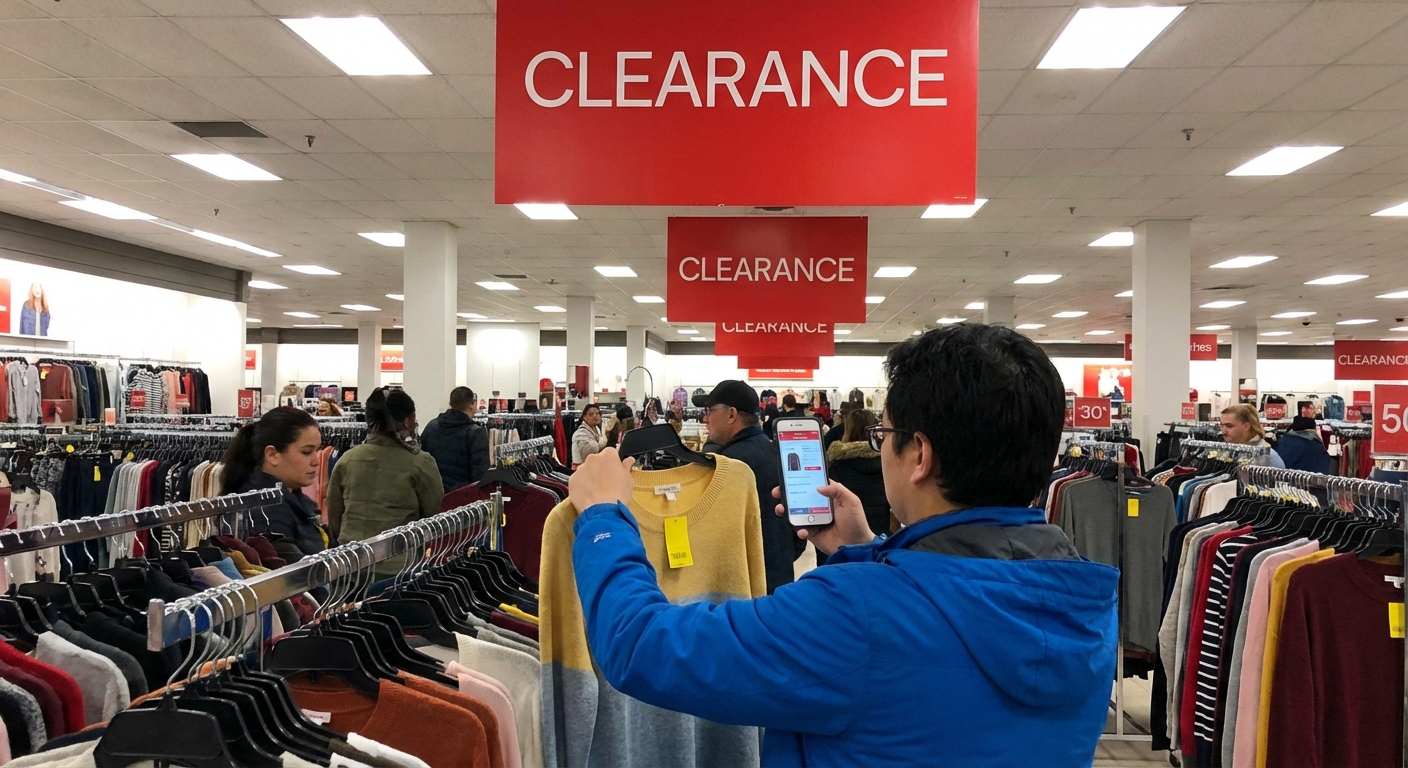
Guide to Clearance Sale Timing: When Retailers Usually Start Markdowns
lized there’s a very predictable pattern to when stuff gets marked down. Once I started timing my shopping around those patterns, my receipt totals dropped so much my bank app literally flagged my “lifestyle change.”
This guide is the playbook I wish I had when I was paying full price for everything.
The Big Secret: Clearance Is About Space, Not Kindness
Here’s the truth I learned the hard way when I worked in a mall clothing store: clearance isn’t about stores being generous. It’s about making room.
When I tested tracking markdowns for a full year at my local mall, the same rhythm kept popping up:
- New product comes in
- Floor space gets tight
- Older stock slides to promo
- Whatever doesn’t sell…gets pushed to clearance
Most retailers work on a 6–8 week product lifecycle for seasonal fashion, and a slightly longer cycle for basics and home goods. That timing drives when markdowns start.
Once you understand those lifecycles, you can predict when the yellow or red tags are coming before they even go up.
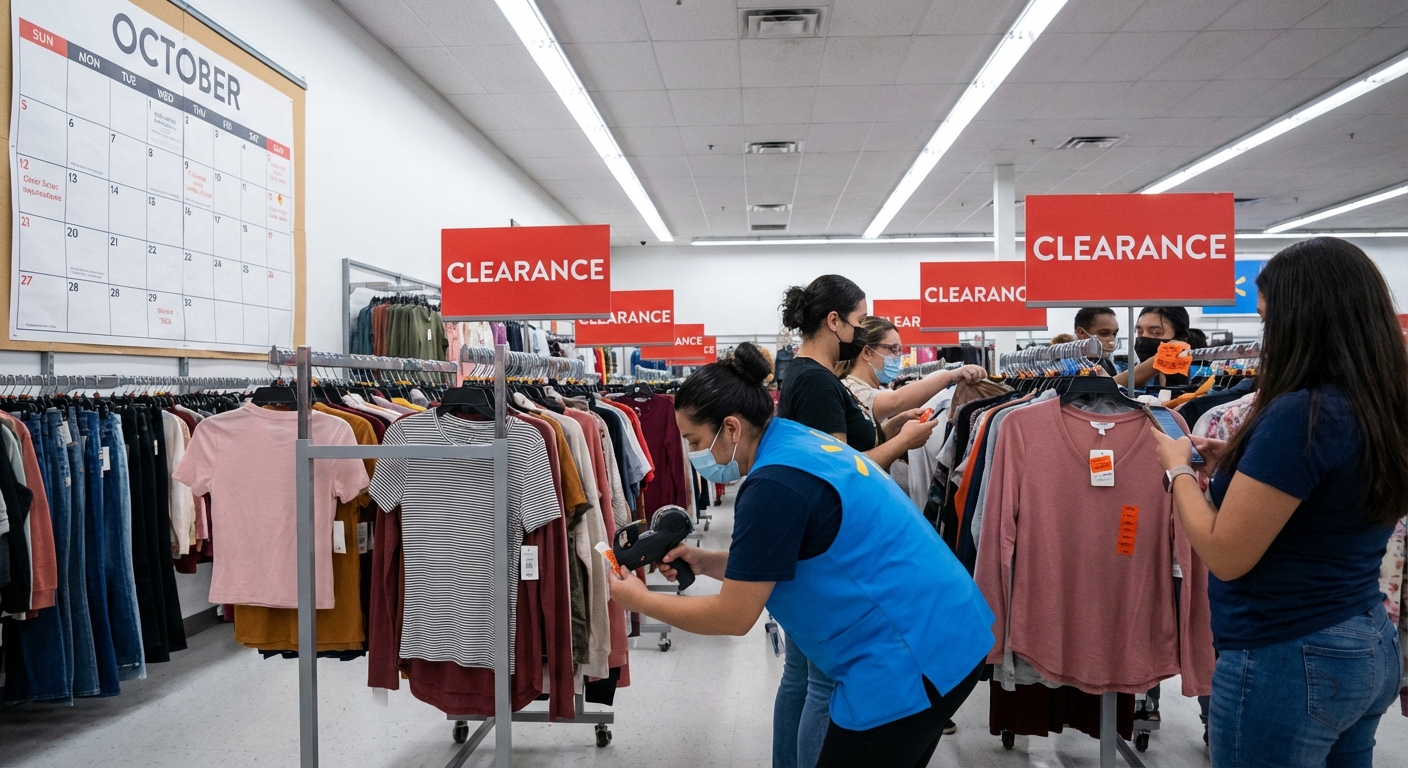
The Monthly Rhythm: Best Weeks of the Month for Markdowns
When I started asking store managers (nicely) about markdown schedules, I kept hearing the same thing: price changes cluster around specific days of the month.
1. End of Month: “We-Need-Our-Numbers” Clearance
In my experience, the last 3–5 days of the month are golden. Many retailers are obsessed with hitting monthly sales and inventory targets, so that’s when they:
- Take deeper markdowns on slow sellers
- Move items from promo to final clearance
- Do “extra 30–40% off clearance” events to flush stock
When I tracked my favorite mid-range clothing chain for six months, I saw final markdowns (60–70% off) hit like clockwork around the 28th–31st.
2. Early Week vs. Weekend
This one surprised me when I tested it:
- Monday–Wednesday: Most common days for new markdown stickers to go on. Price-change lists usually drop after weekend sales data is processed.
- Friday–Sunday: Stores focus more on volume than repricing. You’ll see promos (BOGO, 30% off full-price), but not as many new clearance tags.
My best hauls almost always happen on Tuesday evenings—fresh markdowns, but before everyone’s discovered them.
Seasonal Timing: When Each Category Really Drops
Let’s break down some big categories. This is where the real money-saving magic happens.
Fashion & Apparel
Fashion is the most predictable because of tight seasons.
Based on my notes + industry data:- Winter clothing (coats, boots, heavy sweaters)
- First markdowns: late December–early January
- Deeper clearance: late January–February
- Spring clothing
- First markdowns: late April
- Deeper clearance: May
- Summer clothing (shorts, swim, sandals)
- First markdowns: mid–late July
- Deeper clearance: August
- Fall clothing (light jackets, boots, knits)
- First markdowns: October
- Deeper clearance: November
I once waited until the second week of February to buy a wool coat I’d been stalking from November. Original price: $260. Final price: $61.99. The sales associate literally said, “You waited exactly the right amount of time.”
Shoes
Shoes lag clothing just a bit. Footwear buyers often plan 4–6 months out.
- First markdowns: usually 4–6 weeks after a new shoe hits the floor
- Clearance: when the next wave of styles lands (especially around back-to-school and spring break)
Shoe stores also love BOGO clearance events at the end of school semesters.
Home Goods & Décor
This one I learned while hunting down ridiculously cheap bedding.
- Holiday-themed décor (e.g., Christmas, Halloween):
- 50% off: the day after the holiday
- 70–80% off: about 3–7 days after
- What’s left at 90% off: around 2 weeks after
Big chains like Target and Walmart follow this pattern pretty reliably—especially for Christmas, Halloween, Easter, and back-to-school.
Non-holiday home items (like bedding, rugs, storage) often go to clearance when:
- New season’s color stories arrive
- A major reset or remodel is planned
- A brand changes packaging or sizing
Holiday & Event Cycles: The Mega-Markdown Windows
The clearance calendar really shines around major retail events. Over a couple of years of tracking, I saw the same cycles repeatedly.
1. After Christmas (Dec 26 – mid-Jan)
This is the Super Bowl of markdowns.
What I see drop hardest:
- Gift sets
- Beauty and fragrance kits
- Toys
- Winter apparel that didn’t move for holiday gifts
A lot of chains treat this as a massive inventory reset. Some even publicly say they want leaner stock going into Q1—Target’s CEO Brian Cornell talked about aggressive inventory actions in 2022, for example.
2. After Back-to-School (mid–late September)
Retailers bet big on BTS. Whatever flops? Straight to markdown.
Expect clearance on:
- Backpacks and lunch boxes
- Kids’ clothing basics
- School supplies (I’ve grabbed 80% off notebooks for the entire year)
3. Post–Black Friday & January
This one took me a while to understand. Black Friday doesn’t always give you the lowest price—it’s often the first price drop.
When I tested tracking electronics like TVs and headphones, I often saw:
- Big early discount on Black Friday
- Equal or slightly better prices on some models in late December–January when stores clear old SKUs for new-year releases
Consumer Reports and Wirecutter have both pointed out that January can be excellent for certain categories like TVs and bedding.
Weekday Markdown Patterns by Store Type
Not every retailer is identical, but I noticed some patterns.
Department Stores (Macy’s, Kohl’s, etc.)
In my experience tracking them:
- Markdowns: Often mid-week (Tue–Thu)
- Big clearance promos: Weekends, especially holiday weekends
They also do “lowest price of the season” clearance events that usually land about 2–4 weeks before the season really ends. So if you see that phrase, deeper markdowns might still come later, but sizes will vanish fast.
Fast Fashion (H&M, Zara, etc.)
Fast-fashion runs on speed.
- New stock constantly arriving
- Markdowns often every week on a set schedule (e.g., Thursday nights or Friday mornings)
When I tested Zara specifically, I noticed:
- Big seasonal sales start around the end of June (summer) and end of December (winter)
- Deeper markdowns roll out over 2–3 weeks, but popular items are gone by then
Off-Price Stores (TJ Maxx, Marshalls, Ross)
These are chaos—but predictable chaos.
From multiple chats with managers:
- Trucks arrive several times a week
- New markdowns typically pushed early in the week
- Best time I’ve found: Tuesday and Wednesday morning
These stores don’t do classic “clearance seasons,” but they absolutely mark stuff down in stages: regular → yellow tag → final clearance.
How to Tell When a Deeper Markdown Is Coming
Here’s where experience really pays off. I’ve learned to look for these signs.
1. Multiple Size Gaps
If you see random sizes missing (only XS and XL left), that item’s on its way to clearance land.
2. Sticker-on-Sticker Pricing
When I tested this theory in a popular chain, any item that already had two clearance stickers usually got one more price cut within 1–2 weeks, especially near month-end.
3. Floor Placement
When something moves from the front of the store → side racks → back wall → small rack by fitting rooms… it’s being phased out. That last location is often the final stop before either:
- Final deep clearance, or
- Getting pulled from the floor entirely
Pros & Cons of Waiting for Clearance
It’s not all wins. I’ve definitely lost a few perfect items by waiting too long.
Why Waiting Works
- Huge savings: 50–80% off is normal on final markdowns
- Less impulse buying: The “if it’s still here next markdown, I’ll get it” rule has saved me from so many meh purchases
- You learn patterns: After a while you just know, “Okay, this will hit clearance in 3 weeks.”
The Downsides
- Limited sizes/colors: By the time something is 70% off, you’re often choosing between lime green and “why did they make this?”
- High-demand items never make it: Iconic sneakers, viral home items, top-selling dresses—these often sell out at full or promo price
- Return policies can be stricter: Some stores do final sale on clearance, so there’s real risk
I try to follow a simple rule: if I’d be crushed to miss it and the price is already reasonable, I don’t play the clearance waiting game.
My Simple Strategy for Hitting the Sweet Spot
Here’s the timing formula that’s worked best for me over the last couple of years:
- Shop early in the season to find what you like.
I try things on when they first drop, note sizes and styles, and take photos of the tags.
- Wait 4–8 weeks, depending on the category.
- Fast-fashion tops? I wait ~4 weeks.
- Coats and boots? Usually 6–8 weeks.
- Check back mid-week near month-end.
I’ve scored my best deals on Tuesdays or Wednesdays around the 25th–31st.
- Set price alerts online.
For big purchases, I plug the item into a price-tracking tool so I don’t have to manually stalk it daily.
- Accept that you won’t win every time.
I still miss things. But on balance, the savings outweigh the occasional heartbreak.
When I tested this method over one full year, I averaged around 55–65% off on most seasonal items and rarely paid full price for clothes or home décor.
Final Thoughts (Without Calling It a Conclusion)
Clearance timing isn’t magic—it’s math plus habit. Retailers run on calendars, targets, and inventory cycles. Once you start paying attention, patterns jump out everywhere.
If you start with just three habits—shopping mid-week, checking end-of-month, and waiting 4–8 weeks after new arrivals—you’ll notice your cart totals quietly shrinking while your closet… doesn’t.
And the first time you grab a $200 piece for under $50 on purpose, not by luck, you’ll never look at those little red stickers the same way again.
Sources
- U.S. Census Bureau – Monthly Retail Trade Report - Data on retail sales cycles and seasonality
- National Retail Federation – Holiday and Seasonal Trends - Industry insights on inventory and markdown behavior
- Consumer Reports – How to Find the Best Deals Throughout the Year - Guidance on timing purchases by product category
- Harvard Business Review – Retail Markdown Optimization - Discussion of how retailers plan markdown strategies
- Target Corporation – Quarterly Earnings (Investor Relations) - Commentary on inventory management and clearance actions