Guide to Co Ops Deals and Member Pricing
Within three months, my grocery bill dropped by about 18% (yes, I track this stuff in a spreadsheet), I started buying better quality staples, and I finally understood what all the hype around co-ops and member pricing is about.
If you’ve ever wondered whether co-op deals are legit savings or just clever marketing, this is the deep dive I wish I’d had before I signed up.
What a Co‑op Actually Is (Beyond the Buzzword)
When I say “co-op,” I’m talking about consumer cooperatives—member-owned stores where shoppers collectively own the business and share in the benefits.
So, instead of profits flowing to outside shareholders, they’re either:
- Reinvested in the business (better products, more staff, nicer store), or
- Returned to members as patronage dividends, discounts, or special pricing
The classic example in the US grocery world is REI Co-op in the outdoor space, and thousands of local food co-ops like Park Slope Food Coop in Brooklyn or Wheatsville Co-op in Austin.
In my experience, the real magic isn’t just the warm fuzzy “community” thing. It’s the member pricing structure that can quietly save you a lot of money if you shop there regularly.
Member Pricing: How the Math Actually Works
When I first joined, I assumed member pricing just meant “slightly cheaper for members.” It’s a bit more nuanced.
Here’s what I’ve seen across multiple co-ops I’ve tried:
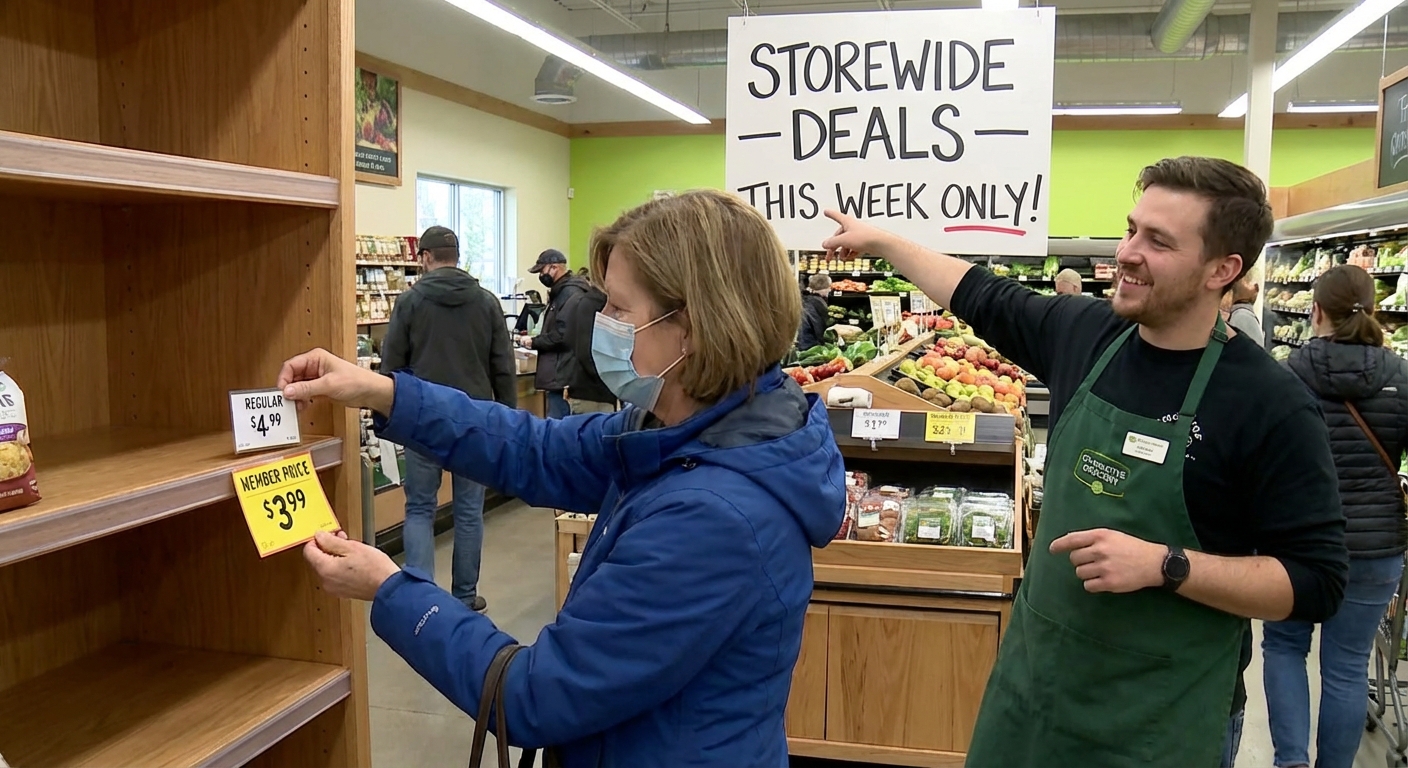
- Member-Only Sale Prices
Certain items are tagged “Member Deal” or “Co-op Deal.” Members get a reduced price; non-members pay the normal shelf price.
- Storewide Everyday Discounts
Some co-ops give members an automatic percentage off nearly everything—often 2–10%—or occasional “10% off one big shop” coupons.
- Patronage Dividends
This is where it gets interesting. At the end of the year, co-ops that are financially healthy return a portion of profits to members, usually in proportion to how much you spent.
For example, REI has historically given members around 10% back on full-price purchases as a dividend. In 2023, REI Co-op distributed $323 million to its members and community, including member rewards and profit-sharing with employees.[¹]
- Special Access and Pre-Sales
Things like early access to sales, extra discounts on bulk items, or member-only shopping days.
When I actually sat down and crunched the numbers for my local food co-op, my $100-ish membership fee paid for itself in about 9 months just through member-only deals and a year-end dividend.
Co‑op vs Regular Store Rewards: What’s the Difference?
A lot of people ask me, “Isn’t this just like a loyalty card at a regular supermarket?”
Short answer: not really.
Ownership
With a co-op, you’re typically buying a share—you’re legally a part-owner. With a supermarket loyalty card, you’re basically trading your data for coupons.
Where the Profits Go
Regular retailers send profits to shareholders or parent corporations. Co-ops funnel excess profits back to members and the community.
For example, National Co+op Grocers (NCG)—a business services cooperative for food co-ops—reported that its member co-ops generated more than $2.4 billion in sales in 2022 and collectively invested millions back into local communities through donations, local sourcing, and programs.[²]
Transparency
Co-ops usually hold annual meetings where members can review financials, vote on board members, and even propose changes. I remember sitting through my first one with a cheap paper cup of coffee thinking, “Oh wow, we’re really going line by line through the budget.” It was weirdly satisfying.
The Real-Life Pros (From My Own Cart)
1. Deeper Discounts on Staples
When I tested buying my basics—rice, beans, oats, olive oil—at my co-op vs a big-box store, the sticker price was sometimes higher at the co-op.
But once I factored in:
- Member-only sales
- Bulk bin savings
- Year-end dividend credit
…it evened out, and occasionally came out cheaper, with noticeably better quality products.
2. Bulk Buying That Actually Makes Sense
I’m not talking about 20-pound tubs of mayo.
My co-op’s bulk section lets me buy exactly what I need: 0.18 lbs of smoked paprika, half a cup of pepitas, or just enough lentils for a new recipe.
When I compared unit prices on bulk vs packaged, I found savings of 20–40% on many pantry staples, especially spices and nuts. The member discounts stacked on top of that.
3. Member Pricing as a Budget Anchor
This one surprised me. I found myself naturally gravitating toward the member-deal tags. It turned into a built-in budgeting hack:
- If it’s on member deal → “green light” item
- If it’s not and it’s pricey → I think twice
It’s like the store is quietly highlighting the best value for members, without the psychological chaos of 20 different promo tags.
The Cons (Because It’s Not All Sunshine and Organic Kale)
I’m a fan of co-ops, but there are real downsides, and I’ve felt them.
1. Upfront Cost
Most co-ops charge a one-time equity share—I’ve seen anywhere from $25 to $200. Some let you pay in installments, but still, it’s a hurdle.
If you’re not sure you’ll shop there regularly, that fee might never pay itself back.
2. Limited Selection
My co-op doesn’t stock certain ultra-specific brands I like. If you’re used to the endless aisles of a big-box store, a co-op can feel… cozy. Sometimes too cozy.
3. Prices on Non-Sale Items
I’m not gonna pretend everything is cheaper. Some niche or specialty items are undeniably more expensive.
A 2016 price comparison by The New York Times between Whole Foods and traditional supermarkets showed that premium and organic staples were often more expensive at specialty retailers, sometimes by 15–25%.[³] Many co-ops operate in a similar space with premium, local, or ethical sourcing, and that can bump prices up.
4. Work Requirements (At Some Co‑ops)
Some co-ops (like the famous Park Slope Food Coop in Brooklyn) require members to work a shift each month. For some people this is community-building. For others it’s, frankly, a dealbreaker.
I tried a work-shift model once. Lesson learned: stocking yogurt at 7:30 a.m. is not my calling.
How to Tell if Co‑op Member Pricing Is Worth It—for You
Here’s the rough framework I use when friends ask me whether to join:
1. Estimate Your Annual Spend
Look at your bank or card statements. If you’ll realistically spend $100+ per month at the co-op, you’re in the zone where membership can make sense.
2. Ask These Questions at the Co‑op
I’ve literally asked these at membership desks:
- Is the member share a one-time fee or yearly?
- What average annual dividend did members receive last year?
- Do you have member-only deals and how often do they rotate?
- Any discounts for students, seniors, or low-income shoppers? (Many co-ops offer these.)
If the staff can’t answer clearly, that’s a bit of a red flag on transparency.
3. Do a Test Shop
Before I joined my current co-op, I did a “mock member test”:
- Shopped a normal weekly list
- Wrote down the non-member total
- Then checked how much would’ve been discounted with member deals
When I compared it to my usual supermarket bill, co-op + member pricing came out slightly cheaper—but with better quality and better labor and sourcing standards. That was my tipping point.
Hidden Perks Nobody Tells You About
These aren’t technically “member pricing,” but they’re worth mentioning.
Classes, Demos, and Education
Many co-ops run free or low-cost cooking classes, nutrition workshops, or sustainability talks. My local co-op hosted a meal-prep class that literally saved me from my boring-chicken-and-rice rut.
There’s actually research backing this up: community-based nutrition programs anchored in places like co-ops and farmers markets can improve diet quality and food literacy over time.[⁴]
Local and Ethical Sourcing
Co-ops often prioritize local suppliers and fair labor. That doesn’t always translate directly into lower prices, but it can mean better value for what you’re paying.
I’ve found lettuces from a local farm at my co-op that stay fresh a solid 3–4 days longer than the cheaper stuff from big-box chains. Less waste = stealth savings.
My Honest Take: Who Co‑ops Are (and Aren’t) For
If your main goal is rock-bottom prices above all else, you’ll probably do better at hard-discount chains or warehouse clubs.
Co-ops shine if you:
- Shop regularly (weekly or close to it)
- Care about quality, sourcing, and community impact
- Actually use the member deals, bulk section, and dividends
I recently did a 6-month experiment where I split my grocery shopping between:
- A discount supermarket
- A big-box store
- My co-op
The result for my specific habits:
- Overall food costs were within about 5% across all three
- But the co-op consistently gave me better ingredients, less packaging, more bulk options, and way more transparency about where my money was going
So for me, the co-op + member pricing combo hit the best balance of value + values.
If you’re even vaguely curious, do a test shop, ask the awkward money questions at the membership desk, and run your own experiment. Worst case, you get some good snacks and stories out of it.
Sources
- REI Co-op 2023 Stewardship Report - Details on member dividends and financial returns
- National Co+op Grocers: Food Co-ops Impact Report - Data on sales, community investment, and co-op operations
- The New York Times – Is Whole Foods Really More Expensive? - Price comparison of premium grocers vs traditional supermarkets
- USDA – Local Food Systems and Healthy Food Access - Research on local food outlets and community nutrition
- University of Wisconsin Center for Cooperatives - Overview of cooperative business models and member ownership