Guide to Co Ops Shopping Benefits Explained
I recently discovered that co‑ops aren’t just for super‑eco people in linen pants. They’re quietly one of the smartest ways to shop if you like saving money, supporting your community, and having a say in what your store actually sells.
When I tested this with my local food co‑op (shoutout to the slightly chaotic bulk spice aisle), the difference in both price and vibe compared to my regular supermarket was… not subtle.
Let me walk you through what I’ve learned actually shopping with co‑ops — not theory, but real cart-in-the-aisle experience.
What a Co‑Op Store Really Is (Minus the Jargon)
A consumer co‑op (short for cooperative) is a business that’s owned by the people who shop there, not by outside investors.
Think of it like this:
- Regular supermarket: profits go to shareholders and corporate headquarters.
- Co‑op supermarket: profits get reinvested into the store, returned to members as patronage dividends, or used for community programs.
Legally, most co‑ops operate under cooperative principles laid out by the International Co‑operative Alliance. That’s why you’ll see words like “one member, one vote” everywhere. In my experience, that’s not just marketing. I’ve literally voted on:
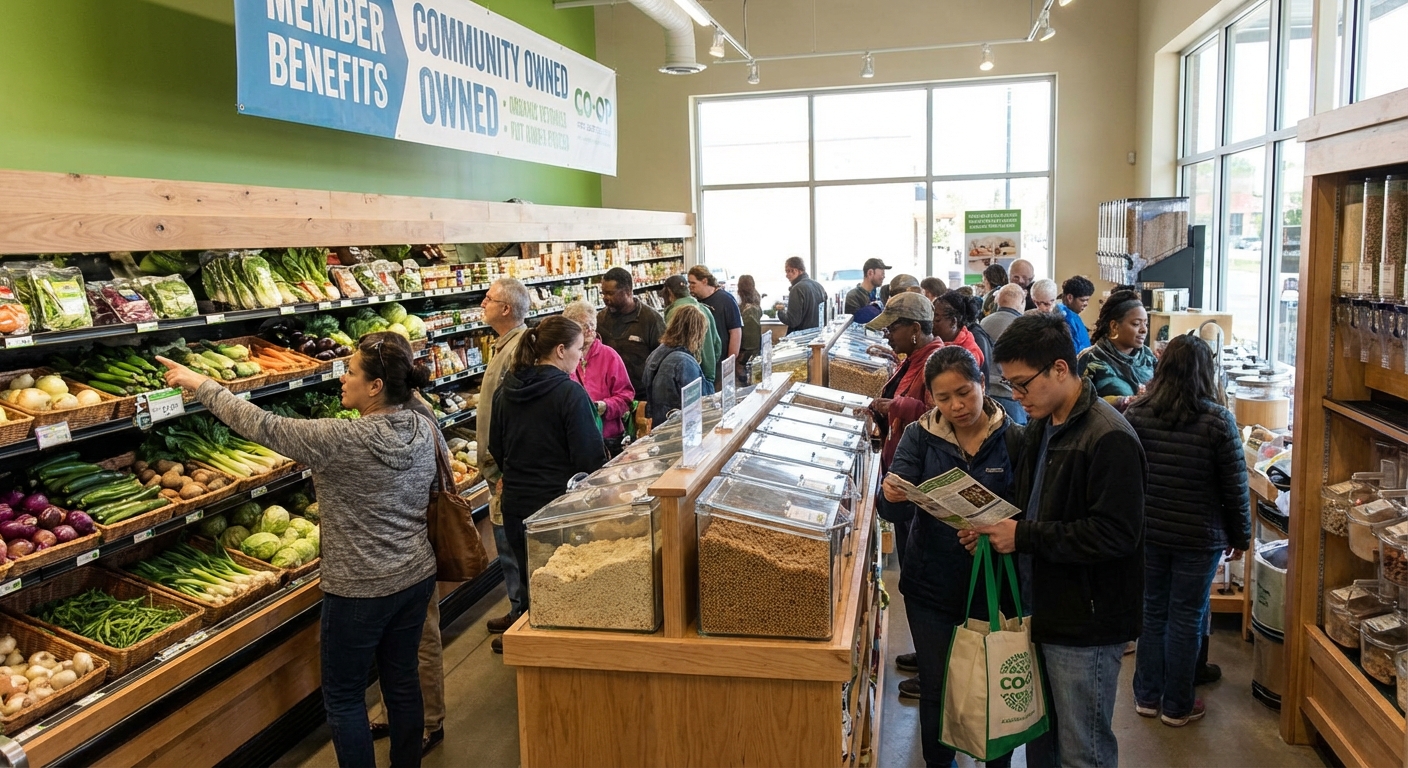
- Whether we should expand the bulk refill section
- Which local bakery to bring in
- What kind of discount structure makes sense for members
You don’t have to be a member to shop at many co‑ops (people are often surprised by this), but membership is where the benefits kick in.
How Co‑Op Membership Actually Saves You Money
Let’s talk numbers, because my wallet definitely noticed a difference.
1. Member Discounts & Special Pricing
When I joined my co‑op, the membership fee was about the cost of two takeout lunches for the entire year. In return, I got:
- 10–15% off member appreciation days
- Lower member-only prices on staples like oats, rice, beans, and coffee
- Extra discounts on case purchases (perfect for pantry stuff)
According to the National Co+op Grocers network, many U.S. food co‑ops return an average of 2–3% of sales back to members as discounts, patronage refunds, or special sales. It doesn’t sound huge until you look at a year’s worth of grocery bills.
When I compared receipts over three months, I worked out that my membership fee paid for itself in about six weeks — just from discounts on bulk ingredients and coffee alone.
2. Patronage Dividends (The “Surprise Money” Moment)
This was the part I didn’t get at first. If a co‑op is profitable, it can return some of that profit to members based on how much they shopped. This is called a patronage dividend.
One year, I got a small but delightful check in the mail — basically the store saying: “You shopped here a lot. Here’s your share of what we earned together.”
It felt very different from a supermarket loyalty card. Points are marketing. Patronage is literally profit sharing.
The Shopping Experience: Why It Feels Different
When I talk about co‑ops, I don’t just mean the economics. The whole experience is noticeably different.
1. Product Selection You Actually Influenced
When I tested this theory, I submitted a suggestion for a specific brand of oat milk that I couldn’t find anywhere. A couple weeks later, it was on the shelf with a tiny “Owner Request” tag.
You can’t exactly walk into a big‑box chain and say, “Hey, can you stock this small local brand that nobody’s heard of yet?” and expect it to work.
Co‑ops often prioritize:
- Local producers and small farms
- Organic and fair‑trade goods
- Transparent ingredient lists
A 2019 report from National Co+op Grocers found that co‑ops purchase significantly more local products than conventional grocers, directing millions of dollars back into regional economies.
2. Staff Who Know Their Stuff
This isn’t universal, but in my experience, employees at co‑ops tend to:
- Actually know what nutritional yeast is (and how to cook with it)
- Give real, tried-it-myself product recommendations
- Be honest when something isn’t worth the money
I once asked a staff member if a pricey specialty chocolate bar was “actually that good or just good marketing.” They laughed and said, “The packaging is doing a lot of the heavy lifting — try this one instead, it’s cheaper and better.” They were right.
That level of candidness is easier when corporate isn’t breathing down your neck to push a specific brand.
3. Community Energy You Can Feel
I know this sounds fluffy, but the vibe is real. I’ve bumped into neighbors, local farmers, even the person who roasts the coffee I buy every week.
Many co‑ops host:
- Free or cheap cooking classes
- Bulk-buy workshops
- Local vendor pop‑ups
- Sustainability or zero‑waste events
It turns shopping from a chore into something that actually feels kinda… good.
Beyond Groceries: Other Co‑Op Shopping You Might Be Missing
Food co‑ops get most of the attention, but there are co‑ops for a lot of things:
- Outdoor gear co‑ops (like REI Co‑op in the U.S.) — I’ve gotten annual member dividends and free services just for buying the gear I was going to buy anyway.
- Housing and student co‑ops — where residents collectively manage and sometimes shop for shared supplies at scale.
- Utility and telecom co‑ops — common in rural areas; they can provide internet, electricity, or phone services with more local control.
When I bought camping gear from REI as a member, I later received a dividend based on my purchases and early access to their big sales. It’s the same cooperative principle, just applied to backpacks instead of broccoli.
The Hidden Benefits Nobody Tells You About
After a couple years of regular co‑op shopping, I’ve noticed some under‑the‑radar perks.
1. Built‑In Support for Better Supply Chains
Because co‑ops aren’t driven purely by quarterly profit targets, they’re often early adopters of:
- Fair trade certifications
- Ethical sourcing policies
- Better labor standards
For example, many food co‑ops publicly commit to supporting fair‑trade coffee and chocolate, meaning you’re more likely to avoid products linked to exploitative labor. You don’t have to obsessively research every brand; the store does some of that filtering for you.
2. Less Waste, More Value
Co‑ops tend to lean hard into bulk buying and refills. When I started refilling things like dish soap, oats, nuts, and spices, a few things happened:
- My per‑unit costs dropped
- My trash output shrank
- I stopped overbuying “just in case” because I could get exactly the amount I needed
The first time I refilled a spice jar for 86 cents instead of buying a $6 bottle, I fully converted.
The Downsides: Co‑Ops Aren’t Magic
To keep this honest: co‑ops aren’t perfect, and they won’t be the best choice for everyone.
1. Prices Can Be Higher on Some Items
Yes, some things are cheaper, especially bulk and staples. But co‑ops often can’t match rock-bottom prices on mass‑produced, heavily processed goods. If your cart is mostly national-brand chips, soda, and frozen meals, you may pay more at a co‑op.
When I compared my full weekly shop, I found a pattern:
- Pantry basics and bulk: cheaper or similar
- Specialty organic/local: often pricier but higher quality
- Mainstream processed foods: usually cheaper at big chains
2. Limited Locations and Hours
A lot of co‑ops are still one‑location or regional operations. My co‑op closes earlier than the 24/7 supermarket, which means late‑night ice cream emergencies require a different plan.
3. Upfront Membership Fee
Memberships are usually affordable (often $20–$100 a year or even a one‑time fee), but that upfront cost can still be a barrier. Many co‑ops offer low‑income or installment options, but you have to ask.
4. Not All Co‑Ops Are Equally Great
Co‑ops are run by people, and people are… well, human. The quality depends on management, member engagement, and financial health.
I’ve visited co‑ops that were incredibly well‑run and others that felt disorganized, with spotty stock and confusing signage. The cooperative model helps, but it doesn’t instantly fix everything.
How to Decide If Co‑Op Shopping Makes Sense for You
When friends ask me whether they should join a co‑op, I usually suggest this simple test:
- Shop there as a non‑member for a month. Track your receipts and note what’s cheaper, what’s more expensive, and what you uniquely love about the place.
- Ask about their member benefits and patronage history. Do they regularly return dividends? Offer real discounts? Or is membership mostly symbolic?
- Look at your own values. If local food, sustainability, and community matter to you, those non‑monetary benefits might easily justify a slightly higher price on certain items.
- Check your budget honestly. If you’re in a season where every cent counts, you might use the co‑op more surgically: bulk staples and occasional specialty items, while doing the rest at a discount chain.
For me, co‑op shopping hasn’t replaced every other store, but it’s become my default for groceries and everyday essentials, with big‑box and warehouse stores filling in the gaps.
How to Find a Co‑Op Near You
If you’re curious and want to try this in your own cart, here’s what I’d do:
- Search “food co‑op near me” or “consumer cooperative grocery [your city]”
- Check regional or national directories like National Co+op Grocers (for the U.S.)
- Look for outdoor/gear co‑ops if you’re into travel or camping (REI Co‑op is the big one in North America)
Then do what I did: walk in, ask at the customer service desk, “How does membership work here — and what are the real benefits?” and let them give you the unpolished version.
If you care where your money goes, co‑ops turn everyday shopping into a quiet little act of voting — with your receipts, not just your opinions.
And honestly? It feels pretty good to know that when my cart is full, I’m not just padding a distant shareholder’s portfolio. I’m helping shape a store I actually like shopping in.
Sources
- National Co+op Grocers – Food Co-ops & Local Economies - Data and background on U.S. food cooperatives and their local impact
- International Co-operative Alliance – Cooperative Identity, Values & Principles - Official explanation of the global cooperative model
- REI Co-op – Member Rewards - Example of how a large consumer co-op structures dividends and member benefits
- U.S. Department of Agriculture – Cooperative Information Report - Government publications on cooperative business structures and performance
- University of Wisconsin Center for Cooperatives – Research on Co-ops - Academic research and data on cooperative economics and impact