Guide to Comparing Big Lots With Other Discount Stores
than what I usually drop at Target on “just a few things.” That trip turned into a little obsession, and I started methodically comparing Big Lots to other discount staples: Dollar Tree, Dollar General, Walmart, Aldi, Ollie’s, and even TJ Maxx / HomeGoods.
Here’s what I’ve learned from way too many receipts, a lot of price tracking, and a few wins (and fails) along the way.
What Big Lots Actually Is (and Isn’t)
Big Lots sits in a pretty specific niche: it’s a closeout and off-price retailer that’s evolved into a discount home and essentials store.
When I dug into their investor reports, Big Lots themselves describe their model as a mix of:
- Closeouts (excess inventory from other brands)
- Special buys (opportunistic deals from vendors)
- Everyday value (regularly stocked items)
They’re not a dollar store. They’re not exactly a traditional big-box store either. They’re more like: “What if HomeGoods, Walmart’s seasonal aisle, and a clearance rack had a baby?”
My first real “aha” moment
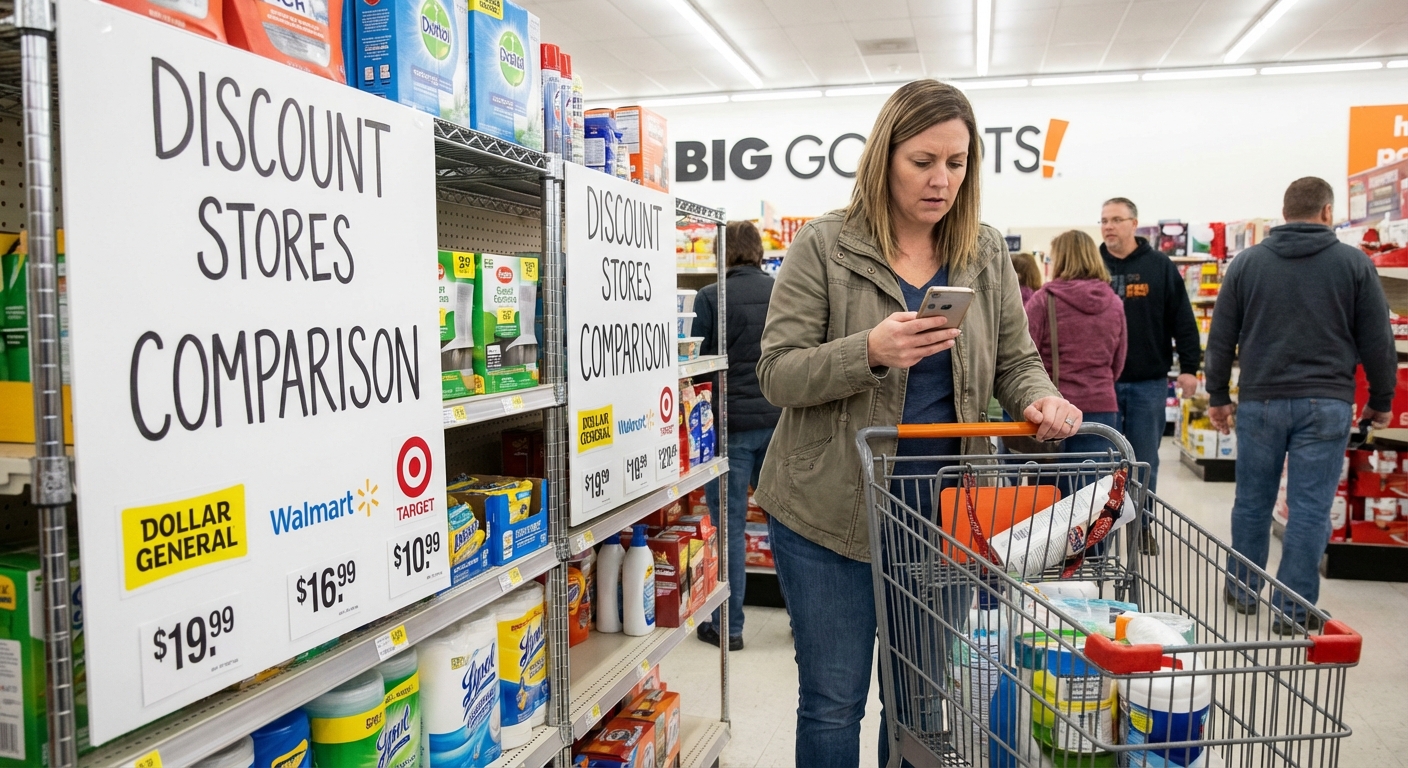
When I tested Big Lots against Walmart on everyday items, I bought:
- Paper towels
- Laundry detergent
- A mid-tier pillow
My receipt data (yes, I keep photos):
- Laundry detergent (same size, same brand): Big Lots was about 8–10% cheaper than my local Walmart that week.
- Paper towels (Big Lots house brand vs Walmart’s): prices were similar, but Big Lots ran a “Buy 1, get 50% off the 2nd” promo that tipped the scale.
- Pillow: Big Lots’ mid-range pillow was about 30–40% cheaper than Target’s equivalent, but the fill felt cheaper and flattened faster.
That’s when I realized: Big Lots is strongest when you’re flexible on brand and timing, and weaker if you’re picky and want specific items every time.
Big Lots vs Dollar Tree & Dollar General
These three get lumped together a lot, but they play different games.
Big Lots vs Dollar Tree
Dollar Tree is ultra-price-defined: almost everything is $1.25 (as of 2024 in most locations). You trade size and quality for that predictability.
When I tested this with cleaning supplies:
- Dollar Tree’s multi-surface cleaners were smaller bottles, unfamiliar brands.
- Big Lots carrying recognizable brands (Fabuloso, Lysol, etc.) in larger sizes.
Price per ounce, Big Lots usually won if I grabbed sale or promo items. Dollar Tree still wins if you’ve only got a few bucks and want strict price control.
My experience:- I go to Dollar Tree for party supplies, gift bags, and throwaway decor.
- I go to Big Lots for larger household supplies and when I want semi-decent quality at a discount.
Big Lots vs Dollar General
Dollar General leans hard into small-town convenience. According to their filings, they have over 19,000 stores in the U.S., often where there isn’t a Walmart around. Big Lots, by contrast, has a little over 1,300 stores.
When I tested prices on basics (toilet paper, cereal, dish soap) in the same week:
- Dollar General’s house brands were usually cheaper.
- Big Lots was competitive or cheaper on name-brand items when coupons and in-app deals stacked.
The catch:
- Dollar General is more about “quick run for milk and TP”.
- Big Lots is more of a “let’s browse, maybe redo the guest room and grab snacks” experience.
If you want strictly rock-bottom everyday prices on essentials, especially rural or small-town, Dollar General edges out. If you’re also hunting home goods and furniture on a budget, Big Lots becomes interesting.
Big Lots vs Walmart: The Big Test
When I started actually tracking prices, Walmart was the obvious benchmark.
Where Walmart usually wins
- Groceries: Walmart’s scale is unbeatable. USDA data and multiple price comparisons regularly show Walmart as one of the lowest-price national grocers.
- Everyday consistency: If you want the exact same detergent, same cereal, same brand every time, Walmart’s your safer bet.
- Selection: Walmart carries more SKUs, especially in groceries, personal care, and electronics.
Where Big Lots surprisingly holds its own
In my experience, Big Lots beats or matches Walmart when:
- You’re buying seasonal decor (Halloween, Christmas, patio, etc.)
- You’re open to off-brand or house-brand furniture (sofas, mattresses, accent pieces)
- You’re okay with “when it’s gone, it’s gone” closeout deals
I’ve scored:
- A $299 sofa at Big Lots that felt similar to $399–$450 sofas at Walmart.
- Decent-quality area rugs for under $80 that would be $120+ at many big-box stores.
The trade-off: Walmart’s quality and returns process felt more standardized and reliable. Big Lots’ quality is more hit or miss—you have to physically touch and inspect furniture.
Big Lots vs Aldi: Snacks and Pantry Wars
Aldi is its own universe: limited selection, heavy focus on private-label brands, and legendary low prices. I regularly shop there, so I did a direct comparison for snacks and pantry items.
What I saw in my receipts
- Chips, crackers, cookies: Aldi’s prices were usually lower per ounce, but Big Lots occasionally had name-brand closeouts (think giant boxes of Pop-Tarts or cereal) at insane markdowns.
- Canned goods & staples: Aldi almost always cheaper, but Big Lots ran bonus-card promotions that narrowed the gap.
- Variety of name brands
- Fun limited-time closeout snacks you won’t see anywhere else
- Week-to-week reliability on staples
- Tight, consistent low pricing model
I treat Big Lots more like a treasure hunt for snacks and pantry extras, while Aldi is my workhorse for weekly groceries.
Big Lots vs TJ Maxx / HomeGoods / Ollie’s Bargain Outlet
This is where things get interesting for home decor lovers.
Vs TJ Maxx / HomeGoods
When I tested Big Lots against HomeGoods for decor and small furniture:
- Style: HomeGoods usually has trendier and more curated pieces.
- Price: Big Lots was often a bit cheaper on similar-sized items (lamps, side tables, storage pieces) but with slightly simpler designs.
My favorite Big Lots win:
- A simple, modern TV stand under $150 that felt comparable to a $199+ version at HomeGoods in build and size.
But if I’m decorating a living room I really care about aesthetically, I’m still more likely to start at HomeGoods and use Big Lots to fill in basics.
Vs Ollie’s Bargain Outlet
Ollie’s (if you have one nearby) is a much more intense “bargain warehouse” vibe.
From my trips:
- Ollie’s can beat Big Lots on book prices, some tools, and random housewares, but it feels more chaotic.
- Big Lots stores are typically cleaner, easier to navigate, and more consistent in layout.
I think of it this way:
- Ollie’s: deeper discounts, rougher edges.
- Big Lots: slightly higher prices on some items, but a more “normal” store experience.
Quality, Returns, and Membership: The Less Glamorous Stuff
Quality
In my experience, Big Lots quality lands in the “solid budget” zone:
- Furniture: fine for apartments, guest rooms, kids’ spaces, or short- to medium-term use.
- Mattresses: I’d test in person; some feel great, some feel very entry-level.
- Textiles (rugs, bedding, curtains): surprisingly good finds if you touch before you buy.
You won’t mistake most of it for high-end designer pieces, but it usually doesn’t feel like pure disposable junk either.
Returns and policies
Big Lots publicly posts its return policies, and in practice, I’ve had:
- Smooth returns with receipts on unopened items
- More scrutiny on furniture returns (understandable, but you need to keep packaging and documentation)
Compared to Walmart, the process feels a bit more case-by-case and store-dependent.
Rewards and coupons
Big Lots’ Big Rewards program is where you can tilt the value in your favor:
- Frequent $5 off $15 or 20% off one item deals
- Birthday rewards
- Occasional bonus rewards for certain categories
When I stacked a 20% off coupon on already discounted patio furniture, that’s where I felt like I “beat the system.” If you shop without the app or rewards, you’re leaving money on the table.
When Big Lots Is the Best Choice (And When It’s Not)
Big Lots makes sense when:
- You’re furnishing on a tight budget and okay with mid-level quality
- You like the thrill of closeout deals and don’t need the same item forever
- You’re hunting seasonal decor or holiday items without paying full big-box prices
- You’ll actually use the rewards program and digital coupons
Big Lots is weaker when:
- You want consistent grocery staples at the lowest weekly prices (Aldi/Walmart usually win)
- You’re super picky about brand, model, or product specs every single time
- You care more about design-forward decor than price (HomeGoods / Target / IKEA might make you happier)
How I Personally Use Big Lots in My Shopping Strategy
After months of nerding out over receipts, here’s how Big Lots fits into my actual life:
- Walmart or Aldi for regular groceries and essentials.
- Big Lots once or twice a month for:
- Seasonal decor
- Accent furniture and storage
- Snacks and name-brand closeouts
- Cleaning supplies when promos stack right
- HomeGoods / TJ Maxx when I want stuff that looks a bit fancier or trendier.
When I treat Big Lots as my secret weapon for specific categories—not my all-in-one everything store—it really earns its place.
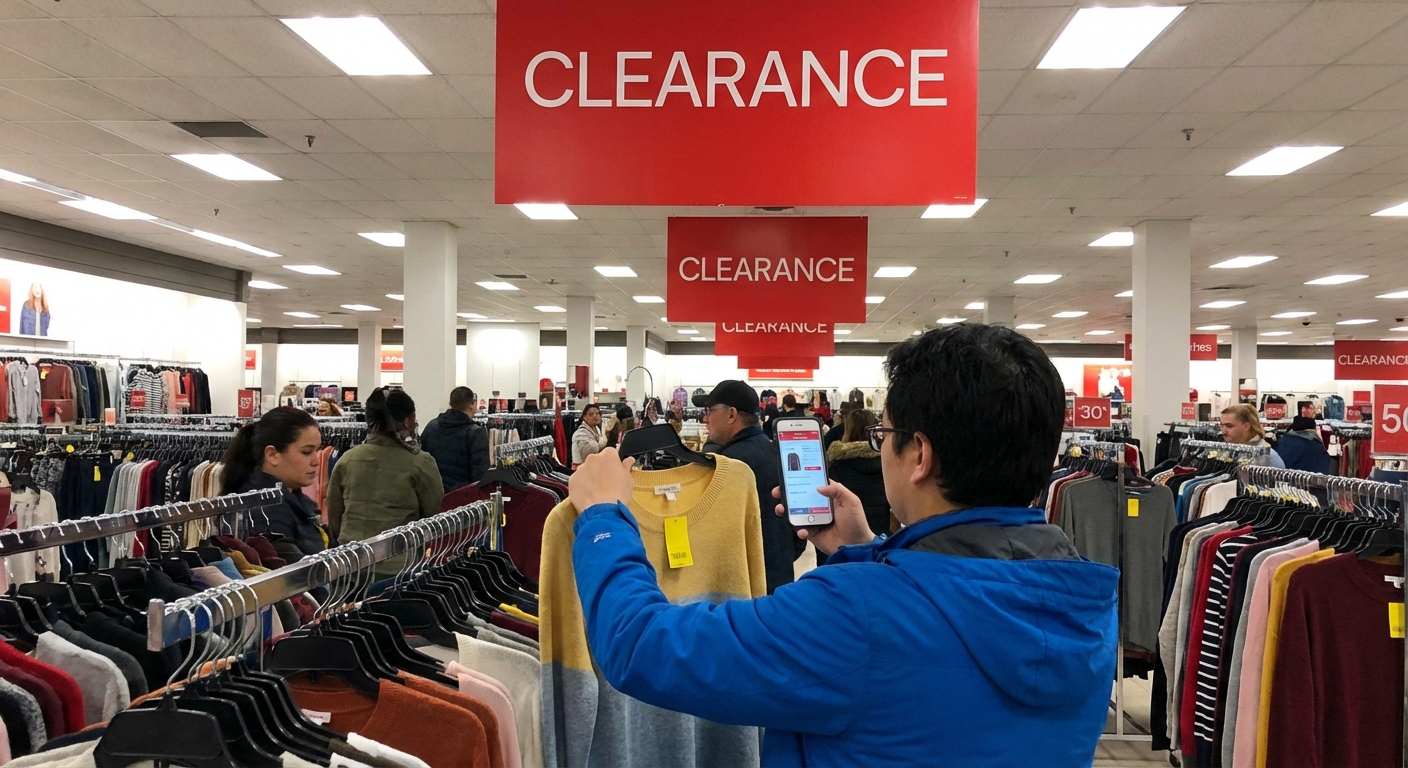
If you go, my honest suggestion: don’t rush. Walk the aisles, check the clearance endcaps, open the app while you’re in-store, and run quick price checks on your phone. That’s where the real savings show up.
Sources
- Big Lots Investor Relations – Company Overview - Official background on Big Lots’ business model and store count
- U.S. Bureau of Labor Statistics – Consumer Prices and Grocery Trends - Data for understanding general price levels and comparisons
- Forbes: How Dollar Stores Are Growing In The U.S. - Context on dollar and discount retail expansion
- NPR: How Aldi, Lidl, And Other Discount Grocers Are Changing U.S. Supermarkets - Insight into discount grocery strategies
- Walmart Corporate – Our Business - Official overview of Walmart’s scale and positioning