Guide to Comparing Burlington Prices with Retail Stores
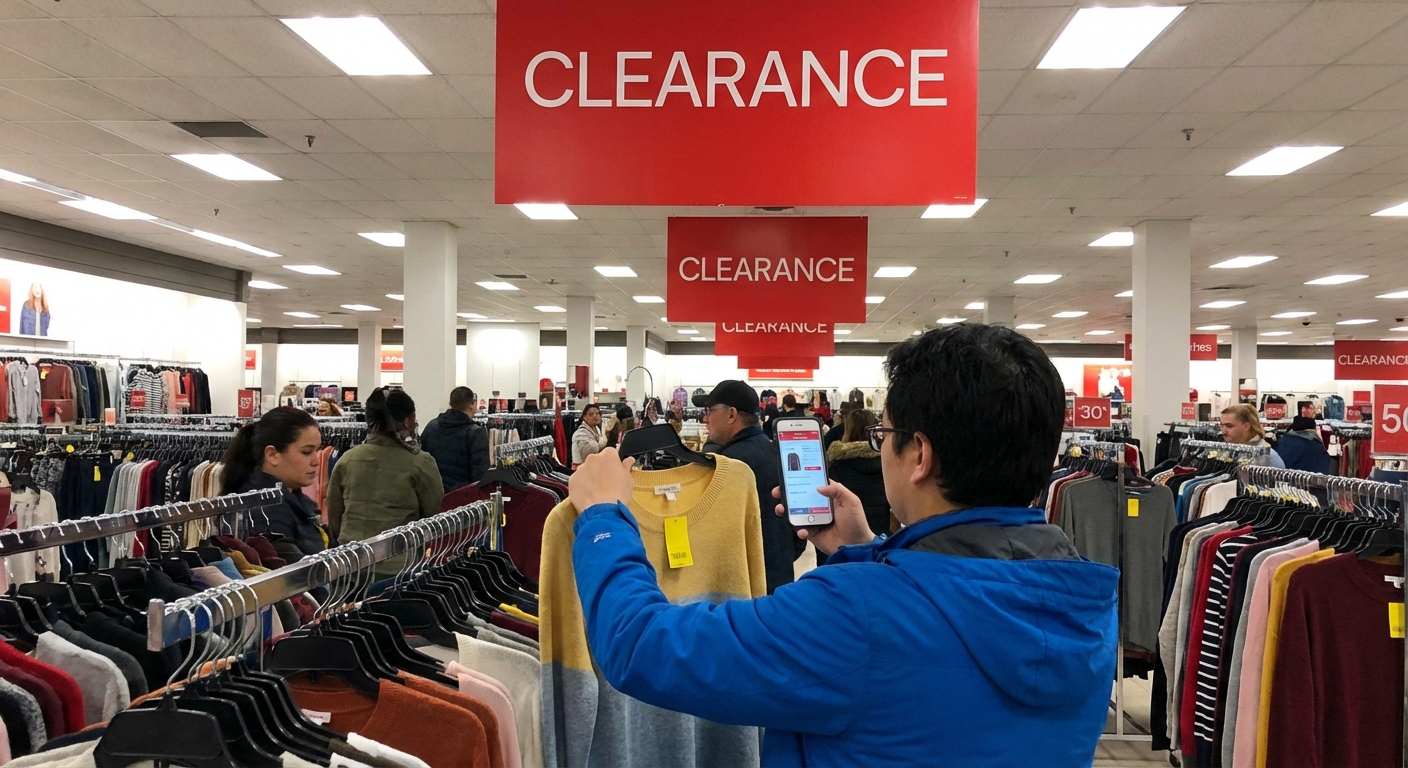
A few months ago, I walked into a Burlington on my lunch break “just to browse.” Famous last words. I walked out with two brand‑name tops, a pair of sneakers, and a cookware set for less than what I’d budgeted for one pair of jeans at the mall. That trip is what pushed me to really test whether Burlington is actually cheaper than regular retail stores—or if it just feels cheaper because of those big red clearance stickers.
This guide is exactly what I wish I had before I started my little price‑comparison experiment.
How Burlington’s Pricing Model Really Works
When I started digging, I realized Burlington isn’t just a “cheap version of department stores.” It’s an off‑price retailer, similar to T.J. Maxx and Ross.
In my experience, this matters, because it changes how you should compare prices:
- Burlington buys excess inventory, overstock, and past‑season items from big brands and department stores at a discount.
- They don’t usually carry full current assortments the way Macy’s, Kohl’s, or Target do.
- The same SKU might not appear in two Burlington locations—or even be re‑stocked once it's gone.
According to Burlington’s own investor materials, their average retail price is well below traditional department store pricing, and they position themselves deliberately as an off‑price player rather than a full‑line retailer.
So when you compare Burlington prices, you’re not comparing apples to apples with, say, Nordstrom. You’re comparing older, off‑price or overstock merchandise to current‑season, full‑price retail.
That’s not bad—it’s just the game.
My Test: How I Actually Compared Prices
I got a bit nerdy with this.
Over four weekends, I hit:
- 2 Burlington locations
- 1 Macy’s
- 1 Kohl’s
- 1 Target
- 1 DSW (for shoes)
I focused on categories Burlington is strong in: men’s & women’s clothing, shoes, handbags, home goods, and kids’ clothes. Here’s how I compared:
1. Match by Brand + Category, Not Exact Item
Exact item matches are rare. When I tested this, I could sometimes find the same sneaker model at DSW and Burlington, but shirts and dresses were usually from different seasons or slightly different styles.
So I compared:
- Same brand
- Same general item type (e.g., “men’s performance polo,” “women’s midi dress”)
- Similar material and construction quality
Example from my own notes:
- Burlington: Calvin Klein women’s blazer – $39.99 (compare‑at price on tag: $129)
- Macy’s: Calvin Klein blazers ranged $119–$149 (current season)
Is that blazer last season’s? Almost definitely. Does that matter to me for work clothes? Not at all.
2. Ignore the “Compare At” Price (Mostly)
Burlington tags usually show a “compare at” price. I used to take those at face value… then I started checking.
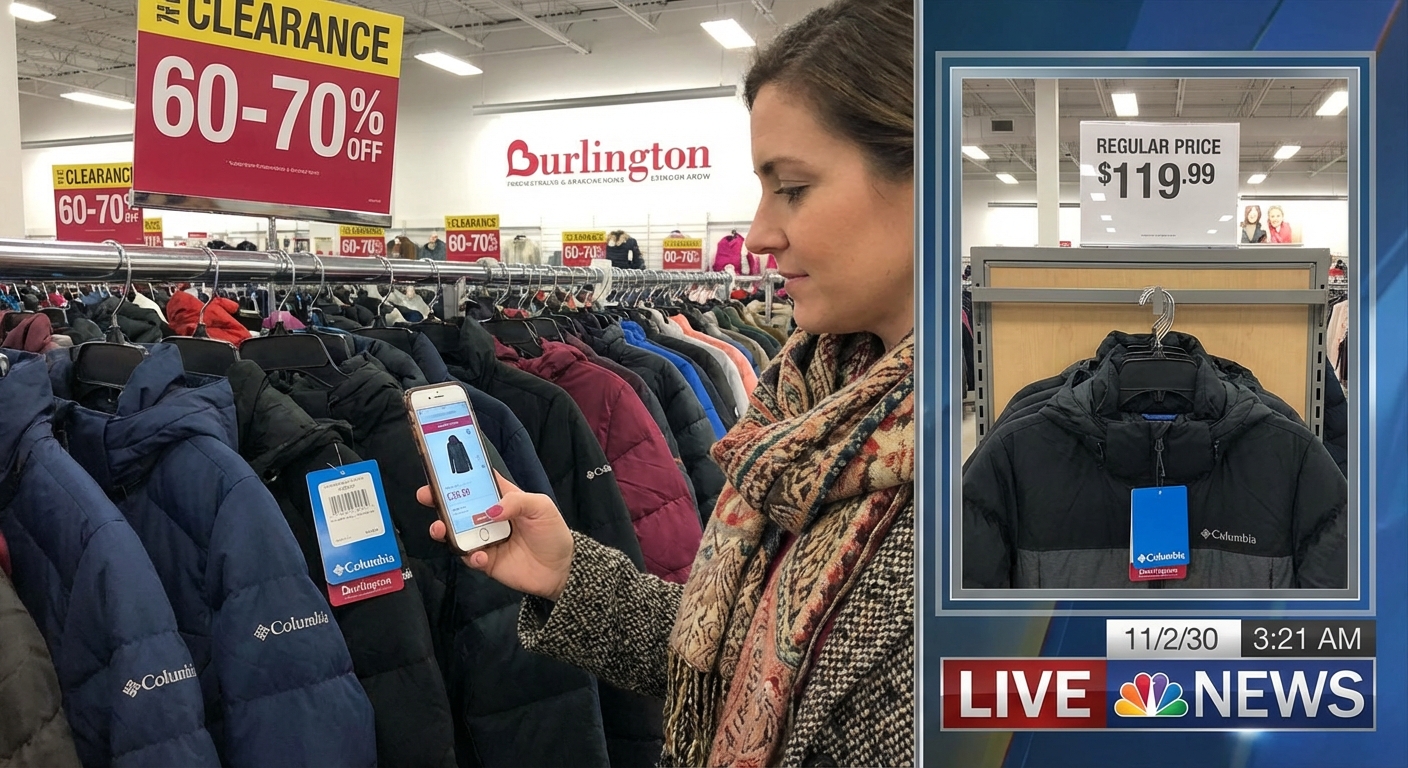
When I scanned barcodes with my phone (Google Lens + brand websites), I found:
- Sometimes the “compare at” price was accurate.
- Sometimes the true current price at the brand’s site was lower than Burlington’s compare‑at.
- A few times, the “compare at” was for original MSRP, not current selling price.
So now, in my experience, that number is just a loose reference, not proof of savings.
3. Use Your Phone Like a Secret Weapon
I did this constantly:
- Searched product names or numbers on:
- Official brand websites
- Major retailers (Macy’s, Target, Kohl’s, DSW)
- Amazon for a ballpark
For example, I found a pair of Adidas running shoes at Burlington for $44.99. On Adidas’ own site, they were on sale for $65 (down from $90). That’s a real saving, not just psychological.
Real Price Comparisons I Found
Here are a few actual comparisons from my little experiment (prices obviously fluctuate, but this gives a sense of patterns):
1. Athletic Shoes- Burlington: Adidas women’s running shoes – $44.99
- DSW: Similar Adidas model – $69.99–$79.99
- Adidas.com sale section: $60–$70 range
- Burlington: Tommy Hilfiger dress shirts – $24.99–$29.99
- Macy’s: Tommy Hilfiger dress shirts – typically $79.50 MSRP, often on promo for $49.99–$59.99
- Burlington: 10‑pc nonstick cookware set (recognizable national brand) – $59.99
- Target: Same brand, updated packaging, similar 10‑pc set – $89.99 (regular), sometimes $69.99 on sale
When I tested this, I checked reviews on Target’s site and the brand’s site to confirm quality. Same basic product line, slightly older packaging at Burlington.
Where Burlington Really Shines (and Where It Doesn’t)
After several trips (and more receipts than I care to admit), here’s my honest breakdown.
Burlington Wins Big On:
1. Branded Fashion at Deep DiscountFor mid‑tier brands—Calvin Klein, Tommy Hilfiger, Guess, Nautica, Kenneth Cole—Burlington beat mall prices almost every time I compared similar items. If you’re brand‑sensitive but not season‑obsessed, this is gold.
2. Kids’ Clothes & Baby GearIn my experience shopping for baby shower gifts, Burlington often had onesies, blankets, and accessories cheaper than Target and Walmart, especially multi‑packs and brand‑name items.
3. Outerwear & Seasonal StuffCoats, jackets, and holiday‑themed items get pricey at regular retailers. Burlington’s coat section in particular is usually stacked with name brands at 40–60% less than department stores’ tagged prices.
Where Retail Stores Compete or Win
1. Latest Styles & Full Size RunsIf you want the newest drop from Nike or the exact dress you saw on Instagram, a full‑price retailer or the brand’s own website is safer. Burlington is hit‑or‑miss with sizes and colors.
2. Store Policies and ReturnsWhile policies vary by location and have changed over time, traditional retailers often have:
- Longer return windows
- More lenient return conditions
- Easier online returns
If you’re the “buy three, return two” type, full‑price retailers or Amazon may be less stressful.
3. Consistency & Stock ReliabilityWhen I returned to Burlington for a specific pan set I didn’t buy the first time, it was gone. Poof. Meanwhile, at Target, I can usually find the same item across multiple visits or at least order it online.
How to Compare Burlington Prices Like a Pro
Here’s the simple method I use now whenever I’m standing in an aisle, debating.
Step 1: Check the Tag—but Don’t Trust It Blindly
Look at:
- Burlington’s price
- The brand name
- Any model/style number
Then treat the “compare at” price as a rough ceiling, not a guarantee.
Step 2: Do a 90‑Second Phone Check
Search on:
- Brand’s official site
- A major retailer (Macy’s, Kohl’s, Target, DSW)
- Google Shopping or Amazon for range
If Burlington’s price is 20%+ lower than current sale prices elsewhere, it’s usually a strong buy in my book.
Step 3: Factor In Return Hassle
Ask yourself:
- Am I 90% sure I’ll keep this?
- Do I know my size in this brand?
- Is this a style I’d still like next season?
If the answer is “ehhh,” paying a bit more at a retailer with easier returns might actually be smarter.
Step 4: Consider Quality, Not Just Brand
Sometimes off‑price stores get special make‑up versions—items produced specifically for off‑price channels that look like the main line but may use slightly different materials.
When I tested this, I noticed:
- Slight differences in stitching
- Different fabric blends listed on tags
This doesn’t mean it’s bad, just that brand name alone isn’t everything. Read the fabric content, check the hardware, feel the material.
When Burlington Is Worth the Trip (and When to Skip)
From my own experience, Burlington is absolutely worth prioritizing when:
- You’re hunting bargains on recognizable brands
- You don’t care if something is from last season
- You enjoy the “treasure hunt” vibe
- You’re buying kids’ clothes, coats, handbags, or home decor
I’d skip or use it more selectively when:
- You need a specific, current‑season item (wedding guest dress you saw online, matching bridal party outfits, a trending sneaker colorway)
- You’re picky about exact fit or wash on jeans—off‑price can feel like roulette here
- You don’t have the patience to dig through racks or compare online
Final Thoughts: How I Shop Burlington Now
After all this testing, I’ve changed how I use Burlington.
I don’t go in expecting to find an exact item; I go in with categories in mind: “work tops,” “guest towels,” “backup sneakers,” “kids’ gifts.” I treat it as an off‑price treasure hunt backed by quick, real‑time price checks on my phone.
And honestly? When I walk into a mall store and see a $98 blazer now, I can’t help thinking about that $39.99 Burlington find sitting in my closet, still going strong.
If you treat Burlington as a strategic supplement to regular retail rather than a full replacement—and if you’re willing to double‑check prices instead of trusting every compare‑at tag—you can absolutely beat most retail prices without sacrificing quality.
Just… maybe bring a cart. You’ve been warned.
Sources
- Burlington Stores Investor Relations – Company Overview – Official explanation of Burlington’s off-price business model
- Harvard Business School – The Off-Price Retail Business Model – Academic look at how off-price retailers source and price merchandise
- Forbes – How Off-Price Retailers Are Disrupting Traditional Retail – Industry analysis of off-price vs full-price retail
- CNN Business – Why TJX, Ross and Burlington Are Thriving – Context on how off-price chains compete on price and value
- U.S. Bureau of Labor Statistics – Consumer Price Index Data – Official data on apparel and retail price trends for broader price context