Guide to Cooking and Baking With Honey: Substitutions, Temperature Adjustments, and Flavor Pairings
in places sugar had no business being… and I haven’t really looked back.
When I tested honey in everything from sandwich bread to brownies, I realized two things:
- Honey behaves nothing like plain sugar.
- If you respect its quirks, it can make your food taste way better.
This guide is everything I wish I’d had before I wrecked an entire tray of honey cookies that turned into a single, chewy, golden-brown sheet.
Honey 101: Why It’s Not Just “Liquid Sugar”
In my experience, once you understand what honey is, your recipes stop going sideways.
Honey is:
- About 80% sugar (mostly fructose and glucose)
- About 17–20% water
- Packed with acids, enzymes, minerals and aromatics that give it flavor and browning power
A few practical consequences:
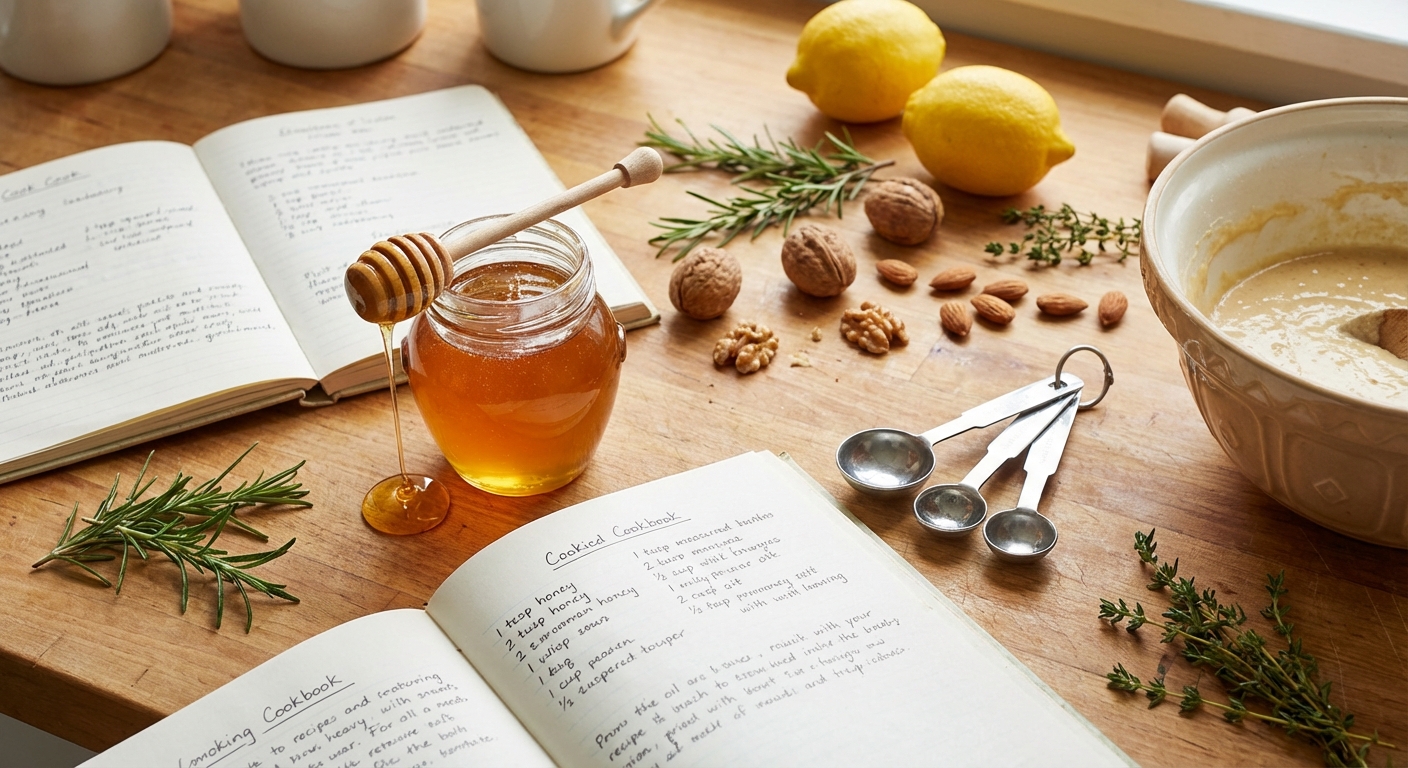
- Sweeter than sugar: Because of its higher fructose content, honey tastes sweeter than the same weight of table sugar. The USDA notes honey is roughly 1.2–1.4 times sweeter than sucrose by weight.
- More hygroscopic: It attracts and holds water. This is why honey cakes and breads stay moist longer… and also why cookies can spread more than you’d like.
- Browns faster: The combination of sugars, natural acids, and trace proteins means honey-heavy batters can darken quickly in the oven.
Once I stopped treating honey like “sugar that pours,” my results improved overnight.
How to Substitute Honey for Sugar (Without Ruining Texture)
This is where most people (including past-me) get burned.
Basic conversion rules I actually use
When I tested side-by-side batches, these ratios worked best for most recipes:
- Use 2/3 to 3/4 cup honey for every 1 cup granulated sugar
- Reduce other liquids by 2–4 tablespoons per cup of honey
- Lower oven temperature by 25°F (about 14°C)
So if a cake recipe calls for:
- 1 cup sugar
- 1 cup milk
- Bake at 350°F (175°C)
Then my honey version usually looks like:
- 2/3–3/4 cup honey (start with 2/3)
- 3/4–7/8 cup milk (reduce liquid by about 3 tbsp)
- Bake at 325°F (160–165°C)
When these substitutions shine
I’ve had the best results using honey to replace sugar in:
- Quick breads & muffins – Banana bread with honey instead of sugar is ridiculously moist and stays good for days.
- Soft cookies – Oatmeal, ginger, or bar cookies hold up well; crisp cookies get too chewy.
- Cakes with structure – Carrot cake, spice cake, yogurt cakes. Sponge cakes are touchier.
- Yeasted breads – Honey adds flavor and helps browning. I love it in whole wheat or oatmeal loaves.
When I don’t recommend a straight swap
Honey is not a great 1:1 hero in:
- Crisp cookies – You’ll typically lose the snap and end up with soft, bendy edges.
- Meringues & macarons – The water content and different sugar profile can wreck the structure.
- Hard candy or caramel – Honey burns easily and has a narrower temperature window.
You can create recipes built around honey in these categories, but you can’t just drop it in where sugar used to be and expect magic.
Temperature Adjustments: Keeping Honey From Burning
When I first baked honey-sweetened granola at my usual sugar settings, it went from pale to “uh-oh” in five minutes.
Here’s what I do now.
Oven temperature
- Lower the oven temperature by about 25°F (14°C) whenever honey is the main sweetener.
- Start checking earlier than usual. For cookies, I peek at the 2/3 mark of the stated baking time.
Honey’s natural fructose and acids accelerate browning and caramelization. That gorgeous deep color can cross into bitter very fast.
Stovetop cooking with honey
When I glaze veggies, meats, or fruits with honey, I:
- Cook over medium or medium-low, not high.
- Add honey later in the cooking process, especially with pan sauces.
Example from my own kitchen: When I tested a honey-soy chicken recipe, the first version burned because I put the honey in the pan right at the start over high heat. The better version: sear chicken, deglaze with stock and soy, then whisk in honey at the end and simmer gently until just glossy.
Deep heat and honey’s nutrients
A lot of people claim cooking honey “kills all its benefits.” The reality is more nuanced:
- Heat can reduce some enzymes and antioxidants.
- But you’ll still get flavor, some minerals, and the functional properties (moisture retention, sweetness).
If you’re using honey purely for health benefits, keep some raw honey for no-cook uses (tea below boiling, yogurt, drizzling on toast) and don’t stress too much about the spoonful that went into your roast.
How Honey Changes Texture: Moist, Chewy, and Sometimes Too Dense
When I started baking with honey, I noticed a pattern:
- Cakes were more moist, but could turn a bit dense if I wasn’t careful.
- Cookies were chewier than their sugar-based cousins.
- Bread stayed soft longer.
Here’s why, in plain language.
Moisture and crumb
Because honey is both liquid and hygroscopic, it:
- Boosts overall hydration in doughs and batters.
- Holds onto moisture as the baked goods sit, slowing staling.
To keep texture in the sweet spot, I usually:
- Reduce other liquids slightly (as above).
- Cream fat and honey really well when the recipe calls for it, to avoid heaviness.
- Sometimes increase leavening by 1/8–1/4 teaspoon per cup of honey in dense batters.
Browning and crust
Honey gives:
- Deeply colored crusts on bread (great for appearance and flavor).
- Quick browning on the bottoms of cookies and bars (line pans with parchment; ask me how I learned that).
If something’s browning too fast but not cooked-through, I:
- Tent it with foil.
- Move it to a higher rack in the oven.
Flavor Pairings: What Actually Tastes Good With Honey
This is my favorite part, because honey isn’t one flavor; it’s a whole palette.
When I started buying single-origin honeys (like orange blossom, buckwheat, or acacia), my cooking changed. Wildflower honey in a vinaigrette vs chestnut honey in a glaze? Completely different vibe.
Matching honey types to dishes
In my experience, this general guide works really well:
- Mild honeys (acacia, clover, alfalfa)
Great for: light cakes, whipped cream, tea, simple syrups, delicate fruit (pears, peaches).
Why: They sweeten without shouting.
- Medium, floral honeys (orange blossom, wildflower)
Great for: salad dressings, muffins, granola, yogurt, poultry glazes.
Why: They add a noticeable but friendly floral note.
- Dark, robust honeys (buckwheat, chestnut, manuka)
Great for: gingerbread, barbecue sauces, roasted root veggies, rye or whole wheat breads.
Why: They bring molasses-y, almost malty notes that stand up to strong flavors.
Classic flavor friends
A few pairings I go back to constantly:
- Honey + citrus (lemon, orange, grapefruit): Cuts sweetness and brightens everything from dressings to cakes.
- Honey + yogurt: The tang from lactic acid plays perfectly with honey’s floral sweetness.
- Honey + nuts: Especially walnuts, pistachios, and almonds. Baklava is the textbook case.
- Honey + cheese: Fresh goat cheese, blue cheese, Parmigiano-Reggiano. A drizzle of honey on a cheese board feels way fancier than it is.
- Honey + warm spices: Cinnamon, cardamom, ginger, nutmeg. This is why honey cake and gingerbread taste like a hug.
When I tested a honey-roasted carrot recipe with and without a hit of lemon at the end, the version with lemon disappeared first. Small acid tweaks keep honey-based dishes from feeling heavy.
Cooking Savory Dishes With Honey (Without Making Them Dessert)
When I first added honey to savory dishes, my biggest fear was making everything taste like dessert. A few lessons from my own kitchen:
Balance is everything
Whenever I use honey in savory recipes, I try to also add at least one of these:
- Acid: lemon juice, vinegar, wine
- Salt or umami: soy sauce, fish sauce, miso, aged cheese
- Heat: chili flakes, hot sauce, black pepper, mustard
Example combo I love:
Honey + Dijon + apple cider vinegar + olive oil + salt = a sharp, sweet, addictive salad dressing that doesn’t taste like dessert.A few reliable savory uses
- Glazes for roasted veggies – Honey + olive oil + salt + chili on carrots or Brussels sprouts, roasted at a moderate temp so it doesn’t burn.
- Marinades – Honey helps browning and adds body to marinades for chicken or tofu when balanced with soy sauce and citrus.
- Pan sauces – A tiny spoonful to round out a red wine or mustard sauce for pork or chicken.
I recently tested two sheet-pan dinners: one with just olive oil and herbs, and another with a drizzle of honey, lemon, and chili. Same base ingredients, but the honey version tasted like I’d done way more work than I actually had.
Pros and Cons of Cooking and Baking With Honey
To keep things honest, here’s the balanced view I share with friends who are honey-curious.
Why I reach for honey
- Flavor: Nuanced, complex, and varies by floral source.
- Moisture retention: Breads and cakes stay softer longer.
- Browning: Gorgeous color and caramel notes.
- Less refined than white sugar: Still sugar, but with trace minerals and phytochemicals.
What you should watch out for
- Calories and sugar load: Per tablespoon, honey actually has slightly more calories than granulated sugar (about 64 vs 49), though you may use less due to sweetness.
- Texture unpredictability: Can make things denser or chewier if you don’t adjust liquids and leavening.
- Burn risk: Browns faster and can scorch.
- Not for infants: Due to the risk of infant botulism, health authorities (like the CDC) say no honey for children under 12 months.
I think of honey as a flavor tool first, and a sugar alternative second. It’s not a free pass health-wise, but it can give you better, more interesting food.
Practical Tips to Start Using More Honey (Without Wrecking Recipes)
If you’re just getting started, here’s how I’d ease in based on a lot of trial, error, and weirdly flat muffins.
- Start with recipes designed for honey. Look up “honey cake” or “honey wheat bread” from a trusted source before rewriting your favorite sugar cookie.
- Swap just part of the sugar first. Replace 25–50% of the sugar with honey and adjust liquids slightly. You’ll get flavor and moisture without risking a structural disaster.
- Use parchment paper and slightly lower heat for baked goods. It’s your best defense against burnt bottoms.
- Taste different honeys side by side. A spoon of clover vs orange blossom vs buckwheat will open your eyes to how strongly they can shape a dish.
- Always balance with acid and/or salt in savory recipes. Pretend honey is as strong as salt or vinegar—you’d never dump it in without thinking about the rest.
The more I cook with honey, the more I treat it like a spice: concentrated, powerful, and capable of transforming a recipe if you know how to handle it.
Sources
- USDA FoodData Central – Honey, nutritional profile - Official nutrient data for honey
- Centers for Disease Control and Prevention – Infant Botulism and Honey - Guidance on honey safety for infants
- National Honey Board – Baking with Honey Guidelines - Industry recommendations for honey substitutions in baking
- Cleveland Clinic – Is Honey Healthier Than Sugar? - Balanced look at honey vs sugar from a medical perspective
- Harvard T.H. Chan School of Public Health – Sugars and Health - Context on added sugars, including honey