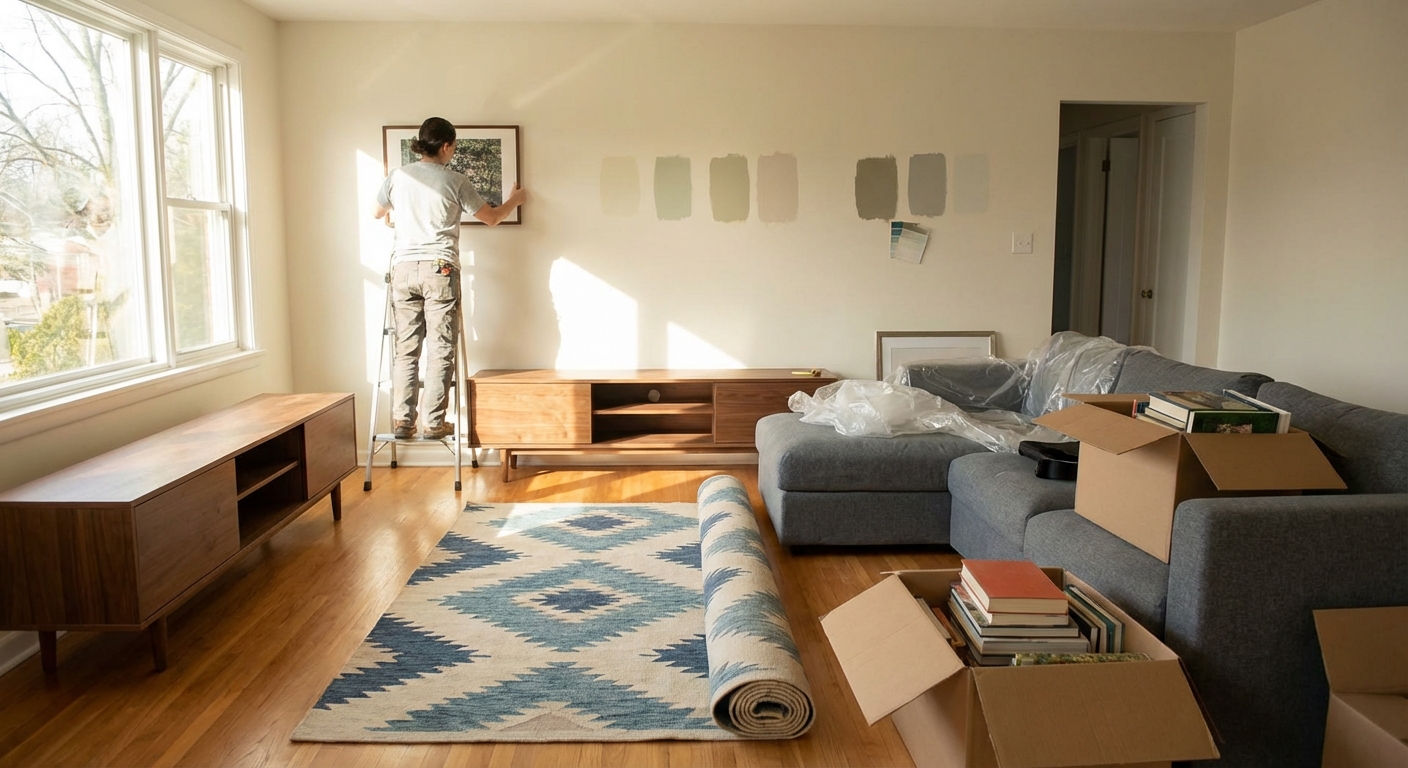
Guide to Creating Balanced Feature Wall Designs
d… it looked like a cave. The sofa felt like it was floating in front of a void. That was the moment I realized: balance matters more than boldness.
Over the past few years, I’ve designed and re-designed feature walls for clients (and messed up a few in my own home). This guide is everything I wish I’d known before I bought that first gallon of paint.
What Actually Makes a Feature Wall Work?
When a feature wall feels right, you don’t stare only at the wall. You notice the whole room feels pulled together. In my experience, three things separate a balanced, designer-level feature wall from a random accent wall:
- A clear focal point – TV, fireplace, bed, dining table, or a big window. The wall should support that focal point, not compete with it.
- Visual weight that’s proportionate – Color, pattern, and texture shouldn’t overpower the room’s size or the furniture.
- Rhythm in the room – Colors and materials on the feature wall should “echo” elsewhere in small doses so it doesn’t feel like a completely different universe.
When I tested this on a client’s long, narrow living room, we anchored the TV on a panelled feature wall, then repeated the wall’s warm wood tone on the coffee table and picture frames. The wall felt bold, but not shouty.
Step 1: Choose the Right Wall (Most People Get This Wrong)
I recently walked into a home where the boldest wall was behind the doorway, completely hidden unless you shut the door and backed up. Technically it was an accent wall, but functionally it did nothing.
In my experience, the best feature wall candidates are:
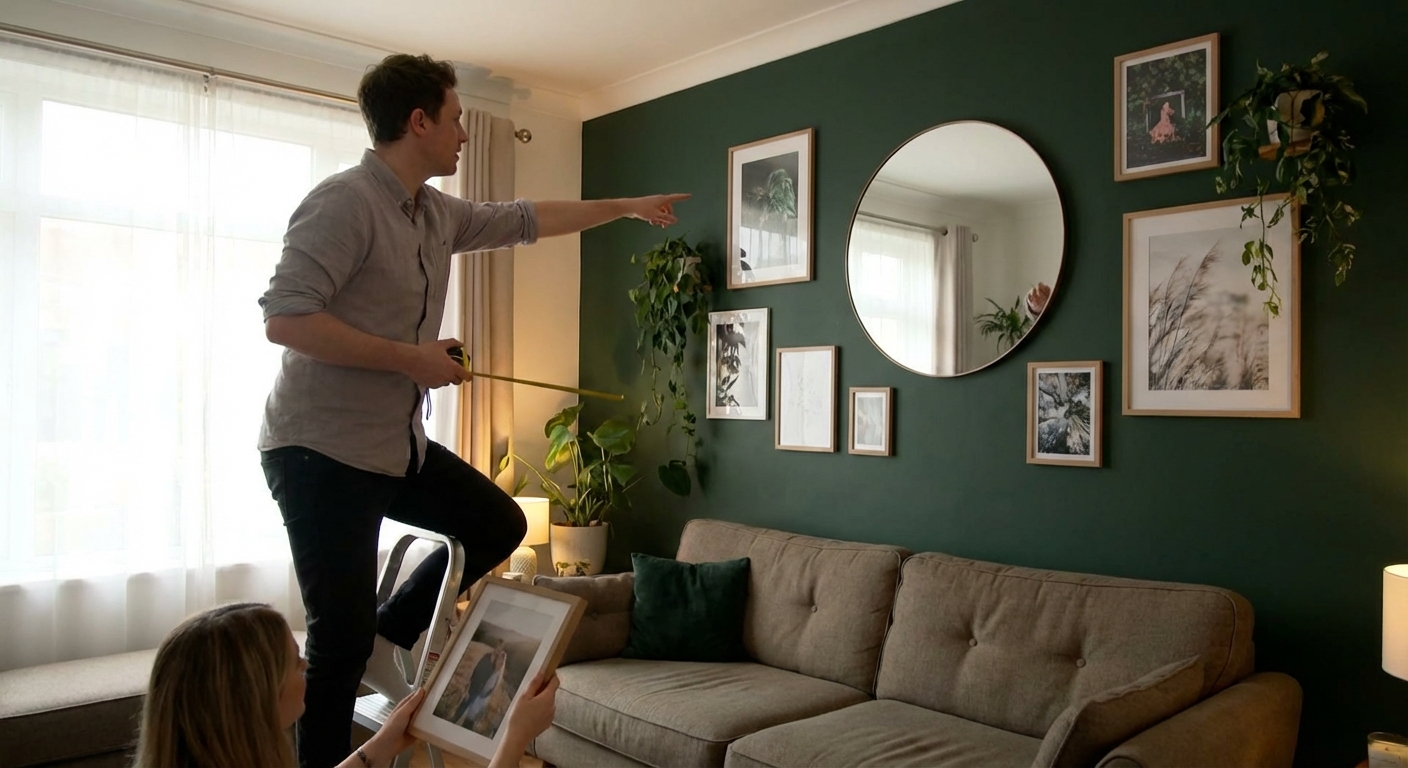
- The natural focal wall – behind the TV, fireplace, or bed.
- The first wall you see when you walk into the room.
- A wall that frames a view – like around a window or a sliding door, if done subtly.
I’m cautious with:
- Very short walls – They can make a room feel choppy if you treat them too differently.
- Walls with lots of doors – Too many visual interruptions; your feature will look busy and fragmented.
If you’re unsure, stand in the entry to the room, snap a photo on your phone, and circle the wall your eye goes to first. Nine times out of ten, that’s your feature wall.
Step 2: Balance Color, Pattern, and Texture
A feature wall is basically three levers: color, pattern, and texture. Pulling all three to the max is where chaos starts.
Color: Strong but Not Suffocating
Research on color and mood from the University of Texas at Austin has found that saturated colors can boost energy, while lighter tones feel more open and calm.¹ That lines up with what I’ve seen in real homes.
Rules of thumb I use with clients:- Small rooms – Dark colors can work, but I pair them with high-contrast trim and light adjacent walls so the room doesn’t feel like a closet.
- Low ceilings – Avoid super dark ceilings and a super dark feature wall together unless you’re intentionally going for a cocoon vibe.
- Open-plan spaces – Choose a feature color that already exists in your decor (a rug, art, or sofa) so it feels integrated.
When I tested a charcoal wall in a north-facing bedroom, it felt gloomy until we added warm lighting and light bedding with subtle charcoal accents. The color wasn’t the issue; the lack of balance was.
Pattern: One Star, a Few Extras
Pattern is where people get excited and Pinterest-happy. But if the feature wall has a strong geometric wallpaper, then the rug, curtains, and bedding also shout, you end up with visual noise.
I think of it this way:
- One hero pattern – e.g., the feature wall wallpaper or mural.
- Two or three supporting patterns – smaller scale, more subtle, in pillows, throws, or art.
Designers often refer to this as mixing scale and density of pattern. Large, open pattern on the wall; tighter, smaller patterns on textiles. That avoids the dreaded “pattern fight.”
Texture: Underrated but Powerful
I’ve noticed textured feature walls age better than extreme colors. Things like:
- Vertical or slat wood panelling
- Limewash or plaster finishes
- Brick or stone veneer
These add tactile depth without screaming for attention. A 2022 Houzz trend report even noted a rise in textured accent walls as homeowners move away from purely flat painted features.² When I added a simple batten-and-board detail in a client’s dining room, painted the same color as the wall, it instantly felt like a custom home—without any wild colors.
Step 3: Proportion and Layout – Where Balance Really Shows
Let’s talk about composition, the unsexy design word that quietly makes everything look expensive.
Anchor the Wall with Furniture
A feature wall floating behind a tiny console table looks odd. I try to:
- Align the main furniture piece (sofa, bed, console) centered on the strongest part of the wall.
- Keep about 2/3 of the wall width visually anchored by furniture or built-ins. That ratio tends to feel comfortable.
When I tested a feature wall behind a queen bed pushed into a corner (for a teen client who wanted more floor space), the wall felt off-kilter. Once we centered the bed and adjusted the nightstands, the feature made sense again.
Use the Rule of Thirds
Photographers use the rule of thirds, and I borrow it constantly for wall design. Roughly:
- Break the wall visually into thirds—horizontally and/or vertically.
- Place major elements (TV, art, shelving) along those lines or at their intersections.
I did this recently for a living room media wall: TV centered on the middle third, floating shelves occupying the right third, and a low console spanning the lower third. The wall looked intentional instead of random, even though the components were pretty simple.
Style-Specific Ideas (With Real-World Pros and Cons)
1. Painted Feature Wall
Why I like it:- Easiest to change if you hate it.
- Budget-friendly and DIY-friendly.
- If nothing else on that wall changes (no art, no lighting, no furniture shift), it can feel like “we only painted this wall because that’s what Instagram said.”
I usually recommend pairing a painted feature wall with at least one more change: a new light fixture, a gallery of frames, or added trim.
2. Wallpaper or Murals
Upside:- Adds instant character and pattern.
- Great for small spaces like powder rooms or behind a bed.
- Higher commitment. Removing wallpaper can be annoying (speaking as someone who spent a weekend steaming off a 90s floral disaster).
- Can date quickly if the pattern is super trendy.
To keep balance, I often pull two colors from the wallpaper and repeat them in textiles and decor around the room.
3. Wood Panelling and Slat Walls
Upside:- Adds warmth, texture, and acoustic benefits (slat walls especially).
- Looks high-end, especially if painted the same color as the wall (for a subtle, shadowy texture).
- Material and labor costs can add up.
- Bad installation shows: warped boards, uneven gaps, poor finishing.
The National Association of Home Builders has noted that high-quality millwork and wall treatments can positively influence perceived home value, but poorly executed DIY can do the opposite.³ If you’re not handy with a level and a nail gun, this might be one to outsource.
4. Built-In Shelving or Media Walls
Upside:- Functional storage plus visual interest.
- Lets you style decor to balance color and height.
- Higher cost and more permanent.
- Styling shelves is an ongoing job (I’ve absolutely overstuffed shelves then had to edit back).
I try to keep 20–30% visual emptiness on shelves for breathing room. Your feature wall shouldn’t look like a storage crisis.
Lighting: The Secret Weapon People Forget
When I tested different lighting setups on the same dark green feature wall, the difference was wild. Under cool, overhead-only light, the wall looked flat and harsh. With two warm wall sconces and a floor lamp, it suddenly felt moody and rich.
For balanced feature walls, I aim for three layers of light:
- Ambient: ceiling light or recessed lighting.
- Task: reading lamps, picture lights.
- Accent: wall sconces or LED strips to graze texture (amazing on brick or slat walls).
The U.S. Department of Energy notes that layered lighting, especially with LEDs and dimmers, is more energy-efficient and flexible for changing moods.⁴ Dimmers on feature-wall lighting let you go from “movie night” to “daytime Zoom background” in a second.
Common Mistakes (I’ve Made Most of These)
A quick honesty list from projects that didn’t go as planned:
- Wall too bold for the room: Neon blue wall in a neutral, cottage-style home. It looked like a gaming den teleported into a farmhouse.
- No repetition of color: A strong terracotta wall with zero terracotta anywhere else. It felt detached until we added cushions, art, and a vase in related tones.
- Too many feature walls: I once saw a home where every room had a different wild accent wall. Moving through it felt like changing TV channels every three seconds.
Balanced designs usually share one thing: they look cohesive with the rest of the house, not like a standalone experiment.
How to Sanity-Check Your Feature Wall Plan
Before you buy anything, I run through this quick checklist with clients (and myself):
- Does this wall support the main function of the room? (TV-watching, sleeping, dining, working.)
- Do at least three things in the room repeat the wall’s key color or material? (Pillows, rug, art, lamp base, wood tones.)
- Is the wall balanced with furniture and lighting, not just paint or pattern?
- Can I live with this for at least 3–5 years? (Trends move fast; repainting is easier than rebuilding.)
If you can answer yes to those, you’re probably on track for a feature wall that feels considered, not just “because TikTok said so.”
And if you do make a mistake—I say this as someone who repainted that first navy wall twice—paint dries, wallpaper can come down, and even paneling can be reworked. The goal isn’t perfection; it’s a room that feels like you, just a bit more intentional.
Sources
- Color in Healthcare Environments: A Review of the Literature (UT Austin) - Research on color, perception, and mood.
- Houzz 2022 U.S. Emerging Home Design Trends - Report noting rising use of textured and feature walls.
- National Association of Home Builders – What Home Buyers Really Want 2021 - Insights on interior features and perceived value.
- U.S. Department of Energy – Lighting Choices to Save You Money - Guidance on efficient, layered lighting.
- Sherwin-Williams – Accent Walls 101 - Manufacturer tips on selecting and balancing accent walls.