Guide to Easy Homemade Dessert Ideas
ing short-cut methods, no-bake tricks, and smart pantry swaps. That’s when dessert stopped being a “special occasion project” and became something I could whip up on a random Tuesday night.
This guide is basically the greatest hits from my kitchen experiments—what actually works when you’re tired, a little lazy, but still want something sweet that tastes like you tried.
The 10-Minute Dessert Mindset
The first mental shift I had to make: easy desserts aren’t “cheating”. They’re efficient.
When I tested timing for different recipes, I noticed something funny:
- A classic layer cake took me about 2.5 hours start to finish.
- A no-bake layered dessert (crushed cookies + whipped cream + fruit) took 9 minutes and was the first thing gone at a party.
People rarely care how long you spent. They care if it tastes good and feels a bit special.
My personal checklist for an easy homemade dessert:
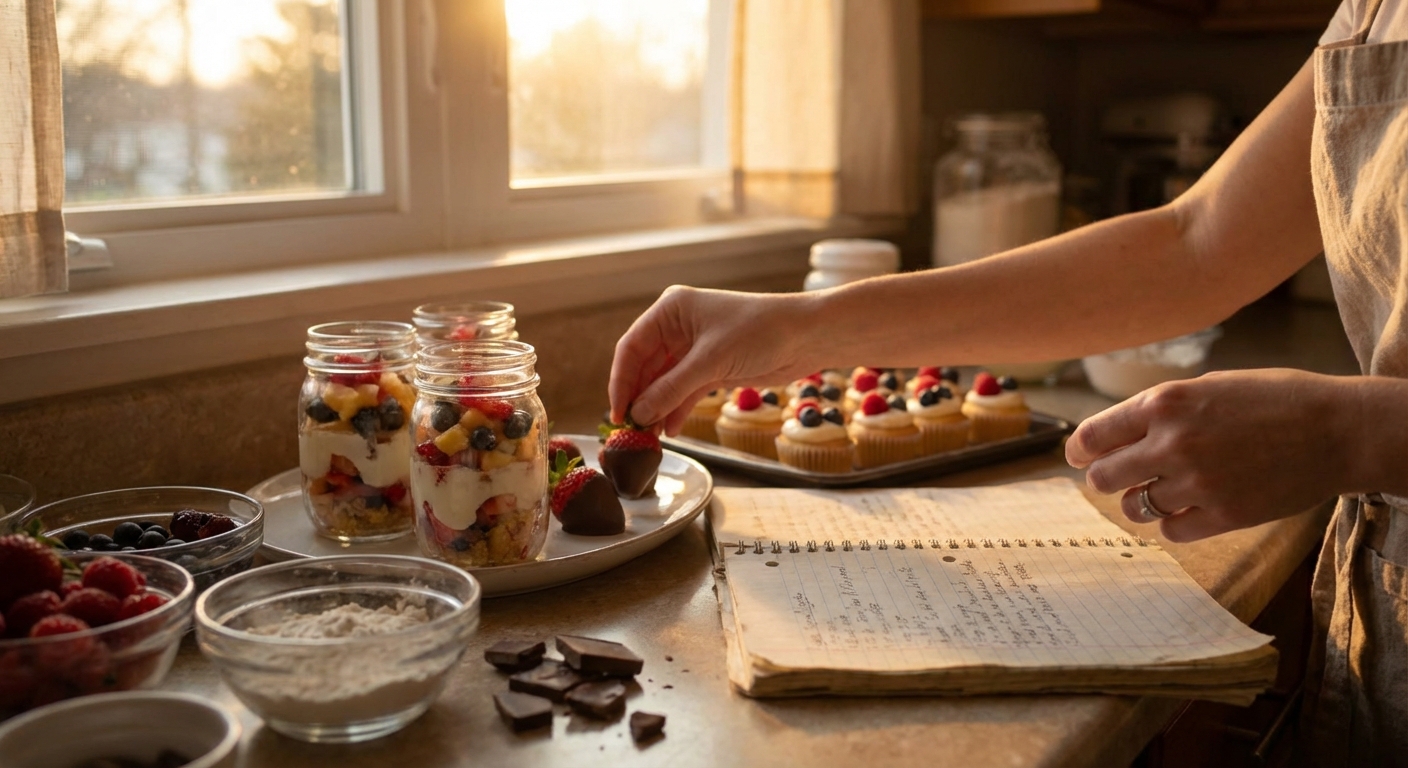
- Uses 5–8 ingredients max
- Minimal equipment (bowl, whisk, maybe a pan)
- Zero or low-stress temperatures (no “soft ball stage” sugar, thank you)
- Forgiving if you eyeball a little
When I frame dessert this way, I bake more, waste less, and honestly enjoy it more.
No-Bake Desserts: Maximum Payoff, Minimum Effort
No-bake desserts are my emergency back-pocket trick. When I recently discovered how fast you can turn grocery-store cookies into something that tastes restaurant-level, I stopped apologizing for shortcuts.
1. Lazy Layered Cookie “Tiramisu”
Is it authentic tiramisu? Absolutely not.
Is it demolished in 5 minutes at any gathering? Absolutely yes.
What I do (serves 6–8):- 2 packs crisp cookies (ladyfingers, vanilla wafers, or speculoos)
- 2 cups heavy cream
- 1/2 cup mascarpone or cream cheese
- 1/3–1/2 cup sugar (to taste)
- 1 cup strong coffee or hot cocoa (cooled)
- Cocoa powder for dusting
I whisk the cream, mascarpone, and sugar until thick and fluffy. Then I quickly dip each cookie in coffee (1-second dunk so they don’t fall apart), and layer: cookies → cream → cookies → cream. Chill for 1–2 hours.
Why it works: The fat from the cream and mascarpone + the moisture from the coffee softens the cookies into a cake-like texture. It’s essentially a cold assembled trifle. Downside: Needs chilling time. If you rush it, the cookies are a bit crunchy. I learned this the hard way when I tried serving it after only 20 minutes.2. 3-Ingredient Chocolate Mousse (That’s Actually Silky)
I was skeptical of “3-ingredient mousse” recipes—most tasted like sweet whipped cream with attitude. Then I tested a version using melted chocolate and got the texture I wanted.
You’ll need:- 170 g (about 1 cup) good dark or semisweet chocolate
- 2 cups cold heavy cream, divided
- 1–2 tbsp sugar (optional)
- Melt chocolate gently over a double boiler or in the microwave (20–30 sec bursts), then cool slightly.
- Whip 1 1/2 cups cream to soft peaks with sugar (if using).
- Stir the remaining 1/2 cup unwhipped cream into the melted chocolate—this makes it glossy and more fluid.
- Fold the chocolate mixture into the whipped cream in 2–3 additions.
- Chill at least 30–45 minutes.
- If your chocolate is too hot, it seizes when it hits the cream and turns grainy.
- If you overwhip the cream, you get a mousse that feels a little buttery.
From a technical standpoint, you’re making a stable foam: air bubbles are trapped in a fat network from the cream and cocoa butter in the chocolate.
One-Bowl Bakes That Almost Never Fail
Some days I want the smell of something baking in the oven, but not the precision of a pâtisserie. That’s where one-bowl desserts shine.
3. Stir-and-Bake Brownies
When I tested dozens of brownie recipes, the easiest style that kept winning was the melted butter + cocoa powder approach. No mixer, no tempering chocolate.
Basic formula I use:- 1/2 cup melted butter
- 1 cup sugar
- 2 large eggs
- 1/3 cup cocoa powder
- 1/2 cup flour
- Pinch of salt + splash of vanilla
Whisk butter and sugar, beat in eggs, whisk in cocoa, then fold in flour, salt, vanilla. Bake in a lined pan at 350°F (175°C) for about 20–25 minutes.
Trade-offs:- Pros: Fast, forgiving, easy cleanup.
- Cons: Texture is more “fudgy-chewy” than ultra-dense; if you want that glossy crackly top every time, you usually need to beat sugar and eggs longer or use some melted chocolate.
Food scientists like Shirley Corriher and sources like Serious Eats have broken down how sugar, fat, and flour ratios affect brownie texture—more fat and less flour = fudgier, more flour and eggs = cakier.
4. The Oversized Cookie Skillet (For When You Can’t Be Bothered to Scoop)
The cookie skillet might be my highest enjoyment-to-effort dessert.
I use a simple chocolate chip cookie dough, press it into a cast-iron skillet, and bake until golden at the edges and just set in the middle.
Why it’s so easy:- No chilling.
- No scooping.
- No worrying if a cookie spread too much.
We eat it warm with ice cream straight from the pan. Realistically, this is less about presentation and more about communal dessert therapy.
Health note: The CDC does caution against eating raw flour and raw eggs because of E. coli and Salmonella risk, so I bake it until the center is properly set—no raw batter fishing.Fruit-Forward Desserts When You Want “Lighter”
Not every dessert has to feel like a sugar bomb. When I’m craving something less intense but still dessert-y, I lean on fruit.
5. Roasted Fruit with Anything Creamy
When I tested roasting versus serving fruit raw, roasting won every time for flavor.
I toss sliced peaches, plums, or berries with a little sugar, salt, and sometimes a splash of balsamic or vanilla, then roast at 375°F (190°C) until syrupy and soft.
Serve over:
- Greek yogurt
- Vanilla ice cream
- Ricotta or mascarpone
The heat concentrates the natural sugars via caramelization and Maillard reactions, giving deeper flavor without needing loads of added sugar.
Minor downside: The texture won’t be crisp or firm—this is more jammy and spoonable.6. Shortcut Crumble Topping
Crumble is one of the most forgiving desserts I’ve ever made.
My go-to ratio (by volume):
- 1 part melted butter
- 1 part sugar (half white, half brown if you have it)
- 2 parts flour or oats (or a mix)
Stir until clumpy, sprinkle over fruit tossed with a little sugar and lemon, bake until the topping is golden and the fruit is bubbling.
What I’ve noticed:- A bit of salt makes it taste like you knew what you were doing.
- Using oats gives more texture and fiber.
- It reheats better than most cakes.
Smarter Shortcuts That Still Feel Homemade
A lot of “semi-homemade” advice just says, “Use cake mix!” which is fine, but there are more interesting ways to cheat.
7. Store-Bought + Fresh Element = Magic
When I tested serving plain store-bought pound cake versus the same cake grilled with fruit and a quick sauce, the difference in reactions was huge.
Simple combo ideas I keep going back to:
- Store-bought pound cake + grilled peaches + honey yogurt
- Plain vanilla ice cream + olive oil + flaky salt (surprisingly sophisticated)
- Frozen puff pastry + sliced apples + cinnamon sugar → quick tart
You’re basically adding texture and freshness to something already stable and consistent.
Honesty check:- These aren’t cheaper than fully-from-scratch if you keep a well-stocked pantry.
- But they’re way more consistent if you’re still building baking skills.
Balancing Sweetness and Dietary Needs
As I’ve cooked for friends with different preferences, I’ve had to adjust.
Less sweet:I often reduce sugar by about 20% in many recipes without ruining texture. But in things like meringues and caramel, sugar is structural—cutting too much can cause weeping or crystallization.
Gluten-free swaps:For simple desserts (mousses, roasted fruit, puddings), you don’t need flour at all. For crumbles, I’ve had good results using certified GF oats and almond flour.
Allergies and safety:- The U.S. FDA lists 9 major allergens (including milk, eggs, peanuts, tree nuts, wheat, soy). If I’m baking for a group, I always label what’s in the dessert.
- For undercooked eggs (like classic mousse, tiramisu), I either use pasteurized eggs or opt for recipes where eggs are fully cooked.
When Easy Isn’t Enough (And That’s Okay)
I’ll be honest: some desserts don’t have a truly “easy” version that hits the same. Croissants, laminated puff pastry, and perfectly tempered chocolate still take time, practice, and patience.
But for weeknights, last-minute invites, or when you just want something sweet without stress, these easy homemade ideas cover a lot of ground:
- No-bake layers when you don’t want the oven on
- One-bowl bakes when you want that warm, cozy smell
- Fruit-based options when you’re craving lighter
- Smart store-bought upgrades when time is non-negotiable
When I tested all of these over and over, the biggest takeaway wasn’t a single perfect recipe—it was realizing that homemade dessert can be relaxed, a little messy, and still completely irresistible.
So the next time you think, “I don’t have time to make dessert,” try one of these. You might be 10–15 minutes away from something that tastes way more special than the effort you put in.
Sources
- CDC – Raw Flour and Other Raw Ingredients - Guidance on food safety and why raw flour can carry E. coli.
- U.S. Food & Drug Administration – Food Allergens - Overview of major food allergens and labeling.
- Harvard T.H. Chan School of Public Health – Carbohydrates and Sugar - Discussion of added sugar intake and health.
- Serious Eats – The Science of the Best Brownies - Detailed breakdown of how ingredients affect brownie texture.
- King Arthur Baking Company – Flour in Baking - Educational guide on how different flours behave in recipes.