Guide to Evaluating Clothing Quality at Burlington
h. Then I had a very humbling moment with a “designer” blazer that pilled after a single wear and literally lost a button during a job interview.
After that, I started treating Burlington more like a quality lab than a bargain bin. And once I did, the game changed. I still get those wild deals, but my clothes actually last.
This is the guide I wish I’d had the first time I walked into Burlington with a cart and zero strategy.
Understanding What Burlington Actually Is
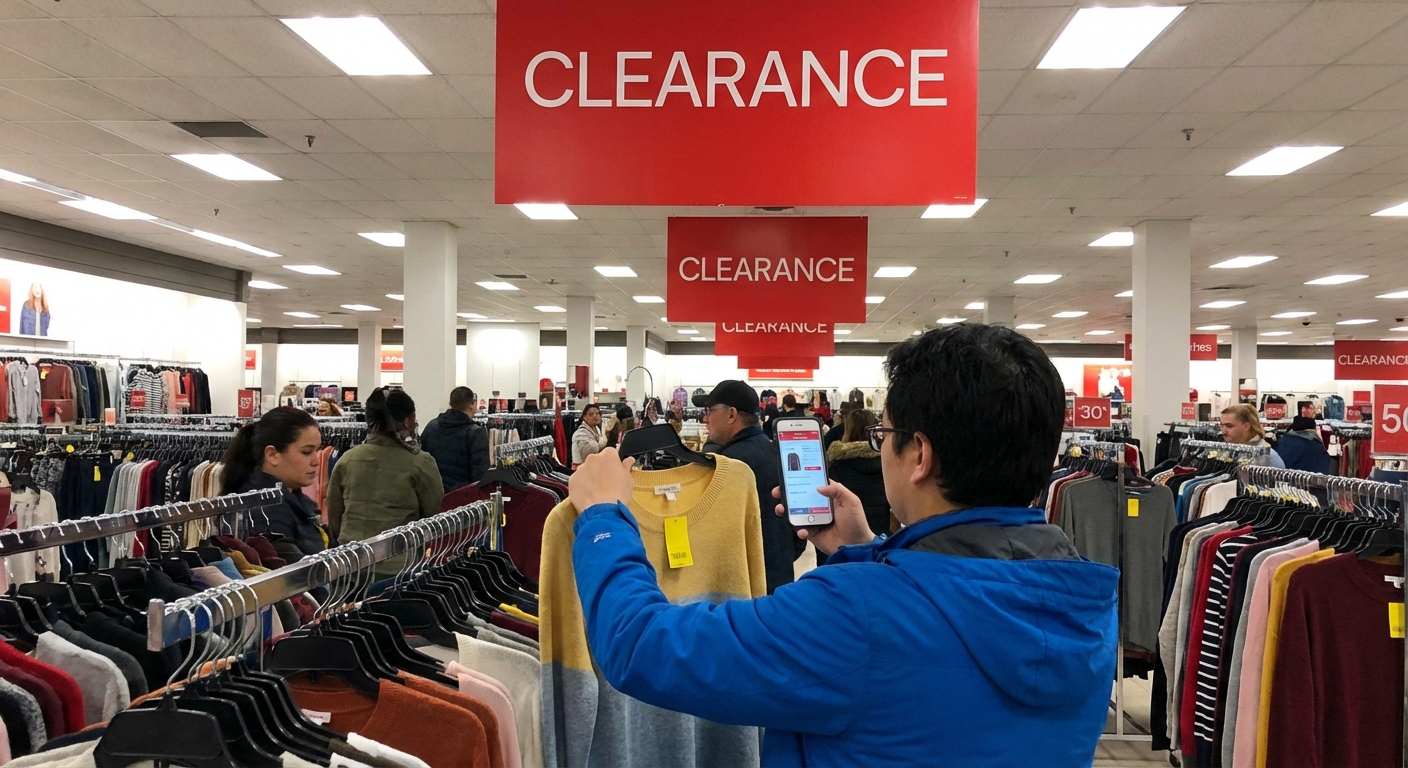
When I first started shopping there, I thought Burlington was just “discount random stuff.” Then I dug into how off-price retailers work.
Burlington (formerly Burlington Coat Factory) is an off-price retailer. That means:
- They buy excess inventory, overstock, and past-season items from brands and department stores.
- Sometimes they get special make-up goods — items produced specifically for off-price channels that look similar to the mainline products but can be a bit different in quality.
The Wall Street Journal and Forbes have both broken down this model for retailers like Burlington, TJX, and Ross: the brands get to clear inventory without obvious “sales,” and we get lower prices without a traditional outlet store markup.
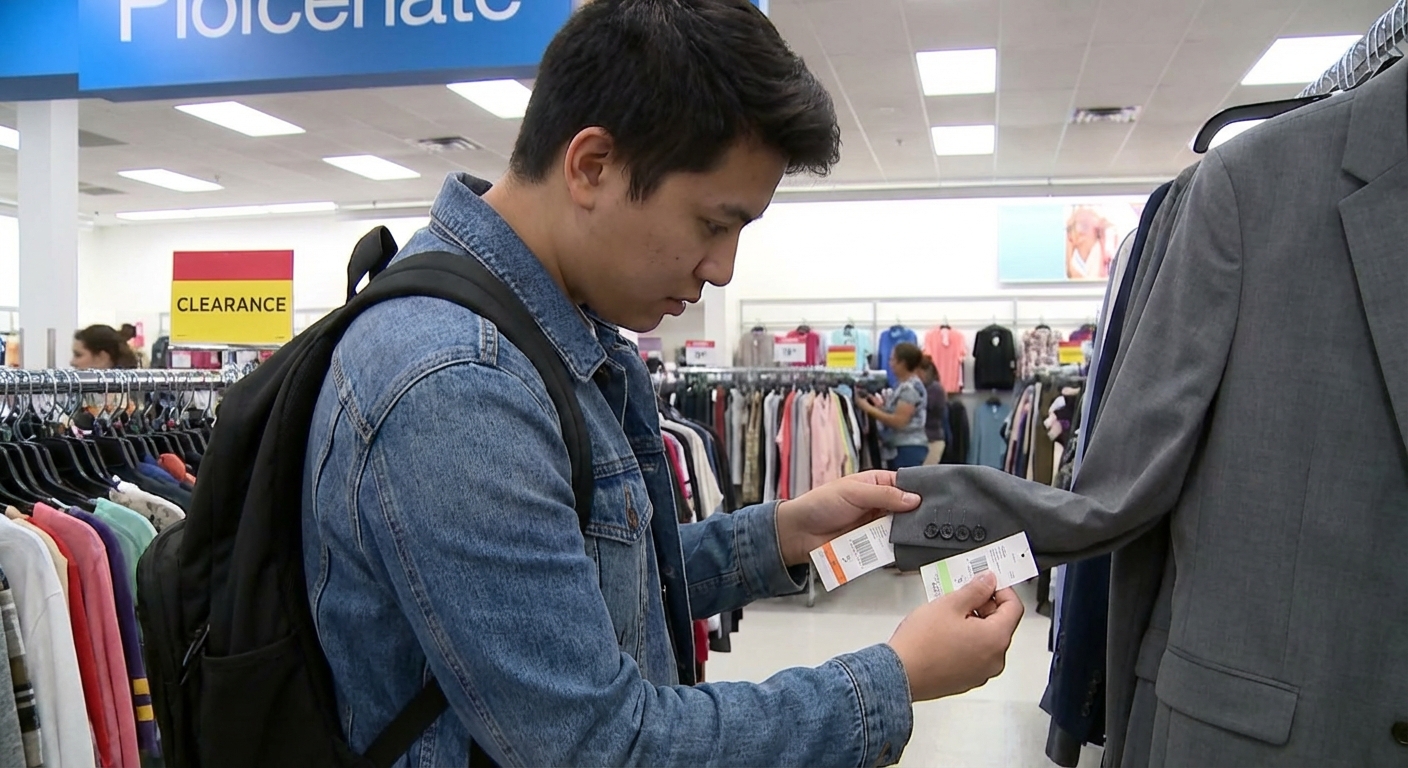
In my experience, that means you can absolutely find high-quality pieces next to "why is this fabric making that noise" items. The trick is knowing which is which.
Step 1: Start With the Fabric Tag (I Always Do)
When I tested this systematically one Saturday — yes, I’m that person — I spent 90 minutes doing nothing but flipping tags and touching fabric. The pattern was obvious.
Here’s how I parse fabric content at Burlington:
Fabrics I usually trust for long wear
- 100% cotton (for shirts, tees, casual dresses) – feels breathable, holds up if it’s a tight weave.
- Cotton with a little elastane/spandex (1–5%) – great for fitted tops and jeans.
- Linen or linen blends – wrinkly but ages beautifully when the weave is dense.
- Wool or wool blends in coats and sweaters – check that it doesn’t feel itchy like cheap acrylic.
- Modal, Tencel (lyocell), viscose (rayon) – when they feel smooth and drapey, they can look luxe for the price.
Fabrics I treat with caution
I don’t automatically reject these, but I get suspicious:
- Acrylic – pills fast in my experience, especially cheap knits.
- Polyester – totally fine in some pieces, but I run a hand over it; if it’s squeaky, plasticky, or feels like a shower curtain, I put it back.
- Nylon – good for activewear or outerwear, not as nice for everyday tops unless it feels soft.
A 2016 study from the Norwegian University of Science and Technology (Neto et al.) actually measured pilling, durability, and comfort across different fibers — and surprise, natural fibers or quality blends generally outperformed cheap synthetics in longevity.
At Burlington, I’ve found some incredible 100% cotton shirts and wool-blend coats hiding between racks of 100% polyester everything. Those are the wins you’re hunting for.
Step 2: The Touch Test – Feel First, Price Tag Second
When I first started doing this, I literally closed my eyes and just ran my hand down a rack of sweaters. The ones that felt substantial and soft (not limp or scratchy) were usually the ones with better fiber content and construction.
Here’s what I look for:
- Weight: Thin isn’t automatically bad, but if a fabric feels flimsy and almost transparent when it shouldn’t be (like a work shirt), that’s a red flag.
- Handfeel: Does it feel smooth, brushed, or pleasantly textured? Or rough, plasticky, squeaky?
- Recovery: Gently stretch the fabric and let it go. Does it bounce back or stay warped?
When I tested this side-by-side with two “similar” sweaters — both around the same price at Burlington — the one that felt weightier and smoother was a cotton-wool blend. The lighter, scratchy one? 100% acrylic that started pilling after one weekend trip.
Step 3: Inspect the Construction Like a Tailor (Or Pretend To)
I’m not a tailor, but I’ve learned some easy construction checks that instantly separate the gems from the “fast fashion on clearance” buys.
1. Seams and Stitching
I always flip clothes inside out in the aisle. Yes, people stare. Yes, it’s worth it.
- Look for even stitching with no huge gaps.
- Check that thread tension looks consistent — no puckering or loose loops.
- Tug gently at the seams (especially at the armholes and crotch on pants). If you can see light between the stitches or they pull apart, that’s a no.
Garment engineering experts and fashion schools (like FIT in New York) routinely teach that seam quality is one of the best visual predictors of overall garment life. I’ve seen this play out in real life: the jackets with double-stitched seams and neat overlocking always outlast the ones with messy single-stitch jobs.
2. Hems
Check the bottom hem, sleeves, and neckline:
- Is the hem even all the way around?
- Any warping or twisting at the bottom?
- For knits, is there a coverstitch (those two rows of stitching on the outside) that stretches?
Cheap hemming is one of the first places brands cut corners for off-price runs.
3. Buttons, Zippers, and Notions
I’ve had Burlington pieces last years… except for the sad plastic button that cracked in week two.
I look for:
- Buttons: Are they securely sewn with a thread shank (a bit of space between button and fabric) on thicker items?
- Extra button included: Usually a good sign the brand expects you to keep the garment a while.
- Zippers: I prefer YKK zippers when I can find them — the brand name is often stamped on the pull or back. They’re an industry standard for reliability.
- Zip all the way up and down in the aisle. If it snags when brand-new, it’s not getting better at home.
Step 4: Decode the Brand Label and Compare Lines
Not all brands at Burlington are created equal — and not all lines within a brand are equal either.
Here’s what I’ve noticed after years of label-stalking:
- Some pieces are true overstock from department stores (same construction as full-price).
- Others are made-for-off-price lines: similar aesthetic, slightly cheaper fabric or simpler construction.
When I tested this side by side, I did a fun little nerd exercise: I took a brand I recognized, pulled up its full-price version on the brand’s website, and compared it to a similar piece at Burlington.
Patterns I saw:
- Department store versions often had more detailed finishing (better linings, stronger interfacing in collars, nicer buttons).
- Off-price versions sometimes had simpler linings or thinner fabric, but still decent if the basics passed my tests above.
If you see a well-known brand and the construction looks solid, I treat it like a green light. If it’s a brand I’ve never heard of, I lean more heavily on my fabric and construction checks.
Step 5: Fit + Movement – Don’t Just Stand There
One of my worst Burlington mistakes was a pair of trousers that looked perfect in the mirror but cut into my thighs the first time I sat down at a desk. I’d done the size check, but not the movement test.
In the fitting room I now:
- Sit, bend, and squat a little.
- Reach my arms overhead in jackets and blazers.
- Walk around like I’m late for a meeting.
If seams feel like they’re under stress right away, that’s extra risky for off-price garments, where quality control is sometimes less consistent than full-price. The U.S. Federal Trade Commission (FTC) even notes that fabric and seam stress can accelerate wear, especially in lower-cost garments.
Step 6: Think Beyond the Price Tag
I used to get hypnotized by the “Compare at $89 – Our price $24.99” tags. When I actually tracked cost-per-wear on a few outfits (yes, I made a geeky spreadsheet), the story shifted.
- A $24.99 blouse that shrinks, fades, or pills in 3 months costs more per wear than a $39.99 one that lasts 2–3 years.
Now I ask myself:
- Will this survive at least 20 wears without looking exhausted?
- Does the care label (wash instructions) match how I actually live? If it says “dry clean only” and I know I’ll ignore that, I pass.
The EPA has reported growing textile waste in landfills in the U.S. over the past two decades. Choosing better-quality garments — even at discount stores — actually does make a dent when they last longer before being tossed.
Pros and Cons of Hunting Quality at Burlington
In my experience, Burlington is absolutely worth it if you go in with a method instead of chaos.
What I love
- Designer and mid-range brands for way less when you spot real overstock.
- Surprising fabric wins: I’ve scored wool-blend coats and 100% cotton shirts at true bargain prices.
- Great for basics and kids’ clothes when you’re smart about fabric and seams.
What frustrates me
- Inconsistent quality: one rack can be gold, the next is landfill-in-waiting.
- Time cost: it takes patience to inspect everything. This isn’t a 5-minute in-and-out store.
- Occasional “made-for-off-price” traps: looks like the mainline brand, doesn’t wear like it.
I still have a black wool-blend coat I grabbed at Burlington over five years ago for under $70. It’s fully lined, seams are still immaculate, and it looks more expensive than coats I’ve seen at triple the price. That piece is living proof that quality is hiding there — you just have to be a bit of a detective.
A Simple 30-Second Checklist Before You Buy
When I’m short on time, here’s my rapid-fire process in the aisle:
- Check the fabric tag – Aim for cotton, linen, wool, or decent blends; be cautious with 100% acrylic.
- Do the touch test – Does it feel substantial and comfortable, not scratchy or plasticky?
- Inspect seams and hems – Flip inside out, look for even stitching and no pulling.
- Test buttons and zippers – Give them a little stress test right there.
- Ask: Will I wear this 20+ times? – If the answer’s no, even a $10 tag isn’t a bargain.
When I stick to this, my Burlington hauls feel less like gambling and more like curated finds.
If you treat the store like a quality scavenger hunt rather than a clearance free-for-all, you’ll walk out with pieces that look good and survive real life — job interviews, spilled coffee, bad laundry habits and all.
Sources
- Federal Trade Commission – Threading Your Way Through the Labeling Requirements Under the Textile and Wool Acts - Official guidance on textile labeling and fiber content.
- U.S. Environmental Protection Agency – Facts and Figures about Materials, Waste and Recycling: Textiles - Data on textile waste and clothing lifespans.
- Forbes – How Off-Price Retailers Are Disrupting Traditional Retail - Overview of the off-price retail model including Burlington.
- Fashion Institute of Technology – Fashion Glossary: Garment Construction - Educational explanations of seams, stitching, and construction quality.
- Burlington Stores, Inc. – Company Overview - Official background on Burlington’s business model and operations.