Guide to Everyday Home Items for Comfort and Safety: Bathroom, Bedroom, and Living Areas
ying.
Then I slipped on a barely-wet bathroom floor.
Nothing dramatic—just one of those cartoon-style slides where you catch yourself on the towel bar and then pretend you totally meant to do that. That one moment sent me down a rabbit hole of everyday home items that quietly boost both comfort and safety.
This is what I’ve learned (and personally tested) in bathrooms, bedrooms, and living areas—without turning my place into a hospital room.
Bathroom: Where Comfort and Safety Matter Most
The bathroom is where most home slips and falls happen, especially for older adults. The CDC has cited data showing that millions of older people fall each year, and bathrooms are a big part of that story. I decided I didn’t want to wait until I was 80 to care.
1. Non-Slip Mats That Actually Don’t Move
I used to buy the cheapest bath mats—thin, cute, and useless.
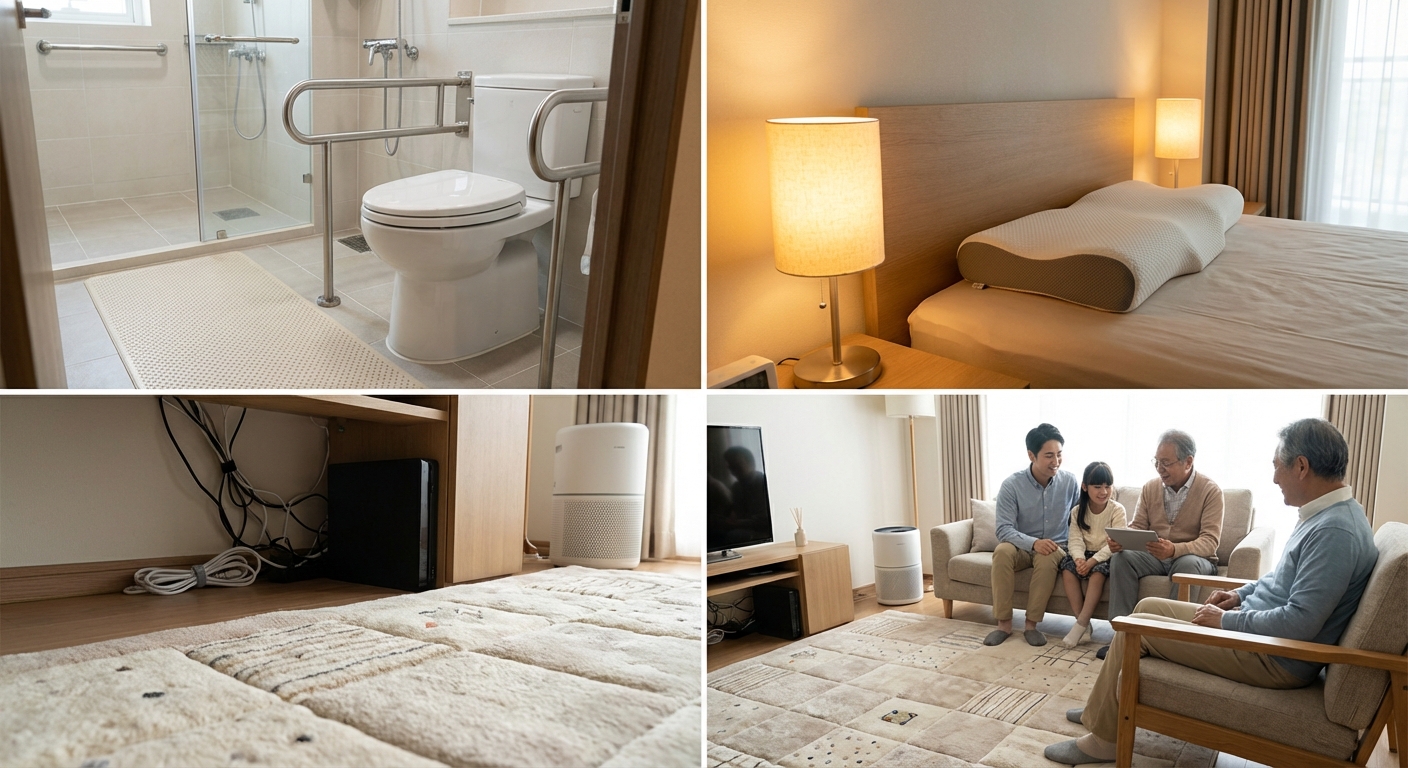
When I tested a high-density rubber backed mat with proper suction cups, the difference was almost ridiculous. I stepped out of the shower and… it stayed put. No curling, no sliding.
What I’ve learned to look for:- Strong suction cups or a textured rubber backing
- Mold-resistant materials (I’ve had cotton mats that smelled swampy in a week)
- Machine-washable (because… life)
2. Grab Bars That Don’t Scream “Hospital”
I used to associate grab bars with my grandmother’s house. Then I installed one after a minor ankle sprain and realized: I like not falling.
When I installed a matte black grab bar that matched my shower fixtures, it stopped looking medical and started looking… intentional.
Insider tip: Look for bars that are ADA-compliant (Americans with Disabilities Act standards) for load capacity and grip diameter, even if no one has a diagnosed mobility issue yet. Future you will be grateful. Pros:- Real stability in wet areas
- Subtle, stylish options now exist (brushed nickel, black, even brass)
- Proper installation into studs is a must (or specialty anchors rated for the load)
- Not ideal for renters unless you have a very chill landlord
3. Shower Chair or Bench (Even If You’re Young and Healthy)
I bought a simple teak shower bench because I thought it looked spa-like. Then I realized how practical it is when you’re sick, exhausted, shaving your legs, or washing kids.
There are two main routes:
- Portable plastic/metal chair – height adjustable, more clinical but super stable.
- Teak or bamboo bench – prettier, feels like a spa, but you have to maintain it.
- Comfort plus safety for anyone with temporary or chronic issues
- Double as storage surface
- Takes up space in smaller showers
- Wood options need regular cleaning and sealing to avoid mold
4. Smart Night Lighting to Avoid Stumbles
I added motion-sensor night lights in my hallway and just outside the bathroom.
When I tested these, the biggest win wasn’t what I expected: I stopped turning on bright overhead lights at 3 a.m., which meant I could fall back asleep faster.
Look for:- Warm color temperature (2700–3000K) to avoid waking your brain up fully
- Plug-in or battery-operated with motion sensors
Bedroom: Small Upgrades, Big Sleep and Safety Wins
My bedroom used to be a bed, a lamp, and a pile of regrets (aka clothes chair). As I’ve iterated on it, I’ve realized how much everyday items impact both how safe I feel and how deeply I sleep.
1. Mattress and Pillow Protection (Not Just for Germ Freaks)
I ignored mattress protectors for years because they sounded crinkly and uncomfortable.
Then I reviewed a waterproof, breathable protector for work—and kept it because it didn’t feel like plastic. It also saved my mattress from an entire spilled coffee.
Why it matters:- Dust mites love mattresses; studies from places like the Mayo Clinic have pointed out how they can worsen allergies and asthma.
- Waterproof layers protect from spills, sweat, and eventual stains.
Pair that with pillow protectors, and you drastically cut down on allergens right where your face lives eight hours a night.
Pros:- Extends mattress and pillow life
- Big comfort boost if you have allergies
- Cheaper ones can be noisy or hot
- Needs regular washing (but that’s the point)
2. Bedside Lighting You Don’t Have to Fumble For
I used to do that half-asleep “where’s the lamp switch” dance.
When I switched to a touch lamp and, later, to a smart bulb I control from my phone, the convenience (and safety) jump was real. No more stumbling in the dark if I hear a noise or need to get up.
Things that made a difference for me:- Dimmable warm light for winding down (again, 2700–3000K range)
- Easy access from bed—ideally, just a tap or voice control
- Reduces fall risk at night
- Better control of light intensity for reading vs. relaxing
- Smart bulbs rely on Wi‑Fi or apps (and sometimes glitch)
- Touch lamps can be sensitive if pets brush against them
3. Rug Grippers and Cord Management
I learned this the awkward way: I caught my toe on an uneven rug corner and did a slow-motion trip into my dresser.
Now I use:
- Rug pads or grippers under every bedroom rug
- Cord clips or cable sleeves behind bedside tables
- Cleaner, less cluttered look
- Far fewer trip hazards
- Cheap rug grippers lose stickiness over time
- Cable organizers take a bit of setup effort
Living Areas: Comfort You Feel, Safety You Don’t Notice
The living room is where we relax, but it’s also where a lot of near-miss accidents happen—especially with kids, pets, and electronics.
1. Stable, Rounded-Edge Furniture
I once reviewed a gorgeous, sharp-edged glass coffee table. It photographed beautifully and terrified me in real life.
After one incident where a friend’s toddler bumped their head (they’re fine, but still), I swapped it for a rounded-edge, solid wood table.
What I’ve noticed since:
- Fewer “watch out!” moments when kids are over
- I can walk around the table in the dark without fear of shin destruction
- Combines safety with design when chosen well
- Often more durable than cheap glass
- Rounded-edge, quality pieces can be pricier
- Bulkier styles can take up more visual space
2. Smart Plugs and Power Strips with Surge Protection
I used to have a Hydra of extension cords behind the TV. Not just ugly—also not great from a fire-safety perspective.
When I tested a surge-protected power strip with USB ports and a flat plug, cable chaos dropped dramatically.
Pairing some devices with smart plugs also gave me:
- Remote control of space heaters and lamps (I’m strict about turning heaters off when I leave)
- The ability to schedule lights for security when I’m away
According to guidance from the U.S. Fire Administration, overloaded outlets and power strips are a known fire risk, so using properly rated surge protectors and not daisy-chaining power strips is non-negotiable for me now.
Pros:- Better protection for electronics during power surges
- Less visual clutter and easier on/off control
- Good strips cost more than basic ones
- Smart plugs add one more thing on the Wi‑Fi network
3. Air Quality Helpers: Purifiers and Plants
I used to think air purifiers were overhyped until I tried one during a smoky wildfire season.
When I tested a HEPA-filter purifier in my living room, I could literally see the difference on the sensor readings on high-smoke days—and smell the difference in the air.
What I’ve learned:- True HEPA filters can capture very fine particles; look for CADR ratings appropriate for your room size.
- Houseplants won’t single-handedly purify your air (NASA’s famous plant study is often overstated), but they do boost perceived comfort and humidity slightly.
- Noticeable improvement in allergy seasons and smoke events
- Plants add psychological calm and visual comfort
- Filters need regular replacement (ongoing cost)
- Plants can be toxic to pets if you don’t choose carefully
Balancing Comfort, Safety, and Real Life
Not every home needs every item I’ve mentioned. When I walk through my own space now, I ask myself three simple questions:
- Where am I most likely to slip, trip, or fumble in the dark?
- What small upgrade would make this daily routine easier or more comfortable?
- Is this safety item something I’ll actually use, or will it just collect dust?
In my experience, the most effective changes are boring on paper and life-changing in practice: a stable mat, a better light, a properly installed grab bar.
None of these will break the internet on their own, but together they turn a regular house into a place that quietly has your back—on your best days, your sick days, and those half-asleep 3 a.m. bathroom runs you’ll never post about.
Sources
- Centers for Disease Control and Prevention – Important Facts about Falls - Data and context on household fall risks, especially for older adults
- Mayo Clinic – Dust mites and allergies - How bedding protection can help reduce allergy triggers
- U.S. Fire Administration – Electrical fire safety - Guidance on safe use of outlets, power strips, and extension cords
- Harvard Health Publishing – Light and sleep - Why light type and timing in bedrooms affects sleep quality
- EPA – Guide to air cleaners in the home - Evidence-based overview of air purifiers and what they can and can’t do