Guide to Finding Sofas at Thrift Stores
ery Goodwill in North America… hard pass.
Then I moved into a bigger place on a smaller budget and decided to actually learn how to thrift a sofa the right way. I’m not exaggerating: the $120 mid-century couch I dragged home is still the most complimented piece in my living room. And yes, I sat on about 40 terrible sofas to find it.
This is the guide I wish I’d had before I started.
Why Thrift a Sofa (and When You… Probably Shouldn’t)
When I tested thrift shopping against buying new, I tracked prices for a month. Basic new sofas at IKEA, Wayfair, and Target averaged around $400–$900, not including delivery. At my local thrift stores, couches ranged from $40–$250, with way higher quality frames and fabrics.
Why thrifting can be amazing:- You can get higher-end brands for less than a budget new sofa
- Older frames are often solid wood, not particleboard
- It’s more sustainable (the EPA estimates over 12 million tons of furniture and furnishings ended up in U.S. landfills in 2018 alone)
- You see and test the exact piece you’re getting – no “color is slightly different in person” surprises
But I’ll be real: thrifting isn’t always the move.
When thrifting a sofa might not be worth it:- You have severe allergies or compromised immunity and can’t risk potential allergens
- You live in an area with known bed bug issues and stores don’t have good inspection protocols
- You need something ultra-specific in a hurry (matching sectional with exact dimensions by next weekend)
For most people, though, a little knowledge and a cheap tape measure go a long way.
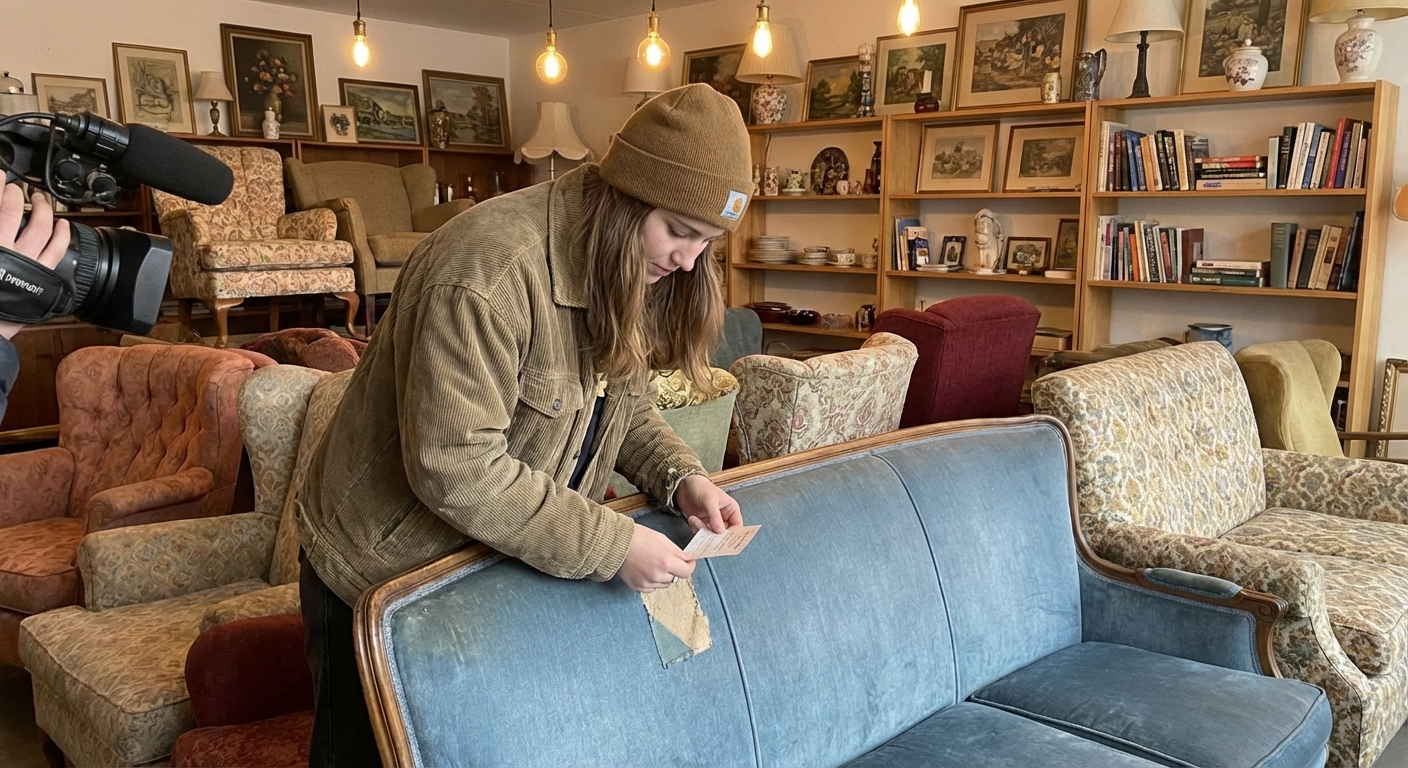
Where I Actually Find the Good Sofas
Not all thrift stores are equal. I learned that the hard way after driving 25 minutes to look at what can only be described as a cursed microfiber graveyard.
1. Big nonprofit chains
Think Goodwill, Salvation Army, Habitat ReStore. In my area, Habitat for Humanity ReStores have been absolute gold mines for solid-wood and higher-end donated furniture. They often get builder and showroom overstock, hotel liquidations, or model home pieces.
Pro tip from experience: Call ahead and ask when they put out furniture. My local Goodwill rotates major furniture on Tuesdays and Thursdays; once I started showing up at 10 a.m. Tuesdays, the quality of what I saw shot up fast.2. Local charity shops and hospice stores
These are where I’ve found the “grandma owned this and never really sat on it” sofas. They tend to be:
- Older but better-built
- Clean, low-wear
- Sometimes weirdly patterned (which you can fix with slipcovers or reupholstery)
3. Consignment and used furniture stores
These aren’t technically thrift, but they’re secondhand and usually curated. Prices are higher, but the selection tends to be better. I’ve seen West Elm, Crate & Barrel, and Room & Board sofas for 40–70% off retail.
When I tested consignment vs regular thrift, consignment usually had less “digging” and fewer duds, but I spent about 2–3x more on average.
4. Online hybrids
I treat Facebook Marketplace and Craigslist as “digital thrift.” The advantage: way more options and you can search by brand or size. The downside: you need stronger scam radar.
What’s worked for me:
- Search by brand (e.g., “Pottery Barn sofa,” “Article couch,” “IKEA Vimle”)
- Ask for close-up photos of tags, legs, and cushions
- Always test in person before handing over cash
The Non-Negotiable Sofa Inspection Checklist
This is the part that separates “I scored a steal” from “I brought home a biohazard.” When I evaluate a thrifted sofa, I go through the same sequence every time.
1. The sit test (comfort & structure)
I literally plop down like I’m watching Netflix.
- Sit in multiple spots – middle, corners, edges
- Bounce slightly – you’re feeling for creaks, pops, or sagging
- Lie down if you’re a nap person
If you feel a hard bar under the cushions or you noticeably roll into the center, the support system (springs, webbing) may be failing. That’s expensive to fix.
2. Frame & legs: the skeleton
I once found a gorgeous navy sofa that looked perfect… until I grabbed the arm and the whole frame flexed.
Check:
- Grab the back and arms and give them a firm shake
- Try to rock the sofa gently side to side
- Check that legs are sturdy and not wobbly
Better signs:
- You see kiln-dried hardwood or solid wood construction on the tag (often on higher-end brands)
- Joints are screwed and glued, sometimes with corner blocks, not just stapled
If the frame is loose or cracking, I walk away. Reupholstering is one thing; rebuilding a frame is a whole different cost tier.
3. Cushions & support
Pull the cushions off. Every single one.
I’ve found lost remotes, $3.47 in change, and one very concerning chicken nugget.
What I look for:
- Foam density – When you squeeze, it should bounce back, not stay squished
- Evenness – Lumps usually mean degraded foam or cheap fill
- Zippered covers – Easier to wash or replace
Higher-quality sofas will sometimes use high-resiliency foam or foam wrapped in down/feathers. If you see tags mentioning HR foam, that’s a good sign.
4. Fabric & odors (the awkward sniff test)
Yes, I get weird looks. Yes, I still sniff the couch.
Run your hand along arms, seat, and back:
- Look for bald patches, pilling, or frayed seams
- Check for sun fading on the back or sides
- Inspect for stains and decide if they’re surface-level or soaked in
Then: lean in and smell.
- Mild “thrift store” smell – Usually fixable with enzyme cleaners and time
- Strong smoke, mildew, or pet urine – I’ve tried; these are incredibly hard to fully remove. I always pass.
5. The bed bug & pest check
This part freaks people out, but it’s manageable if you’re methodical.
I keep a small flashlight on me and check:
- Under cushions
- Along seams and piping
- Underneath the sofa, especially around the dust cover and staples
You’re looking for:
- Tiny rust-colored spots or smears
- Black dots that look like pepper (could be droppings)
- Shed skins or live bugs
If you see anything suspicious: no negotiation, no “maybe I can clean it” – I walk away. The CDC and EPA both recommend caution with secondhand upholstered furniture in areas with bed bug activity.
How I Judge Whether a Sofa Is Actually a Good Deal
Just because it’s cheap doesn’t mean it’s a bargain. I use a quick mental formula:
> Cost of sofa + realistic cleaning/repair cost vs. value & lifespan
For example, I once found a $60 sofa that needed new foam in all the cushions (about $150) and professional steam cleaning ($80–$120). That puts it around $290+. I passed, because for $300–$350, I could find a better secondhand or entry-level new sofa.
On the other hand, my $120 mid-century sofa only needed:
- $30 in enzyme cleaner
- A weekend of airing out
- Two new throw pillows I already wanted
It was solid wood, tight-back design (no loose back cushions to sag), and a neutral tweed fabric. That was a great value.
Brands that often indicate quality (from what I’ve personally seen in the wild):- Room & Board
- Crate & Barrel
- West Elm (varies, but certain lines are solid)
- Ethan Allen
- Mitchell Gold + Bob Williams
- Higher-end IKEA lines like Vimle, Soderhamn, Kivik (easy to slipcover)
If a sofa from one of these brands is structurally sound and under ~30–40% of its original price, I pay attention.
Cleaning and Sanitizing a Thrifted Sofa (What Actually Worked for Me)
When I brought my first thrifted sofa home, I went full hazmat mode. Overkill? Maybe. But it’s been years, and no issues.
My typical routine:- Vacuum everything with a brush attachment – seams, under cushions, underside
- Spot-treat stains with an upholstery-safe cleaner; Folex has been a staple on cleaning blogs and worked well for me
- Enzyme cleaner on any organic-smelling spots (pet odors, mild funk)
- If the fabric tag has a W or WS code, I’ll:
- Use a rented upholstery cleaner or steam cleaner
- Go slowly to avoid soaking the foam
- Let it dry completely – windows open, fans on, sometimes 24–48 hours
If the tag says S (solvent only) or X (vacuum only), I stick to vacuuming, solvent cleaners, or hire a pro.
I’m honest with myself: deep structural cleaning for heavily soiled sofas can cost $100–$200 professionally. If a couch needs that much work, I factor it into the price or walk away.
Negotiation, Timing, and Transport Tricks
How I’ve haggled (respectfully)
Most charity and big-box thrift stores have set prices, but I’ve had success when:
- There’s visible damage (small tear, loose leg) – I point it out calmly
- The piece has been there for weeks – sometimes tagged by date
I’ve gotten 10–20% off by nicely asking, “Would you be open to a small discount because of this rip here?” No drama, no pressure.
Best time to shop
From talking to staff and just… lurking a lot:
- Weekday mornings are best – fresh stock, fewer people
- Donation-heavy days (often Monday after weekend cleanouts)
- End-of-month can be good when stores rotate inventory
Getting it home safely
I’ve tried: strapping a sofa to a too-small sedan (do not recommend), renting a Home Depot truck (much better), and hiring help.
Options that have actually worked:
- Borrow a friend’s SUV or truck – bribe with coffee or pizza
- Rent by-the-hour trucks from Home Depot or U-Haul
- Some thrift stores offer local delivery for a fee
Wrap the sofa in moving blankets or plastic, especially if it’s raining or dusty. I learned the hard way that road grime is not a fun surprise.
When to Walk Away (Even If It’s Cheap and Cute)
I know the feeling of falling in love with a $70 sofa and trying to convince yourself you can “fix anything.” My real-life dealbreakers now:
- Strong, entrenched smoke or urine smell
- Suspicious bed bug signs
- Major frame instability or cracking
- Deep structural sagging in multiple seat areas
- Fabric so worn it’s threadbare
If I’d have to:
- Rebuild the frame
- Replace all foam and fabric
- Pay for professional cleaning and repairs
…then I’m essentially buying a project, not a bargain. Unless I’m intentionally doing a full reupholstery project (which can run $800–$2,000+ according to multiple upholstery shops I’ve spoken with), I let it go.
Final Thoughts from Someone Who’s Sat on a Lot of Weird Couches
Thrifting a sofa isn’t just about luck; it’s about pattern recognition. After a few trips, you start to feel the difference between a cheap, saggy frame and a well-built piece with a long life left.
In my experience, the winning combo is:
- Show up consistently (especially on stock days)
- Learn how to do a 5-minute inspection like a pro
- Be brutally honest about cleaning and repair costs
Do that, and one day you’ll sit down on a random couch at a thrift store, feel that solid “thunk” of a good frame, and know you’ve found your sofa.
And yes, you’ll probably sniff it too. Welcome to the club.
Sources
- United States Environmental Protection Agency – Facts and Figures about Materials, Waste and Recycling - Data on furniture waste and landfills
- Centers for Disease Control and Prevention – Bed Bugs FAQs - Official guidance on bed bugs and secondhand furniture
- Consumer Reports – How to Buy a Sofa - Expert advice on sofa construction and quality indicators
- Habitat for Humanity ReStore - Information on ReStores and typical inventory like secondhand furniture
- New York Times – The Used Furniture Market Is Booming - Overview of the growing secondhand furniture market