Guide to Garden Office Design and Setup
Then I tried working from a cramped dining table with a partner pacing on calls and a cat walking across my keyboard during a Zoom presentation. That was the week I became very interested in garden offices.
After helping plan a few and setting up my own, I can say: done right, a garden office doesn’t just add space — it seriously changes how you work and how your home feels.
Let me walk you through what actually matters, what’s overhyped, and what I wish I’d known before I started.
Step 1: Decide if a Garden Office Really Makes Sense
When I first started researching, every blog made it sound like a garden office was the magic solution for all work-from-home problems. It’s not. It’s amazing if it fits your life.
Ask yourself:- Do you actually need physical separation from your home noise and distractions?
- Can you realistically walk outside to work in bad weather?
- Do you plan to be in that house for at least 3–5 years?
In my experience, a garden office works best when:
- You work from home at least 3 days a week
- You need quiet, client‑facing calls, or deep-focus work
- Your indoor space is maxed out (small bedrooms, no spare room)
I also checked local property data: in the UK, agents I spoke to (and articles from Rightmove and Zoopla) pointed to outbuildings/home offices adding noticeable value only when they’re well built, insulated, and not obviously a DIY bodge job.
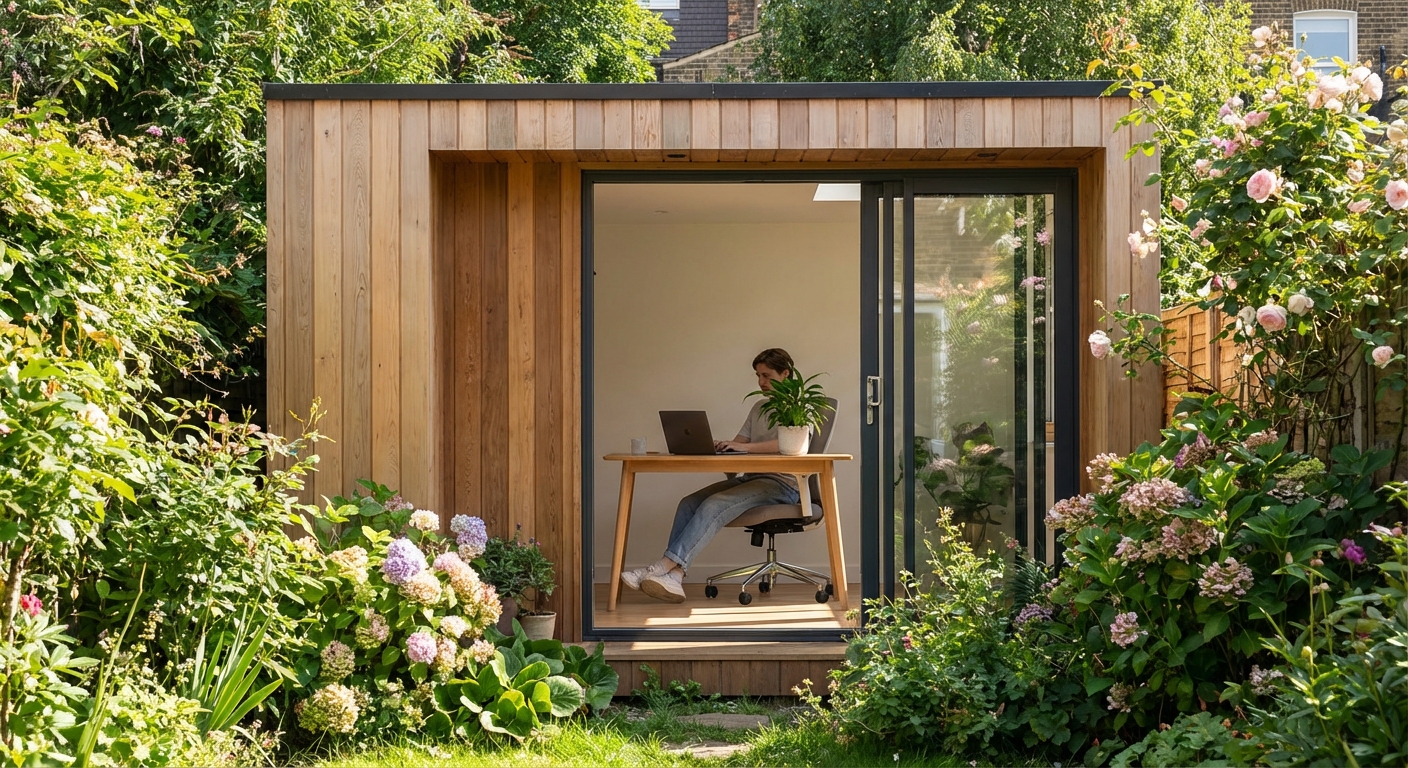
So if your plan is “cheap shed + extension cable,” you’ll get a nice hideout, but not necessarily an asset.
Step 2: Planning, Permissions, and Positioning
This is the boring bit everyone skips — and it’s where future problems are born.
Check planning rules (seriously)
When I tested a few layouts with a friend who’s an architect, their first sentence was: “Check planning law before you fall in love with Pinterest.”
Depending on where you live, you might be dealing with:
- Permitted development rules (e.g., in the UK, often fine if under 2.5m high near boundaries and not used as a separate dwelling)
- Setbacks and lot coverage in US cities
- Conservation or protected areas with extra restrictions
I always recommend checking your local government planning portal or calling the planning office. It’s boring, but cheaper than moving a building.
Where to put it in the garden
When I was marking potential spots with string, a few things surprised me:
- Light: A shady corner sounded cosy until I imagined working there in January. North-facing (in the northern hemisphere) is great for even light, but avoid deep shade plus trees that drip sap.
- Privacy: I rotated my design twice after realising my neighbour would have a perfect view of my screen.
- Access: Think about hauling furniture in, running cables, and walking there with a laptop in heavy rain. A narrow, muddy path gets old fast.
A good rule I picked up from a landscape designer: stand inside your home at different windows and imagine the office as part of the view. If it ruins every sightline, reposition.
Step 3: Structure and Insulation (The "Not Freezing in February" Part)
People obsess over desk styles and forget the building envelope. I did the opposite, and I’m very glad I did.
Shed vs purpose-built garden room
I tried working in a converted basic timber shed once. It looked charming. It also:
- Leaked a tiny bit in one corner
- Was boiling in July
- Was a fridge in December
If you’re writing emails once a week, fine. For daily work, you want:
- Proper insulation (walls, floor, roof)
- Double‑glazed windows
- A breathable membrane and vapour barrier
I went with insulated timber construction, but I’ve seen excellent SIP (Structural Insulated Panel) buildings: they go up quickly, have high thermal performance, and feel more like a tiny house than a garden shed.
Insulation thickness and materials
I got nerdy here and it paid off.
Look for:
- Wall insulation around 90–150 mm (rockwool, PIR boards, or high‑density mineral wool)
- Floor insulation (very often skipped) — mine has 70 mm PIR and the difference underfoot is huge
- Roof insulation of at least 120 mm equivalent
According to the UK’s Energy Saving Trust, good insulation can reduce heat loss by up to 25–35% through walls and roof combined, which you’ll feel in both comfort and bills.
Step 4: Heating, Cooling, and Fresh Air
When I tested working in an unheated outbuilding one winter, I lasted 17 minutes. My fingers refused to type.
Heating
I’ve tried three options:
- Oil-filled electric radiator – Cheap upfront, slow to heat, feels okay for occasional use
- Convection panel heater – Quicker, but air feels drier, and bills can creep up
- Mini split air‑source heat pump – Higher initial cost, but efficient heating and cooling
The mini split won for me. Modern heat pumps can deliver 3–4 units of heat for every unit of electricity used (COP 3–4 under decent conditions), which is far better than pure electric heaters.
Cooling and ventilation
If you live somewhere that sees real summers, plan for cooling from the start:
- Windows that open on opposite sides (cross‑ventilation) make a huge difference
- A small, quiet ceiling or wall fan helps keep air moving
- A mini split gives you actual AC if your climate needs it
I also added trickle vents and occasionally crack the door open between calls. Stale air is surprisingly draining.
Step 5: Power, Data, and Lighting (Where Most Corners Get Cut)
This is where I nearly made the classic mistake: I almost ran a cheap extension lead across the lawn.
Electrics
In my experience, this is not a DIY job unless you’re properly qualified.
A professional electrician helped me with:
- Running an armoured cable (SWA) from the house consumer unit
- Installing a small consumer unit in the office
- Adding dedicated circuits for heaters and sockets
I’m not just being cautious for the sake of it — government safety guidance in both the UK and US strongly recommends proper outdoor-rated installations for outbuildings.
Internet
I tested three options:
- Wi‑Fi extender – Worked… badly. Latency spikes, weak signal on video calls
- 4G/5G router – Surprisingly decent, but performance varied with weather and network congestion
- Buried Ethernet cable – Rock solid, zero drama
Ethernet won hands down. We used external‑grade Cat6 cable in ducting. If that’s not possible, powerline adapters can work, but they’re hit or miss depending on your wiring.
Lighting that doesn’t kill your eyes
I underestimated this.
What worked best for me:
- Indirect overhead LED lighting (around 4000K – neutral white)
- A desk lamp with adjustable colour temperature for late evenings
- Warm, low‑level lamp in the corner to soften the mood after dark
The goal is no harsh shadows on your face for video calls and no glare on the monitor.
Step 6: Interior Layout and Ergonomics
Once the shell is right, this is where it starts feeling like a real workspace.
Zoning in a tiny footprint
My office is about 3m x 4m, and I split it into:
- Work zone: desk, chair, screens
- Think zone: small armchair and side table
- Storage zone: built‑in shelves and a shallow cupboard
When I tested a “desk against the window, back to the door” layout, I felt constantly on edge. I eventually followed the classic advice from environmental psychology: sit where you can see the entrance without twisting.
Ergonomics that actually feel good
I made three non‑negotiable investments:
- Proper ergonomic chair – Not the prettiest, but my back stopped complaining within a week
- Adjustable desk – Mine’s sit‑stand; I now stand for calls and sit for deep work
- Monitor at eye level – I used a gas‑arm mount to free up desk space
Research from Cornell University’s ergonomics team has shown that correct monitor height and chair support significantly reduce musculoskeletal discomfort over time. I noticed the difference within days.
Step 7: Make It Feel Like a Garden Office, Not a Box
The whole point of a garden office is that it’s in the garden.
When I first moved in, it felt like a generic studio. Bringing the outside in changed everything:
- I added a full‑height window framing the most interesting part of the garden. That’s my “screensaver” when I think.
- A couple of tough houseplants (snake plant, pothos) softened the space and subtly improved air quality.
- I chose a green‑grey paint for one wall that echoes the plants outside. It sounds fussy, but it makes the space feel anchored.
Small detail that surprised me: hearing rain on the roof while working is oddly calming, as long as it’s properly insulated and not a drum.
Costs, Pros, Cons, and a Few Honest Warnings
What it really costs
Actual numbers will vary wildly, but from my tracking and conversations with builders:
- DIY conversion of a decent shed: $2,000–$6,000 / £1,500–£5,000 (comfort varies a lot)
- Mid‑range, well-insulated garden office: $10,000–$25,000 / £8,000–£20,000
- High‑end, architect-designed space: $30,000+ / £25,000+
Hidden costs I didn’t initially factor in:
- Trenching and armoured cabling
- Heating/cooling unit
- Pathway, decking, or basic landscaping
Pros (from actually living with one)
- Real separation between work and home — that 10‑second “commute” is oddly powerful
- Fewer household distractions
- A dedicated space for calls and focused work
- Potential home value boost if well built
Cons (people gloss over these)
- You will have days when it’s raining sideways and the sofa inside looks very tempting
- Ongoing running costs: heating, cooling, lighting
- Security concerns: you’ll need proper locks, maybe an alarm or camera
- Upfront cost isn’t trivial, especially for something you can’t easily take with you
Who a Garden Office Is (and Isn’t) For
From my experience and from talking to others who’ve done it, a garden office is worth it if:
- You’re serious about long‑term remote or hybrid work
- You need privacy and quiet you simply can’t get indoors
- You’re okay treating it like a proper building project, not a weekend hack
It’s probably not worth it if:
- You only WFH one day a week
- You’re likely to move within a year or two
- You hate the idea of walking outside in bad weather, even for 10 seconds
If you’re still on the fence, here’s what I tell friends: borrow or rent a small external studio or test working in a garage/outbuilding for a month. That “door between you and the kitchen” feeling will tell you pretty quickly whether a garden office is your thing.
And when you do build one, focus first on the unsexy parts: structure, insulation, power, and layout. The Instagram‑worthy touches are easy to add later. Comfort in January is not.
Sources
- U.S. Department of Energy – Insulation fact sheet - Guidance on insulation types, thickness, and energy performance
- Energy Saving Trust – Home insulation advice - Independent UK guidance on insulation, heat loss, and costs
- Cornell University Ergonomics Web - Research-based guidance on workstation ergonomics and posture
- UK Planning Portal – Outbuildings guidance - Official rules on garden buildings and permitted development in England
- Forbes – How remote work is changing housing demand - Discussion of remote work trends and home office value