Guide to Handbag Designs for Daily and Special Events
I was swapping bags at the last second, so yes, I’ve taken this very seriously.
Over the past few years, I’ve tested everything from $25 canvas totes to investment-level leather top-handle bags for weddings, work, and those “this might end up on Instagram” nights out. This guide is exactly what I wish I’d had when I started: a practical, no-fluff breakdown of handbag designs for real daily life and special events.
How I Learned to Match Bags to Real Life (Not Just Outfits)
I used to buy bags purely on vibes. If it looked pretty on the shelf, it came home with me. Then I’d try to cram a laptop into a structured mini bag and wonder why the zipper hated me.
When I started cataloging what I actually carried each day—phone, small notebook, power bank, sunglasses, emergency snacks—it changed how I looked at bag designs. Now I evaluate every handbag on three things:
- Function – what it can realistically hold and how easy it is to access.
- Form – the structure, hardware, and how it sits on the body.
- Flexibility – how many contexts it works in: office, errands, dinners, events.
Let’s go through the main handbag designs and where they genuinely shine—daily vs. special events.
1. Tote Bags: Everyday Workhorse with Hidden Glam Potential
I recently discovered that my most-used bag of the year wasn’t the fancy leather crossbody I “saved” for good days—it was a mid-range, structured tote with a zip top.
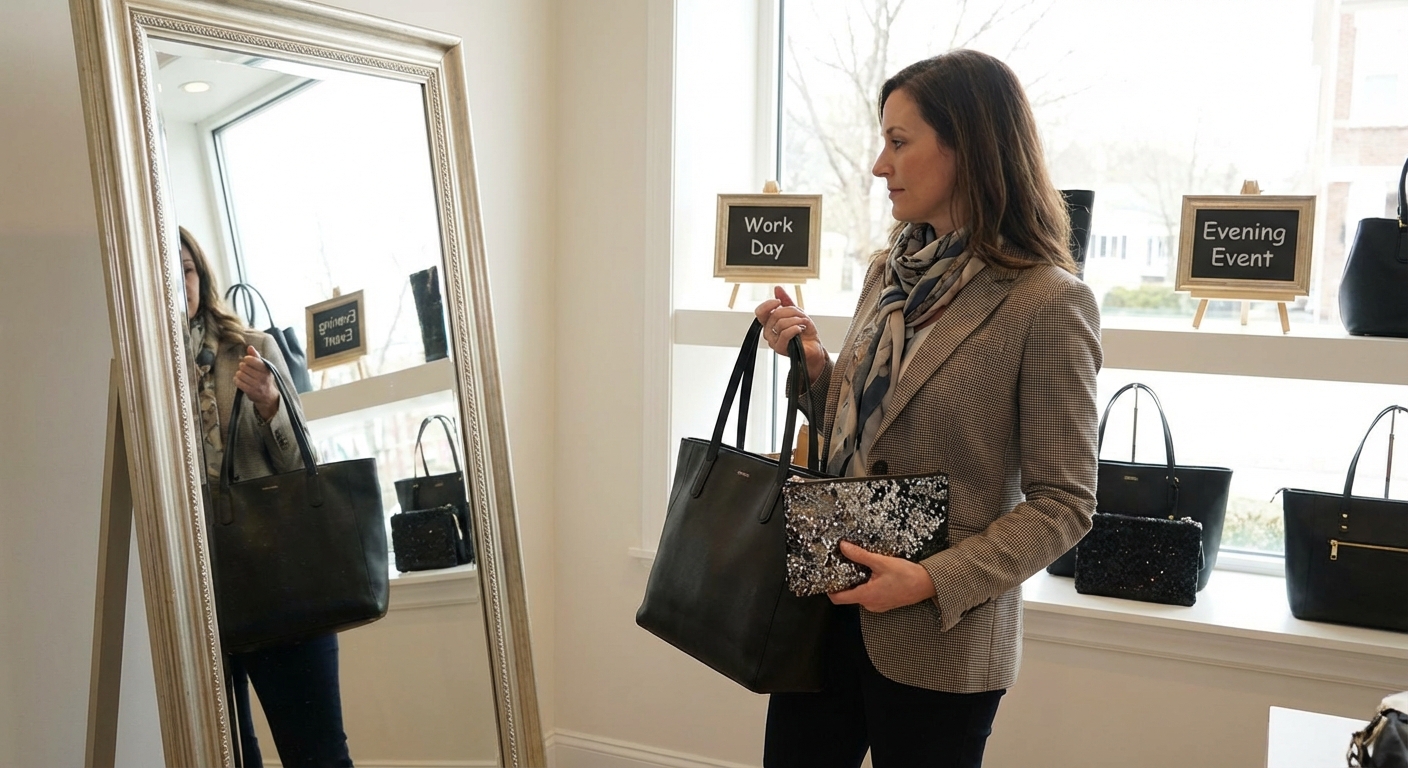
When totes win
For daily life, totes are unbeatable when you need to carry:
- Laptop or tablet
- Water bottle
- Makeup pouch
- Random “why is this in here?” items
A structured tote (think Saint Laurent Sac de Jour or Michael Kors Jet Set) works better for work and meetings than a slouchy canvas one, because it keeps documents and tech upright and looks more polished.
In my experience, the best daily tote details are:
- Drop length that fits over a coat
- Zipper or magnet closure (I learned the hard way when my metro card fell out of an open tote)
- Lining you can wipe clean
Can a tote work for special events?
Sometimes. A sleek, medium-sized leather tote in black or nude can pass at more relaxed professional events or day weddings—especially if the dress code isn’t ultra formal. But for black-tie or evening events, big totes can look like you’re about to whip out a laptop mid-toast.
Pros:- Highest capacity
- Great for commuters and parents
- Professional when structured and in neutral leather
- Not ideal for evening wear
- Easy to overload—mine has literally caused shoulder dents on travel days
2. Crossbody Bags: From Errands to Concerts
When I tested crossbody bags across a week of errands, coffee meetings, and a concert, one thing became clear: if I’m walking a lot, I want a crossbody.
Why they’re perfect for daily life
A good crossbody keeps weight close to the body and your hands free. I look for:
- Adjustable strap (I switch between shoulder and hip level depending on outfit)
- Secure closure (zip or flap with magnet)
- At least two internal compartments so my keys don’t attack my phone screen
Smaller crossbodies like the Coach Tabby or the Polène Numéro Un Nano have become cult favorites because they balance size and structure. They’re big enough for essentials but small enough that you won’t pack half your apartment.
Crossbody for special events
Here’s where it gets interesting. Slim, chain-strap crossbodies can absolutely work for special occasions. Fashion editors often recommend compact crossbodies for evening because you can discreetly wear them crossbody when you’re moving around and switch to shoulder carry for photos.
What I’ve noticed in photos: a chain-strap crossbody in metallic or patent leather often looks dressier than a plain clutch—and you’re less likely to leave it on a chair and forget it.
Pros:- Ideal for city life, travel, concerts
- Better for posture than overstuffed shoulder bags
- Transition easily from day to night in smaller sizes
- Limited capacity
- Chunky hardware can feel heavy by hour five
3. Shoulder Bags: Classic, Polished, and Very 90s (in a Good Way)
I went through a phase where I tried to live out my 90s minimalist dreams with a small black shoulder bag. Spoiler: it actually worked…as long as I didn’t try to pack my whole life.
Where shoulder bags shine daily
Structured shoulder bags add instant polish to jeans-and-tee outfits and workwear. Designs like the Prada Cleo or the classic Chanel flap have a curved or rectangular body that sits tight under the arm.
These work well for:
- Office days when you don’t need a laptop
- Lunch meetings
- Casual date nights
I’ve found the most versatile are mid-sized, with:
- A flat, comfortable strap (thin straps dig into your shoulder)
- Interior zip pocket for cards
- Slight structure so it doesn’t collapse when half empty
Shoulder bags for special events
This is where they really excel. A sleek, small shoulder bag in satin, velvet, or metallic leather can completely finish off an evening look without screaming for attention.
Event photographers I’ve chatted with often prefer guests carrying smaller shoulder bags over giant totes, because they photograph cleaner, don’t distort your silhouette, and are easier to rotate slightly out of frame.
Pros:- Elegantly bridges daily and evening wear
- Often more secure than clutches
- Timeless look; less trend-dependent
- Limited space
- Can feel awkward over bulky jackets
4. Clutches & Minaudières: Strictly Special-Event Energy
When I tested a rigid crystal-embellished clutch at a formal wedding, it looked incredible in photos…and was absolutely useless for carrying anything but lipstick, cards, and my phone.
When they’re worth it
For black-tie, gala, or very formal weddings, clutches and minaudières (those small, often hard-case evening bags) still rule. They:
- Don’t interrupt the line of your gown or suit
- Add texture—beads, crystals, satin, velvet
- Force you to carry less (Your back will say thank you.)
But there are trade-offs:
- One hand is always busy holding it
- You will eventually put it down and panic when you don’t see it
My workaround is to look for evening clutches with a detachable chain strap. You can tuck the chain in for photos and pull it out when you’re dancing or holding a drink and dessert plate at the same time.
Pros:- Most elegant option for formal events
- Huge variety of materials and embellishments
- Practically no capacity
- Easy to misplace
5. Top-Handle & Satchel Bags: The “I Have My Life Together” Bag
Top-handle bags are the ones that make you feel like you have your life in order, even if you ate cereal for dinner.
When I tested a medium-sized top-handle satchel for a week of meetings and one engagement party, what stood out was how many outfits it elevated—blazer and trousers, slip dress, even jeans and loafers.
Daily life
Structured top-handle or satchel bags are fantastic for:
- Office and client meetings
- Brunches or more polished daytime events
Look for:
- A removable crossbody or shoulder strap (hand carry all day is exhausting)
- Protective feet on the bottom (so you don’t destroy the leather on floors)
- Medium size—small top-handles are cute but not realistic for day
Special events
Smaller top-handle bags in satin or glossy leather feel very “old Hollywood” at special events. Think of designs inspired by the Lady Dior or the Gucci Bamboo bag: compact, structured, camera-loving.
Pros:- Extremely polished and photogenic
- Work across professional and social occasions
- Less comfortable for long walking days
- Can feel too formal for super casual outfits
6. Matching the Bag to the Event (Without Overthinking It)
Here’s the simple framework I now use when I’m rushing to get dressed:
- Daily errands, commuting, kids’ activities: medium/large tote or crossbody
- Office, meetings, day dates: structured tote, shoulder bag, or satchel
- Cocktail parties, dinner dates, semi-formal events: structured small shoulder or mid-size crossbody with chain strap
- Black-tie, galas, highly formal weddings: clutch, minaudière, or small top-handle
I also factor in security. According to crime-prevention advice from several city police departments, bags that close fully (zips, firm flaps) and sit close to the body are safer than open totes or bags that hang loosely behind you—something to keep in mind for crowded events or travel.
7. Materials, Quality, and the Real Cost Per Wear
From a shopping standpoint, the smartest bag I ever bought was a mid-range, full-grain leather black crossbody. I’ve used it for over five years. If I divide the cost by the times worn, it beats my cheaper impulse buys easily.
A few quick material notes from experience and research:
- Full-grain leather ages well, develops a patina, and generally lasts longest when cared for.
- Coated canvas (like Louis Vuitton’s iconic Monogram) is lightweight and resistant to stains and rain.
- Vegan leather varies wildly in quality. Some high-end polyurethane and plant-based leathers are impressive, but low-quality versions can crack or peel after a year of heavy use.
- Fabric and satin look gorgeous for evening but pick up stains and pulls faster, so I reserve them mostly for special events.
Maintenance matters. A basic leather conditioner once or twice a year and storing bags stuffed and upright has literally extended the life of my daily bags by years.
8. What Actually Belongs in Each Bag
When I started matching bag size to a set “carry list,” I stopped overpacking. Rough guidelines:
- Daily tote: laptop, charger, notebook, wallet, cosmetic pouch, small umbrella, snacks
- Daily crossbody/shoulder: phone, slim wallet or cardholder, keys, compact, lip product, hand sanitizer
- Event clutch: cardholder, lipstick, pressed powder or blotting papers, mini fragrance, one key
If I can’t fit this curated list comfortably, the bag’s wrong for the occasion—not the other way around.
Final Thoughts: Build a Small, Strategic Rotation
You don’t need 20 handbags. The most functional wardrobe I’ve tested for real life and special events looks like this:
- One reliable structured tote
- One versatile medium crossbody
- One polished shoulder or top-handle bag
- One dedicated evening clutch or mini bag
Once those four bases are covered, the trend pieces—bright colors, unusual shapes, statement hardware—become fun extras instead of stressful purchases.
Handbags should work for you, not the other way around. If you can run for a cab, hold a drink, hug a friend, and still feel pulled together, you’ve nailed the match between design and event.
Sources
- Harvard Business Review – The Psychology Behind Handbags and Status - Insight into how accessories shape perception
- The New York Times – How to Buy a Handbag That Lasts - Practical guidance on quality, materials, and construction
- Metropolitan Police Service – Personal Safety and Bag Security Advice - Official tips on safer ways to carry bags in public
- Fashion Institute of Technology (FIT) – Handbag Design and Construction Overview - Educational insight into handbag design principles
- Coach Official Site – Guide to Leather Types - Brand explanation of different leathers and care recommendations