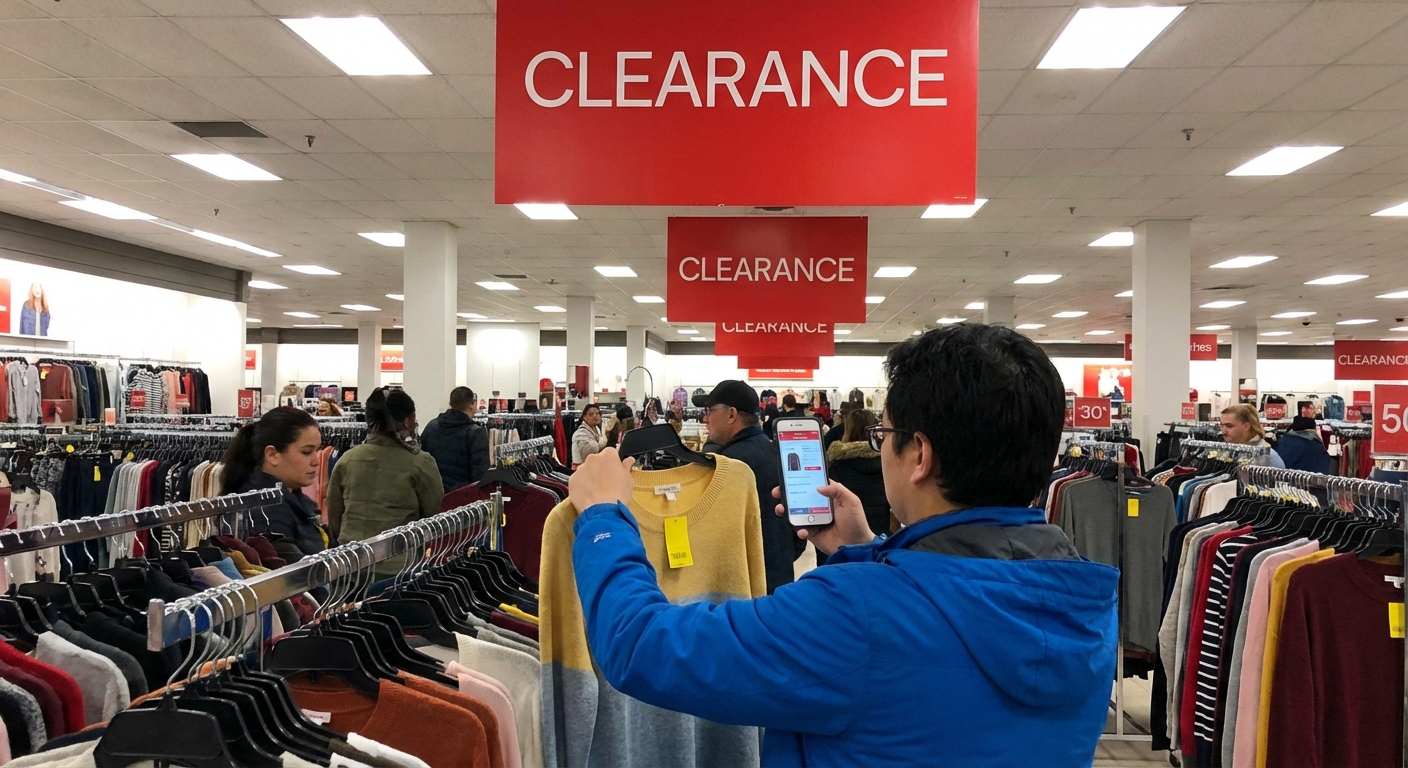
Guide to Home Depot Clearance Sections and Finds
o just said, “Yeah… that was priced to move.” Since then, I’ve basically turned hunting Home Depot clearance into a side hobby.
This isn’t about random yellow tags. Home Depot has a pretty consistent (and surprisingly strategic) system for marking stuff down — if you understand it, you stop paying full price for a lot of home projects.
I’ll walk you through how I actually shop it, what the price codes really mean, and yes, where they hide the good stuff.
How Home Depot Clearance Really Works
When I started paying attention instead of just wandering the aisles, a few patterns popped out.
Home Depot uses a mix of:
- Store-level markdowns (manager decides to clear space)
- Corporate markdowns (chain-wide price reductions)
- Vendor-funded promotions (brands helping move old models)
In my experience, the best savings usually happen when all three collide: seasonal changeover + new model arriving + local store out of shelf space.
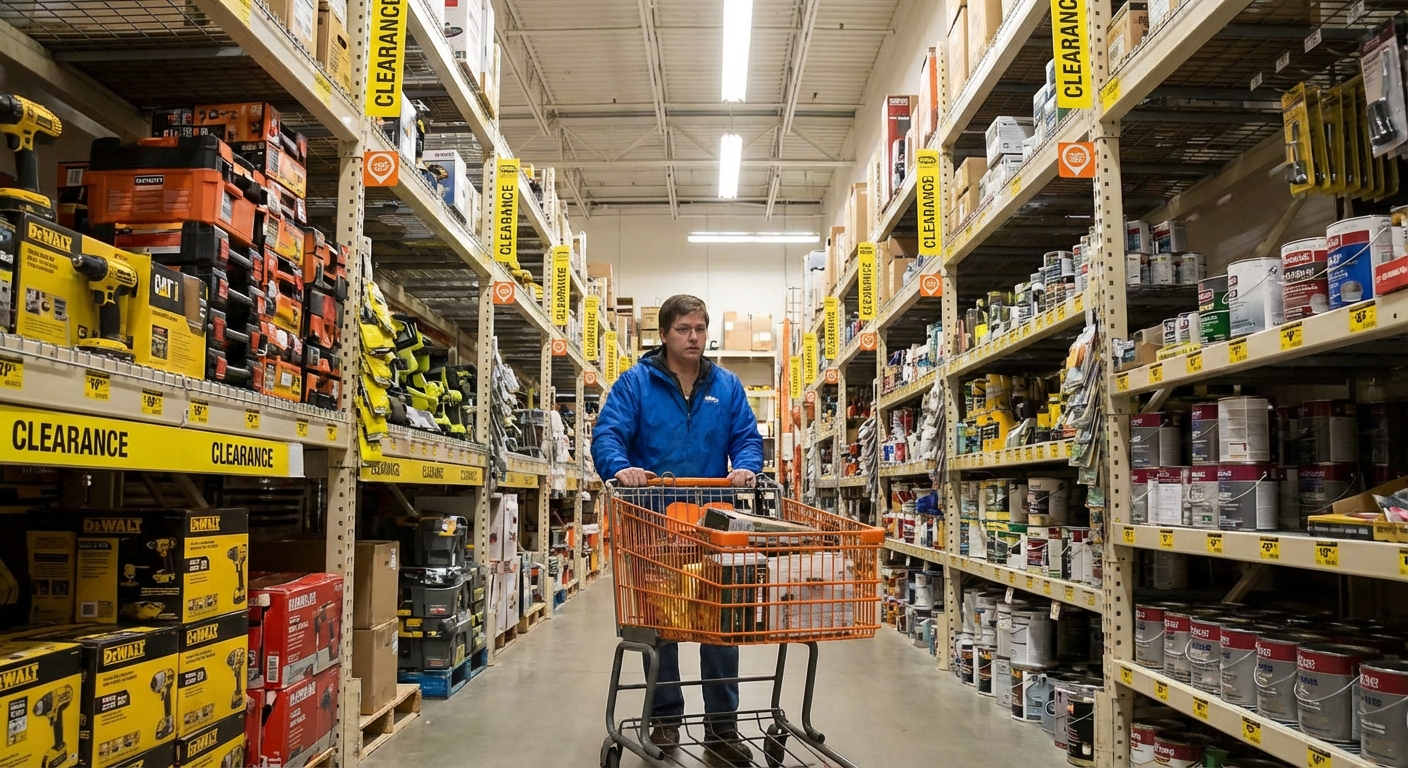
They also follow a cycle that most employees will quietly confirm if you ask the right way: pricing tends to be reviewed on Mondays and Tuesdays, with tags updated mid-week. I’ve had the best luck on Wednesday mornings, when the new markdowns are already on the floor but the weekend crowd hasn’t picked through everything yet.
Decoding Home Depot Clearance Price Tags
Once I learned to read those orange and yellow tags, it honestly felt like unlocking a cheat code.
The endings that matter
While exact policies can vary by region, in my local stores and from what employees have told me:
- .06 endings often mean a “we’re clearing this, but not final” markdown.
- .03 endings usually signal a final markdown — once it sells, it’s gone.
- .00 can mean a manager’s special or an oddball price created manually.
For example, I once watched a Ryobi tool set go from $149 to $106.06, then a week later down to $93.03. I grabbed it at $93.03 because that .03 ending usually means: this is as low as it’s going.
You can confirm the current price by scanning the barcode with the Home Depot app. More than once I’ve seen a shelf tag say $98 while the app (and register) ring up $62.
The dates on the tag
Most clearance tags show a tiny “Price Effective Date”. When I tested tracking a few items over a month, I noticed something:
- If it’s been sitting 30+ days with the same clearance price, it often drops again.
- Items with handwritten adjustments or stickers over stickers usually mean negotiation might be possible if it’s damaged or missing parts.
I’ve politely asked, “This has been here a while and the box is ripped — is there any flexibility on the price?” and gotten extra 10–15% off more times than I expected.
Where the Good Clearance Actually Hides
The biggest mistake I made early on was thinking clearance was only on a single rack. Home Depot hides (or at least scatters) deals all over the store.
1. The end caps and random aisles
Yes, there’s usually a main clearance aisle or end cap, but that’s just the appetizer.
Some of my best finds came from:
- Middle shelves in lighting, where discontinued fixtures get yellow tagged
- The last few feet of tool aisles near the back wall
- Bottom shelves in plumbing and bath (apparently no one likes bending down)
I recently scored a Moen shower trim kit at 70% off simply because it was shoved behind some full-price boxes. The tag was dusty enough that I knew it had been hiding there for weeks.
2. The appliance area
If you’re even thinking about buying an appliance in the next 6–12 months, walk through this section whenever you’re in the store.
Look for:
- Open-box returns (often 20–40% off)
- Floor models (I’ve seen 50–60% off refrigerators with nothing wrong but fingerprints)
- Previous model years when the new line arrives
One associate told me they’re under pressure to clear last year’s models quickly once the new ones arrive, so managers get much more flexible on price if you offer to take it same-day.
3. Lumber and building materials
This is less glamorous but insanely useful if you do projects.
- Cull lumber carts: slightly warped, cut, or cosmetically flawed boards at 50–70% off.
- Broken packs of flooring or tile: I once patched a rental unit’s flooring using three different “odds and ends” boxes they’d heavily marked down.
In my experience, staff in lumber are also some of the most straightforward about markdowns. Ask, “Is that cull cart firm or is there any discount if I take a bunch of it?” and you might be surprised.
4. Garden center
This one feels like cheating.
- End of season: plants, planters, soil, and fertilizers can drop 50–90%.
- I’ve grabbed perennials at clearance prices that came back beautifully the next spring.
The downside? Those plants are often stressed, so you need to be willing to baby them a little.
How to Time Your Clearance Hunts
I started noticing that my best hauls weren’t random — they lined up with the retail calendar.
Seasonal transitions
You’ll see waves of clearance:
- Late January–February: Holiday leftovers, heaters, some tools.
- Late April–May: Early-season overbuys, some outdoor power equipment.
- August–September: Patio furniture, grills, summer decor.
- October–November: Air conditioners, fans, lawn equipment.
I grabbed a $399 patio set for $118 one October because the associates literally needed the floor space for snow blowers.
Day-of-week strategy
When I tested different days over a few months:
- Mid-week mornings (Wed–Thu) were best for fresh markdowns.
- Sunday evenings were best for random open-box and returns.
Weekends are still fine, but inventory moves faster and the true unicorn deals are usually gone.
Tools and Tactics That Actually Work
These are the things I personally use every time I go on a clearance run.
1. The Home Depot app is your friend
I use it to:
- Scan barcodes and spot prices lower than the tag
- Check nearby store inventory (clearance can vary a lot by location)
- Save items to watch if I suspect a second markdown is coming
I’ve had items scan lower in one store than another. Corporate sets a base, but store managers can markdown further.
2. Know when to ask for a discount
You’re not haggling at a flea market, but there are legit reasons they’ll adjust:
- Damaged packaging
- Missing hardware (screws, brackets, manuals)
- Floor models
I usually say something like, “If I take this as-is today, any chance you can do a bit better on the price?” Calm tone, no entitlement. When I tested being pushy vs. polite, polite won every time.
3. Compare to online and third-party prices
Before I get too excited, I quickly:
- Check homedepot.com to see the regular online price
- Compare on Amazon or the manufacturer’s site
More than once I’ve seen “clearance” that was barely a discount off big online sales.
What’s Worth Buying on Clearance (and What I Skip)
Not every 70%-off sticker is a smart buy. Learned that the hard way with a sketchy ceiling fan.
What I happily buy
- Tools from major brands (Milwaukee, DeWalt, Ryobi) with standard warranties
- Lighting, faucets, hardware where style changes but function’s the same
- Storage, shelving, and organizers (clear plastic bins don’t go out of style)
- Building materials if I know exact specs and quantities
That $74 vanity I mentioned? Same solid wood construction as the full-price version, just last year’s finish color.
What I’m more careful about
- Smart home tech: Older models can lose software support faster.
- Highly trendy finishes/patterns: That matte black rose-gold combo might age weirdly.
- Weird brand appliances: If I can’t easily find parts or service, I walk.
I also check return policies. Home Depot’s standard return window is generally 90 days (365 for some cardholders), but clearance or special buy items can be more restrictive. If a cashier says “final sale,” I ask them to point to it on the receipt so I know for sure.
The Downsides and Limitations (Because It’s Not All Wins)
To keep this honest: clearance hunting sounds glamorous. It’s not always.
- It’s time-consuming. You have to be willing to walk multiple aisles and sometimes multiple stores.
- Stock is inconsistent. What I find in my state might not exist anywhere near you.
- Analysis paralysis. I’ve overbought “deal” items and then had to store them for months.
And yes, sometimes what looks like a steal is a problem product being quietly moved out. I always google the product name plus “review” on my phone before buying.
In my experience, though, if you go in with a loose project list and a realistic budget, Home Depot clearance can shave hundreds of dollars off a renovation or even small DIY upgrade.
Final Thoughts: How to Turn Browsing into Strategy
If I had to boil everything down to how I actually shop now, it’s this:
- I keep a running list on my phone: things I’ll need in the next 6–12 months (fixtures, storage, tools).
- Whenever I’m at Home Depot for something boring (like caulk), I do a 5–10 minute clearance loop: tools → lighting → bath → appliances → garden.
- I only buy clearance when it’s: the right item, the right size/spec, and at least 40–50% off the realistic comparable price.
The goal isn’t to collect random cheap stuff. It’s to let Home Depot’s clearance cycles quietly fund your home upgrades.
And if you walk out with a 70%-off vanity and a cashier who gives you that impressed look… you’ll know you’ve officially joined the club.
Sources
- The Home Depot – Return Policy - Official Home Depot details on returns and special purchases
- The Home Depot – Investor Relations: 2023 Annual Report - Background on merchandising and inventory strategy
- Forbes – How Retailers Use Pricing Strategies To Drive Sales - Overview of retail markdown and clearance tactics
- U.S. Bureau of Labor Statistics – Consumer Expenditures for Home Improvements - Data on how much consumers spend on home projects
- Consumer Reports – How To Save On Major Appliances - Tips on timing and finding deals on appliances