Guide to Identifying High Quality Finds at Marshalls
me (and too many returns), I turned Marshalls hunting into a bit of a personal sport. I’ve found cashmere that rivaled designer boutiques, Le Creuset pieces for a fraction of the price, and yes—some tragic “what was I thinking?” purchases.
This guide is everything I’ve learned from years of combing those chaotic racks and checking labels like a detective.
How Marshalls Actually Gets Its Stuff (And Why It Matters)
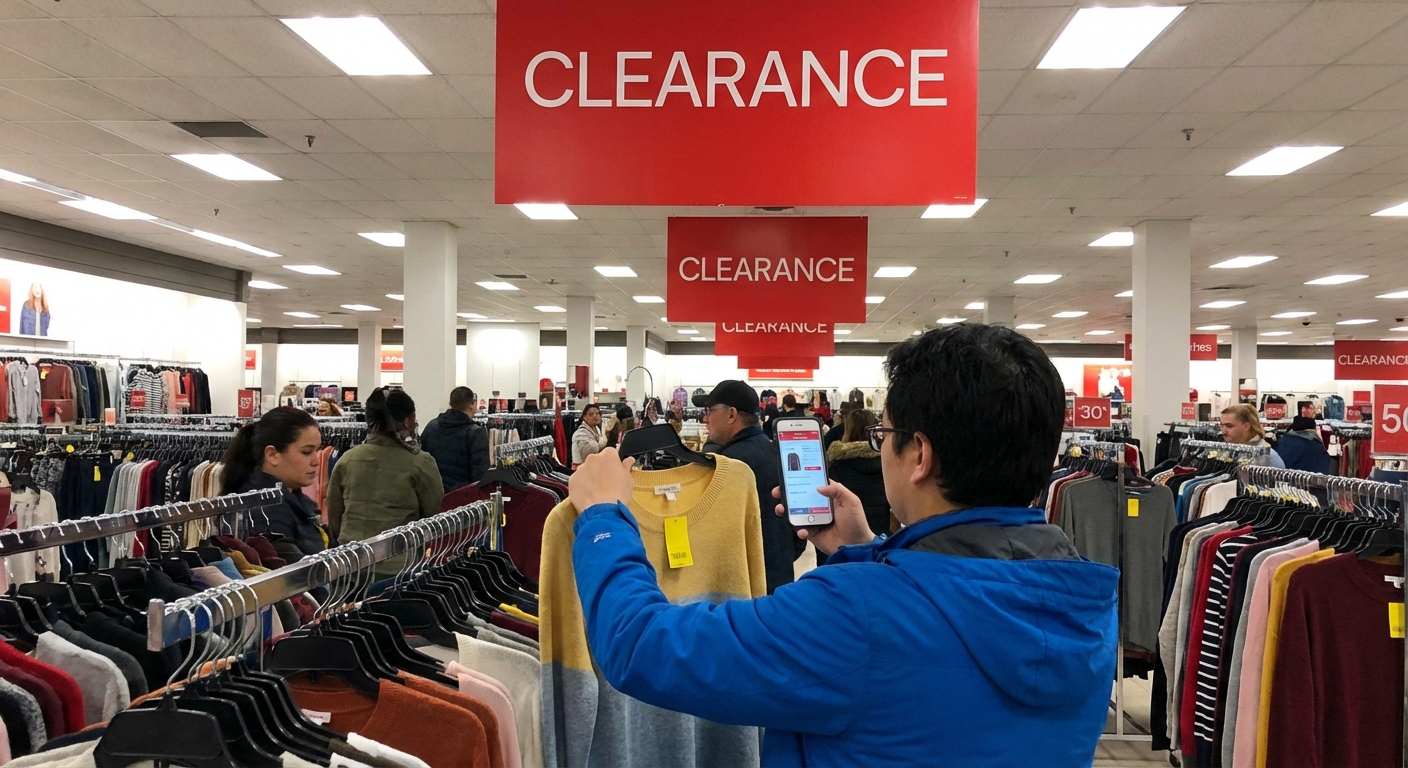
When I started treating Marshalls like a scavenger hunt instead of a traditional store, my finds got better fast.
Marshalls is part of TJX Companies (same parent company as T.J. Maxx and HomeGoods). According to TJX’s own disclosures, their buyers source from:
- Overproduction and excess inventory from brands
- Canceled orders from department stores
- End-of-season or overstock
- Special “made for outlet” runs (this is the one you need to watch closely)
Knowing this changed how I shop. Some items are literally the exact same as what you’d see at Nordstrom or Macy’s, just last season. Others are produced specifically for off-price retailers and can be slightly lower quality.
My rule: assume nothing. Inspect everything.
Step 1: Read the Tag Like a Pro
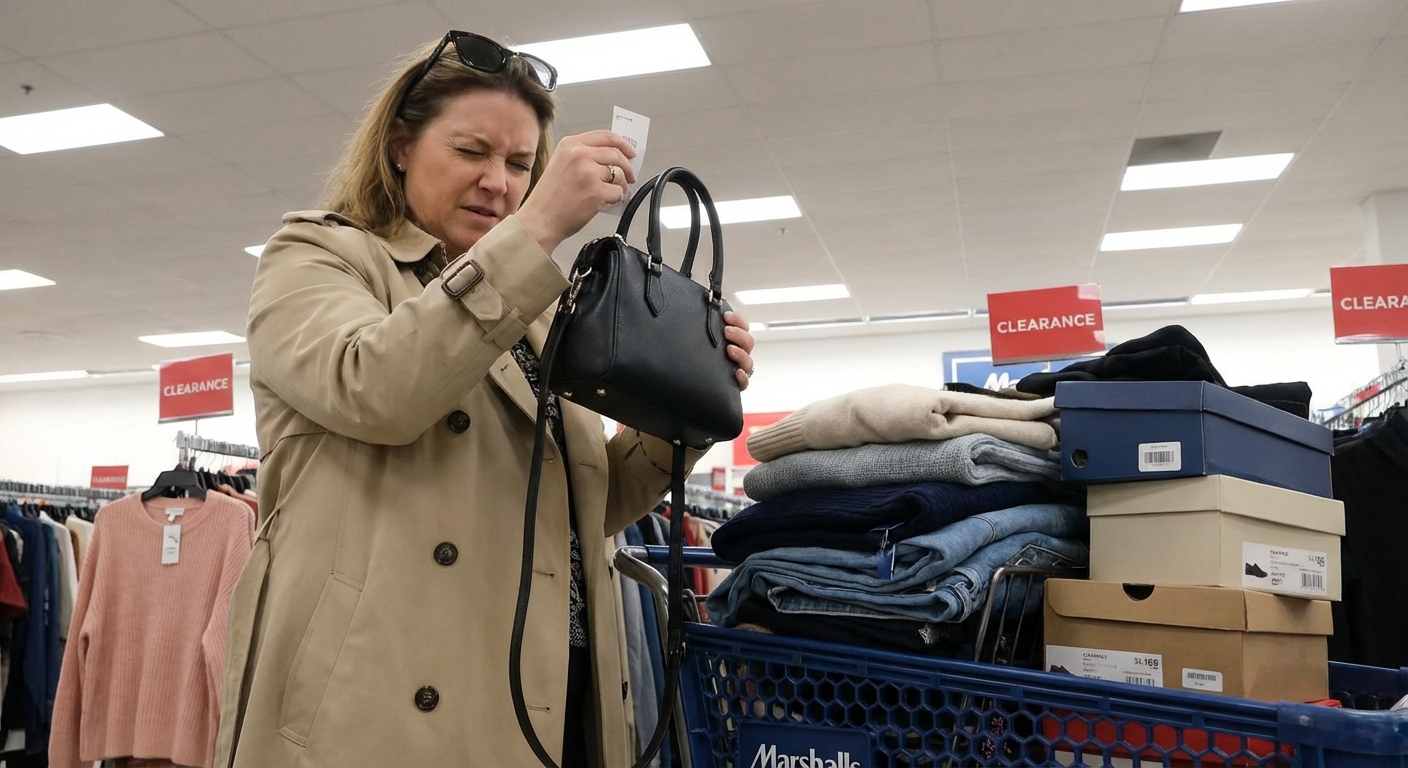
When I tested this on a random armful of clothes, the tag alone told me which 3 pieces were worth buying—and I was right once I looked up the brands later.
Here’s what I look for on a clothing tag:
1. Fabric Content
In my experience, the fabric tag is the single fastest giveaway of quality.
Worth paying attention to:- Wool, merino wool, cashmere, alpaca
- Linen (especially for summer pieces)
- Cotton (bonus points for “pima cotton” or “Supima”)
- Silk or silk blends
- 100% polyester for pieces that should drape nicely (like dresses or blouses)
- Acrylic-heavy knits (these pill fast)
- “Unknown” or vague blend descriptions
One time I grabbed what I thought was a chunky wool sweater for $29.99. When I checked the tag, it was 85% acrylic. Cute today, fuzz-ball tomorrow. I put it back and 5 minutes later found a merino wool sweater for the same price.
2. Country of Origin
Country of origin isn’t an automatic quality stamp, but it’s a decent clue. Many higher-end brands still manufacture in Italy, Portugal, Turkey, and some in the U.S. or Canada. I’ve consistently found better denim and leather goods made in Turkey, Italy, and Portugal.
Lower-end “made for outlet” items are often produced wherever is most cost-effective—this is fine if the construction is solid, but it’s a signal to look closer.
Step 2: Decode the Brand (Quietly Flex Your Label Knowledge)
When I first started paying attention to labels at Marshalls, I kept a running note in my phone of brands that felt higher quality. That list has saved me countless times.
Here’s how I quickly assess a brand in-store:
- Check original retail price mentally – If you already know a brand retails for $150+ for dresses or $200+ for denim, a Marshalls price of $39.99 is a legit deal.
- Look for diffusion lines – Designers sometimes have lower-priced lines or “outlet only” brands. The label may look similar but not identical (slightly different logo, added word like “Studio,” “Weekend,” or “Essentials”). These can still be good, but I inspect them like a hawk.
- Google test – I’ve literally stood in the aisle, Googling a brand. If the brand’s main site shows mid-to-high price points and good materials, I’m more interested.
I once found a pair of Vince trousers for $49.99 that retailed for over $200. The giveaway was the fabric (wool blend), the weight, and that clean, minimal label. Same with a pair of Paige jeans I spotted—if you know premium denim brands (AG, Mother, Frame, Citizens of Humanity), you’ll recognize winners quickly.
Step 3: Inspect Construction Like You’re Returning It Tomorrow
I started doing this after bringing home a gorgeous blazer that literally lost a button the first day.
Here’s my rapid-fire checklist:
Seams & Stitching
- Turn the garment inside out. Are seams straight and even?
- Is the stitching tight, or are there loose threads everywhere?
- At stress points (underarms, pockets, crotch on pants), is there reinforcement or double stitching?
Higher quality pieces usually feel secure when you give them a gentle tug at the seams. Cheaper-made items can feel like they’ll split if you move too suddenly.
Lining & Finishing
If it’s a blazer, coat, or dress:
- Is it fully lined or half-lined? Fully lined jackets usually hang better and last longer.
- Does the lining fabric feel smooth, or like stiff plastic?
- Are hems neatly finished or kind of raw and uneven?
When I tested this with two nearly identical black blazers at Marshalls—a $39.99 no-name brand and a $59.99 one from a known label—the second had proper lining, inner pockets, and clean stitching. The first looked okay on the hanger but bulky and cheap on the body.
Step 4: Distinguish "Made for Marshalls" from True Overstocks
This is the subtle part most people skip.
Some pieces are designed specifically for off-price retailers. They can still be good, but they’re not always the same quality as the mainline brand.
Clues an item might be off-price specific:- No original brand tag with MSRP, only a generic Marshalls tag
- Label looks less detailed than what you’ve seen at full-price retailers
- Fabric content is cheaper than what that brand usually uses (e.g., that brand’s wool coat on their site vs. polyester blend at Marshalls)
I once compared a Calvin Klein dress at Marshalls to one on Macy’s site. The Marshalls version looked similar but had thinner fabric, a different zipper, and a simpler lining. Not necessarily bad—but not the same.
When in doubt, I ask: Would I still buy this at this price if it didn’t have this label? If the answer’s no, I walk away.
Beyond Clothes: Spotting High Quality Home & Beauty Finds
Marshalls’ home section is where I’ve had some of my best wins—and a few fails.
Home & Kitchen
When I tested cookware and home finds over time, here’s what held up:
- Cast iron & enameled cast iron – Le Creuset, Staub, Lodge. These are often past-season colors or minor packaging changes. I once scored a Le Creuset baking dish for less than half the price listed on their own site.
- Knives – Look for forged, full-tang knives (the metal runs through the handle). Avoid flimsy, ultra-light sets.
- Glassware & ceramics – I check weight (substantial but not brick-heavy) and look for even glazing with no bubbling.
Beauty & Skincare
I’m picky here. Counterfeit or expired beauty is a hard no for me.
My rules:
- I stick mostly to brands I know and can verify on their official site.
- I check for tamper seals and avoid anything with damaged packaging.
- I glance at expiration or PAO (period after opening) symbols—anything that looks old or separated, I skip.
Dermatologists and consumer protection agencies have warned about gray-market or old beauty products in off-price chains. The good news: when I’ve stuck to recognizable brands with intact seals, I’ve had solid experiences, but I don’t gamble with active skincare (like retinols) from random brands.
Timing, Strategy, and When to Walk Away
I recently did a little experiment: I went to my local Marshalls at opening time midweek for three weeks in a row. The difference versus weekend afternoons was dramatic—more stock, less chaos, better sizes.
What’s worked for me:- Mornings on Tuesdays–Thursdays are usually calmer and better stocked.
- I always do a fast scan of clearance, but I don’t let the red tags seduce me—if the quality isn’t there, the discount just means I’m overpaying for clutter.
- I try things on. A $30 dress that fits perfectly is a better buy than a $12 top that sits wrong and lives in your closet.
And honestly? Some days you’ll find nothing worth buying. That’s part of the game. Walking out empty-handed is a win compared to settling for meh.
Pros and Cons of Hunting for High Quality at Marshalls
What I love:- You can get true premium pieces for 50–70% off if you know what to look for.
- You’ll often find unique, past-season or odd-size gems nobody else has.
- It forces you to learn brands, fabrics, and construction—skills that help you shop smarter anywhere.
- It takes time and patience; this isn’t a “run in and grab it in five minutes” kind of shopping.
- Sizing is inconsistent and limited; if you find something you love that fits, don’t wait.
- Quality is uneven; for every great find there’s a rack of “almost but not quite.”
In my experience, the shoppers who consistently win at Marshalls aren’t the ones with the biggest carts—they’re the ones who are the pickiest.
When you start reading tags, inspecting seams, and ignoring the siren song of the markdown sticker, Marshalls stops being a gamble and starts feeling more like a secret weapon.
Sources
- TJX Companies – Our Business Model - Official explanation of how Marshalls/TJX sources merchandise
- Consumer Reports – How to Tell if Clothes Are Well Made - Practical tips on checking garment quality and construction
- Good Housekeeping – Fabric 101: A Guide to Fabric Types - Overview of fabric types and care basics
- FDA – Importing and Exporting Cosmetic Products - Background on cosmetic products and safety regulations
- Le Creuset Official Website - Brand background and typical pricing for comparison with off-price finds