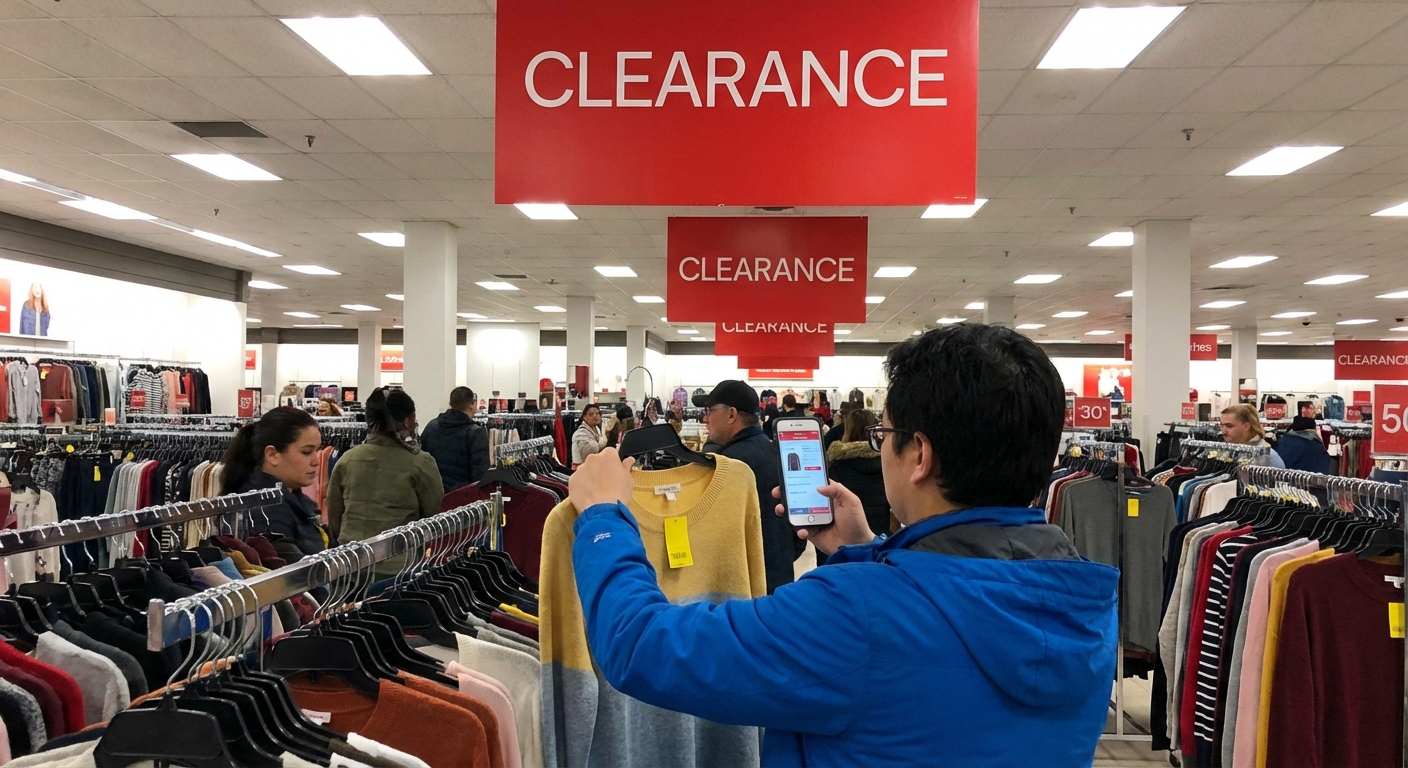
Guide to JCPenney Clearance Deals Explained
ctually learned how their clearance system works… and it got a little dangerous for my wallet.
I’ve walked out with $5 Arizona jeans, a $12 Liz Claiborne blazer, and a $30 comforter set that was originally tagged at $160. When I tested different shopping times and strategies over a couple of months, I realized JCPenney clearance isn’t random at all—it’s a pattern. Once you see it, you can’t unsee it.
This is the guide I wish I’d had before I started hunting their red and yellow tags.
How JCPenney’s Clearance System Actually Works
When you first look at JCPenney clearance, it seems like a giant mashup of markdowns. But there’s a structure:
- Regular price → Sale price → Clearance → Final clearance
- They usually markdown in stages: around 25–40% off, then 50–60%, then up to 70–80% off on final clearance.
JCPenney themselves say on their site that “clearance items are typically priced at 40–80% off original prices” and may be excluded from some coupons. When I checked store tags against the online prices, I noticed clearance in-store can be better than online, especially at the final markdown stage.
The Tag Colors and What They Mean (In Practice)
When I tested different locations, here’s what I consistently saw:
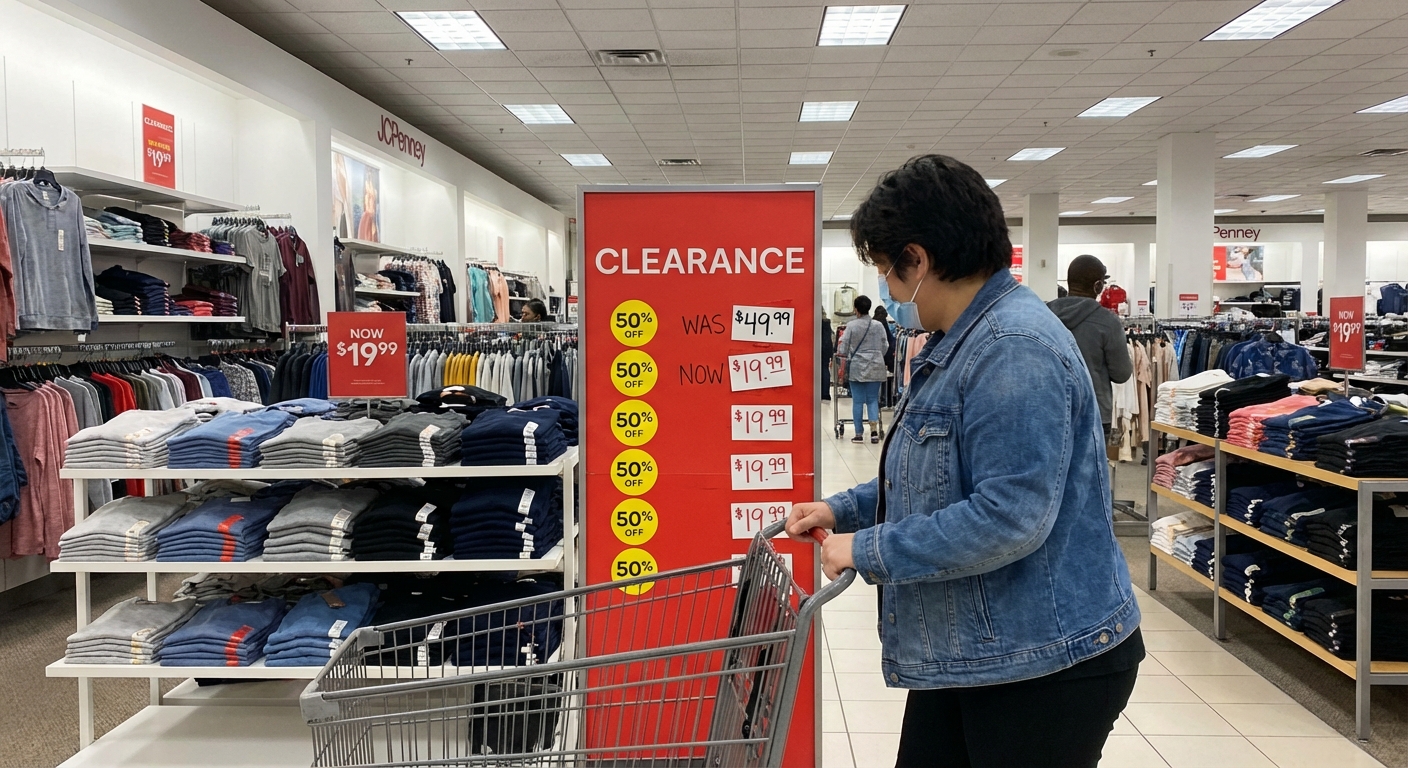
- Red tags – Standard clearance
- Yellow tags – Usually deeper markdown / final clearance in many stores
Some stores lean heavier on printed clearance stickers instead of colored tags, but staff confirmed for me that yellow almost always signals “we’re done marking this down—this is the bottom.” One associate literally told me, “If it’s yellow, buy it now or kiss it goodbye.”
Is it an official corporate rule? Not exactly; it can vary. But in my experience across three different JCPenney locations, that pattern held up.
The Best Days and Times I’ve Found for Clearance
I experimented with different days for a few weeks (yes, I went full nerd on this):
- Best times I found: weekday mornings, especially Tuesday–Thursday between 10am–1pm
- Worst times: Saturday afternoons when everything is picked over and dressing rooms are chaos
Multiple associates told me they often do new markdowns early in the week. It’s not a publicly posted rule, but when I compared my receipts and what I saw appearing, midweek mornings gave me:
- More sizes (especially in men’s and plus-size)
- More organized racks
- Less competition from other shoppers
If you can’t do weekdays, aim for later Sunday afternoons—I’ve occasionally lucked into fresh markdowns that hit after the weekend crowds.
Stacking Savings: Coupons, Rewards, and Clearance
I used to assume clearance meant “no coupons allowed.” At JCPenney, that’s only partly true.
What Worked For Me
When I tested this at my local store and online:
- JCPenney Rewards (their free loyalty program) still applied to clearance. I earned points on clearance purchases and could redeem rewards certificates on clearance most of the time.
- Percent-off coupons sometimes excluded clearance, but not always. The fine print is everything.
- Dollar-off coupons (like $10 off $25) occasionally stacked with clearance, especially in-store.
On one trip, I bought:
- 3 clearance tops, each around $7–$9
- Original total: about $72
- Clearance price: about $24
- After stacking a $10 rewards certificate: $14 out of pocket
I did confirm with the cashier: “So I’m getting rewards on clearance and also redeeming on clearance?” She laughed and said, “Yep. Until they change it, ride the wave.”
Big Limitation to Watch
JCPenney clearly notes in promo fine print that “some coupons exclude clearance” and that “clearance items may be excluded from additional discounts.” When I cross-checked that with online promotions, I saw that doorbuster or special event coupons are more likely to exclude clearance.
Moral of the story: always open the offer details before you shop, don’t assume.
In-Store vs Online Clearance: Where the Real Wins Are
When I compared prices over several weeks:
- Online clearance: Better for breadth of sizes and styles, especially in shoes and home.
- In-store clearance: Better for deepest markdowns and random hidden gems.
One example from my own receipt pile:
- Comforter set online: clearance at $69.99
- Same set in-store, yellow tag: $29.97
I scanned the barcode in the JCPenney app, and the app still showed the higher online price. The associate confirmed, “Store-only price—this location wants it gone.”
If you’re serious about deals, I recommend this combo:
- Browse online first to see styles, brands, and rough pricing.
- Hunt in person for the deepest markdowns, especially in:
- Bedding & bath
- Seasonal décor
- Men’s dress shirts and ties
Seasonal Clearance: When I’ve Saved the Most
Retail analysts and the National Retail Federation often mention that seasonal inventory gets cleared out fast after peak. JCPenney follows that classic playbook.
From my own shopping logs and receipts, the biggest drops tended to hit:
- Holiday décor – Starts going clearance just after Christmas, then gets truly wild in early January (I’ve seen 70–80% off trees, ornaments, and wrapping).
- Winter apparel – Biggest clearance in January–February.
- Swim & summer – Strong markdowns in July–August, then final clearance toward September.
- Back-to-school – Backpacks and kids’ basics drop sharply right after school starts.
One year, I grabbed a $220 men’s wool coat for $44 in late February. The associate shrugged and said, “We need spring jackets on this wall, so…” That’s the mindset you’re working with.
The Pros and Cons of Chasing JCPenney Clearance
I’m not going to pretend JCPenney clearance is some magical, flawless hack. It has serious upsides, but it’s not for everyone.
What I Love (and Why I Keep Going Back)
- Real, meaningful discounts – I’ve consistently seen 60–80% off original prices when items hit final clearance.
- Quality per dollar is strong – Mid-range brands like Liz Claiborne, St. John’s Bay, and JCPenney Home hold up better than a lot of bargain-only stores.
- Stackable savings – Earning and redeeming rewards on clearance can make already big discounts feel a little ridiculous.
What Drives Me a Little Nuts
- Inconsistent policies – One store allows a certain coupon on clearance, another doesn’t. The rules can feel fuzzy.
- Hunt-and-peck experience – If you hate sifting, digging, and checking tags, you’ll probably get frustrated.
- Limited sizes and odd leftovers – By the time pieces hit rock-bottom prices, popular sizes/colors are often gone.
From a trust standpoint, I appreciate that JCPenney clearly labels their clearance and has a posted return policy. But I’ve learned not to assume every deal is a steal. Sometimes the “sale” price is just the normal market price elsewhere, so I still price-check big-ticket items.
My Personal Strategy for Scoring the Best Deals
Here’s the approach that’s worked best for me after months of experimenting:
- Make a short list before I go – Otherwise I end up with six throw pillows and no jeans.
- Start with clearance, not new arrivals – If I find what I need there, I never even look at full price.
- Check tags carefully – I compare:
- Original price
- Markdown date (if printed)
- Sticker-on-sticker layering (sign it’s been reduced multiple times)
- Test coupons at checkout – I always ask politely, “Can you try this on clearance? Totally okay if it doesn’t apply.” Cashiers are usually happy to test it.
- Double-check the return policy – Some deeply discounted items are final sale, especially online. I don’t gamble on shoes or bras if I can’t return them.
On a recent trip, I followed this exact method and walked out with:
- 2 pairs of men’s dress pants
- 1 blazer
- 3 tops
Original total (tags added up): just over $310. After clearance markdowns, a rewards certificate, and a coupon that did apply to clearance: I paid $63 and change. That’s the kind of receipt that keeps you coming back.
When JCPenney Clearance Isn’t Worth It
There are definitely times I walk away:
- When the “clearance” price is still close to what I’ve seen at Target or Kohl’s for similar quality
- When I’m clearly impulse-buying something I’d never pick up at full price
- When the fabric feels cheap or the fit is off and I’m just telling myself, “But it’s only $7…”
Retail experts often warn that markdowns can trigger what’s called the “deal effect”—your brain focuses on the savings, not whether you actually want or need the item. I’ve felt that tug more than once standing in a JCPenney aisle.
If I wouldn’t be at least tempted to consider it at, say, 50% off, I skip it even at 80% off.
Final Thoughts: Is JCPenney Clearance Worth Chasing?
In my experience, yes—if you treat it like a strategy, not a scavenger hunt free-for-all.
If you:
- Have a little patience,
- Don’t mind checking tags,
- And can walk away when the deal isn’t actually a deal for you,
then JCPenney clearance can be a seriously powerful way to outfit your closet and home on a mid-range budget.
If you prefer curated, minimalist, no-dig shopping, you might be happier with fewer, intentional purchases at full price elsewhere. There’s no shame in that.
But if you’re even a little bit thrill-of-the-hunt wired like I am, once you score your first 80%-off yellow-tag find that you actually love and wear, you’ll understand why JCPenney clearance has its own quiet fanbase.
Sources
- JCPenney Official Website – Clearance & Promotions - JCPenney’s own clearance section and promotional terms
- National Retail Federation – Seasonal Sales Trends - Insights on how retailers handle seasonal inventory and markdowns
- Forbes – How Retailers Use Markdowns Strategically - Background on clearance and markdown strategy
- Consumer.gov – Shopping for Bargains - Government advice on recognizing real vs fake deals
- Harvard Business Review – The Psychology Behind Sales - Explains why discounts can influence buying decisions