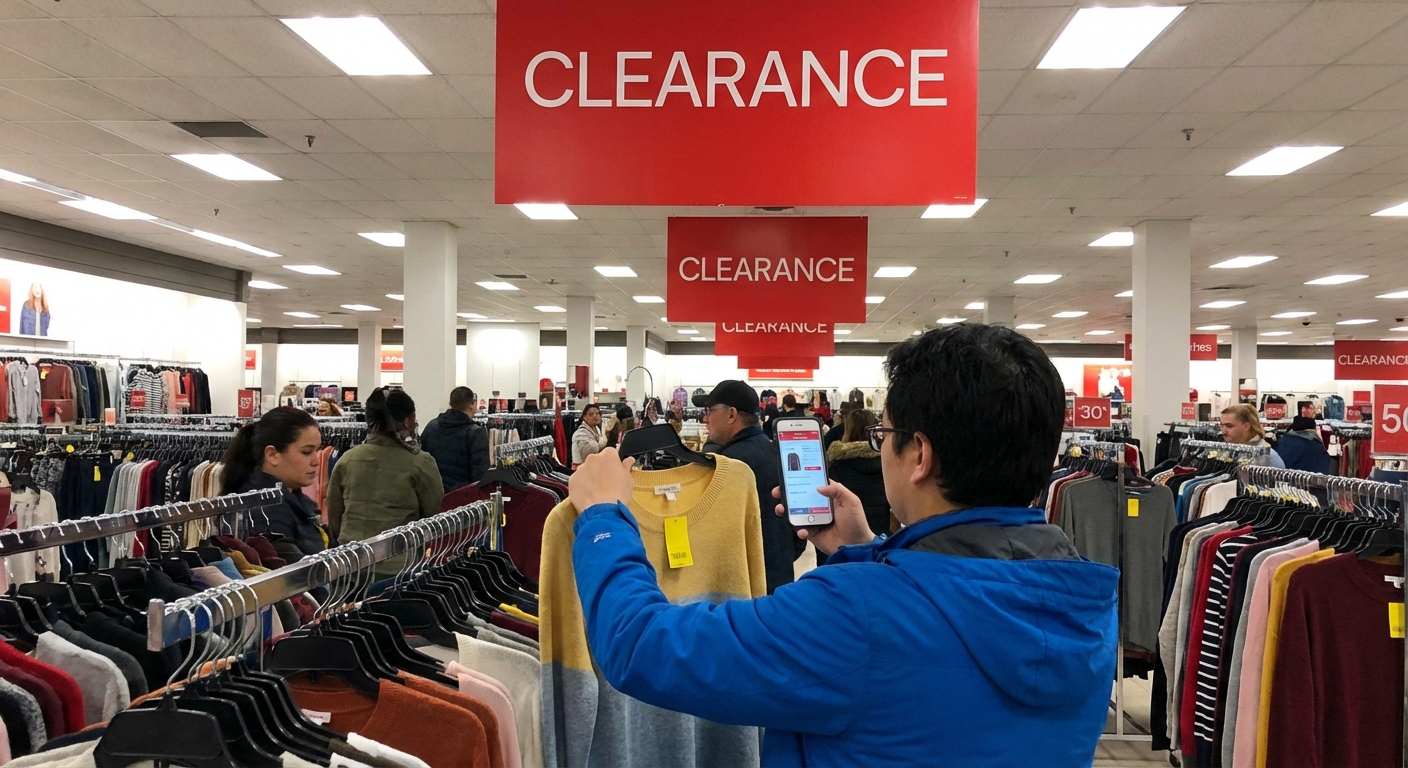
Guide to Kroger Clearance Sections and Store Finds
I grabbed a cart, a coffee, and actually explored those clearance corners.
I walked out having paid $21 for what my receipt said was $69 worth of groceries and household stuff. That was the night I got hooked.
This is the guide I wish I’d had before I started stalking those yellow tags.
Where Kroger Hides the Good Clearance Stuff
Every Kroger layout is a little different, but the patterns are weirdly similar. Here’s what I’ve consistently found in multiple Kroger and Kroger-banner stores (King Soopers, Fry’s, Ralphs, etc.) when I’ve actually taken time to scout.
1. The Main Clearance Rack (a.k.a. Treasure Island)
In my experience, there’s almost always a big rolling shelf or endcap with orange or yellow tags near:
- The dairy aisle entrance
- The back of the store by the stockroom doors
- Or front right side near household goods
I’ve seen everything here: discontinued cereal flavors, seasonal candy, random gourmet sauces, overpriced protein bars suddenly marked down to “stock-up” levels.
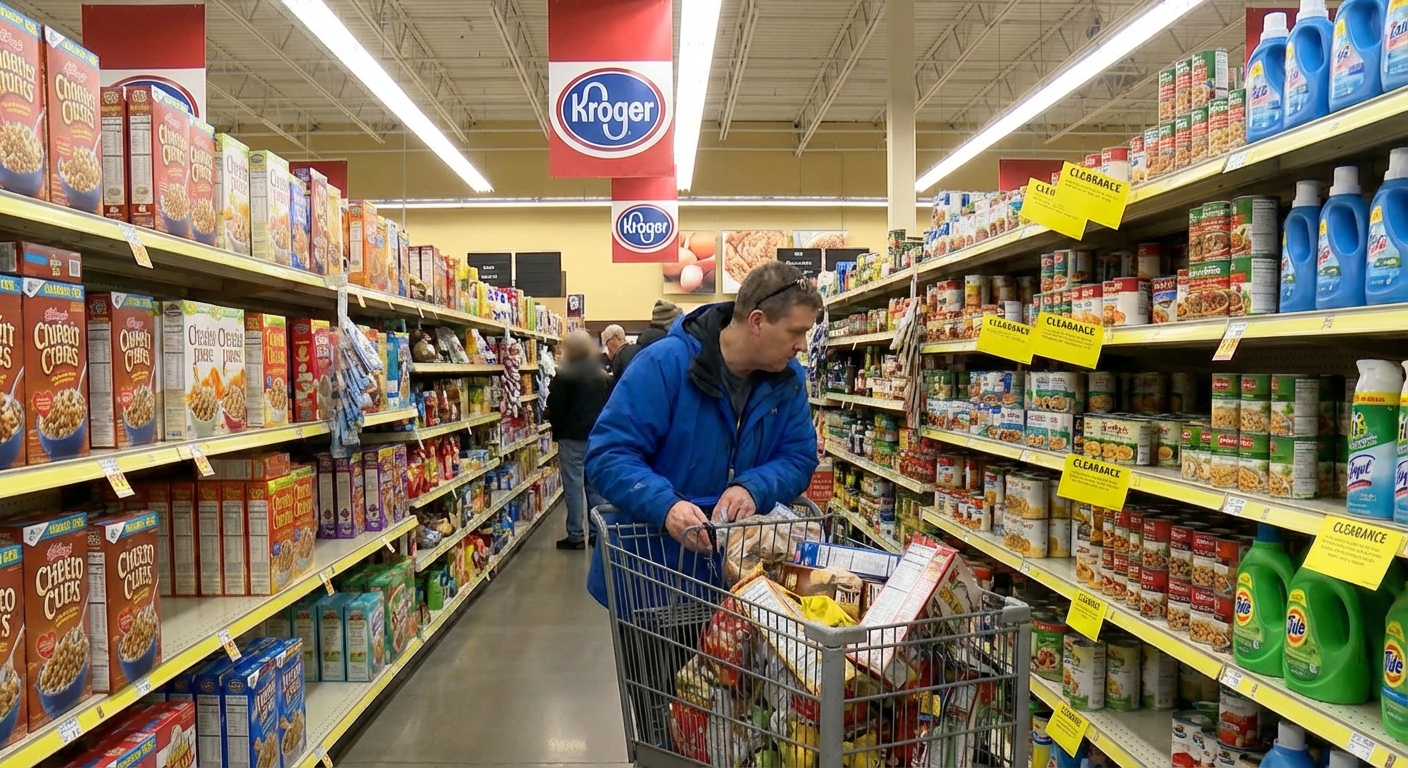
When I tested this across three different Kroger locations over one week, that main rack consistently had:
- Seasonal clearance (pumpkin stuff in November, heart-shaped everything in late February)
- Products with older packaging that Kroger’s replacing
- “Test” products that clearly didn’t sell well
Pro tip from my own cart: flip items around and check all tags. Half the deals I found had markdown stickers stuck on the side or even the bottom.
2. Meat & Seafood Clearance
This is where the real savings live.
Kroger typically slaps Manager’s Special stickers on meat that’s 1–2 days from the sell-by date. I’ve personally snagged 50–75% off:
- Organic chicken thighs
- Name-brand bacon
- Ground beef in family packs
When I tested freezing these, everything cooked up just fine as long as I froze it the same day. According to USDA guidelines, freezing meat near its sell-by date is still safe as long as it’s been properly refrigerated up to that point and cooked to safe temps later on (source below).
The trick I’ve learned:
- Go early morning (7–10 a.m.) or late night (after 8 p.m.)
- Look for yellow/orange markdown stickers on the regular meat shelves, not just a separate bin
3. Produce “Rescue” Racks
Not every store has a dedicated produce markdown shelf, but when they do, it’s usually near the back of produce or along a side wall.
I recently grabbed a bag of “ugly” apples for 99 cents that turned into an actually fantastic apple crisp. I also regularly see:
- Mixed bags of slightly bruised peppers
- Spotty bananas (perfect for freezing or banana bread)
- Discount salad kits close to date
This is where I’ve learned to be picky: if the whole bag looks tired and slimy, I skip it. But if it’s just cosmetic bruises, I’m in.
4. Bakery Deals
The day-old bakery rack is usually:
- On the outside edge of the bakery
- Or tucked near the bread aisle
When I tested how long these lasted at home, most items were fine for 2–3 more days, especially if I tossed bread into the freezer. I’ve scored:
- $1 artisan loaves
- Clearance dinner rolls for holiday meals
- Huge cakes for less than the price of a frozen dessert
Kroger often marks these with “Manager’s Special” or bright stickers that are hard to miss once you know to look.
5. Personal Care & Household Endcaps
This is the area most people ignore. I rarely walk out without something from here:
In health & beauty, watch the endcaps near:
- Shampoo & hair dye
- Toothpaste & oral care
- Razors & deodorant
I’ve seen discontinued shades of hair color 70% off, name-brand razors under $3, and huge body washes half-price.
In household, check:
- Cleaning aisle endcaps
- Paper goods section
- Air fresheners and candles
When I started cross-checking clearance prices with regular shelf prices using the Kroger app, I realized some “meh” looking markdowns were actually insanely good unit prices.
How Kroger Clearance Pricing Actually Works (From What I’ve Seen)
I’m not a Kroger employee, but after way too many runs and talking to a couple of store workers, here’s what I’ve pieced together.
The Yellow Tag / Sticker System
There are two main types I see:
- Shelf Clearance Tags – Yellow/orange tags under the product on the shelf
- Long-term or final markdowns
- Often tied to product discontinuation or packaging changes
- Manager’s Special Stickers – Bright stickers on individual items
- Short-term, item-specific discounts
- Usually close to sell-by or seasonal clearance
When I tested scanning these in the Kroger app, almost all rang up correctly—but a couple didn’t, and customer service adjusted them without drama. So it’s worth paying attention.
Markdowns Happen in Waves
I’ve noticed patterns like:
- First markdown: small (10–20% off)
- Second: decent (30–40% off)
- Final: aggressive (50–75% off)
The risk? If you wait for the final drop, the item might be gone.
My general rule: if it’s something I regularly use and it’s 40%+ off, I grab it. If it’s a “fun” item, I might risk waiting.
Best Times to Hunt for Markdowns
I actually tested this over a couple weeks by hitting the same store at different times.
What consistently worked best:
- Early morning, weekdays – Fresh meat markdowns, bakery items from the day before
- Late evening, especially Sunday or Monday – End-of-week produce and random overstock
I asked a meat department worker once when they usually do markdowns; he said they “try to knock them out in the morning before lunch rush.” Your store may differ, but asking politely has given me surprisingly honest answers.
Hidden “Stacking” Opportunities
Digital Coupons + Clearance
This is where it gets fun.
When I tested stacking Kroger digital coupons with clearance prices, I found:
- Most manufacturer coupons (loaded in the app) still came off clearance items
- Some store or category coupons didn’t always apply, so I had to check my receipt
Example from a recent trip:
- Clearance price on cereal: $1.49 (down from $4.29)
- Digital coupon: $1 off 2
- Final price: $0.99 per box when I bought two
Not extreme couponing, but for zero clipping or printing, it’s a solid win.
Fuel Points and Clearance
Even if your cart is 90% clearance, your total still earns fuel points like any normal purchase. During one fuel promo period, my clearance-heavy haul pushed me over the threshold for extra cents off per gallon.
What’s Actually Worth Buying… and What I Avoid
I love a deal, but I’ve also learned where clearance turns into clutter or waste.
My “Always Check” Categories
- Meat & Poultry – Freeze same day; label with date
- Cheese & yogurt – Short-dated but usually fine for a while at home
- Household cleaners – They don’t really “expire” in any dramatic way
- Shampoo, soap, deodorant – Easy stock-up wins
My “Be Careful” List
Based on my experience (and a couple of regret purchases):
- Salad kits & precut veggies – Turn slimy very quickly
- Odd-flavor snacks – There’s a reason “pumpkin salsa chips” are 80% off
- Niche diet products – Keto/fad stuff that you may not actually like long term
Food Safety Reality Check
According to the USDA, “sell-by” and “best-by” dates are more about quality than hard safety deadlines for many products, assuming they’re stored properly. I still follow a sniff test + common sense policy at home, but clearance doesn’t automatically mean unsafe.[^usda]
Tips I Wish I’d Known Sooner
Here’s what’s consistently helped me get the best Kroger clearance finds without wasting money:
- Walk the whole store once – Don’t just hit the big rack; swing by meat, produce, bakery, and the HBA/cleaning aisles.
- Use the Kroger app while you shop – Scan items to confirm prices and check if there are extra coupons.
- Set a mental budget – Clearance is sneaky; I tell myself, “$15 max in unplanned deals.”
- Think in meals, not items – Instead of just grabbing cheap chicken and random sauce, I ask, “What full meal can I build with this?”
- Check packaging condition – Dents on cans? Usually okay. Swollen cans or badly damaged seals? Hard pass.
In my experience, one or two thoughtful clearance runs can noticeably lower your grocery budget without feeling like you’re living off expired mystery food.
The Realistic Downsides
I love the hunt, but I’m not going to pretend it’s all magical savings.
Some honest cons:
- Time – Doing a full clearance sweep adds 10–20 minutes to a trip.
- Inconsistent selection – One week is gold, the next week is crickets.
- Impulse danger – Cheap doesn’t mean useful. I’ve bought way too many random sauces I never opened.
- Crowded racks – I’ve had to literally dig around chaotic shelves more than once.
If you hate browsing or feel overwhelmed easily, you might prefer a “5-minute scan” strategy—hit just meat, bakery, and one clearance rack and call it a day.
Final Thoughts from a Clearance Addict
After months of experimenting, tracking receipts, and talking to staff, I’d say Kroger clearance sections are absolutely worth exploring if you:
- Know your regular prices
- Are willing to be flexible with brands and flavors
- Can walk away from a “deal” that doesn’t actually fit your life
When I stay disciplined, Kroger’s yellow tags are basically a built-in discount layer on top of sales and digital coupons. When I don’t… well, that’s how I ended up with four bottles of clearance kombucha I actively hated.
Start small: on your next Kroger run, give yourself 10 extra minutes, hit the key zones (meat, produce, bakery, main rack), and see what you actually use at home. That’s where the real savings story starts.
Sources
- USDA Food Product Dating - Official guidance on sell-by and use-by dates
- Kroger Corporate: Our Brands & Value - Background on Kroger’s product lines and pricing approach
- Kroger Digital Coupons FAQ - How Kroger’s digital coupons work and apply
- Forbes: How Grocery Prices & Promotions Work - Context on grocery pricing and promotions
- Consumer Reports: How to Save Money on Groceries - Expert tips on grocery savings strategies
[^usda]: USDA, “Food Product Dating,” Food Safety and Inspection Service, updated 2023.