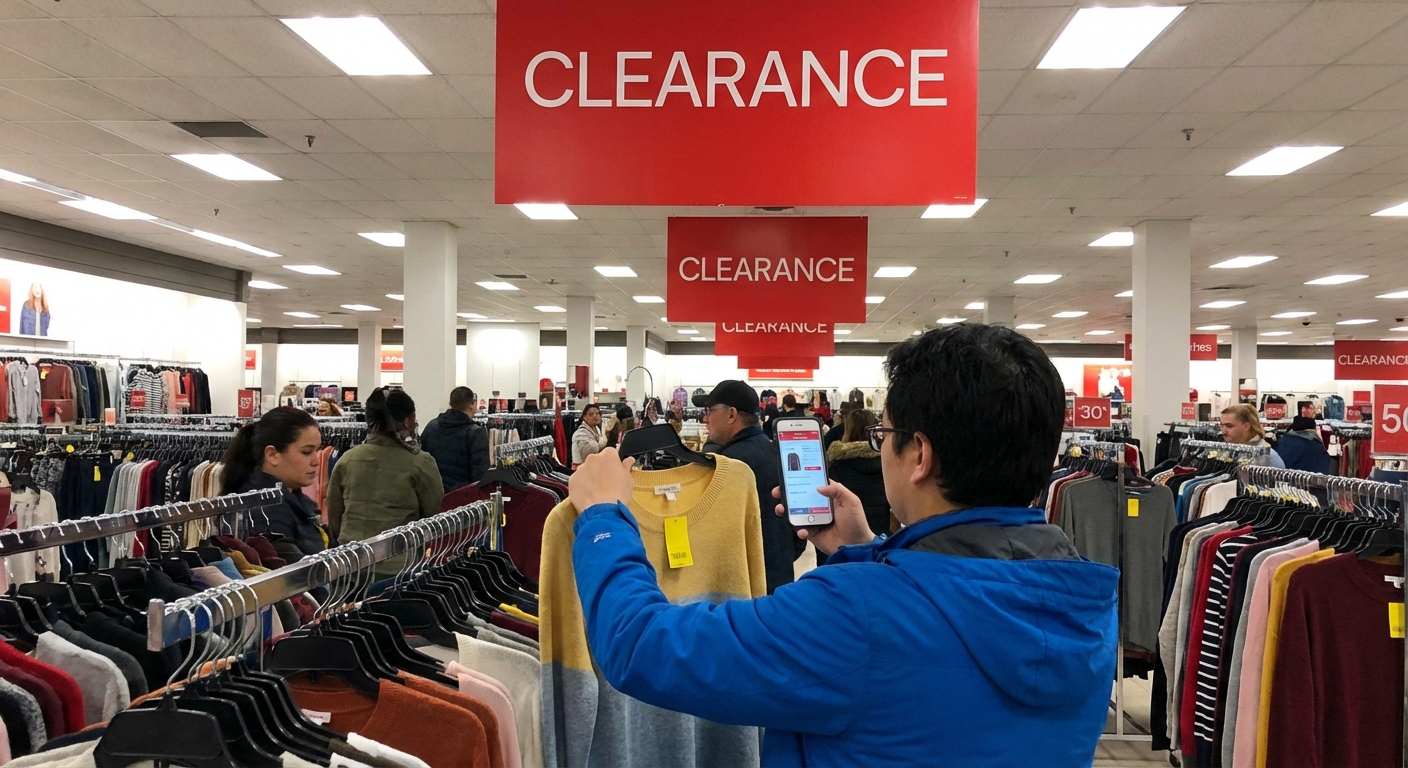
Guide to Kroger Seasonal Deals on Groceries
at checkout. Then one random Sunday, I stacked a digital coupon, a weekly ad deal, and a seasonal promotion on a cart full of fall produce and snacks—and my total dropped by 40%. That was the moment I got hooked on Kroger’s seasonal deals.
This guide is basically everything I’ve learned since then, after too many receipts, a lot of trial and error, and way too many bags of “buy five, save more” tortilla chips.
How Kroger’s Seasonal Deals Actually Work
In my experience, Kroger doesn’t just “put things on sale.” Their discounts run on overlapping cycles:
- Weekly digital and print ads (the ones you see in the app or mailed flyer)
- Monthly/quarterly promos (like Buy 5, Save $5, or Mix & Match events)
- Seasonal themes (back-to-school, football season, holidays, grilling, etc.)
When I started watching the pattern, I noticed:
- Fresh produce cycles by what’s in season nationally
- Private-label brands (Kroger, Simple Truth, Private Selection) get big markdowns around holidays
- Frozen and pantry staples anchor most “mega event” savings
Kroger’s CFO Gary Millerchip has talked about how their promotions are built to encourage “basket building” rather than one-off cheap items—translation: they reward you for buying sets of items, especially during seasonal campaigns.
Once you see it that way, the game is to line up what you actually need with what the season wants you to buy anyway.
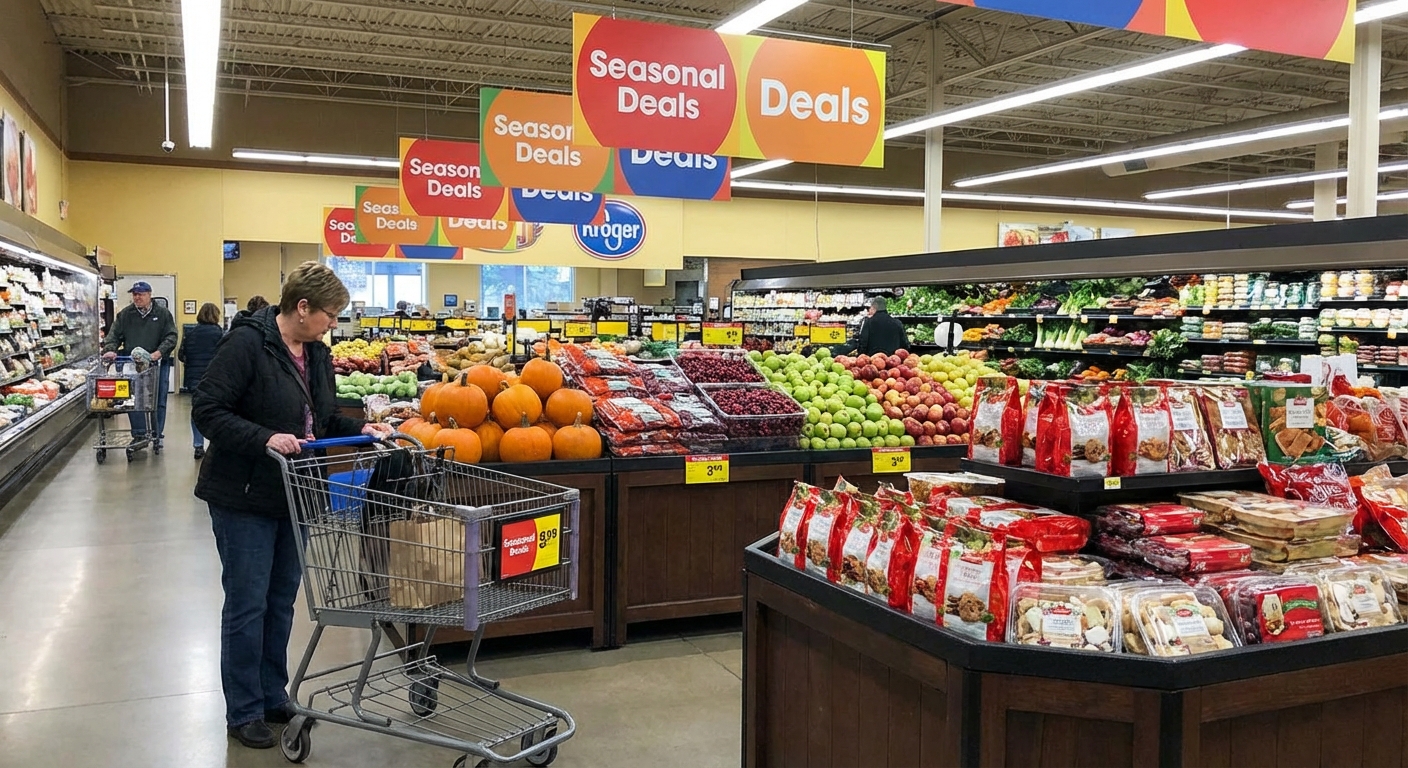
Seasonal Grocery Cycles: What’s Cheapest When
When I tested tracking my grocery prices across a full year (yes, I’m that person with a spreadsheet), I found some standout patterns.
Winter (Jan–Feb): Reset & Healthy Kick
This is when Kroger leans hard into “new year, new you”:
- Big deals on Simple Truth organics, plant-based milks, Greek yogurt
- Discounts on frozen veggies, brown rice, and lean proteins
- Sales on vitamins and wellness items (which stack nicely with fuel points promos)
I recently discovered that the week after New Year’s is absurd for stocking up on frozen vegetables and bagged salads. The trade-off: indulgent holiday items are gone or back at full price.
Spring (Mar–May): Produce Wakes Up
In my experience, this is when my produce bill stops hurting so much:
- Strawberries, asparagus, avocados, and greens start dropping in price
- Easter and Mother’s Day bring brunch-focused deals: eggs, orange juice, bakery items, bacon
- Cleaning and paper goods promos show up around “spring cleaning” themes
One spring, I watched strawberries bounce from $3.99/pack down to 99¢ during a three-day weekend sale. I bought four packs, froze half, and regretted not buying eight.
Summer (Jun–Aug): Grilling & Snack Season
This is my favorite Kroger season by far:
- Meat (burgers, hot dogs, ribs), buns, condiments, and chips are constantly rotating on sale
- Huge watermelon and corn deals around Memorial Day, July 4th, and Labor Day
- Ice cream, popsicles, and soda are almost always tied to some multi-buy promo
When I tested a “stock-up weekend” last July 4th, I layered a Buy 5, Save $5 event with digital coupons on Kroger brand hot dogs, buns, mustard, and chips. The actual per-unit price beat warehouse club pricing—without membership fees. The downside: you need freezer space.
Fall (Sep–Nov): Back-to-School & Holiday Launch
This is when Kroger turns into two stores at once: lunchbox central and holiday headquarters.
- School snacks, sandwich supplies, cereal, and yogurt get aggressive discounts
- Canned goods sales: broth, canned tomatoes, beans, baking staples
- For Thanksgiving: turkey, potatoes, stuffing mix, and canned pumpkin go into promotion overdrive
I watch canned goods like a hawk in October and November. One year, I bought a full winter’s worth of beans, tomatoes, and broth when they all hit $0.49–$0.79 per can. My pantry was insanely extra, but my winter grocery bills were calm.
Holiday Peak (Nov–Dec): Baking & Entertaining
If you bake or host, this is your Super Bowl.
- Flour, sugar, chocolate chips, butter, spices: usually the lowest prices of the year
- Frozen appetizers, cheese, crackers, and sparkling beverages flood the weekly ads
- Gift-card promos offering 4x fuel points can be a real money-saver if you’re disciplined
One year I bought a $200 Kroger gift card during a 4x fuel points promo, then used that card to buy all my holiday groceries. Those fuel points knocked around $1 off per gallon at Kroger Fuel. Free gas, basically, for driving to see family.
Kroger Tools That Make Seasonal Deals Way Better
1. The Kroger App (Non-Negotiable, Honestly)
When I tested shopping only from in-store tags vs using the app, I saved about 23% more in the app weeks.
Why?
- Digital-only coupons don’t always show clearly on shelf tags
- Boosted deals for loyalty accounts (aka personalized offers)
- Easy view of the weekly ad, including future promos in some regions
Pro move: I build my cart inside the app first, clip every relevant coupon, then decide what to buy in-store vs pickup. It feels obsessive, but it stops impulse buys.
2. Kroger Plus Card & Digital Coupons
The loyalty card isn’t optional if you want real savings. A lot of those “$1.99 with card” tags are 3–5x higher without it.
In my experience:
- Personalized coupons get better the more consistently you shop
- Seasonal patterns show up (I always get grilling coupons in June, baking coupons in November)
- Paper coupons still exist, but digital is faster and less hassle
A snag: sometimes the digital coupon looks like it applied in the app but doesn’t show on the receipt. I’ve had to go to customer service a few times with screenshots. They’ve always fixed it, but it’s an extra step.
3. Fuel Points & Gift Card Stacking
Fuel points aren’t “free money,” but they’re close if you’re smart.
- Every $1 spent = 1 fuel point (usually)
- During promo periods, gift cards earn 2x–4x points
I buy gift cards for places I know I’ll spend anyway—like Amazon or restaurants—only during 4x fuel point promos. Then I use those points at Kroger Fuel or partnered stations. The U.S. Bureau of Labor Statistics shows average gas prices have been volatile since 2022, so shaving even 50¢/gal matters over a year.
Best Seasonal Items to Stock Up On (And What to Skip)
Based on a full year of experimenting, watching unit prices, and occasionally overbuying like a raccoon in a Costco:
Worth stocking up when on sale:- Canned tomatoes, beans, broth (fall and winter promos)
- Baking staples: flour, sugar, chocolate chips (Nov–Dec)
- Frozen fruits and veggies (January health push, mid-year promos)
- Pantry snacks for school lunches (late summer/early fall)
- Condiments and grilling sauces (summer holidays)
- Fresh produce beyond what you can reasonably freeze
- Trendy seasonal limited flavors (pumpkin everything) you’re not 100% sure you love
- Huge quantities of chips or crackers—go stale faster than you think
I once bought six family-size bags of “limited edition” apple-cinnamon tortilla chips. They were… fine. My friends still roast me for that one.
Pros and Cons of Chasing Kroger Seasonal Deals
I love Kroger’s deal system, but it’s not perfect.
Pros:- You can hit 20–40% savings on a cart if you stack deals smartly
- Seasonal cycles are fairly predictable once you pay attention
- Private-label quality (especially Simple Truth and Private Selection) is genuinely solid
- App and digital coupons make it easy to plan at home
- The promo structure can feel confusing: Buy 5 vs Buy 6, mix & match conditions, etc.
- Some “sale” prices are just normal prices with fancy tags
- Digital coupons occasionally glitch or don’t apply
- It’s really easy to buy stuff just because it’s on sale
In my experience, the trick is staying grounded. I only “stock up” on items that:
- We actually eat regularly
- Are non-perishable or freezable
- Beat my target price based on past sales
If those three boxes aren’t checked, it stays on the shelf.
A Simple Seasonal Strategy You Can Copy
Here’s the exact framework I use now:
- Pick 2–3 seasonal “anchor times” per quarter (e.g., Memorial Day, back-to-school, Thanksgiving).
- Scan the weekly ad in the app on Wednesday or Thursday; clip every coupon that matches your staples.
- Build a loose meal plan around what’s on sale that week, not the other way around.
- Stock up only on genuine deals you recognize as lower than the last sale price.
- Use gift-card fuel promos when they align with real spending you’d do anyway.
Once I started treating Kroger’s seasonal deals like a pattern instead of random luck, my grocery bill dropped noticeably—and stayed there.
If you’re willing to spend 10–15 minutes a week planning, Kroger’s seasonal system absolutely can work in your favor instead of theirs.
Sources
- Kroger Co. – Investor Relations & Financial News - Official statements about promotions, strategy, and customer value
- U.S. Bureau of Labor Statistics – Average Retail Food and Energy Prices - Data on price trends for groceries and gas
- USDA Seasonal Produce Guide - Government guide on what produce is in season when
- Consumer Reports – How to Save Money on Groceries - Research-backed grocery savings tips
- Forbes – How Inflation Is Changing Grocery Shopping Habits - Context on consumer behavior and grocery strategies