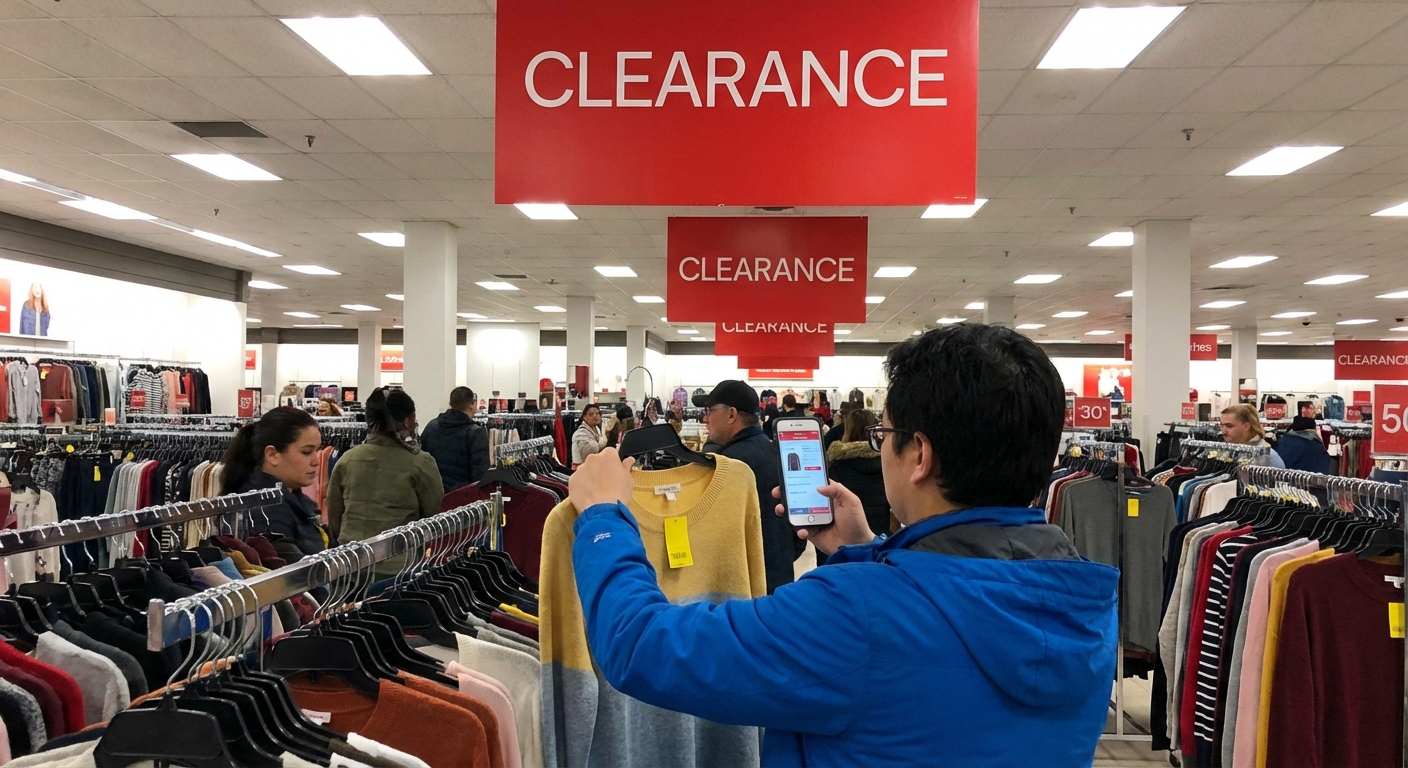
Guide to Lowe’s Clearance Deals and Savings
paint, I accidentally scanned a yellow tag and watched the price drop again at the register. That was the day I realized: Lowe’s clearance is basically a treasure hunt, and most people don’t even know the rules of the game.
This is the guide I wish I’d had before I started chasing those little orange and yellow tags.
How Lowe’s Clearance Actually Works (Not Just the Sticker)
When I first dug into Lowe’s clearance system, I thought it was just “stuff on sale.” It’s not. There are layers:
- Regular sales – weekly promos, BOGOs, advertised discounts.
- Markdowns – price reductions that happen over time as items don’t sell.
- Clearance – the “we want this gone” phase.
Lowe’s uses a mix of in-store markdowns, online-only clearance, and store-specific deals. That last part is where the gold is: what’s on clearance in your store might be full price in mine.
When I tested this by checking the same drill set in two different locations, one store had it at full price, the other had it on a bottom shelf with a yellow clearance tag for 40% off. Same SKU, totally different world.
Decoding the Price Tags (Your Secret Weapon)
In my experience, learning the price tag “language” at Lowe’s boosted my savings more than any coupon.
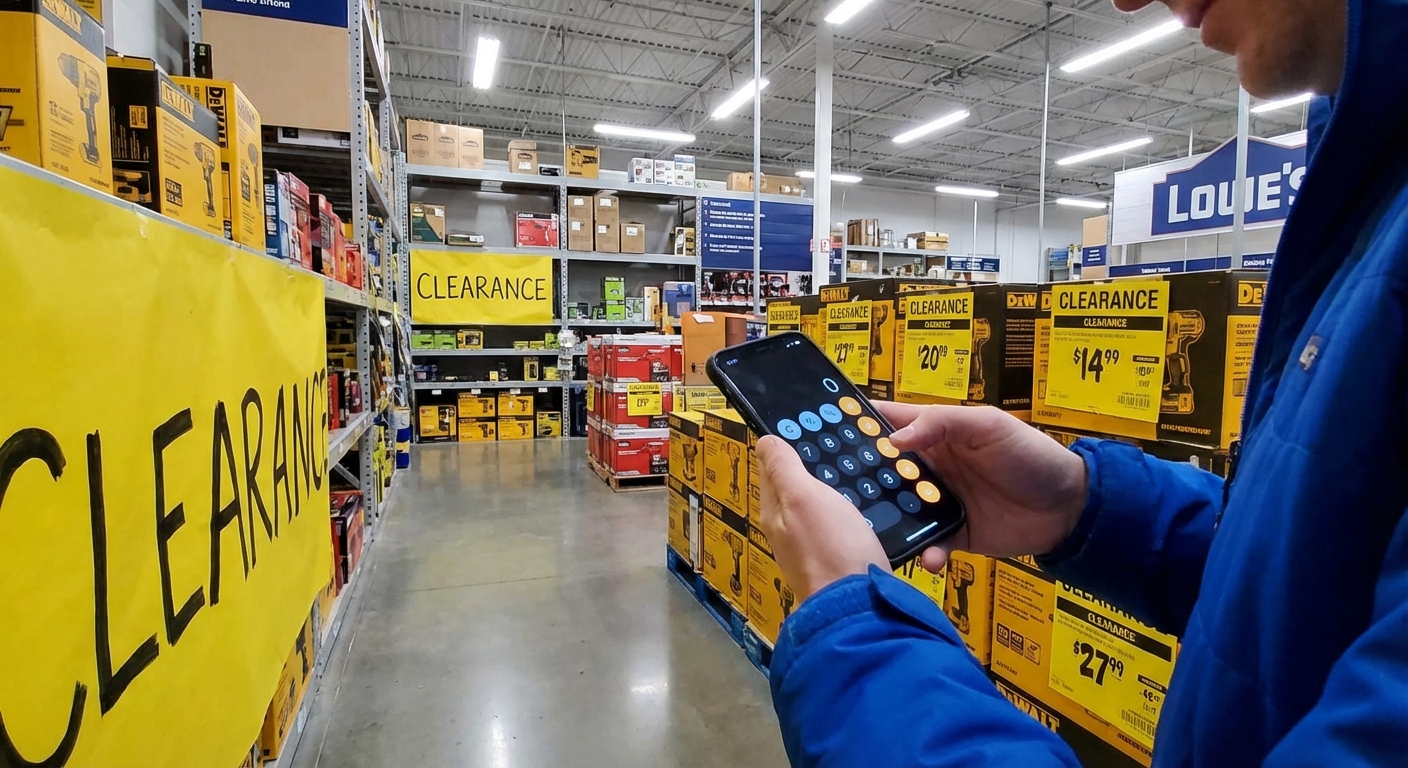
Here’s what I’ve consistently seen in multiple stores and confirmed with a couple of floor associates:
- Yellow tags usually signal clearance or markdown items.
- The price ending often hints at where the item is in its markdown life.
While Lowe’s doesn’t publish an official code chart (and it can vary by region), here’s the pattern I’ve seen over and over:
- .00 or .50 – often a final or near-final price. One associate literally told me, “If it ends in .00, we’re done with it.”
- Odd cents like .07, .08, .06 – sometimes indicate different stages of markdown, depending on the store.
- Price crossed out with a lower price below – that’s a markdown, not necessarily final, but it’s trending down.
I always check the “was” price if it’s listed. I once caught a “clearance” ceiling fan that had dropped from $189 to $178. That’s… not clearance. That’s just marketing with extra steps.
Where the Best Clearance Hides in the Store
The mistake I made early on was only checking the obvious end caps. That’s where Lowe’s puts the flashy deals. The real steals? Those live in the weird, quiet corners.
Here are the clearance hot spots I consistently find money in:
1. Back-of-Aisle End Caps
Not the front-facing shiny ones. The back ends of aisles, especially near lighting, tools, and plumbing. I once found a $120 smart thermostat for $48 on a dusty back end cap, with one lonely yellow tag nobody was looking at.
2. Top Shelves and Bottom Shelves
When I started deliberately scanning very high and very low shelves, I noticed a pattern: discontinued items and stray clearance units often get shoved out of eyeline.
I recently discovered a boxed vanity light, top shelf, mislabeled. Yellow tag said $79. Online scan showed $39. The associate did a price check, shrugged, and honored the lower price.
3. Appliance Section – Scratch & Dent
If you’re flexible on “perfect condition,” scratch-and-dent appliances can be insane value. When I tested this strategy buying a washer, I got a model that retailed for around $900 for under $600 because it had a cosmetic scratch on the side that would face a wall.
Ask for the “out of box” or “open box” items and check the tags on the sides or front.
4. Seasonal Aisles
Timing matters:
- Late summer – grills, patio furniture, gardening tools.
- Post-holidays – lights, decor, inflatables.
- End of winter – space heaters, snow blowers.
I grabbed a gas grill in early September for 70% off. The associate literally said, “We need this space back for Halloween.”
Stacking the Savings: Coupons, Apps, and Timing
Clearance is great. Clearance + strategy is better.
Use the Lowe’s App Every Time
When I tested this side by side—tag price vs. app scan—the app won more than once. Sometimes the system price is lower than the printed tag.
What I do now:
- Open the Lowe’s app in-store.
- Use the barcode scanner on clearance tags.
- Compare app price to shelf price.
If the app is lower, I politely show it at checkout. I’ve never had them refuse.
Watch for 10–15% Off Events
Lowe’s periodically runs extra savings events on specific categories or for cardholders. Occasionally, clearance items still qualify for percentage-off promos.
It’s not universal, but I’ve had:
- A clearance shop vac stack with a 10% off moving coupon.
- A reduced tool set stack with a Lowe’s credit card promo for another 5% off.
Always read the fine print, but don’t assume clearance is excluded. Ask or test at checkout.
Price Match vs. Clearance
Lowe’s has an official price match policy against competitors like Home Depot and Amazon. In my experience, they usually won’t price match another store’s clearance, but they will match an in-market competitor’s regular price on an item that’s still regular price at Lowe’s.
Strategy I’ve used:
- Price match the initial purchase on a regular item.
- Watch it over a few weeks.
- If it goes clearance and you’re within the 30-day return window, return/rebuy or ask for an adjustment (results vary by manager).
Online vs In-Store: Two Different Clearance Universes
This was a big surprise when I tested it systematically over a couple of weekends.
Online-Only Clearance
On Lowes.com, there’s often a “Savings” or “Clearance” filter within categories. Some items are:
- Cheaper online than in-store
- Available for ship-to-home or ship-to-store only
I’ve ordered online, chosen “pick up in store,” and walked past the same item sitting on a shelf with a higher tag price.
In-Store-Only Clearance
On the flip side, the most ridiculous deals I’ve found are:
- One-off returns
- Floor models
- Discontinued store-specific stock
These often never appear online. When I tested scanning them with the app, some didn’t even show a normal product page.
Moral: you need to combine digital hunting with physical wandering.
What’s Worth Buying on Clearance (and What I Avoid)
Not every clearance item is a win. Here’s how I’ve learned to separate the “steal” from the “future regret.”
Great Clearance Targets
- Hand tools & accessories – Tape measures, pliers, drill bits. These don’t go obsolete quickly.
- Lighting & fixtures – Styles change, but if you like it, who cares if it’s “last season’s” pendant light?
- Storage & organization – Shelving, bins, garage racks. Functional is functional.
- Outdoor & seasonal – If you can store it until next year, you’ll usually save big.
Things I’m Cautious About
- Smart home gadgets – Tech ages fast. I always check: Is the app still supported? Any known security or compatibility issues?
- Power tools with short warranties – I look up warranty coverage and reviews before committing.
- Very niche items – If you don’t have an immediate or realistic use, clearance can trick you into hoarding.
I got burned once buying a “too good to pass up” obscure plumbing part set. Three years later, it’s still in my garage, silently mocking me.
Returns, Warranties, and the Fine Print
One thing I really like about Lowe’s: clearance usually follows normal return policies unless the tag explicitly says otherwise (like “Final Sale” or “As-is”).
What I always check:
- Condition – For open box or scratch-and-dent, I inspect like I’m buying a used car. Dents, missing parts, damaged cords.
- Paperwork – For appliances and power tools, I confirm there’s a way to register the warranty.
- Return window – The standard policy (as of my last check) is typically 90 days on most items, but some categories differ.
I’ve had a clearance faucet with a missing piece swapped out with no drama because it was still within the return period.
Realistic Pros and Cons of Chasing Lowe’s Clearance
I’m not going to pretend this is all upside. Clearance hunting is fun, but it’s not magic.
The Upsides
- Huge discounts – 50–75% off is not rare if you’re patient and flexible.
- Upgrading for less – I’ve replaced “good enough” items at home with “actually nice” ones because clearance made it affordable.
- Discovering quality brands – I’ve tried higher-end hardware and lighting I never would’ve paid full price for.
The Downsides
- Inconsistent stock – You can’t count on finding the exact thing you want on clearance.
- Time investment – The best deals come when you’re willing to wander, scan, and compare.
- Risk of buying junk – Clearance can nudge you into buying stuff just because it’s cheap. I’ve done it. More than once.
The way I keep myself honest now: if I wouldn’t consider it at 20–30% off, I won’t buy it at 70% off.
Simple Game Plan to Start Scoring Lowe’s Clearance Deals
If you’re just starting, here’s a quick strategy that’s worked well for me:
- Pick one or two target categories – Tools, lighting, or outdoor.
- Do one focused lap – Back end caps, top/bottom shelves, seasonal aisles.
- Scan every interesting yellow tag with the app – Check if the price is lower in system.
- Look up reviews on your phone – Don’t guess on quality.
- Walk away once – If you’re unsure, leave it, finish the rest of your list, then circle back. If it’s gone, it wasn’t meant to be.
When I started following that routine instead of impulse grabbing everything “cheap,” my savings went up and my regrets went way down.
If you treat Lowe’s clearance like a system instead of a random surprise, you’ll start seeing patterns—and that’s when it gets fun.
Sources
- Lowe’s Official Savings and Promotions - Current deals, promotions, and savings programs
- Lowe’s Price Promise (Official Policy) - Details on price matching and adjustments
- Consumer Reports: How to Get the Best Deals on Appliances - Expert guidance on timing and negotiating appliance discounts
- Federal Trade Commission – Advertising and Pricing Basics - Rules and guidelines for retail pricing and markdowns
- U.S. Bureau of Labor Statistics – Consumer Spending on Household Furnishings & Equipment - Data on home-related consumer spending trends