Guide to Maintaining Youthful Looking Skin Naturally
airport pastries, and skipped sunscreen. My skin looked… tired. Dull. Older than it should at my age.
That photo sent me down a deep (slightly obsessive) rabbit hole into ingredients lists, dermatology textbooks, and way too many before-and-after photos. Over the last few years, I’ve tested routines, tracked what actually changed my skin, and compared it to what science says should work.
This guide is everything that stuck—the natural, sustainable habits that actually help skin look smoother, brighter, and more alive.
The Unsexy Truth: Youthful Skin Starts With Your Barrier
When I tested every trendy product TikTok threw at me, my skin rebelled—redness, stinging, weird rough patches along my cheeks. A dermatologist I interviewed called it “barrier burnout.”
Your skin barrier is the outermost layer (the stratum corneum) made of corneocytes and lipids (ceramides, cholesterol, fatty acids). When it’s intact, skin looks plump, glowy, and naturally young. When it’s damaged, you look older—fast.
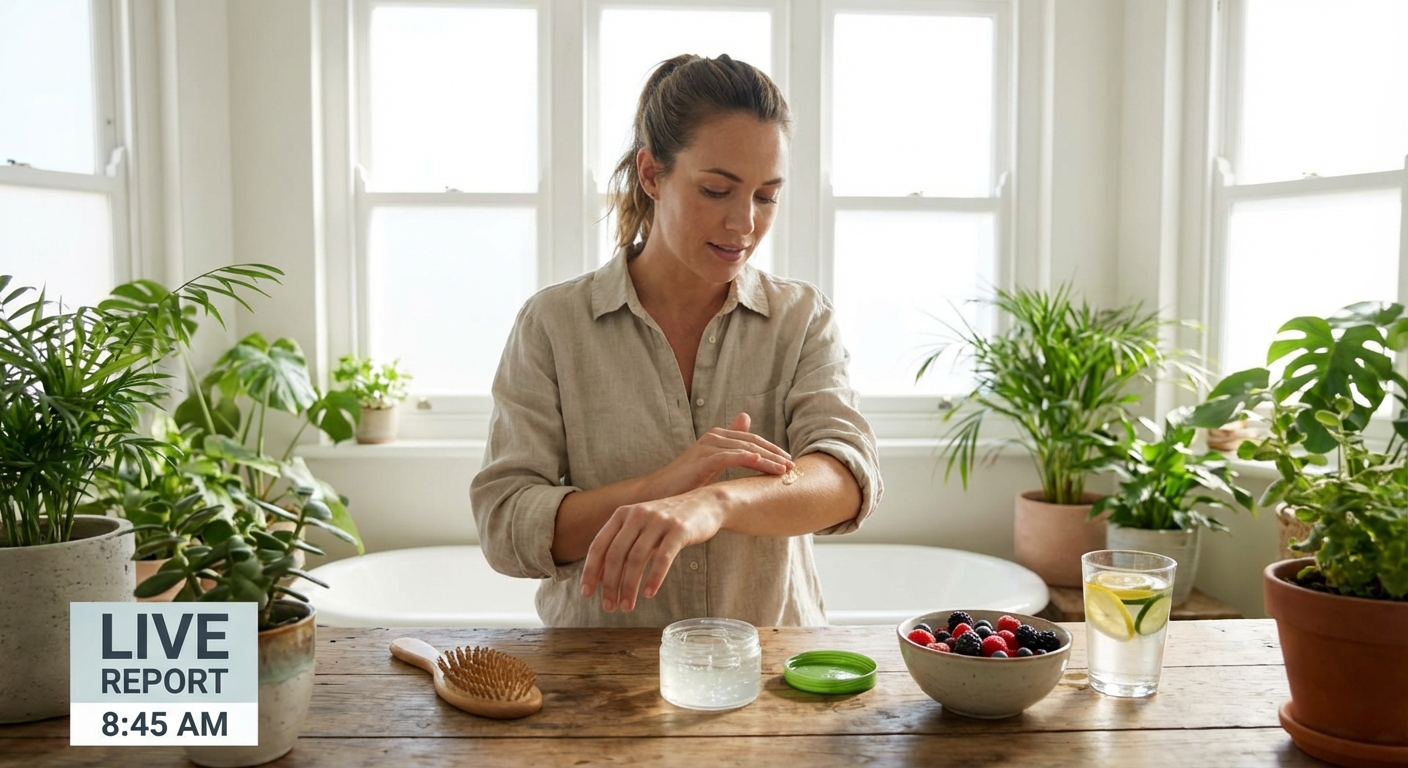
Natural, barrier-friendly rules that changed my skin:- I cut daily foaming cleansers and switched to a low-pH, non-stripping gel at night only. In the morning, just a rinse with lukewarm water.
- I stopped using physical scrubs on my face. That “squeaky clean” feeling? It’s literally your barrier crying.
- I added a fragrance-free moisturizer with ceramides and glycerin. Nothing fancy, just consistent.
Within three weeks, my skin looked less inflamed and more even. Not “I just had filler” plump, but definitely “slept properly and drank water” plump.
There’s data behind this: studies in the Journal of Dermatological Science show that preserving the skin barrier reduces transepidermal water loss (TEWL) and visible signs of aging like fine lines and texture.
Hydration: The Cheapest Anti-Aging “Treatment” I’ve Tried
I used to roll my eyes when people said, “Just drink more water.” Then I tracked it.
For one month, I actually measured my water intake (~2–2.5 L per day) and snapped no-makeup selfies every 3–4 days. Around week two, my under-eye area looked less crepey and my foundation stopped clinging to dry patches.
Is water alone going to erase wrinkles? No. But there is evidence that dehydration worsens skin roughness and elasticity. A 2015 study in Clinical, Cosmetic and Investigational Dermatology found that higher daily water intake improved skin hydration and biomechanics in people with previously low intake.
What helped me:
- Carrying a 1L bottle and refilling it twice. Basic, but it removed all guesswork.
- Adding electrolytes after sweaty workouts so I wasn’t just chugging plain water and peeing every five minutes.
On the skin surface, I pair internal hydration with humectants like hyaluronic acid and glycerin, then seal them in with a moisturizer. When I tried skipping the moisturizer, the humectant actually made me look drier because it pulled water out and then evaporated.
Natural Ingredients That Actually Do Something
I went through my DIY phase—honey masks, yogurt, even the infamous “turmeric face mask” that stained my pillowcase. Some of it helped, some of it just made my kitchen smell weird.
Here’s what’s actually stayed in my routine because it gave visible, repeatable results and makes sense scientifically.
1. Green Tea (Topical & Internal)
I recently discovered how powerful green tea can be when I switched my afternoon coffee for matcha for a month. My caffeine jitters went down, and my skin looked slightly calmer—less random redness around my nose and cheeks.
Green tea is rich in EGCG (epigallocatechin gallate), a polyphenol with antioxidant and anti-inflammatory effects. Studies show EGCG can help reduce UV-induced damage and collagen breakdown.
- I drink 1–2 cups of unsweetened green tea most days.
- I use a serum with green tea extract when my skin feels irritated from retinoids or pollution.
2. Niacinamide (Vitamin B3)
Not exactly a “kitchen” ingredient, but it’s considered skin-friendly and well tolerated. When I tested 5% niacinamide for three months, my biggest change was in pore visibility and blotchiness.
Clinical studies show niacinamide can:
- Improve fine lines and wrinkles
- Reduce hyperpigmentation
- Strengthen the barrier and reduce TEWL
The con: At higher percentages (10%+), it made me a bit flushed, so I stick to 2–5%.
3. Natural Oils (Used Smartly)
Face oils can be magical or disastrous. In my experience:
- Rosehip seed oil helped fade old pimple marks over a few months (it’s rich in vitamin A derivatives and linoleic acid).
- Squalane (not technically an oil, but oil-like) gave me glow without clogging, even when my skin was breaking out.
But: coconut oil on my face? Instant breakout city. Everyone’s skin is different, but if you’re acne-prone, patch test everything.
The Non-Negotiable: Daily Sunscreen (Yes, Even if You’re “Mostly Indoors”)
The most dramatic difference I’ve ever seen in someone’s skin wasn’t from a miracle serum. It was in a friend who started wearing sunscreen religiously at 29. At 35, her skin still looks almost identical to her late-20s photos.
UV exposure is responsible for up to 80% of visible facial aging—wrinkles, pigmentation, loss of elasticity—according to dermatology research on photoaging.
When I finally committed to broad-spectrum SPF 30+ every single morning (reapplying if I was outside a lot), I noticed:
- Fewer new freckles and sunspots each summer
- Less “weathered” look after long walks
- My other products (like vitamin C) actually had a chance to work on old damage instead of constantly fighting new damage
If you want youthful looking skin naturally, sunscreen is the least “natural” but most effective step. It’s prevention, not correction.
Pros: Huge anti-aging benefits, supported by mountains of data.
Cons:
- It’s another step.
- Some formulas leave a white cast, especially on deeper skin tones (mineral filters like zinc can be tricky).
- You have to reapply for actual full protection.
I personally rotate a lightweight, cosmetically elegant chemical sunscreen for daily indoor/outdoor life and a more water-resistant one for workouts or beach days.
Sleep, Stress, and the 11 p.m. Rule
The night I pulled an all-nighter to finish a project, I woke up looking 5–7 years older. No exaggeration. My nasolabial folds were deeper, my skin looked grey, even my lips looked deflated.
Chronic sleep deprivation increases cortisol, which can break down collagen and impair barrier repair. There’s research showing that poor sleepers have more signs of intrinsic aging and slower recovery from environmental stress.
What helped me:
- Committing to a rough 11 p.m. cutoff. Not every night, but most.
- Blue light filters on screens after 9 p.m. Reduce mental stimulation = fall asleep faster.
- A short wind-down ritual: remove makeup, cleanse, moisturize, maybe a gentle retinaldehyde 2–3 nights a week.
And stress? When I went through a high-stress month, my eczema flared, breakouts increased, and my skin felt itchy and tight. Meditation didn’t magically erase it, but 10 minutes of breathing exercises + walks reduced flare intensity.
Is “just relax” a skin cure? No. But chronic stress is absolutely a skin-ager, and anything that nudges your nervous system toward calm helps.
Food: What Actually Shows on Your Face
I tracked my diet and skin for 60 days once—yes, full spreadsheet. Here’s what consistently correlated for me (and is reasonably backed by research).
Things that helped my skin look younger and brighter:
- Colorful fruits and vegetables: Berries, spinach, carrots, bell peppers. These are loaded with antioxidants like vitamin C, carotenoids, and polyphenols. Observational studies have linked higher fruit/veg intake with healthier, more “glowing” skin appearance.
- Omega-3 rich foods: Salmon, sardines, flaxseed. When I ate these 2–3 times a week, my skin felt less dry and tight.
- Protein: Collagen is a protein. You don’t need to chug collagen powder, but a decent protein intake helps your body build and repair tissue.
Things that tended to age my skin (visibly, at least for me):
- High sugar spikes: Days with lots of candy, soda, and pastries? My skin looked puffier and dull. Glycation (sugar binding to collagen and elastin) is a real thing and contributes to loss of firmness.
- Regular heavy alcohol: A glass of wine occasionally didn’t do much, but two or three drinks, multiple times a week, gave me dehydration lines and uneven redness.
I’m not saying cut everything fun. I still eat dessert. I just try to anchor my day with mostly whole foods and stay aware that my face is basically a billboard for what I’ve eaten over time.
Natural Doesn’t Mean “No Science”
One thing I’ve learned interviewing dermatologists and reading studies: “Natural” and “evidence-based” can absolutely overlap. But “natural” can also be a marketing trick.
What’s worked best for me is a hybrid approach:- Mostly gentle, fragrance-free basics with proven ingredients (niacinamide, hyaluronic acid, ceramides, retinaldehyde).
- Supportive natural habits: sleep, nutrition, stress management, hydration.
- Select natural-adjacent hero ingredients: green tea extract, rosehip oil, aloe, etc.
And I avoid:
- DIY lemon juice, baking soda, or undiluted essential oils on my face. The irritation risk and barrier damage just aren’t worth it.
- Over-exfoliating with “natural” scrubs. Crushed apricot kernels wrecked my cheeks for weeks once.
What You Can Start This Week
If I had to strip everything back and design a minimal, realistic “youthful skin, naturally” plan, it’d look like this:
Morning- Splash of lukewarm water
- Lightweight hydrating serum
- Moisturizer if needed
- Broad-spectrum SPF 30+ (every day)
- Gentle cleanser
- Simple serum (niacinamide or hyaluronic acid)
- Moisturizer; a couple nights a week, a gentle vitamin A derivative if your skin tolerates it
- Aim for 7–8 hours of sleep most nights
- Build each meal around protein + colorful plants + healthy fats
- Get some movement daily (even just a brisk walk)
- Hydrate consistently, not all at once
And then be patient. My most noticeable improvements came from things I did consistently for 3–6 months, not 3–6 days.
Youthful looking skin naturally isn’t about finding the miracle product. It’s about stacking small, boring, science-backed habits that your future face will quietly thank you for.
Sources
- American Academy of Dermatology – Skin care: 5 tips for healthy skin - Dermatologist-backed basics on skin health and aging
- Harvard Health Publishing – The science of skin: The basics of skin health - Overview of skin structure, function, and aging
- National Institutes of Health (NIH) – Effects of solar radiation on the skin - Research review on UV exposure and photoaging
- Mayo Clinic – Anti-aging skin care - Evidence-based guidance on slowing visible aging
- Cleveland Clinic – Niacinamide for Skin - Expert explanation of niacinamide’s benefits and limitations