Guide to Modern and Practical Door Design Options
A few years ago, I moved into a rental with a front door that swelled every time it rained. I had to shoulder-check it to get inside, which is funny exactly once. That experience sent me down a deep rabbit hole of door design, materials, hardware, and all the small details that quietly make or break how a home feels.
Since then, I’ve helped friends (and a few design clients) pick doors for renovations and new builds, and I’ve tested more configurations than I care to admit. This guide is what I wish I’d had at the beginning: modern, practical options that don’t just look nice on Pinterest but actually work in real life.
Start with the Big Three: Function, Style, Budget
When I walk into a project now, I always ask three questions before anyone starts scrolling inspiration photos:
- What does this door actually need to do? (Privacy? Security? Space-saving? Light?)
- What’s the architectural style of the home? (Mid-century? Farmhouse? Urban loft?)
- What’s the realistic budget per door, including hardware and installation?
In my experience, getting clear on those three prevents 90% of regret purchases. For example, a gorgeous full-glass pivot door is amazing… until you realize it faces west, bakes your entryway, and costs more than your appliances.
Material Matters: Wood, Fiberglass, Steel, and Aluminum
When I tested different materials for an exterior reno, I was shocked at how different they feel and age.
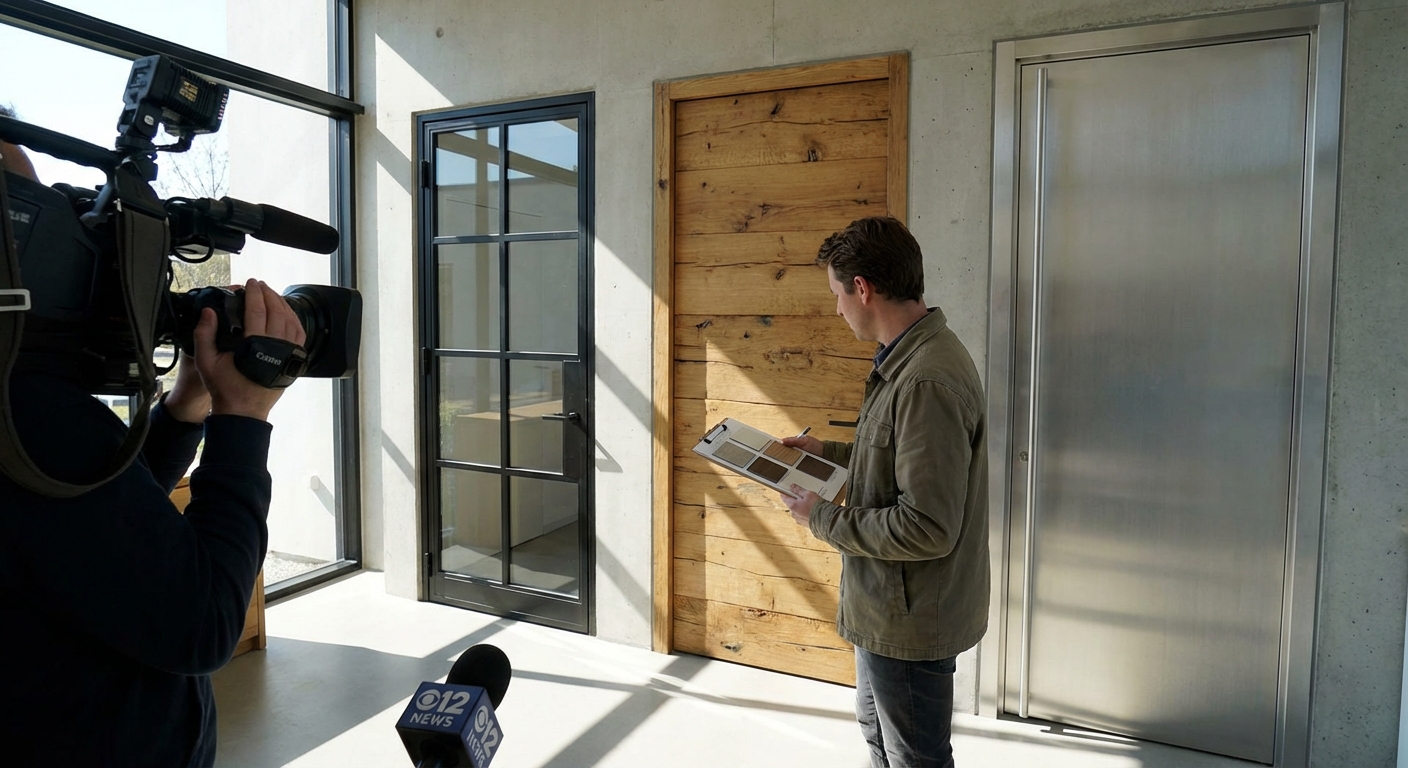
Solid Wood Doors
I love the warmth and character of a solid wood door. The grain, the weight, that solid thunk when it closes—it’s hard to beat.
- Visually rich and timeless
- Easy to sand, stain, or repaint
- Can be custom-carved or detailed for high-end projects
- Can warp, swell, or crack with humidity if not properly sealed
- Needs more maintenance (repainting/resealing every few years in harsh climates)
- Often more expensive than other options
If you’re going wood, species matters. I’ve had the best luck with mahogany and oak outdoors, and I keep softer woods (like pine) for interior doors only.
Fiberglass Doors
I used to turn my nose up at fiberglass until I installed one on a client’s beach house. Zero warping, no swelling, and the faux-wood grain was convincing from even a few feet away.
Pros:- Highly resistant to moisture and warping
- Good insulation and energy efficiency
- Can mimic wood or go sleek and modern
- Cheap versions can look…cheap
- Repairs can be trickier than patching wood
- Still not as “authentic” in feel as solid wood
Fiberglass is a sweet spot for many modern homes—especially in climates with big temperature swings.
Steel and Aluminum Doors
Steel and aluminum are having a moment in modern design, especially with large glass inserts.
Pros:- Very secure (especially steel)
- Excellent for narrow sightlines and industrial/modern looks
- Low maintenance, especially powder-coated finishes
- Can dent, and deep dents are hard to fix
- Poor insulation if you cheap out on the core
- Can feel cold or harsh in some interior settings
For front doors, I usually recommend steel with a foam-insulated core if security and energy efficiency are top priorities.
Modern Door Styles That Actually Work in Real Homes
Let’s get into the fun part: style and operation. Here’s what I’ve seen work well in real projects—not just magazine shoots.
1. Clean-Lined Slab Doors
When I renovated my own hallway, I swapped out fussy panel doors for simple flush slabs. It instantly made the space feel taller and calmer.
These doors are basically flat planes with minimal detailing, perfect for modern and Scandinavian-inspired interiors.
Why they’re practical:- Easy to clean (no grooves to collect dust)
- Inexpensive in hollow-core versions, luxurious in solid-core
- Can disappear into the wall if painted the same color
- Cheap hollow-core slabs don’t insulate sound well. For bedrooms and offices, I strongly prefer solid-core.
2. Glass and Glazed Doors
I recently replaced a solid kitchen door with a glazed one, and it changed the entire mood. Suddenly the hallway wasn’t a black hole anymore.
Best uses:- Interior doors between dark halls and living spaces
- Home offices (frosted or reeded glass for privacy)
- Back doors opening to gardens or patios
- Clear glass for maximum light
- Frosted or etched for semi-privacy
- Reeded or fluted glass for a very on-trend, softly blurred look
Just remember: more glass = more cleaning. If you have kids or pets, you’ll see fingerprints. Constantly.
3. Sliding Barn Doors (But Done Right)
I’ve had a love-hate relationship with barn doors. They can look great and save space, but I’ve also stayed in Airbnbs where the bathroom barn door… didn’t quite close. Awkward.
Pros:- Space-saving—no swing arc
- Adds a strong design statement
- Relatively easy retrofit in renos
- Poor sound and smell insulation (not great for bathrooms)
- Needs wall space beside the opening
- Tracks and hardware can rattle if not installed well
When I use barn doors now, it’s usually for laundry rooms, pantries, or closets—places where full privacy isn’t critical.
4. Pocket Doors
Pocket doors are the quiet heroes of small spaces. I put them in a narrow ensuite once, and it made the layout work without weird compromises.
Great for:- Small bathrooms
- Walk-in closets
- Between kitchen and dining where you sometimes want separation
- More expensive and complex to install (walls must accommodate the pocket)
- Future plumbing/electrical changes inside that wall are trickier
- Cheap pocket hardware leads to doors that wobble and stick
If you go this route, spend more on a high-quality pocket frame and soft-close mechanism. It’s worth every cent.
5. Pivot Doors
I recently tested a pivot door setup in a contemporary project, and it was absolutely stunning—but not for every house.
The door pivots on an offset hinge at the top and bottom instead of swinging on a side hinge. It feels very high-end and sculptural.
Pros:- Allows for extra-wide openings with dramatic presence
- Smooth operation if you use good-quality hardware
- Great for minimalist or luxe modern façades
- More air leakage than a traditional hinged door, in many cases
- More complex installation and adjustment
- Usually more expensive, especially with floor closers
For a typical suburban home, I consider pivot doors a “nice-to-have statement,” not a default.
Don’t Sleep on Hardware: Handles, Hinges, and Hidden Tech
When I started paying attention to hardware, everything changed. A basic door with great hardware often looks more expensive than a fancy door with cheap hardware.
Handles & Levers
- Levers are more ergonomic (and more accessible for kids, older adults, or anyone with mobility issues).
- Knobs can feel more traditional or cottage-like.
I’ve had good luck with brands like Schlage and Emtek in mid-range budgets: solid feel, good finishes, and decent warranties.
Hinges & Closers
Soft-close and self-closing hinges sound like a luxury, but in high-traffic areas—they’re sanity savers. On heavy doors, I always spec ball-bearing hinges for smoother movement.
Smart Locks & Access
I tested a few smart lock systems on my own front door before recommending them. Here’s what I’ve learned:
Pros:- Keyless entry and temporary codes (great for guests or cleaners)
- Some models integrate with security systems and cameras
- Activity logs can add a layer of peace of mind
- Batteries die, and they will die at the worst time if you ignore warnings
- Some early models had security concerns; stick to reputable brands
- You still need to maintain good physical security (solid frame, strike plate, and deadbolt)
Look for locks certified to ANSI/BHMA Grade 1 or 2 for residential security.
Practical Considerations People Often Forget
There are a few details I now obsess over after messing them up once.
1. Soundproofing
If you have kids, teenagers, musicians, or work from home, solid-core interior doors are a game-changer. Paired with good seals, they dramatically reduce noise transfer.
2. Energy Efficiency
For exterior doors, check the U-factor and R-value, just like windows. The U.S. Department of Energy has found that doors with poor insulation can noticeably impact heating and cooling costs.
My rule: if you can feel a draft when the door is closed, you’re basically paying to heat the outdoors.
3. Thresholds and Accessibility
I once chose a beautiful but tall threshold for a client’s entrance… then watched their elderly parent struggle with it. Since then, I pay more attention to:
- Low-profile thresholds
- Smooth transitions between flooring types
- Door clear widths that work with mobility aids
Checking local building codes and universal design guidelines is worth the five-minute Google search.
Balancing Style, Durability, and Real Life
In my experience, the best modern door design isn’t about chasing trends—it’s about matching how you actually live.
If I had to sum up my go-to combos:
- Front door: Insulated fiberglass or steel, solid hardware, maybe a sidelight for daylight.
- Bedrooms and offices: Solid-core flush or simple panel doors with quality levers.
- Bathrooms: Swing or pocket doors, never barn doors if privacy matters.
- Transitions and pantries: Sliding or barn doors where space is tight and sound isn’t critical.
The goal isn’t perfection—it’s choosing doors that will still feel good and work well five or ten years from now, when the trend photos have long scrolled past.
Sources
- U.S. Department of Energy – Energy-Efficient Doors - Guidance on materials, insulation, and performance ratings for doors.
- Consumer Reports – Buying Guide: Entry Doors - Independent testing and comparisons of fiberglass, steel, and wood doors.
- This Old House – All About Front Doors - Practical breakdown of styles, materials, and installation tips.
- Schlage – ANSI/BHMA Lock Security Grades Explained - Overview of lock grading and what it means for home security.
- Harvard University – Joint Center for Housing Studies: Remodeling Trends - Research on U.S. housing and renovation patterns, including spending on exterior replacements.