Guide to Modern Bungalow Layouts and Features
go, and it honestly flipped my script. The place felt airy, smart, and insanely livable. Since then, I’ve toured, tested, and helped write plans for more bungalows than I’d like to admit, and modern layouts are on a completely different level.
If you’re dreaming about a one-story home that doesn’t feel cramped or dated, modern bungalows are a sweet spot: compact but not tiny, cozy but not cluttered, efficient but still stylish.
Let me walk you through what actually works, what doesn’t, and which features are worth budgeting for.
What Makes a Bungalow “Modern” Now?
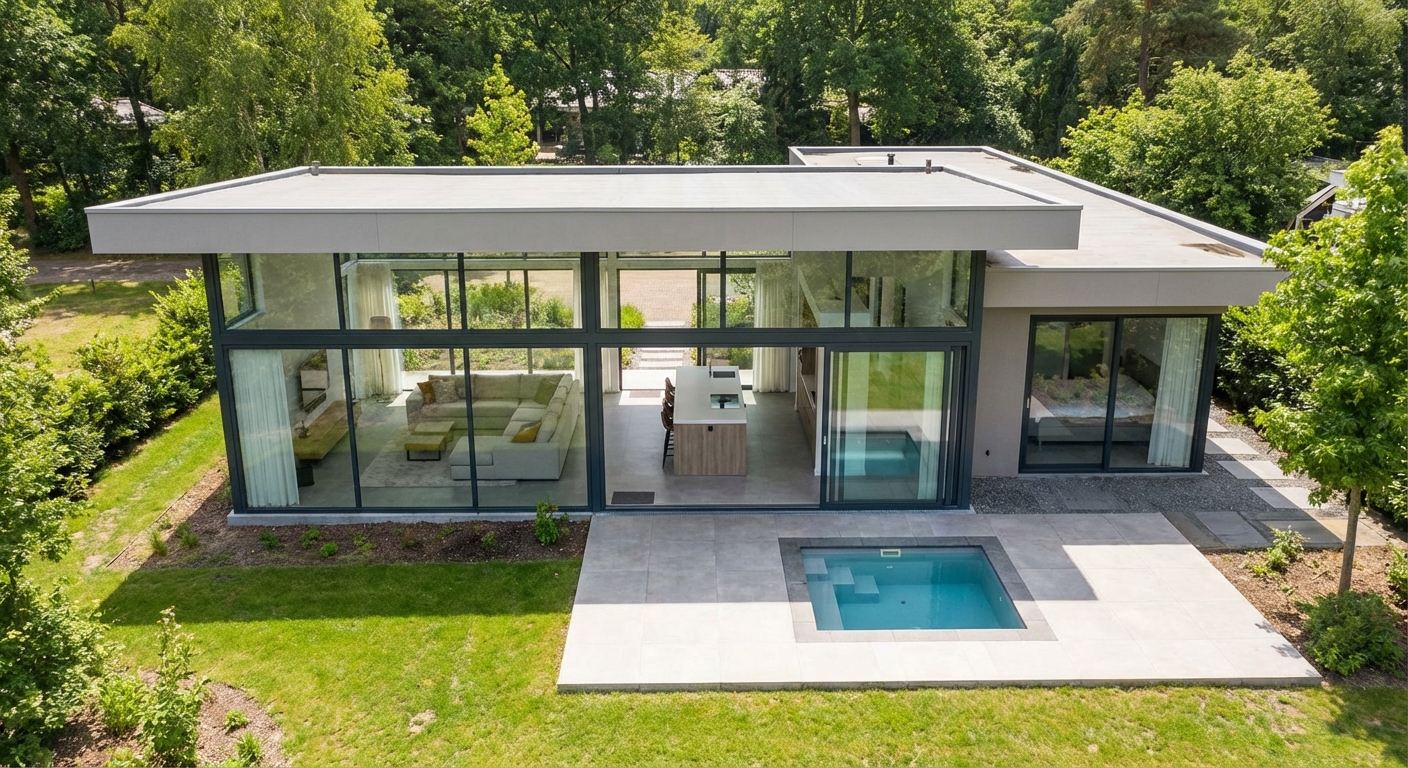
When I say modern bungalow, I’m not talking about some cold, glass box. I’m talking about a classic single-story footprint reimagined with:
- Open-but-zoned layouts (spaces that flow, but still feel defined)
- Smarter storage (so the small footprint doesn’t feel small)
- Energy efficiency baked into the design, not slapped on later
- Indoor–outdoor living that doesn’t require a giant yard
When I tested different layouts with a designer using 3D modeling (SketchUp, if you’re curious), the biggest surprise was how much difference circulation made. A 1,400 sq ft bungalow can feel massive or microscopic depending on how you move through it.
The Core Layout Types I See Over and Over
1. The Classic Front-Porch Bungalow… Upgraded
This is the traditional layout most of us picture: porch, front door into living room, then dining, then kitchen. The modern twist is knocking down a few walls.
- Deep front porch → entry zone with a console/bench
- Living room at the front with a clear line of sight to the kitchen
- Kitchen pushed to the back with access to a deck or patio
In my experience, this layout feels familiar and welcoming. You walk straight into “home” energy – sofa, maybe a fireplace (or an electric insert), and natural light from the street.
Watch out for:- Noise at the front: If you’re on a busy road, front-facing living spaces can be loud.
- Privacy: I once stayed in a bungalow where strangers on the sidewalk could basically see what was for dinner. Frosted side windows and smart window treatments help a lot.
2. The Central Great Room Layout
This is the layout I recommend most to people who entertain or have young kids.
Typical flow:- Entry hall or mudroom on the side
- Big central great room (living + dining + kitchen)
- Bedrooms grouped on one or both ends of the house
When I stayed in an Airbnb with this setup, it was ridiculously easy to keep an eye on everyone while cooking. No disappearing kids, no feeling cut off from guests.
Pros:- Super social; everyone gravitates to the middle
- Fewer hallways = more usable square footage
- Natural light can enter from both sides if you plan glazing well
- Noise travels. If you’re a light sleeper and someone’s making a 10 p.m. snack, you’ll know.
- Cooking smells linger if you skimp on ventilation.
3. Split-Bedroom Bungalow Layout
I first discovered this while researching aging-in-place floor plans. Instead of clustering all bedrooms together, the primary suite sits on one side and secondary bedrooms (or an office/guest room) on the other.
Why people love it:- Privacy for parents, guests, or anyone working from home
- Great for multigenerational living
- If you’ve got very young kids, some parents don’t love being separated at night
- You’ll likely need a slightly wider footprint, which can be an issue on narrow lots
Key Features That Make a Modern Bungalow Actually Work
Open Concept… But Not Chaos
The best bungalows I’ve seen use partial openness:
- A half wall or wide cased opening between living and dining
- Kitchen islands that act like visual and functional boundaries
- Slight ceiling height changes (say 9’ in living, 8’ in bedrooms) to signal different zones
When I tested a fully open layout in one renovation, we ended up adding a slatted wood divider near the entry after six months. It instantly made the living room feel calmer and created a mini foyer without losing light.
Smart Storage That Saves the Floor Plan
With a single-story footprint, every square foot matters. The difference between cluttered and streamlined often comes down to:
- Built-in mudroom wall: Even a 4–5 foot stretch with hooks, cubbies, and a bench can replace a full coat closet.
- Deep pantry cabinets or a slide-out pantry: In one 1,200 sq ft bungalow I toured, a 12-inch-deep slide-out pantry held an entire family’s dry goods.
- Attic access: I underestimated this once. Without it, seasonal decor and luggage ended up dominating closets.
Professional builders and designers talk a lot about storage ratios – aiming for at least 10–15% of total square footage as dedicated storage. In a bungalow, hitting that number is a game-changer.
Natural Light: The Secret Weapon
A modern bungalow can’t lean on tall volumes like a two-story house, so windows do the heavy lifting.
What’s worked best when I’ve walked real homes and tested floor plans:
- Corner windows in living areas – they pull in light from two directions and visually widen the space.
- Transom windows over beds or along hallways – light without sacrificing privacy.
- Glass doors (with good insulation) to a patio or deck from the kitchen or dining area.
If you’re in a hot climate, be careful: huge west-facing glass can roast a small bungalow. Overhangs, exterior shades, or low solar-gain glass are worth serious consideration.
Energy Efficiency Baked into the Design
Modern bungalows are naturally efficient because of their compact envelope. But I’ve seen builders ruin that advantage with poor windows or almost no insulation.
When I dug into data from the U.S. Department of Energy, single-story homes generally lose more heat through the roof, while multi-story homes lose more through walls. That makes roof insulation and air sealing extra critical for bungalows.
What’s been consistently worth the money in real projects I’ve followed or lived in:
- High-performance windows (double or triple glazed, low-e)
- Insulated slab or crawlspace to reduce cold floors
- Heat pump systems instead of older HVAC setups
Yes, it costs more upfront, but utility savings + comfort typically justify it over the long term. Energy Star–rated homes and appliances give you hard numbers to compare.
Indoor–Outdoor Flow on a Modest Lot
Not everyone has a half-acre backyard, and that’s fine. Some of the most inspiring bungalows I’ve toured squeezed amazing outdoor living into tight spaces.
Smart moves I’ve seen work repeatedly:
- Aligning the kitchen or dining room with a patio slider or French doors
- Using a side yard as a narrow but lush outdoor dining zone
- Adding a small covered patio as an “extra room” for three seasons
When I tested living in a smaller bungalow with a generously sized covered deck, it genuinely felt like we’d added another living room about eight months of the year.
Pros and Cons of Modern Bungalows (From Living in Them)
What I love:- Aging in place potential: No stairs. If you’re thinking long-term, that’s huge.
- Easier maintenance: Cleaning, repairs, and upgrades are simpler on one level.
- Cozy, not cavernous: There’s something psychologically comforting about having everything reachable without hiking a hallway marathon.
- Lot size: You typically need a wider lot than a two-story home with the same square footage.
- Privacy and noise: With bedrooms all on one level, sound isolation matters. Solid-core doors and soft finishes (rugs, curtains) help more than people expect.
- Resale expectations: In some markets, two-story homes still command higher prices for the same square footage. It’s very local – I’ve seen the opposite in communities that value accessibility.
Design Moves That Make a Bungalow Feel Bigger Than It Is
These are the specific tricks I’ve seen work over and over when I’ve walked finished homes versus just staring at floor plans:
- Raise ceilings strategically: 9–10 ft in main living spaces makes a 1,300 sq ft home feel far more generous.
- Run flooring continuously: One material through living, dining, and kitchen visually expands the space.
- Limit bedroom count: Three well-sized bedrooms beat four tiny ones in a bungalow every time.
- Align views: Standing at your front door, you ideally see out to a window or glass door, not just a wall.
When I helped a friend refine her builder’s stock bungalow plan, we removed a hallway, widened the great room, and stole 18 inches from a rarely used spare bedroom to enlarge the living area. On paper it looked minor; in reality, it felt like a different house.
When a Modern Bungalow Isn’t the Right Choice
I’m biased toward bungalows, but they’re not magic.
Based on what I’ve seen and lived:
- If you have zero side yard and strict setback rules, fitting a decent layout on one level might be painful.
- If your family needs clear separation of living stages (loud teens vs. work-from-home parent), stacked levels can keep everyone saner.
- If you’re in a region where land is expensive but vertical building is cheap, a bungalow may cost noticeably more per usable square foot.
That said, whenever someone tells me they’re tired of stairs, want a tighter, more efficient home, and care about flow and light more than raw size, a modern bungalow almost always ends up on their shortlist.
Final Thought: Test the Flow, Not Just the Floor Plan
If you’re building or buying, here’s the most practical thing I’ve done: print the floor plan, grab a pen, and literally trace your daily routes.
- Coming home with groceries – where do you walk?
- Getting a glass of water at 2 a.m. – how many doors and corners?
- Hosting six friends – where are people standing, sitting, and moving?
Whenever I’ve done this with clients or friends, weak spots jump out fast: tight corners by the fridge, no landing space near the entry, bedrooms you have to walk through the living room to reach.
Modern bungalow layouts shine when that day-to-day flow feels calm and intuitive. If you get that part right – with good light, thoughtful storage, and a bit of indoor–outdoor magic – you’ll stop thinking about square footage and just start enjoying the way you live.
Sources
- U.S. Department of Energy – Energy Saver: Your Home - Guidance on residential energy efficiency and building envelope strategies.
- National Association of Home Builders (NAHB) – Home Design Trends - Data and insights on modern home layouts and buyer preferences.
- Harvard Joint Center for Housing Studies – Housing America's Older Adults - Research on aging in place and single-level living.
- U.S. Environmental Protection Agency – ENERGY STAR New Homes - Standards and benefits of energy-efficient home construction.
- Architectural Digest – Inside Stylish Bungalows Around the World - Design examples and context for bungalow architecture.