Guide to Multi Functional Power Tool Features
that mostly just redistributed dust. Then I bought my first multi functional power tool — a compact oscillating tool with a bag of mysterious attachments — and everything changed.
When I tested this thing on a small bathroom remodel, I realized I’d been working way too hard for years. But I also learned, sometimes the painful way, that the marketing hype doesn’t always match real‑world performance.
This guide is exactly what I wish I’d had before I spent money: a straight‑talk, hands‑on breakdown of multi functional power tool features that are actually useful, and which ones are just shiny extras.
What Exactly Is a Multi Functional Power Tool?
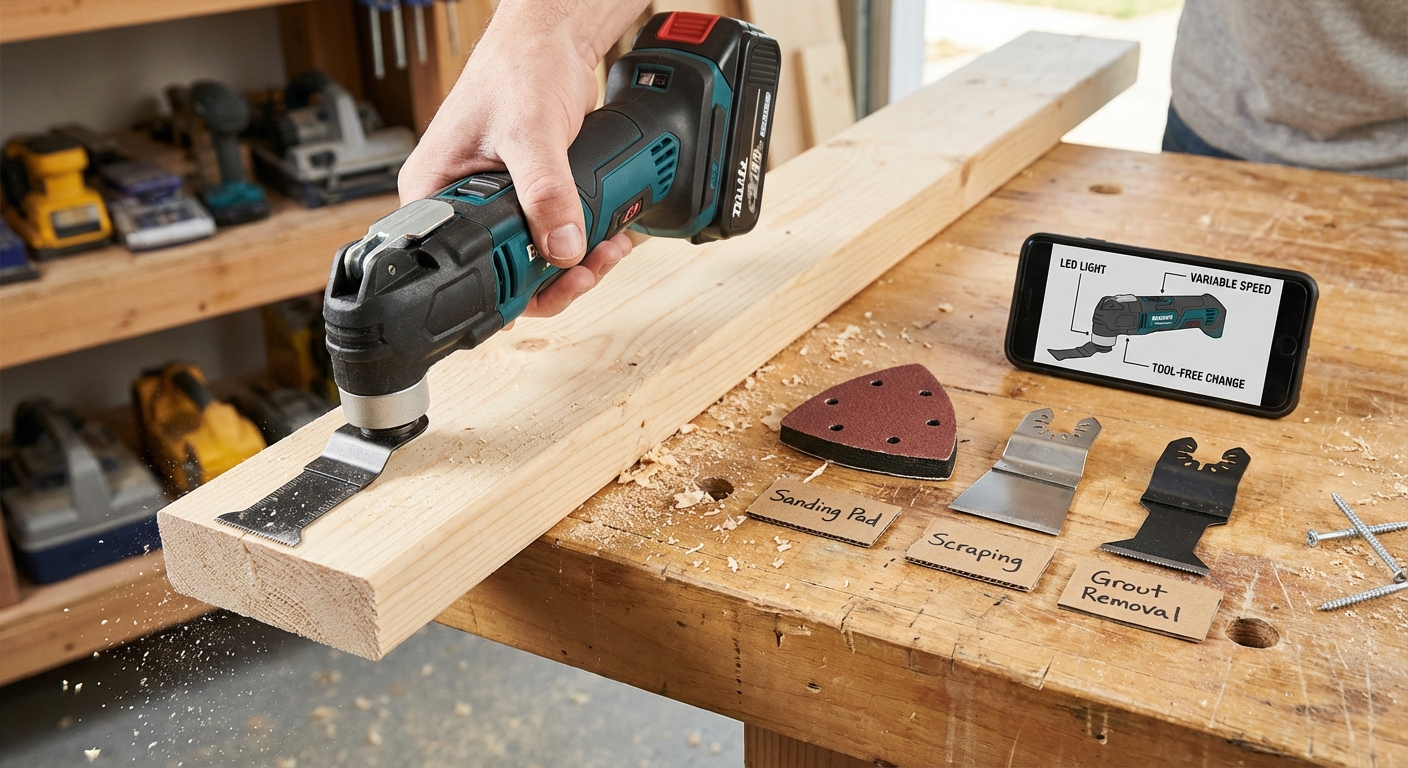
I’m talking mainly about oscillating multi tools — the compact, handheld tools that accept a bunch of different attachments: cutting blades, scrapers, sanding pads, grout removers, and more.
They work by oscillating (swinging) a small angle side to side at a very high rate, usually between about 10,000 and 20,000 OPM (oscillations per minute). That small arc is what gives you control in tight spaces without the kickback you get from a circular saw or angle grinder.
You’ll also see multi‑function tools in the rotary category (like a Dremel) and some drill/driver combos, but for Home & Garden projects, the oscillating multi tool is the real MVP.
Core Features That Actually Matter
1. Power: Amps, Volts, and What They Really Mean
When I first shopped for one, I made the rookie mistake of obsessing over numbers without context.
- Corded tools are usually rated in amps (A). A 2.5–4.0 amp corded oscillating tool is standard for homeowner use. When I tested a 2.3A budget model against a 3.5A pro‑grade one on cutting door jambs, the difference in speed and bog‑down was dramatic.
- Cordless tools are rated by voltage (18V or 20V max are common). The voltage tells you the potential power, but the battery’s amp‑hours (Ah) tell you how long it’ll run.
In my experience, if you’re doing:
- Occasional DIY (small repairs, one room at a time) – 18V/20V cordless or 2.5–3A corded is fine.
- Heavy remodeling (cutting lots of studs, subfloor, trim) – go for a 3.5–4A corded or a high‑end brushless 18V on a good battery platform.
2. Variable Speed Control (and When You Need It)
Most decent multi tools now have a variable speed dial or trigger. The range is usually something like 10,000–22,000 OPM.
Here’s how I actually use it:
- Low to medium speeds (1–3 on the dial): sanding, scraping paint or adhesive, cutting plastics, and anything where you want control more than brute force.
- Medium to high speeds (4–6): cutting wood, metal, drywall, and grout where you want efficiency.
When I tested scraping old linoleum glue, running the tool at max speed just heated the glue and clogged the pad. Dropping to medium let the scraper actually bite in.
If a tool doesn’t have variable speed, I’d personally skip it. You’ll either burn through blades or chew up surfaces.
3. Tool‑Free Accessory Change Systems
The first multi tool I owned required an Allen wrench to swap blades. I lost the wrench on day two. That tool spent the next six months in a drawer.
Modern tools from brands like Bosch, Fein, and DeWalt usually have tool‑free blade change systems — levers, clamps, or star‑shaped mounts.
In my experience, key differences:
- Lever‑lock systems (DeWalt, Milwaukee): super fast, easy with gloves, great when you’re swapping between sanding and cutting every few minutes.
- Starlock mounts (Bosch/Fein system): very positive engagement, less slippage, and you can actually press pretty hard without the blade shifting.
The catch? Some proprietary systems don’t play perfectly with off‑brand blades. I once bought a cheap 20‑pack of blades online and half of them needed “persuasion” to fit a Starlock‑compatible mount.
4. Oscillation Angle (That Tiny Number That Changes Everything)
Manufacturers list the oscillation angle in degrees, often between 2.5° and 5° (total arc). It sounds nerdy, but it changes how the tool behaves:
- Smaller angle (around 3°): smoother, more controllable, better for detail sanding and precision cuts.
- Larger angle (up to 5°): more aggressive cutting and faster material removal, but also more vibration and less forgiveness.
When I trimmed oak door casings with a 5° tool, it cut like a monster but punished any tiny wobble in my hand. When I used a 3.4° model, the cut took a bit longer but looked much cleaner.
For general Home & Garden projects, a mid‑range angle (3–4°) is a nice sweet spot.
Must‑Have Attachments (and a Few Overrated Ones)
Blades and Accessories You’ll Actually Use
Based on about a decade of projects — from undercutting baseboards for new tile to carving out rotten window sills — these are the attachments that earn their keep:
- Bi‑metal plunge blades: These are my default blades. They cut wood, nails, screws, and drywall. Perfect for cutting out sections of subfloor or trimming a screw that’s proud of a joist.
- Japanese‑tooth wood blades: Razor‑sharp and fast for clean wood cuts — door jambs, baseboards, window trim. When I tested these side by side with generic wood blades, they cut almost twice as fast but also dulled faster.
- Scraper blades (rigid and flexible): Game‑changers for removing old caulk, paint drips, flooring adhesive, and even stuck vinyl tiles. I used a flexible scraper to remove a stubborn bead of silicone around a tub without gouging the enamel.
- Sanding pads and sheets: For corner sanding on window frames, stair treads, or inside cabinets, nothing beats the access. Just don’t expect it to replace a dedicated random orbit sander for big flat surfaces.
- Grout removal blades: When I re‑grouted a shower, this blade turned a nightmare job into one afternoon of noisy but efficient grinding.
Nice‑to‑Have (But Not Essential) Attachments
- Rasp attachments: Good for shaping small areas of wood or plaster, but they generate nasty dust and tend to clog.
- Polishing pads: Fun to try on metal or stone, but in my experience, a dedicated polisher does a cleaner job.
Attachments I Regret Buying
I once bought a multi‑pack that included niche specialty blades I never touched: weird contour scrapers, ultra‑narrow saws I thought I’d use for “detailed inlay work” (spoiler: I did not). Most homeowners can skip anything that doesn’t clearly relate to cutting, scraping, sanding, or grout.
Corded vs Cordless: The Real Trade‑Offs
I’ve owned both, and I still grab different ones depending on the job.
Corded Pros & Cons
Pros:- Unlimited runtime — amazing for long scraping or sanding sessions.
- Generally higher continuous power at the budget end.
- No battery management.
- The cord will catch on everything. When I undercut baseboards, I’m constantly re‑routing the cord around doorways.
- Less portable for yard and shed projects without easy outlets.
Cordless Pros & Cons
Pros:- Freedom of movement — fantastic for trimming fence posts, shed repairs, or attic work.
- Modern brushless motors and high‑capacity batteries (4.0Ah and up) can rival corded performance.
- Runtime anxiety. Cutting and grout removal chew batteries fast.
- You’re locked into a battery ecosystem. When I switched from one brand to another, it felt like changing phone chargers multiplied by 10.
If you’re already invested in a battery platform (DeWalt 20V, Milwaukee M18, Makita 18V, etc.), a cordless multi tool on that platform is usually the smartest move.
Ergonomics, Vibration, and Noise (Your Hands Will Thank You)
One thing specs rarely convey is how a tool feels over time.
When I stripped old caulk along 40 feet of baseboard, the difference between a cheap, high‑vibration tool and a better‑balanced one was the difference between “comfortable tired” and “my hand is buzzing at dinner.”
Look for:
- Rubber overmold grips that don’t feel plasticky or slippery.
- Lower vibration ratings when manufacturers list them (Fein and Bosch tend to do well here in independent tests).
- Weight balance: Pick it up (if you can in a store) and imagine holding it at arm’s length for 5–10 minutes.
Noise‑wise, multi tools can hit 100 dB or more. The U.S. CDC recommends hearing protection for prolonged exposure above 85 dB. I learned the hard way scraping tile in a small bathroom — by the end my ears were ringing. Now I default to earplugs or muffs for any job over 5 minutes.
Safety Features You Shouldn’t Ignore
I’ve been guilty of the “it’s small, how dangerous can it be?” attitude. Then I nicked a knuckle on a plunge blade and changed my tune.
Valuable safety‑related features:
- Soft start: Prevents the tool from jerking in your hand when you pull the trigger.
- Lock‑on switch: Helpful for long sanding/scraping, so you’re not death‑gripping the trigger.
- Overload protection (especially cordless): Protects both motor and battery from overheating.
From my experience:
- Always remove the battery or unplug before changing blades. I once bumped a trigger during a blade swap, and while nothing serious happened, it was uncomfortably close.
- Wear eye protection. Oscillating tools throw surprising amounts of tiny debris — especially when cutting metal or grout.
When a Multi Functional Tool Shines — and When It Doesn’t
Where It Absolutely Excels
- Tight spaces: Cutting a single floorboard against a wall, trimming shims under a door frame, or notching a cabinet to fit around plumbing.
- Surgical demolition: Instead of bashing, you can selectively remove just the rotten section of a window sill or a single tile.
- Detail work: Inside corners, near delicate surfaces, around existing trim.
One of my favorite uses: I once had to run a cable behind existing baseboards without pulling them. I used the multi tool to cut just enough drywall behind the base, snaked the cable, and patched it. No one ever noticed.
Where It’s Not the Right Tool
- Long straight cuts in sheet goods (plywood, OSB) — a circular saw or track saw is way better.
- Large sanding jobs (floors, big tabletops) — use a random orbit or belt sander.
- Thick structural metal — you’ll burn through blades quickly; an angle grinder typically wins here.
I think of my oscillating multi tool as a precision problem‑solver, not a main demolition or cutting workhorse.
How to Choose the Right Multi Functional Tool for Your Home & Garden Projects
If I were buying one today, here’s the mental checklist I’d run through:
- What platform am I on? If I already have batteries from a major brand, I’d start there. That ecosystem lock‑in can actually save money.
- How heavy are my projects? Light DIY can work fine with a mid‑range model. Full remodels or frequent use? Step up to a pro‑grade tool with better vibration control and power.
- Does it have tool‑free blade change and variable speed? Those two are non‑negotiable for me now.
- What’s in the box? I’d rather buy a bare tool plus a curated set of high‑quality blades than a giant kit of mediocre accessories.
If possible, I try to handle the tool in person. The specs got me interested, but how it felt in my hand made the long‑term difference.
Final Thoughts (From Someone Who’s Burned a Few Blades)
Multi functional power tools can be absolutely game‑changing for home and garden projects — if you understand what their features really do.
In my experience:
- The right blades and accessories matter as much as the tool itself.
- Features like variable speed, tool‑free changes, and decent ergonomics aren’t gimmicks; they’re what turn a frustrating gadget into your go‑to problem solver.
- No matter what the marketing says, it won’t replace every tool you own, but it will probably become the one you reach for when nothing else can quite do the job.
If you’ve been on the fence, start with a solid mid‑range model from a reputable brand, grab a small set of quality blades, and tackle a real project — trim a door jamb, clean out some grout, or fix that one annoying piece of trim. Once you feel what it can do, you’ll wonder how you managed your home projects without it.
Sources
- Centers for Disease Control and Prevention – Noise Levels and Hearing Protection - Guidelines on safe noise exposure, relevant to power tool use.
- Occupational Safety and Health Administration (OSHA) – Hand and Power Tools - Official U.S. government safety information for using power tools.
- Fein Power Tools – Oscillating Multi-Tools Overview - Manufacturer details and specifications on oscillating multi tools.
- Bosch Professional – Oscillating Multi-Tool Technology - Technical information on oscillation, Starlock mounts, and accessories.
- Consumer Reports – Buying Guide: Oscillating Multi-Tools - Independent testing and comparisons of multi tools and features.