Guide to Navigating Luxury Pricing at Neiman Marcus
- the prices are what they are, how the markdown cycles really work, and how seasoned shoppers quietly game the system.
Once I tested a few strategies, my relationship with Neiman Marcus (and luxury pricing in general) changed completely. I’m not spending less per item necessarily—but I’m spending way smarter, and I’m not overpaying just for the thrill of the beige shopping bag.
This guide is basically the cheat sheet I wish I’d had the first time I wandered in and almost paid full price for a pair of Louboutins.
Understanding What You’re Actually Paying For
When you see a $2,800 Saint Laurent blazer or a $5,000 Chanel bag, it’s easy to assume the brand is just marking it up for vibes. There is a status tax, but there’s more going on behind the scenes.
In my experience, luxury pricing at Neiman Marcus usually reflects a mix of:
- Brand positioning – Neiman Marcus is aspirational by design. They curate brands that protect their price integrity, which is why you won’t see endless 70% off racks of current-season Chanel.
- Wholesale vs. retail – Neiman Marcus buys most luxury brands at wholesale (often 50% of retail or less) and applies a standard retail markup. According to luxury retail analysts, high-end fashion typically carries a 2.2x–2.5x markup from wholesale to retail.
- Exclusivity and allocation – For “it” items (think limited-edition handbags, runway capsules), brands tightly control how many pieces each retailer gets. When I chatted with a sales associate in Dallas, she explained that for certain Hermès and Chanel pieces, there’s literally a waiting list of clients before the pieces hit the floor.
You’re not just paying for leather and stitches—you’re paying for scarcity, service, store experience, resale potential, and brand equity.
It doesn’t mean it’s always worth it. It means once you understand the levers, you can decide very intentionally which items deserve full price and which are worth waiting on.
The Markup Game: Full Price vs. Markdown
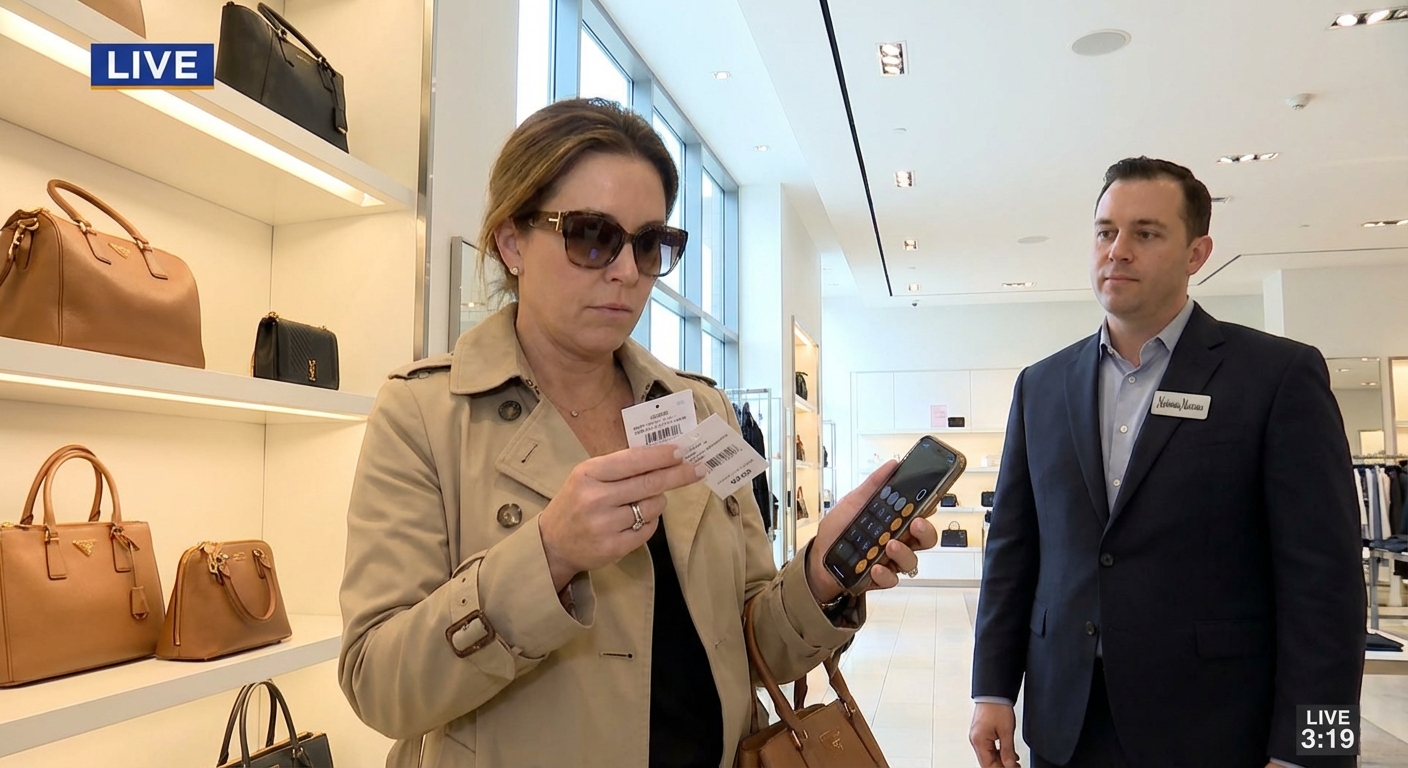
The first time I tracked a single Neiman Marcus item from full price to final sale, it was a pair of Prada slingbacks.
- Week 1: $1,120 (full price)
- Month 2: 30% off during a “Designer Sale”
- Month 3: 40% off
- Month 4: Transferred to Last Call / off-price channel and effectively 55–60% off
I didn’t end up buying them (wrong heel height), but that little experiment showed me how predictable the pricing cadence can be.
Typical markdown flow I’ve seen at Neiman Marcus for seasonal fashion:- New arrivals sit at full price for 8–12 weeks.
- First markdown is usually 25–33% off.
- Second markdown: 40–50% off, often stacked with gift cards or promo codes.
- Final clearance (online or at Last Call / off-price partners): 60–70% off equivalent.
Where it gets tricky is recognizing what won’t go on sale:
- Iconic core pieces (Chanel Classic Flap, Dior Book Tote, Hermès anything)
- Highly protected categories: fine jewelry, certain designer handbags, beauty exclusives
- Collabs with tight brand control (e.g., some exclusive capsule collections)
When I tested waiting on a Loewe Puzzle bag, it backfired. It never hit sale at Neiman Marcus and sold out in the color I wanted. Meanwhile, my “wait and pounce” strategy on a Khaite dress worked beautifully—I snagged it at 40% off plus a gift card promo.
Timing Is Everything: When Neiman Marcus Quietly Discounts
Neiman Marcus doesn’t always scream about its best promos. Some of the real wins are semi-hidden or targeted to email subscribers and cardholders.
Here are the timing patterns I’ve seen after a couple of years of obsessively refreshing the site and having too many conversations with patient sales associates:
1. Seasonal Designer Sales
Think late May–June and November–December.
That’s when you’ll see:
- Up to 40% off current-season ready-to-wear, shoes, and some accessories
- Second markdowns that kick things into 50% off territory on lingering stock
I once grabbed a $1,295 Stella McCartney blazer for around $620 in a June markdown stack—first cut + an email promo.
2. Gift Card Events (These Are Sneakily Powerful)
Instead of lowering prices, Neiman Marcus often runs “Spend X, get a gift card of Y” events.
Example I tested:
- Spend $1,000 → get a $250 gift card
- I bought a full-price Celine bag I knew wouldn’t hit sale
- Used the $250 gift card later on a discounted pair of Jimmy Choos
Effective savings? Around 20–25% blended across the two items.
3. Private & Cardholder Events
If you’re an InCircle member (their rewards program) or Neiman Marcus cardholder, you’ll get early access to some promos, extra points days, and private sale invites.
A sales associate once texted me the day before a private shoe promotion, which meant I could put my size on hold and then technically “buy” when the promo hit the next day. That kind of relationship-building is low-key the biggest hack of all.
Where Luxury Pricing Is Worth It (And Where It’s Not)
I don’t think every Neiman Marcus price tag is a scam or a steal. It’s more like a spectrum.
Where Paying Full Price Can Make Sense
1. Hero handbags and forever piecesWhen I bought a Saint Laurent Sac de Jour at Neiman Marcus, I paid full price and didn’t regret it. The color I wanted (a specific taupe) had low allocation, and similar colors were selling above retail on the resale market. In cases like that, full price is sometimes the cheapest you’ll ever see it.
2. Tailoring-heavy itemsFor suiting, eveningwear, and items where alterations are part of the journey, Neiman Marcus shines. They have in-house tailoring, and in my experience, they’re good at correcting fit issues that would ruin a cheaper piece.
3. Fragrance and beauty exclusivesSome niche fragrance houses and limited-edition beauty sets are Neiman exclusives or very tightly distributed. Pricing is often standardized across retailers anyway, so you might as well buy where you get rewards or perks.
Where I Almost Always Wait for a Sale
1. Contemporary brands (e.g., A.L.C., Veronica Beard, Frame)These lines hit sale incredibly reliably. I’ve bought Veronica Beard blazers for 40–60% off multiple times by waiting a couple of months.
2. Trend pieces and runway statementsWhen I tested impulse-buying a neon runway top at full price, I wore it once. The resale value tanked. Now, if it’s very “of the moment,” I either wait for a steep sale or skip it.
3. Seasonal shoesSandals, boots in unusual colors, anything overly embellished—nine times out of ten, they’ll be there waiting on the sale rack.
Insider Strategies I’ve Personally Tested
These are the tactics that actually moved the needle for me—not theory, just what’s worked (and sometimes failed) in real life.
1. Make Friends With a Sales Associate
The most powerful Neiman Marcus hack I’ve ever tested had nothing to do with coupon codes.
When I started working consistently with one SA (shoes/handbags) and another (women’s RTW):
- They pre-sold pieces for me before public sales
- Texted when my sizes hit markdown
- Helped apply price adjustments when an item dropped shortly after I bought it
I’ve had price matches honored within a 7–10 day window more than once, especially for in-store purchases.
2. Stack Promos Intelligently
I once did this combo:
- Item already at 40% off
- Extra 15% off email code for new cardholders
- Earned a $125 gift card from the spend threshold
Net effect: a $1,050 dress dropped to around $475 after all the math. Not life-changing—but for something I genuinely loved and would wear a lot, it felt like a win.
3. Use Data, Not Vibes
Neiman Marcus’s website lets you filter by “On Sale,” “New Arrivals,” and often segments markdowns.
Here’s how I’ve used that:
- Add items to my wishlist and check weekly
- Track how fast sizes disappear (if my size is vanishing, I don’t wait for a deeper cut)
- Compare pricing to competitors like Saks, Nordstrom, and Bergdorf Goodman—many luxury brands enforce uniform pricing, but promos and gift card events vary
When three retailers have the same price but only one is offering a gift card, that’s where my cart goes.
The Emotional Side: Luxury Without the Regret Hangover
Luxury pricing isn’t purely rational. It’s emotional—status, aspiration, fantasy, even nostalgia.
When I tested a rule for myself—“No panic purchases just because it’s on sale at Neiman Marcus”—my returns dropped and my satisfaction with what I owned skyrocketed.
I now ask myself:
- Would I still want this at full price if money weren’t a concern?
- Can I see at least 10 wears (for clothing) or 3+ years of use (for bags and shoes)?
- Does this fill a genuine gap in my wardrobe, or is it just a flex?
Oddly enough, this mindset makes the occasional full-price purchase feel justified—and the strategic sale scores feel like smart wins, not random splurges.
Pros and Cons of Shopping Luxury at Neiman Marcus
What I love:- Deep designer assortment and access to brands that don’t discount much
- Strong in-store service, alterations, and personal shopping
- Reward structure (InCircle, gift card promos) that actually adds value if you plan ahead
- Some price transparency issues—items can disappear and then reappear in off-price channels
- Limited discounts on the most coveted luxury bags and fine jewelry
- Occasional inconsistency between in-store and online promos
Still, when I use Neiman Marcus as a curated, carefully navigated source—not an impulse playground—it’s one of the best places I’ve found to buy luxury in a way that feels considered rather than chaotic.
Final Takeaway: Treat Neiman Marcus Like a Strategy, Not a Store
Once I stopped seeing Neiman Marcus as “expensive mall candy” and started treating it like a system with rules—markdown cycles, brand protections, promo patterns—I started winning the luxury pricing game far more often than I lost.
If you:
- Build a relationship with at least one great sales associate
- Track items over time instead of panic-buying
- Learn which categories are worth full price and which will reliably hit sale
- Use gift card events and promos intentionally, not randomly
…you’ll quickly realize Neiman Marcus isn’t just for people with infinite budgets. It’s for shoppers who know how to play the long game.
And once you land your first “I can’t believe I paid that for this” piece—whether it’s a perfectly tailored blazer or that dream bag—you’ll understand why some of us quietly treat Neiman Marcus almost like a sport.
Sources
- Neiman Marcus Group – Company Overview - Official background on Neiman Marcus’s business model and positioning
- Bain & Company – Luxury Goods Worldwide Market Study - Data on luxury pricing, market trends, and consumer behavior
- Business of Fashion – The Economics of Luxury Fashion - Explanation of markups, wholesale vs. retail, and brand strategy
- Forbes – How Retailers Use Psychology to Influence Shopping - Insight into pricing psychology and consumer decision-making
- Harvard Business School – The Business of Luxury Brands - Academic perspective on luxury brand strategy and pricing