Guide to Off Price Retail Shopping at Marshalls
savings brain basically lit up.
When I tested a few strategies I’d learned from retail analysts and former buyers, I walked out of Marshalls with $320 worth of branded merchandise (based on original tags) for about $118 plus tax. And no, this wasn’t extreme couponing or glitch-hunting — it’s just understanding how the off‑price game is played.
This is the guide I wish I’d had the first time I walked into Marshalls and felt personally attacked by the wall of mixed-size hangers.
What “Off Price” Actually Means (And Why Marshalls Wins)
Off-price retail isn’t just “stuff on sale.” It’s a specific business model.
In my experience, once you understand these three pillars, Marshalls instantly makes more sense:
- They buy opportunistically: Instead of ordering full seasonal collections, Marshalls (part of TJX Companies) scoops up excess inventory, order cancellations, overruns, and past-season styles from brands. According to TJX’s 2023 annual report, they work with over 21,000 vendors in more than 100 countries, which is wild reach for an off-price chain.
- They pay less, so you pay less: Because they’re buying late in the game or taking excess product, they negotiate heavy discounts. That’s how you get those “Compare at $89, Our price $29.99” tags. The National Retail Federation has repeatedly noted that off-price retailers thrive in times of overproduction and inflation because consumers trade down but still want brands.
- Constant turnover: Marshalls tends to receive new shipments multiple times a week. When I asked a store associate in my local branch, she told me their truck days were Monday, Wednesday, and Friday — but that can vary by location.
This is why Marshalls feels a bit like treasure hunting: you’re not shopping a neatly curated collection; you’re shopping the leftovers of the fashion supply chain… but in the best way possible.
How Marshalls Pricing Really Works
I recently did a little nerdy experiment and tracked price tags on a few similar items across three weeks:
- Week 1: Designer denim at $39.99 with a “Compare at $89” tag
- Week 2: Same brand, different wash, $32.00
- Week 3: Clearance rack, yellow sticker, $24.00
The pattern matched what retail analysts often describe:
- Regular Marshalls price: Already discounted, often 20–60% lower than full-price department stores (TJX itself advertises “up to 60% less” vs. department and specialty stores).
- Markdowns: Items that don’t sell move to clearance in stages — first small drop, then more aggressive.
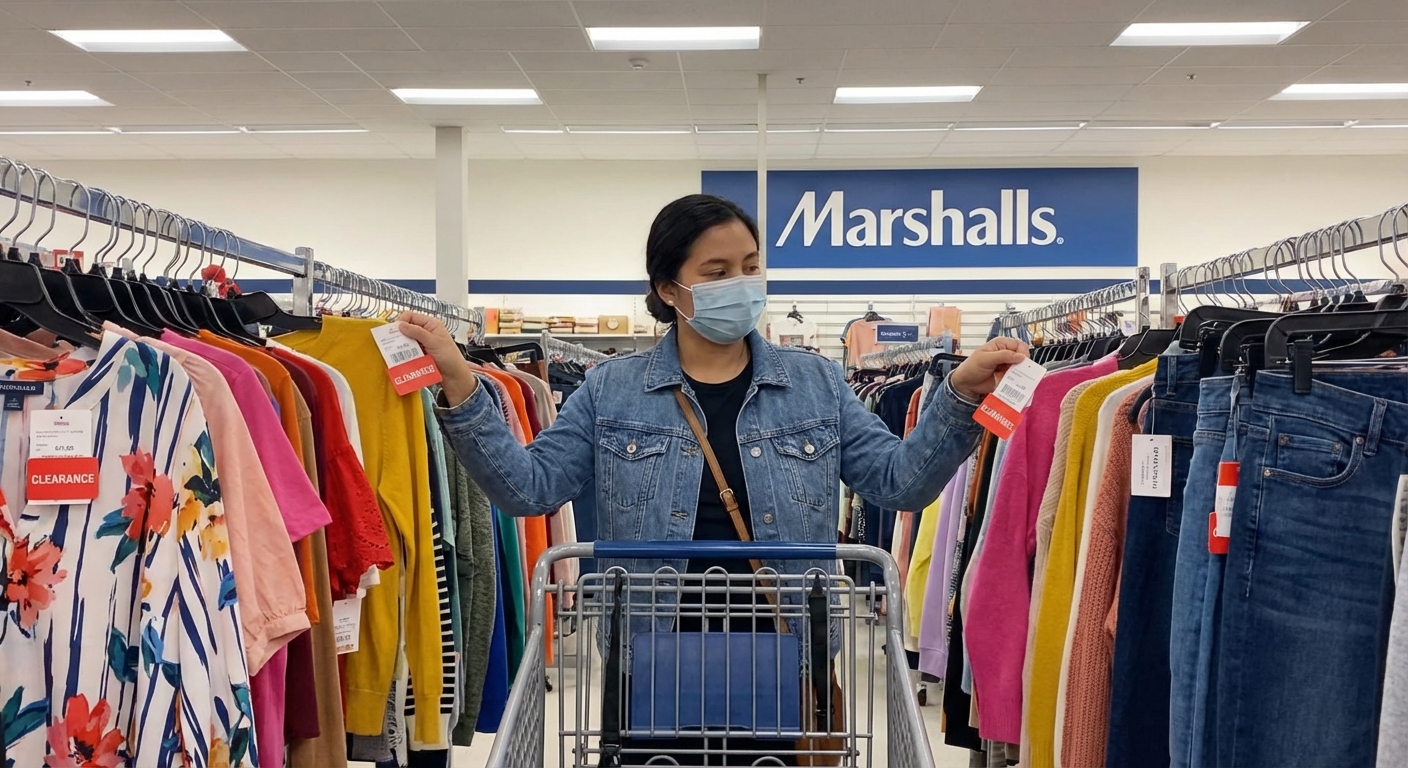
- Color-coded clearance (this can vary by region, but here’s what I’ve consistently seen):
- Red or yellow stickers: permanent markdown
- Multiple stickers layered: item has been reduced more than once
One thing I’ve learned the hard way: the “Compare at” price is an estimate, not always the exact original retail price. The Federal Trade Commission has actually issued guidance on price comparisons — retailers are supposed to use realistic reference prices, but it’s not always perfect. So I treat “Compare at” as a rough benchmark, not gospel.
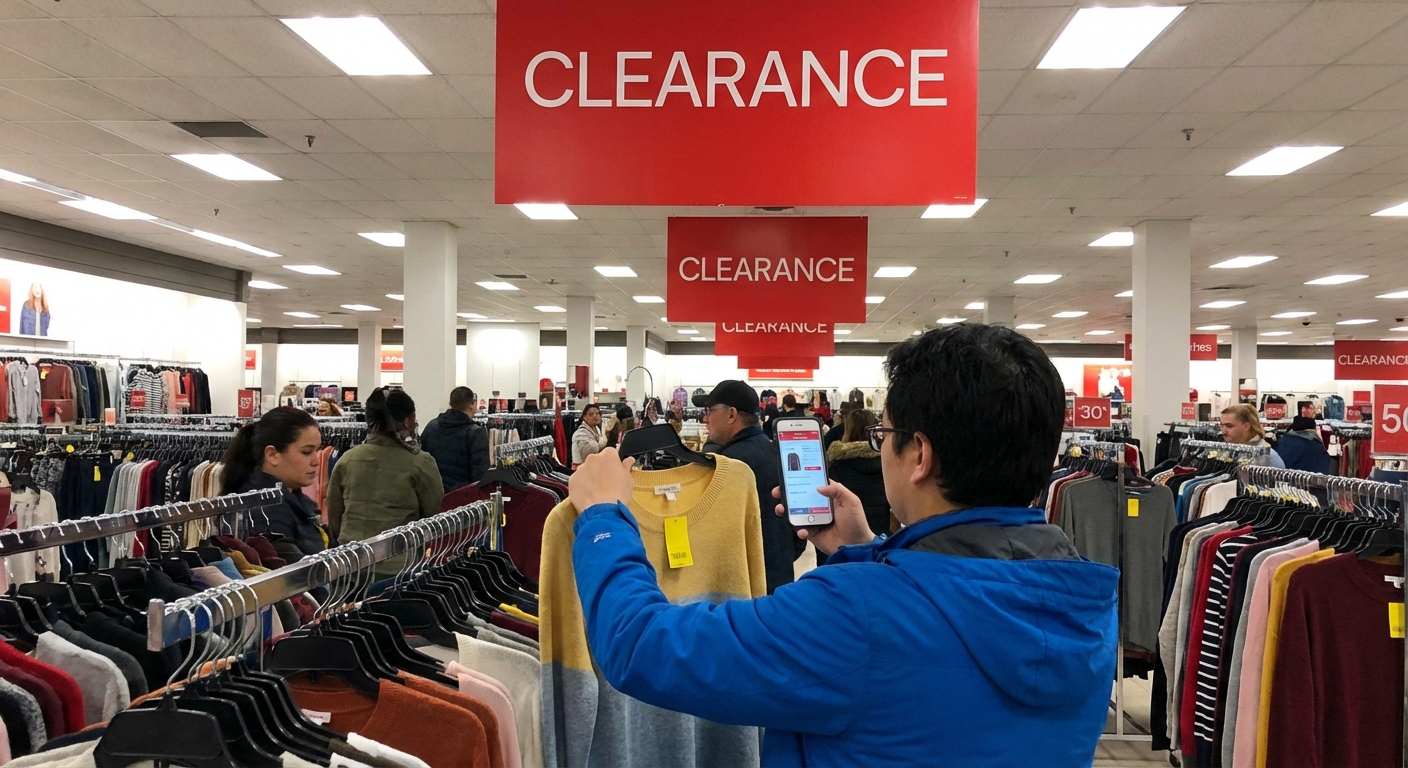
When I really want to check, I’ll quickly search the brand and style on my phone. Half the time, I confirm I’m getting a genuine deal; occasionally, I realize the “compare” price is a bit optimistic.
Best Days and Times to Shop (From Someone Who’s Tested Weird Hours)
I went through about a month where I treated Marshalls like my part‑time research project. Here’s what consistently worked best:
Early weekday mornings
When I showed up around opening time on a Tuesday and Thursday, the store was:
- Noticeably tidier
- Less picked over
- Stocked with more full-size runs
Staff told me they’d just finished putting out a lot of new merchandise, and it showed.
Avoiding peak chaos hours
Whenever I went:
- Saturday afternoons
- Weekday evenings after work
…fitting rooms had lines, aisles were crowded, and carts were stacked. You can still find deals, but searching becomes more of an athletic event than a relaxing browse.
For maximizing both sanity and selection, my personal ranking:
- Tuesday–Thursday, right at open
- Monday late morning
- Sunday evening (hit-or-miss, but quieter)
Every store is different, so I recommend asking: “What days do you usually get new shipments?” The most helpful associate I met actually pulled out a small notepad calendar and walked me through their weekly truck schedule.
Sections That Consistently Deliver (And Ones I Approach Carefully)
The Goldmines
1. Beauty & skincareI recently discovered my holy-grail Korean sunscreen sitting on a random lower shelf for half its usual price. But I also noticed:
- Boxes sometimes opened
- A few products with older packaging
My personal rules:
- Always check expiration dates on skincare and SPF
- Avoid open jars, broken seals, or anything that looks even slightly used
- Stick to recognizable brands or at least Google them quickly
This is where Marshalls quietly shines. I’ve found:
- High-quality cutting boards for under $20
- Cast iron pans comparable to premium brands
- Linen blend pillows that look way more expensive than they were
Durables like glass, steel, and ceramic are less risky than creams or electronics. When I tested a set of frying pans from a lesser-known brand, they actually held up better than my big-box-store purchase.
3. Kids’ clothes & toysIf you’ve got kids in your life, off-price is your wallet’s best friend. Growth spurts don’t care about retail markups.
I’ve grabbed name-brand kids’ joggers and winter coats for a fraction of what I’d pay in a mall store. I do, however, double-check:
- Safety labels on toys
- Age recommendations
- Loose parts or damage
The “Proceed With Caution” Zones
1. High-fashion labelsYes, Marshalls can get actual designer pieces. I’ve seen everything from mid-tier contemporary labels to the occasional true-luxury item. But:
- Selection is inconsistent
- Sizing is random
- Some pieces are there because they fit weird or feel overdesigned
My rule: I only buy designer there if I already love how it looks and fits — not just because the label is fancy.
2. Tech & gadgetsI rarely buy electronics at Marshalls. The deals are tempting, but:
- Warranties can be limited
- Models might be older generations
If I do grab something (I caved on a wireless charger once), I:
- Test it immediately at home
- Keep the packaging and receipt
How to Actually Shop Marshalls Like a Pro
Here’s the system I’ve refined after way too many hours wandering those aisles.
1. Go in with flexible specifics
When I tested going in with a super rigid list (e.g., “I need black, high-rise, straight-leg, ankle-length jeans from X brand”), I almost always left frustrated.
When I went in with categories instead of exact items (e.g., “I’m looking for versatile jeans and a neutral sweater”), I:
- Found better deals
- Stayed open to unexpectedly great brands
2. Learn the store’s layout
Most Marshalls locations group sections like this:
- Front right: women’s contemporary or “better” brands
- Middle: everyday basics
- Back: clearance
Once I understood this, my routine became:
- Quick scan of front-right racks for potential unicorn items
- Targeted browse in my size range
- Sweep through clearance for hidden gems
3. Check stitching, fabric, and construction
In my experience, quality varies more at off-price stores simply because you’re dealing with lots of vendors. I do a 10-second quality check:
- Turn the garment inside out: clean seams? loose threads?
- Check fabric content: natural fibers or at least comfortable blends
- Gently tug buttons and zippers: anything about to fall off?
When I skipped this step on a blazer I was excited about, the lining tore within two wears. Lesson learned.
4. Use the fitting rooms — and be ruthless
Unpopular opinion: it’s better to try on 12 items and buy 2 than buy 5 and return 3.
My try-on checklist:
- Can I sit, bend, and raise my arms without feeling like a stuffed sausage?
- Does this work with at least two things I already own?
- Would I buy this at full price if I could afford it, or am I just seduced by the discount?
Whenever I ignored that last question, the item usually ended up living in the back of my closet.
Pros and Cons of Shopping Off Price at Marshalls
What I Love
- Serious value: I’ve routinely paid 40–60% less than full retail for solid brands.
- Discovery factor: I’ve found new labels and unique pieces I never see in mall chains.
- Home section: Honestly, if Marshalls only sold kitchen and home goods, I’d still go.
- Budget-friendly gifting: I’ve built entire gift baskets with candles, mugs, notebooks, and snacks for far less than a single department-store gift set.
The Trade-Offs
- Inconsistency: You can’t go in expecting specific items or re‑buying the same exact thing.
- Time investment: You need patience to sort through racks, especially in busy locations.
- Quality variation: Not everything is a win; you have to filter smartly.
- Overbuy temptation: Discounts can trick you into buying things you don’t actually need.
When I’m honest with myself, Marshalls is amazing for filling gaps in my wardrobe or home, not so great for building a highly specific capsule wardrobe where every piece has to match a strict vision.
Maximizing Returns, Rewards, and Peace of Mind
A few practical things that made my Marshalls habit more sustainable:
- Know the return policy: As of late 2024, Marshalls generally offers a 30-day return window with a receipt for a full refund to the original form of payment (policies can vary by state and change over time, so I always double-check the sign at the register).
- Keep receipts and tags on until you’ve worn or used the item and you’re sure.
- Consider the TJX Rewards card carefully: It offers points on purchases at Marshalls, T.J. Maxx, HomeGoods, etc. I personally decided not to get it because I’m minimizing store cards — but if you shop across TJX brands frequently and pay off balances monthly, it can stack extra savings.
Most importantly, I set a rough budget before I walk in. When I tested this against my “let’s just browse” days, I spent about 25–30% less on average while still finding pieces I loved.
Final Thoughts from Someone Who’s Dug Through a Lot of Racks
Marshalls is at its best when you treat it like:
- A curated treasure hunt, not a guaranteed source for exact items
- A place to experiment cheaply with trends or new categories (linen pants, athleisure, new cookware)
- A way to access better brands at approachable prices, as long as you’re willing to do a bit of sifting
When I lean into the hunt, go at the right times, and stay ruthless about quality and fit, Marshalls beats most traditional department store sales I’ve tried — and feels way more fun.
If you’ve ever walked in, gotten overwhelmed, and walked out with nothing but a scented candle you didn’t need… you’re not alone. With a game plan, off-price retail at Marshalls stops being chaos and starts being a seriously effective money-saving strategy.
Sources
- TJX Companies 2023 Annual Report - Corporate overview of Marshalls’ parent company and off-price model
- National Retail Federation – Off-Price Retailers Continue to Thrive - Industry context on why off-price stores like Marshalls are growing
- Federal Trade Commission – Guides Against Deceptive Pricing - Rules and guidance around price comparison claims
- Marshalls Official Website – FAQs and Policies - Current information on returns, gift cards, and general shopping policies
- Harvard Business School – How Retailers Can Keep Up with the Consumer - Research-based insights into modern retail and consumer behavior