Guide to Outdoor Grills for 2026: Gas, Charcoal, and Pellet Features to Compare
e taste test — and the arguments over which grill was “best” got louder than my neighbor’s leaf blower.
That afternoon pushed me to really dig in and test what’s actually worth paying for in 2026, and what’s just shiny marketing.
Below is the guide I wish I’d had before I bought my third grill.
How I Tested and What Actually Matters
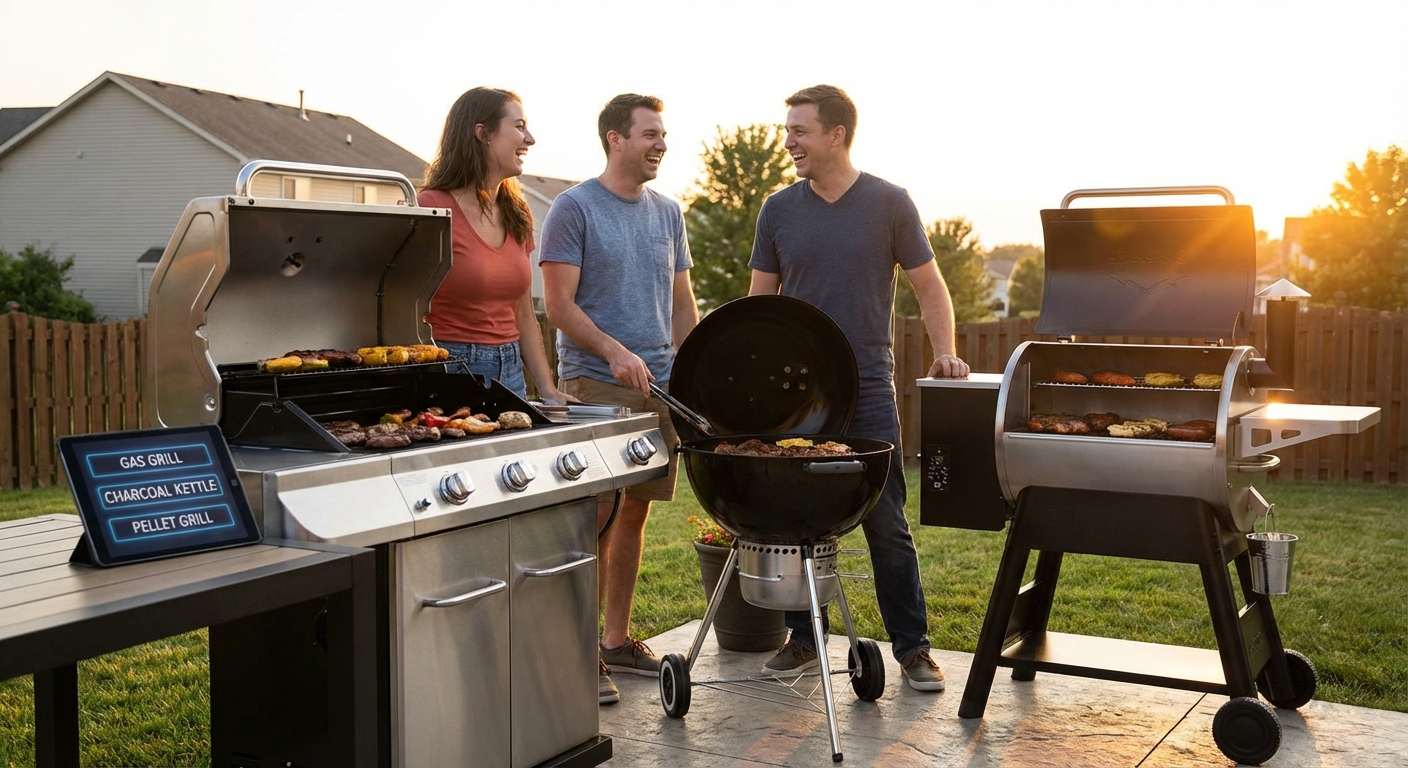
Over the last three seasons I’ve cooked on:
- A mid-range 3-burner gas grill with a side burner
- A classic 22-inch charcoal kettle
- A WiFi-enabled pellet grill/smoker
I’ve run all three through the same tests:
- High-heat searing (steaks, smash burgers)
- Low-and-slow (ribs, pork shoulder)
- Weeknight speed tests (how fast I can go from “I’m hungry” to “food is ready”)
- Winter cooks in temps down to about 25°F
In my experience, four features matter way more than brand hype:
- Heat control – can you dial in and hold a temp?
- Flavor profile – smoke level, char, and crust
- Startup and cleanup hassle – the real reason people quit grilling
- Fuel cost and availability – especially as prices keep creeping up
Let’s break this down by grill type.
Gas Grills: Convenience Kings (with a Few Asterisks)
When I tested weeknight dinners, gas won almost every time.
I could walk outside, hit the igniter, and the grill was at 450–500°F in around 10 minutes. That meant chicken thighs on the table in under 30 minutes, including prep. For busy schedules, that’s huge.
Key Features to Compare on Gas Grills in 2026
1. BTUs (but not in the way ads push them)Brands love throwing massive BTU numbers at you. But a 60,000 BTU grill that leaks heat and has thin metal walls won’t outperform a well-built 40,000 BTU model.
When I tested, what really mattered was heat distribution. I look for:
- Even browning across the grate without big hot/cold zones
- At least 90 seconds of solid, high heat for a steak sear without flare-ups everywhere
In my experience, three main burners is the sweet spot for most families: it gives you a true two-zone setup (hot and cool side) plus a buffer.
Things I now always check:
- Burner material: stainless steel or brass outlast cheap aluminum
- Port design: smaller, evenly spaced ports = smoother flame pattern
- Warranty: if burners aren’t covered for at least 5 years, I move on
I recently swapped porcelain-coated grates for heavy cast iron on my gas grill, and the sear marks jumped from “sad cafeteria” to “steakhouse cosplay.”
Cast iron holds heat better but needs a bit of oiling. If you’re not into maintenance, solid stainless rod grates are a good long-term compromise.
4. Extra features that are actually usefulUseful in my real-world testing:
- Side burner: Great for boiling corn or sauces so you don’t run back inside.
- Infrared sear zone: If you really care about steak, this is a game-changer.
- Fuel gauge for propane: Saved me from running out mid-burger more times than I’ll admit.
Overhyped in my experience:
- Giant viewing windows (they fog and grease up)
- LED “mood” lighting everywhere
- Fast startup
- Simple temperature control with knobs
- Easier winter cooking
- Good for frequent, casual grilling
- Flavor is milder; less “smoky”
- Propane tank refills add up if you grill a lot
- Cheap models rust fast and run uneven
Charcoal Grills: Flavor and Ritual
My charcoal kettle is the grill that makes guests wander over and say, “What are you cooking?” The smell alone wins.
Flavor-wise, a charcoal grill with hardwood chunks added can beat almost anything.
Features That Actually Matter on Charcoal Grills
1. Airflow control (vents and dampers)Temperature on charcoal is basically air in, air out. When I tested cheaper kettles with loose-fitting vents, I had to constantly babysit the fire.
For 2026 models, I look for:
- Snug, adjustable top and bottom vents
- A lid that seals decently without big gaps
- Easy-to-reach ash system (or you’ll hate cleaning it)
If you want to sear steaks one night and smoke ribs at 250°F the next, you’ll want:
- Adjustable charcoal grate if possible
- Or at least a two-zone setup: coals on one side, empty on the other
When I tested whole chickens, having that indirect zone meant crispy skin without incinerating the bird.
3. Ash managementTrue story: the first time I owned a bargain charcoal grill, I stopped using it after one summer because cleaning the ash was such a pain.
Now I look for:
- A bottom ash catcher you can remove and dump easily
- Minimal cracks and edges for ash to clog up
This isn’t technically part of the grill, but it changes everything.
In my experience:
- Lump charcoal burns hotter and faster, great for searing.
- Briquettes burn more consistently and longer, great for low-and-slow.
Pros of Charcoal
- Deep, classic grilled flavor
- Can hit very high heat for searing
- Simple construction; fewer parts to break
- Typically cheaper upfront than good gas or pellet grills
Cons of Charcoal
- Slower startup (20–30 minutes to ideal heat)
- More learning curve with airflow and fire management
- Messier ash cleanup
- Temp control is trickier on windy or cold days
Pellet Grills: Set-It-and-Forget-It Smokers
When I tested pellet grills, I felt slightly like I was cheating. You pour in wood pellets, set a temperature like you would on an oven, and a control board meters the fuel.
For long cooks — ribs, brisket, pork shoulder — this is by far the least stressful way I’ve cooked.
What to Compare on Pellet Grills in 2026
1. Controller typeOlder pellet grills use basic controllers that swing temps by 20–30°F. Newer PID controllers (Proportional-Integral-Derivative) keep temps much tighter.
When I smoked ribs, my PID-controlled pellet grill stayed within about 5–10°F of the target for hours. My older non-PID unit wandered all over the place.
If you’re buying in 2026, I strongly favor:
- PID controller
- Clear digital display you can read in sunlight
Some early pellet grills struggled to sear. Newer models often reach 500–600°F, and some add dedicated sear zones or grates over direct flame.
When I tested burgers, pellet grills with a true high-heat zone could compete with gas. Without that, they were more like an outdoor oven with smoke.
3. Hopper capacity and pellet consumptionOn an overnight pork shoulder, hopper size matters. I aim for:
- At least 18–20 lb hopper capacity for long cooks
Rough pellet consumption in my experience:
- 1/2 lb–1 lb per hour at low temps (225–250°F)
- Up to 2+ lb per hour at higher temps
I was skeptical at first, but remote monitoring is legitimately useful. I’ve sat inside on a cold day watching the pit temp and meat probe on my phone while the grill did its thing.
Just don’t buy only for the app. If the grill body is thin, or the lid doesn’t seal, all the tech in the world won’t save it.
Pros of Pellet Grills
- Exceptional for smoking and low-and-slow
- Very steady temps with minimal babysitting
- True wood-smoke flavor with lots of pellet flavors
- Great for people who like gadgets and data
Cons of Pellet Grills
- Require electricity
- More mechanical parts: auger, fan, electronics can fail
- Pellets must be kept dry (they crumble if they get damp)
- Less portable than a basic charcoal kettle
Cost, Fuel, and Real-World Trade-Offs
I’ve made all the rationalizations — “This grill will save money over time” — so let’s be honest about trade-offs.
Upfront cost (typical, mid-range quality):- Gas: moderate to high
- Charcoal kettle: low to moderate
- Pellet: moderate to high
- Propane: Often around $20–$25 per refill. Light, frequent grillers won’t notice much. Heavy users will.
- Charcoal: Lump or briquettes can add up over a season, especially for long cooks.
- Pellets: Generally cost-effective per hour of smoke, but you’re tied to specific fuel.
A 2012 U.S. Department of Energy analysis on outdoor cooking fuels (updated in later consumer resources) has consistently put propane and natural gas at the more efficient end, with charcoal trading efficiency for flavor and ritual.
In my experience, the real money saver isn’t the fuel type — it’s actually using the grill instead of letting it rust in the corner.
How to Choose the Right Grill for You in 2026
Here’s how I’d guide a friend, based on all my testing.
Choose a gas grill if:- You want fast weeknight meals
- You’re not obsessed with heavy smoke flavor
- You value turn-the-knob simplicity
- You love the idea of tending a fire
- You want that classic smoky, charred flavor
- You don’t mind a bit of ash and a slower process
- You’re serious about barbecue but don’t want to babysit a fire
- You like gadgets, graphs, and dialing in temps
- You cook big cuts or host large gatherings
What I actually use now:
- Gas for quick weeknight dinners
- Charcoal when I want to impress with flavor and don’t mind hanging outside
- Pellet for long smokes and lazy Sundays
You don’t need three grills like a lunatic (me), but understanding how they really behave in the wild will help you pick the one that fits your life, not just your patio.
Sources
- U.S. Department of Energy – Outdoor Cooking Efficiency - Overview of fuel types and efficiency for outdoor cooking
- Consumer Reports – Gas Grill Buying Guide - Independent testing and feature breakdown for modern gas grills
- Serious Eats – The Food Lab: How to Buy a Grill - Deep dive into grill types, performance, and heat management
- BBQ Brethren / AmazingRibs – Science of BBQ and Grilling - Evidence-based research on grilling techniques, fuels, and equipment
- Kansas State University – Food Safety for Outdoor Grilling - University guidance on safe grilling practices