Guide to Pest Control Services for Common Household Pests
rom “eh, I’ll deal with pests later” to deep-diving pest control services like I was studying for an exam.
This guide is everything I wish I’d known before I started frantically Googling “best pest control near me” at 2 a.m.
DIY vs Professional Pest Control: What Actually Makes Sense
When I tested the DIY route first, I did what most people do: bought three different sprays, a gel bait, and those plug-in ultrasonic devices that claim to “repel everything”. In my experience? The cockroaches looked mildly offended… and then carried on with their night.
When DIY is usually enough
From what I’ve seen in my own place and with friends’ homes, DIY can work decently for:
- A few ants trailing in from a window
- Occasional house spiders
- A couple of silverfish in the bathroom
- One-off flies or fruit flies
If you’re dealing with occasional visitors and not a full-on infestation, gel baits, caulk, and basic sanitation plus sealing cracks can be enough.
When you should call a pest control service
Based on what I’ve learned from licensed techs I’ve spoken with, you probably want a pro if:
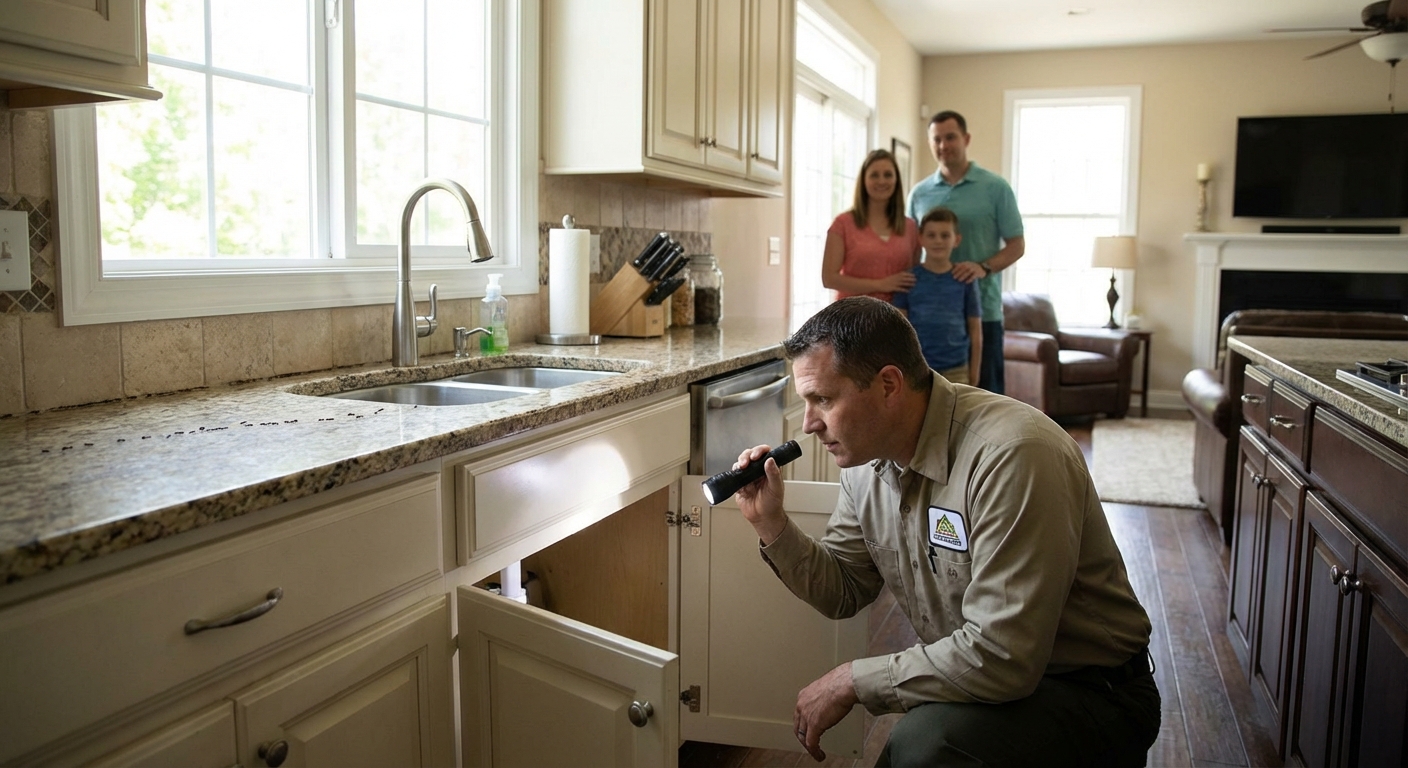
- You see roaches during the day (huge red flag of a bigger infestation)
- You see rodent droppings, gnaw marks, or hear scratching in walls/attic
- You wake up with unexplained bites in linear clusters (possible bed bugs)
- You spot termite mud tubes or blistered wood
- You see lots of ants coming from baseboards or electrical outlets
A licensed pest control company has access to restricted-use products, integrated pest management tools, and most importantly: experience reading the signs of where pests are nesting and how they’re moving through your home.
What Pest Control Services Actually Do (Behind the Scenes)
Before I booked my first service, I assumed they’d just come in, spray everything, and leave a bill. That’s not how reputable companies work anymore—especially those that follow Integrated Pest Management (IPM).
IPM is basically the grown-up, science-backed version of pest control. It focuses on:
- Inspection – Identifying the species, entry points, nesting areas, and conditions that attract them.
- Exclusion – Sealing cracks, gaps, and openings (think under doors, around pipes, attic vents).
- Sanitation & habitat modification – Reducing food, water, and shelter sources.
- Targeted treatments – Using baits, dusts, growth regulators, and sprays in specific locations.
- Monitoring – Follow-up visits, traps, and tracking activity.
When the tech came to my place for roaches, he spent more time inspecting and asking questions than he did actually spraying. That’s when I realized: the strategy is the real product, not just the chemicals.
Common Household Pests & The Services That Work Best
1. Ants
What I experienced: I once had a trail of sugar ants marching from my dishwasher to a single tiny crumb on the counter like it was a religious pilgrimage. How pros usually handle it:- Identify the ant species (carpenter, odorous house ant, pavement ant, etc.)
- Use gel baits and non-repellent sprays so ants carry the poison back to the colony
- Find and treat entry points and moisture issues
2. Cockroaches
My hard lesson: When I tested hardware-store roach sprays, I accidentally pushed the roaches deeper into cracks and neighboring units. Not ideal. What pros do:- Identify species (German, American, Oriental, etc.—German roaches are the worst indoors)
- Use insect growth regulators (IGRs) to stop breeding cycles
- Apply gel baits in cracks, hinges, under appliances
- Use dusts (like borate-based products) in wall voids and outlet boxes
If you’re seeing multiple roaches regularly, particularly in the kitchen and bathroom, it’s time to call a service. Cockroaches reproduce fast, and DIY often treats symptoms, not the nest.
3. Rodents (Mice & Rats)
I’ll never forget hearing tiny scratching in the wall at 1:30 a.m., lying there wondering if it was a mouse… or my imagination. It wasn’t my imagination.
What good pest control companies focus on:- Exclusion first – Sealing entry points where pipes, vents, and utility lines enter
- Using snap traps and bait stations, not just poison tossed around
- Inspecting the attic, crawlspace, and foundation for burrows, droppings, and rub marks
Pros will often talk about rodent-proofing rather than just rodent killing. In my experience, the exclusion work (steel wool, metal flashing, door sweeps) made the biggest difference long-term.
DIY works for: A single mouse you caught early, with a couple of traps and sealed food. Professional service is safer when:- You see multiple droppings in several rooms
- You hear persistent activity in walls/attic
- There are kids or pets at home (improper poison use can be dangerous)
4. Bed Bugs
If you suspect bed bugs, skip the DIY pride. I tried to “handle it myself” with sprays and a steamer for a friend’s apartment. It cost more in wasted products than a pro treatment would’ve.
How professional bed bug services usually work:- Detailed inspection of seams, headboards, baseboards, outlet covers
- Combination approach: heat treatments, residual insecticides, encasements, and follow-ups
- Education on laundering, decluttering, and travel habits
The Environmental Protection Agency notes that bed bugs are resistant to many over-the-counter pesticides, and treatment often requires multi-visit protocols.
If you’re waking up with bites in lines or clusters, seeing tiny black spots on sheets or mattress seams, or spotting live bugs, call a licensed company that explicitly lists bed bug treatment as a specialty.
5. Termites
Termites are usually a “silent damage” problem. I once saw a baseboard that looked perfectly normal until the pest inspector tapped it lightly and his screwdriver went straight through like it was cardboard.
Typical termite service includes:- Inspection for mud tubes, damaged wood, and swarmers
- Soil treatments with termiticides like fipronil, or baiting systems like Sentricon
- Annual or semiannual monitoring
Because of the structural risk, I’d never mess around with DIY termite treatment beyond basic prevention (keeping wood off soil, reducing moisture, fixing leaks). A full colony can cause expensive damage over a few years.
How to Choose a Pest Control Service (Without Getting Ripped Off)
After interviewing a few companies, here’s what I now look for:
- License and certifications – In the U.S., check your state’s Department of Agriculture or structural pest control board. Any reputable company will share their license number.
- Insurance – They should carry general liability and, ideally, errors & omissions coverage.
- Clear treatment plan – When I asked, the best companies walked me through:
- What pests they’d target
- Products and active ingredients they’d use
- How long I’d need to be out of the house (if at all)
- What to expect within the first week or two
- Integrated Pest Management approach – If their only solution is “We just spray everywhere,” that’s a red flag.
- Realistic promises – No one can ethically promise “we’ll eliminate every roach in 24 hours forever.” The honest companies say things like, “You might see more activity in the first week as they come out of hiding.” That’s actually a good sign.
The Pros and Cons of Hiring Pest Control Services
Based on my own experience and conversations with techs and homeowners, here’s the balanced view.
Pros:- Faster, more thorough results for serious infestations
- Access to pro-grade products and tools
- Strategic placement instead of random spraying
- Ongoing monitoring to prevent re-infestation
- Safer use of pesticides when kids/pets are involved
- Ongoing service contracts can be pricey
- You’re relying on the technician’s skill, which can vary
- Some companies push unnecessary add-ons
- There may be prep work (laundry, moving furniture, clearing cabinets)
I’ve definitely had one tech who rushed and did a mediocre job, and another who was meticulous and worth every cent. So it’s not a magic bullet—choosing the right provider matters.
How to Get the Most Out of Your Pest Control Visit
When I started treating pest control like a partnership rather than a rescue mission, the results got way better.
A few things that made a real difference:
- Being honest about clutter and food storage – The tech doesn’t care if your pantry is chaotic; they just need to see what’s going on.
- Following prep instructions – Especially for bed bugs and roaches. Bagging items, laundering, emptying cabinets—it’s tedious but critical.
- Fixing moisture issues – Leaky pipes, dripping AC units, damp basements. Many pests are drawn to moisture.
- Staying consistent with follow-ups – For roaches, bed bugs, and rodents, one visit is rarely enough.
Final Take: When Pest Control Services Are Worth It
If I could go back to that first roach-on-the-pillow moment, I’d still start with basic cleaning, sealing, and maybe a few bait stations. But the second I realized it wasn’t just a stray visitor? I’d call a licensed pest control company sooner—and skip the weeks of half-effective DIY.
Use pros for what they’re good at: identifying species, reading the home’s weak points, and designing a layered plan. Use DIY for maintenance, prevention, and handling the occasional solo intruder.
Pests are normal. You’re not “dirty” if you’ve got ants or roaches—it happens to spotless homes too. The real difference is how quickly you respond and whether you treat the source, not just the symptom.
Sources
- U.S. Environmental Protection Agency – Integrated Pest Management (IPM) Principles – Overview of IPM strategies used by modern pest control services.
- Centers for Disease Control and Prevention – Rodents – Health risks and prevention guidance related to rodents.
- Environmental Protection Agency – Bed Bugs – Official guidance on bed bug identification and control options.
- Allergy, Asthma & Immunology Research – Cockroach Allergy and Management – Research article linking cockroach allergens and asthma.
- University of California Integrated Pest Management Program – Evidence-based pest management guidance for homes and gardens.