Guide to Power Scissors for Garden Pruning
ay hand-pruning a massively overgrown lavender hedge. By Sunday morning, my hands felt like I’d tried to squeeze walnuts bare-fisted.
That’s when I caved and bought my first pair of cordless power scissors.
When I tested them on that same hedge a few weeks later, I finished the job in under an hour, and my hands didn’t hate me. Since then, I’ve tried multiple models, burnt out one cheap motor, and learned a lot about what these tools can and can’t do.
This guide is my honest, slightly muddy-boot take on power scissors for garden pruning.
What Exactly Are Power Scissors?
Power scissors (sometimes called cordless grass shears, electric pruning shears, or mini hedge trimmers) are small, motorized cutting tools designed for light to medium pruning and trimming.
In my experience, they fall into three broad categories:
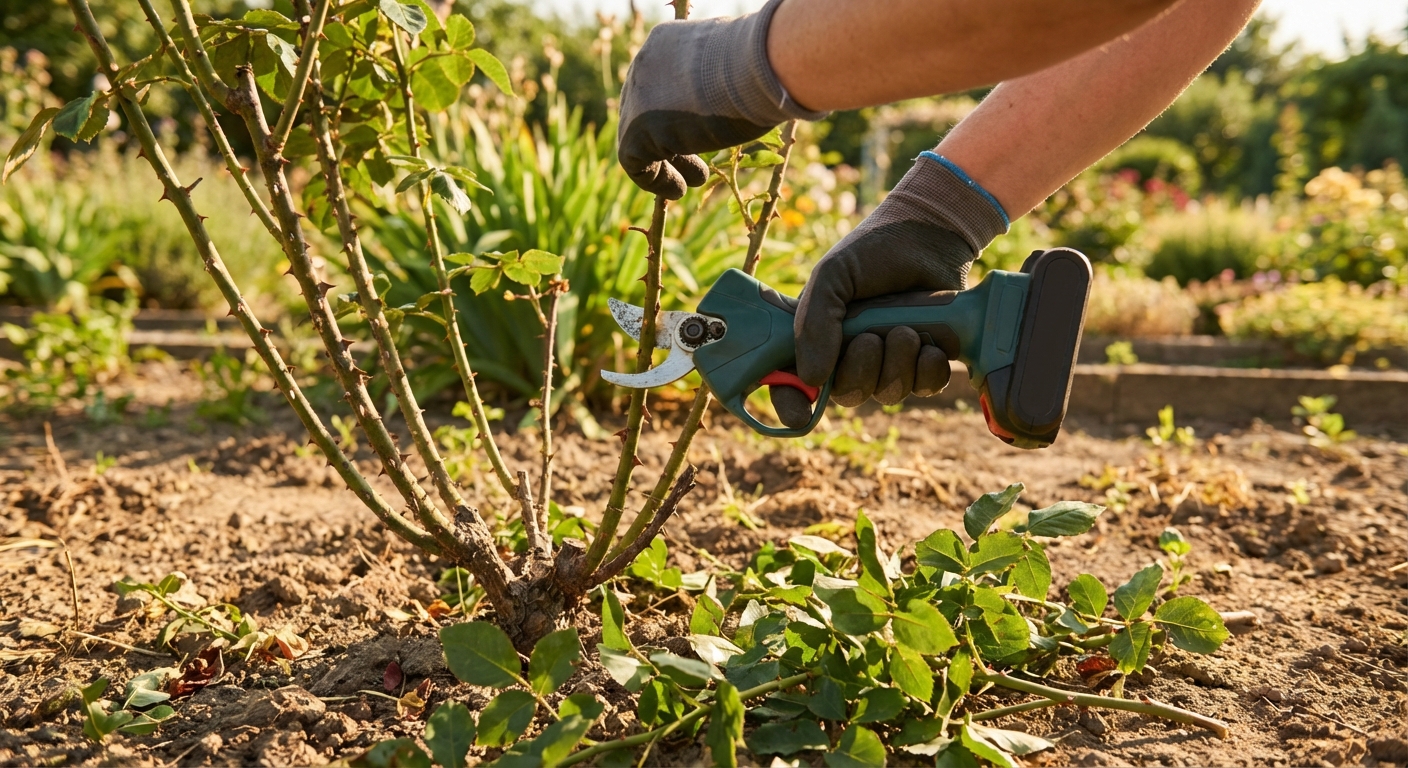
- Cordless grass and shrub shears – Look like chunky scissors or a mini hedge trimmer. Great for edging lawns, shaping low boxwood, trimming herbs, and light shrub pruning.
- Electric pruning shears / secateurs – Pistol‑grip tools with a powered blade, designed to cut thicker stems (often up to 1 inch / 25 mm) with a trigger.
- Multi-head systems – One battery handle with interchangeable heads: scissor blade, small hedge trimmer, sometimes even a mini pole pruner.
When I first started, I assumed they were just “fancy scissors.” They’re actually closer to scaled‑down hedge trimmers or powered secateurs, and the right type really depends on what you’re pruning.
When Power Scissors Make Sense (and When They Don’t)
Where They Shine
In my garden, power scissors are a game‑changer for:
- Shaping low hedges and borders – Boxwood, lavender, santolina, small euonymus. Clean, uniform cuts without crouching forever.
- Edging lawn along paths and beds – Those annoying tufts the mower always misses? Gone in minutes.
- Routine light pruning – Spent annuals, herbs, small perennials. I use them on thyme, oregano, and chives all the time.
- Arthritis or weak grip – A neighbor with wrist issues borrowed my electric pruners and immediately ordered her own. The trigger and motor do most of the work.
When I tested a mid‑range cordless shear on my 12‑meter box hedge, I cut my usual pruning time in half. The difference wasn’t just speed; it was how fresh I still felt at the end. I actually had energy left to weed. That almost never happens.
Where They Struggle
They’re not magic wands. I’ve learned the hard way:
- Thick, woody stems – Most grass/shrub shears tap out around 8–10 mm (about a pencil’s width). For roses, fruit trees, or old woody shrubs, I still reach for proper bypass loppers or hand pruners.
- Heavy structural pruning – Removing big branches, reshaping old shrubs, rejuvenation pruning—that’s manual tool or full‑size hedge trimmer territory.
- Wet or fibrous material – Fresh, sappy stems (like some salvias or hydrangeas) can gum up blades quickly.
Think of power scissors as your maintenance tool, not your demolition crew.
Key Features That Actually Matter
I’ve wasted money on “bargain” tools that looked great online and died in a single season. Here’s what I pay attention to now.
1. Battery Type and Runtime
Look for lithium‑ion batteries. They hold charge better and don’t suffer the old‑school memory effect.
When I tested a 3.6V budget model, I got about 20–25 minutes of real‑world trimming. My 18V system lasts close to an hour of stop‑start use.
- If you’ve got a small courtyard or balcony: 3.6–7.2V is usually enough.
- For medium to large gardens: 12–18V, ideally with a removable battery you can swap.
Big bonus if the battery is part of a shared system (like Bosch, Ryobi, DeWalt, Makita, etc.). I run my shrub shears, drill, and blower on the same 18V pack. Fewer chargers, less clutter.
2. Blade Quality and Type
Blade steel and design make a huge difference.
- Carbon steel blades tend to be sharper but may rust if neglected.
- Stainless is lower maintenance but can be slightly softer.
- Non‑stick coatings help with sappy plants.
For general garden pruning, I prefer models that offer:
- A shorter “scissor” blade for precise shrub shaping.
- A longer hedge‑style blade for straight runs along hedges and borders.
When I tested a cheap, unbranded model, the blade alignment was off just enough to crush soft stems instead of slicing them. Plants didn’t bounce back as well—exactly what research on pruning physiology warns about (Illinois Extension has some great material on this).
3. Ergonomics and Weight
I once used a heavy, badly balanced unit for half an hour and my wrist felt worse than with manual shears.
What I look for now:
- Weight under ~1.2 kg (2.6 lb) for prolonged use.
- Comfortable grip with a bit of rubberized overmold.
- Safety switch that’s easy to reach but not easy to bump.
If you can, actually hold the tool before buying. The “fits in hand nicely” test is underrated.
4. Safety Features
I used to roll my eyes at safety warnings—right up until a friend nicked his knuckle because he bypassed the safety switch.
Good models typically have:
- Two‑step activation: a safety button + trigger.
- Blade guards or scabbards for storage.
- Clear maximum branch diameter guidelines.
The U.S. Consumer Product Safety Commission has logged thousands of injuries related to powered garden tools every year. Boring, but real. Don’t defeat safeties. Don’t prune barefoot. Yes, I’ve seen it.
How to Use Power Scissors Without Butchering Your Plants
When I first got mine, I attacked everything like I was shaving a sheep. The plants survived, but some looked like they’d lost a bar fight. Here’s what I’ve refined over time, backed up by pruning advice from horticulture programs like Penn State Extension.
Start with the Right Timing
- Spring‑flowering shrubs (like forsythia, some spireas): prune after flowering, or you’ll cut off next year’s blooms.
- Summer‑flowering perennials and shrubs: usually safer to cut back in late winter or early spring.
- Evergreen hedges: light trims 2–3 times during the growing season keep them dense.
Technique That Plants Actually Like
- Work from the top down, especially on hedges, so clippings fall away.
- Keep blades slightly angled, not gouging in.
- Make multiple light passes rather than one aggressive cut.
- For woody stems approaching the tool’s limit, stop and switch to hand pruners. Forcing it strains the motor and mangles the stem.
When I tested a “one‑pass” approach on my lavender balls, they looked sharp for about a week… then several sections browned, exactly where I’d cut too deep into old wood.
Pros and Cons of Power Scissors for Pruning
Based on a few seasons of real, sweaty use:
What I love:- Massive reduction in hand fatigue, especially on hedge days.
- Faster, more consistent shapes on low hedges and borders.
- Great for people with joint issues or reduced grip strength.
- Surprisingly versatile for pots, herbs, and ornamental grasses.
- Cheaper models can lose power quickly and bog down.
- Still need manual tools for serious structural pruning.
- Blades require regular cleaning and sharpening for best results.
- Noise is lower than a full hedge trimmer but higher than hand pruners—neighbors will hear you.
I wouldn’t give them up now, but they’re a complement to, not a replacement for, classic pruners and loppers.
Maintenance: The Boring Part That Makes Them Last
When I actually follow this routine, my tools perform better and the plants recover faster.
After each use:
- Brush off debris with a stiff brush.
- Wipe blades with a damp cloth, then dry thoroughly.
- Lightly spray or wipe with lubricating oil to prevent rust.
Every few weeks (or after heavy use):
- Check blade screws and connections.
- Sharpen or have blades professionally sharpened if cuts start tearing instead of slicing.
Research from universities like Cornell notes that clean, sharp blades reduce disease entry points and plant stress. It’s not just about tool life—it’s plant health.
Choosing the Right Power Scissors for Your Garden
Here’s how I match tools to gardens when friends ask for advice:
- Balcony or tiny urban garden
- Compact 3.6–7.2V cordless shear
- Focus on lightness and ease of storage
- Suburban garden with hedges and a mix of shrubs
- 12–18V unit, ideally with interchangeable blades
- Consider a brand with other tools you might add later
- Large or very plant‑dense garden
- Higher‑voltage system + spare battery
- Possibly a dedicated electric pruning shear for thicker stems
I recently switched one border over to being almost entirely maintained with a single 18V multi‑head unit. Between that and a pair of hand pruners, I can keep the whole bed looking sharp in under an hour a week.
Final Thoughts from a Dirt‑Under‑the‑Nails Gardener
Power scissors won’t turn a scruffy garden into Versailles overnight, and they definitely won’t replace everything in your tool rack. But if you:
- Dread hedge‑trimming days
- Have hand, wrist, or shoulder issues
- Or just want to keep on top of light pruning without feeling wrecked
…they’re genuinely worth considering.
The models I’ve kept using year after year all share the same traits: solid battery, good blades, comfortable grip, and realistic cut capacity. The ones I’ve given away or recycled were noisy, underpowered, or just badly balanced.
If you treat power scissors as a precision maintenance tool rather than a universal solution, they can make garden care faster, easier, and honestly, a bit more fun. And anything that keeps us out in the garden more—and nursing sore hands less—is a win.
Sources
- U.S. Consumer Product Safety Commission – Yard and Garden Safety - Data and guidance on injuries and safe use of powered garden tools.
- Penn State Extension – Pruning Ornamental Trees and Shrubs - Evidence-based pruning timing and technique recommendations.
- Illinois Extension – Tree Pruning Essentials - Discussion of proper cuts and plant response to pruning.
- Cornell University – Pruning Shrubs - Best practices for minimizing plant stress from pruning.
- Bosch Garden Tools – Cordless Shrub and Grass Shears - Example specifications and features of modern power scissor systems.